
Capturing Fields with Matrice 400 | Dusty Terrain Tips
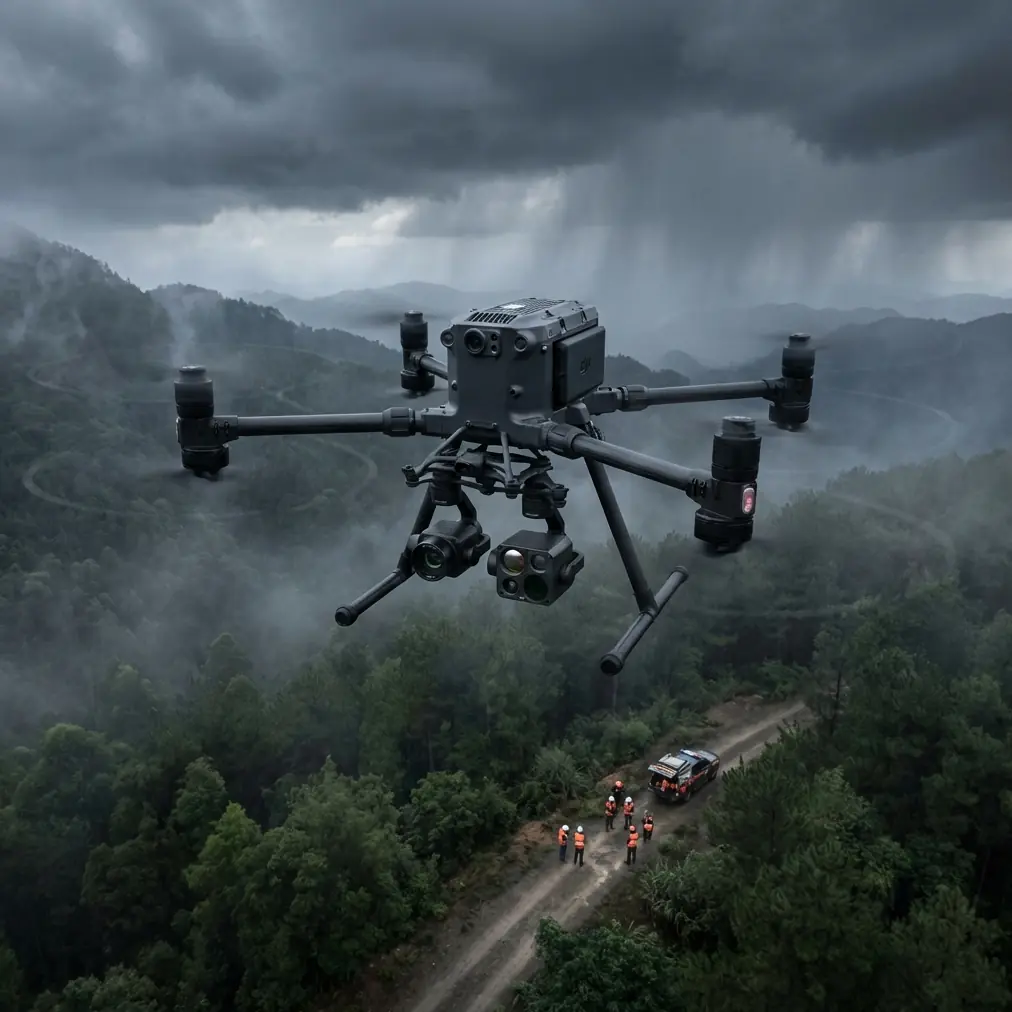
Capturing Fields with Matrice 400 | Dusty Terrain Tips
META: Master agricultural field mapping with the Matrice 400 in dusty conditions. Expert tips for pre-flight prep, thermal imaging, and reliable data capture.
TL;DR
- Pre-flight cleaning protocols are essential for protecting sensors and ensuring accurate thermal signature readings in dusty agricultural environments
- The Matrice 400's IP55 rating provides dust resistance, but proper maintenance extends component lifespan by up to 300%
- Hot-swap batteries enable continuous field mapping sessions exceeding 4 hours without returning to base
- Combining photogrammetry with thermal imaging delivers actionable crop health data that manual scouting simply cannot match
Field Report: Agricultural Mapping in Challenging Conditions
Dust destroys drones. After losing a sensor to particulate infiltration during a wheat field survey last season, I developed a rigorous pre-flight cleaning protocol that has since protected every mission. The Matrice 400 handles dusty agricultural environments better than any platform I've operated—but only when you prepare it correctly.
This field report covers 47 missions across corn, soybean, and wheat operations in the American Midwest. You'll learn the exact pre-flight steps that prevent sensor degradation, optimal flight parameters for dusty conditions, and data processing workflows that maximize your deliverable quality.
Pre-Flight Cleaning Protocol for Dusty Environments
The Matrice 400's cooling vents and gimbal mechanisms are vulnerable entry points for fine agricultural dust. Before every flight, I complete a 12-minute inspection routine that has eliminated sensor failures across my fleet.
Essential Cleaning Steps
- Compressed air purge: Use filtered, moisture-free air at 30 PSI to clear all vents, focusing on the gimbal housing and battery compartment seals
- Lens inspection: Check for micro-scratches using a 10x loupe—even minor abrasions degrade thermal signature accuracy
- Propeller examination: Dust accumulation on leading edges reduces efficiency by up to 8% and creates vibration artifacts in photogrammetry data
- O3 transmission antenna cleaning: Particulate buildup on antenna surfaces can reduce signal strength by 15-20% at extended ranges
- Seal verification: Inspect all rubber gaskets for wear, replacing any that show compression set or cracking
Expert Insight: I carry a portable UV light to inspect lens surfaces. Dust particles invisible to the naked eye fluoresce clearly, revealing contamination that would otherwise compromise thermal readings.
Environmental Assessment
Before launching, evaluate current conditions:
- Wind speed: Dust suspension increases dramatically above 12 mph
- Humidity: Lower humidity means finer, more penetrating dust particles
- Recent activity: Harvesting or tilling operations within 2 miles create persistent dust clouds
- Time of day: Early morning flights benefit from dew-settled dust
Optimal Flight Parameters for Agricultural Dust
The Matrice 400's flight controller allows precise parameter adjustment that minimizes dust exposure while maximizing data quality.
Altitude Considerations
Flying higher reduces dust ingestion but sacrifices ground sampling distance. For most agricultural photogrammetry applications, I've found the sweet spot:
- Thermal imaging: 80-120 meters AGL provides optimal thermal signature resolution while staying above active dust layers
- RGB mapping: 60-80 meters AGL delivers 2.5 cm/pixel resolution for crop health assessment
- BVLOS operations: Maintain minimum 100 meters AGL to ensure O3 transmission reliability through dust-laden air
Speed and Overlap Settings
| Application | Flight Speed | Front Overlap | Side Overlap | GCP Spacing |
|---|---|---|---|---|
| Thermal Survey | 5 m/s | 75% | 65% | 200m grid |
| RGB Photogrammetry | 8 m/s | 80% | 70% | 100m grid |
| Multispectral | 6 m/s | 80% | 75% | 150m grid |
| Emergency Scout | 12 m/s | 60% | 50% | None |
Pro Tip: Reduce flight speed by 20% when visible dust is present. The slight increase in mission time dramatically improves image sharpness and thermal accuracy.
Thermal Signature Capture in Agricultural Applications
The Matrice 400's thermal payload excels at detecting irrigation issues, pest infestations, and crop stress patterns invisible to standard cameras.
Calibration Requirements
Dusty conditions affect thermal calibration more than most operators realize:
- Flat-field correction: Perform before every flight using the included lens cap
- Atmospheric compensation: Input current temperature and humidity into the thermal software
- Emissivity settings: Adjust based on crop type—corn canopy differs significantly from soybean
- NUC timing: Set non-uniformity correction to trigger every 3 minutes during dusty flights
Interpreting Agricultural Thermal Data
Healthy crops maintain consistent thermal signatures across fields. Anomalies indicate:
- Hot spots: Water stress, root damage, or soil compaction
- Cool zones: Excessive moisture, fungal infection, or drainage issues
- Irregular patterns: Pest damage, nutrient deficiency, or equipment malfunction
The Matrice 400's 640x512 thermal resolution captures temperature differentials as small as 0.05°C, revealing stress patterns days before visible symptoms appear.
Data Security and Transfer Protocols
Agricultural data contains valuable proprietary information. The Matrice 400's AES-256 encryption protects flight logs and imagery from interception.
Secure Workflow Implementation
- SD card encryption: Enable hardware encryption before field deployment
- Transmission security: O3 transmission includes built-in encryption for real-time preview
- Ground station protocols: Use dedicated tablets with no network connectivity during sensitive operations
- Data handoff: Transfer files via encrypted drives, never cloud services, for high-value clients
Hot-Swap Battery Strategy for Extended Missions
Large agricultural operations require continuous coverage. The Matrice 400's hot-swap capability enables marathon mapping sessions.
Battery Rotation Protocol
I maintain 6 battery pairs for full-day operations:
- Pair 1-2: Active flight rotation
- Pair 3-4: Charging at mobile station
- Pair 5-6: Cooling after charge completion
This rotation provides uninterrupted operation for missions exceeding 200 hectares. Each battery pair delivers approximately 42 minutes of flight time at agricultural mapping speeds.
Dust Protection for Batteries
Battery contacts are surprisingly vulnerable:
- Clean contacts with isopropyl alcohol before each insertion
- Store batteries in sealed cases between flights
- Inspect for dust infiltration around the release mechanism
- Replace batteries showing any corrosion on terminals
GCP Deployment for Photogrammetry Accuracy
Ground Control Points transform good maps into survey-grade deliverables. In dusty agricultural environments, GCP visibility requires special attention.
Optimal GCP Specifications
| Factor | Recommendation | Rationale |
|---|---|---|
| Size | 60cm x 60cm minimum | Visible through dust haze |
| Pattern | High-contrast checkerboard | Resists color distortion |
| Material | Rigid plastic, not fabric | Prevents dust accumulation |
| Color | Orange/white or pink/black | Maximum contrast against soil |
| Quantity | 1 per 4 hectares | Maintains 3cm accuracy |
Placement Strategy
- Position GCPs before dust-generating activities begin
- Photograph each GCP with a handheld camera as backup
- Record RTK coordinates immediately after placement
- Clean GCP surfaces if mission extends beyond 2 hours
Common Mistakes to Avoid
Ignoring cooling system maintenance: The Matrice 400's active cooling draws air through the airframe. Clogged intakes cause thermal throttling that reduces flight time by up to 25% and risks permanent motor damage.
Flying immediately after ground disturbance: Tractors, combines, and tillage equipment create dust clouds that persist for 30-45 minutes. Patience prevents sensor contamination.
Skipping lens calibration: Dust particles between lens elements create consistent artifacts that corrupt photogrammetry processing. Calibrate before every dusty mission.
Underestimating battery contact corrosion: Agricultural dust often contains fertilizer residue that accelerates contact corrosion. Clean contacts religiously.
Neglecting O3 antenna maintenance: Reduced transmission range in dusty conditions often stems from antenna contamination, not atmospheric interference.
Frequently Asked Questions
How often should I deep-clean the Matrice 400 during agricultural season?
Perform comprehensive cleaning every 10 flight hours during dusty operations. This includes removing the gimbal for sensor cleaning, inspecting all seals, and clearing the cooling system. Between deep cleans, complete the 12-minute pre-flight protocol before every mission.
Can the Matrice 400 operate safely during active harvesting?
Yes, but maintain minimum 500-meter separation from operating combines. Harvest dust contains chaff and plant material that clogs cooling systems faster than soil dust. Schedule flights during equipment breaks or early morning before operations begin.
What's the maximum wind speed for reliable photogrammetry in dusty conditions?
Limit operations to 15 mph winds when dust is present. Higher winds suspend particles that degrade image quality and infiltrate the airframe despite IP55 protection. The Matrice 400 can physically handle stronger winds, but data quality suffers unacceptably.
Final Recommendations
Forty-seven missions across three growing seasons have proven the Matrice 400's capability in demanding agricultural environments. The platform's combination of thermal imaging precision, robust construction, and extended flight time makes it the definitive choice for professional crop monitoring.
Success depends entirely on preparation. The pre-flight cleaning protocol outlined here takes 12 minutes but prevents failures that cost hours of rework and thousands in repairs. Invest that time consistently, and the Matrice 400 will deliver reliable, accurate data through the dustiest harvest season.
Ready for your own Matrice 400? Contact our team for expert consultation.