
Matrice 400 in Remote Field Capture: What Actually Matters
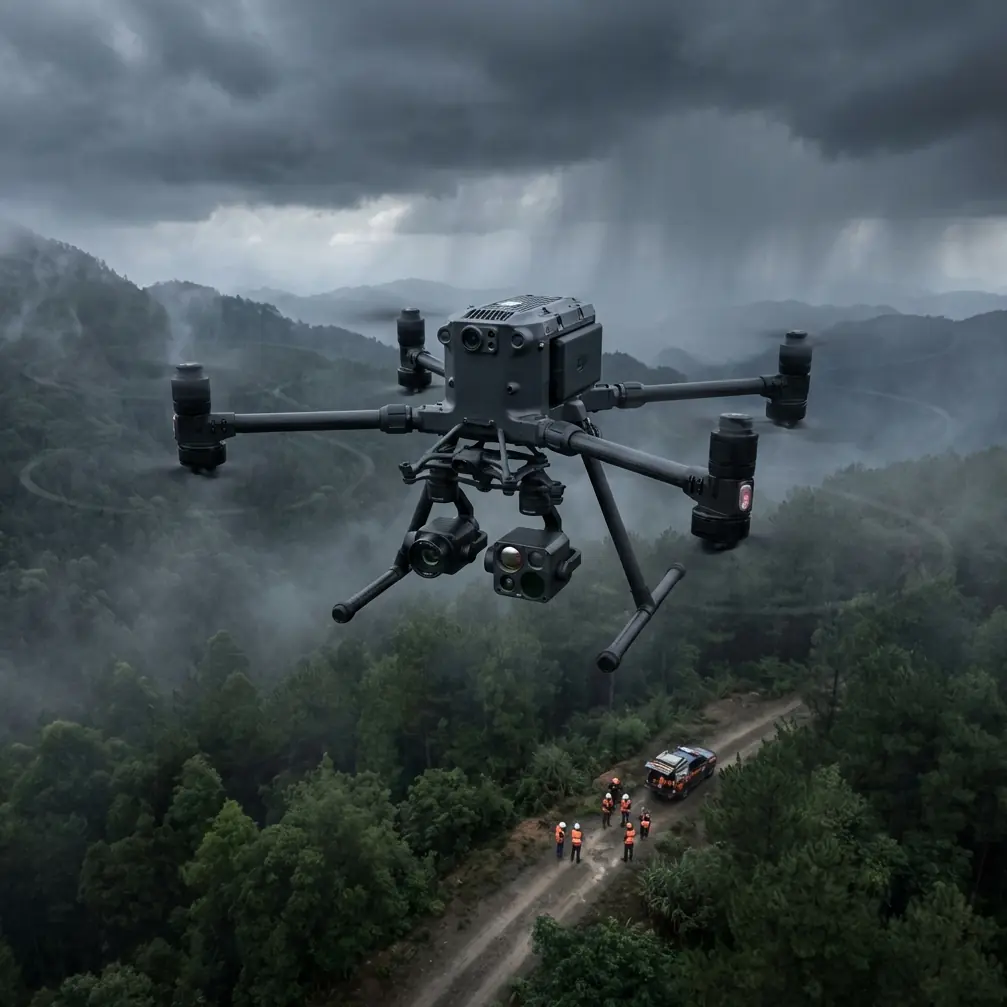
Matrice 400 in Remote Field Capture: What Actually Matters When the Job Site Is Far From Everything
META: Expert field report on using the DJI Matrice 400 for remote mapping, thermal work, and long-range data capture with practical setup and mission tips.
Remote field capture has a way of exposing weak aircraft faster than any spec sheet ever will. A drone can look impressive on paper, then unravel once the truck is two hours behind you, the wind starts moving across open ground, and every battery cycle suddenly carries more consequence. That is the lens through which the Matrice 400 deserves to be judged.
For operators working in agriculture, utilities, environmental surveying, or large rural infrastructure, the real question is not whether the aircraft can fly. Plenty of platforms can. The question is whether it can keep data quality high, maintain link stability at distance, and stay practical to operate when your launch point is remote, uneven, and operationally unforgiving.
That is where the Matrice 400 stands apart. It is not just a heavy-lift enterprise airframe with long-endurance ambitions. In field use, its value comes from how several systems work together: resilient transmission, payload flexibility, battery logic designed for continuity, and security layers that matter when sensitive site imagery is leaving the edge of a network.
Why remote capture changes the evaluation
Capturing fields in remote areas is rarely a single-task mission. On one day, you may need standard RGB orthomosaic coverage for crop-health documentation or topographic planning. On the next, the same team may be asked to identify irrigation anomalies through thermal signature shifts, inspect a remote pump station, and document access routes for civil planning. The airframe that handles those competing requirements without becoming a logistical burden tends to win repeat deployment.
This is why endurance and payload flexibility matter in a more operational sense than a marketing one. If an aircraft can support photogrammetry in the morning and thermal inspection in the afternoon without introducing extra fragility into the workflow, it saves more than time. It protects mission continuity.
The Matrice 400 is built for that style of work. Its design intent is clearly closer to serious field operations than occasional site visits. Against lighter competitors, that difference shows up in two places first: stability under load and mission persistence across a long day. A smaller platform may be easier to throw in the vehicle, but once you start covering broad acreage in patchy connectivity conditions, compact convenience stops being the main metric.
O3 transmission is not just a range story
Many pilots talk about transmission in terms of raw distance, but remote field work makes that a shallow way to look at it. The better measure is whether the downlink remains usable when terrain, vegetation, or sparse infrastructure complicate the environment. O3 transmission earns attention here because its operational value is not abstract. A more stable, cleaner link directly affects the confidence with which you can fly linear corridors, monitor framing, and confirm overlap during mapping passes.
That matters enormously in photogrammetry. If your link degrades enough that you cannot reliably verify image capture behavior or aircraft state, you are not just dealing with pilot discomfort. You are increasing the chances of gaps in coverage, weak reconstruction areas, or an unnecessary repeat flight. In remote fields, a repeat sortie is expensive in the ways operators actually care about: daylight, battery cycles, travel time, and team fatigue.
Compared with older enterprise platforms and many mid-tier competitors, the Matrice 400’s transmission approach supports a more composed workflow. You spend less effort nursing the aircraft and more attention on the mission objective. That distinction becomes obvious when flying broad parcels where the aircraft is physically distant, but the data demands remain exacting.
Thermal signature work benefits from a heavier, steadier platform
Thermal operations in open rural settings are often underestimated. People imagine thermal as point-and-look inspection. In practice, useful thermal data depends on timing, altitude discipline, stable airspeed, and repeatability. If you are trying to identify irrigation leaks, drainage irregularities, stressed vegetation patterns, or heat anomalies around remote equipment, the aircraft’s ability to carry the right payload and hold a reliable flight profile becomes more important than the thermal sensor alone.
This is one of the strongest arguments for the Matrice 400. A larger enterprise aircraft tends to handle variable wind and payload integration better than compact rivals that feel adequate until conditions become less forgiving. Thermal signature interpretation is sensitive to inconsistency. A platform that drifts, struggles under load, or forces compromises in route planning can degrade the usefulness of the collected imagery before analysis even begins.
For field teams that alternate between thermal and RGB workflows, this matters operationally. You are not simply flying a camera. You are preserving comparability between datasets. If the aircraft lets you revisit the same field section under similar parameters and maintain a disciplined capture pattern, your thermal findings become more defensible.
Photogrammetry is won before processing starts
Remote capture professionals sometimes focus too heavily on what happens in software. Stitching, point clouds, and surface models get the attention. But photogrammetry quality is largely decided at the moment of capture. The Matrice 400’s advantage is that it supports disciplined data acquisition in conditions where lesser aircraft tend to produce small errors that snowball later.
One of the most practical examples is how the platform works with GCP-based workflows. Ground control points remain critical when survey confidence matters, especially across large agricultural tracts, rights-of-way, or development corridors where clients expect measurable positional reliability. An aircraft with stable flight behavior and dependable link performance makes it easier to fly repeatable lines, preserve overlap, and maintain the kind of image consistency that strengthens GCP correction downstream.
This is not glamorous, but it is what separates a map that looks good from a map that can support decisions. If your remote field mission is feeding drainage planning, crop intervention, or land management, positional discipline is the whole job.
A well-run Matrice 400 workflow therefore starts before takeoff:
- establish GCP placement with sight lines that suit your planned altitude,
- verify mission geometry for overlap appropriate to terrain and crop texture,
- assess wind direction so your passes work with, not against, exposure consistency,
- and validate transmission quality before committing to a large-area run.
The aircraft helps, but it does not replace fieldcraft. What it does do is give experienced teams a more reliable platform on which good fieldcraft pays off.
Hot-swap batteries change the pace of rural operations
One of the most operationally meaningful details in enterprise drone work is also one of the least glamorous: what happens between flights. In remote capture, battery handling can dictate the rhythm of the entire day. Hot-swap batteries are a serious advantage because they reduce interruption at the point where crews typically lose momentum.
That benefit compounds over a long deployment. If you are documenting scattered field blocks or moving between remote assets, every shutdown, reboot, and reinitialization sequence adds friction. Hot-swap support helps preserve aircraft readiness and shortens the gap between sorties, which is especially useful when light conditions are changing or when thermal windows are narrow.
It also improves planning confidence. A field team can structure missions around target areas rather than around the aircraft’s need for extended ground downtime. Competitor platforms without a seamless battery workflow often look acceptable in short demonstrations. Over a real workday, they feel slower, more interruption-prone, and less suited to high-output field capture.
That is where the Matrice 400 earns its place as a professional tool rather than a premium accessory. The benefit is not dramatic in a brochure sense. It is dramatic when you are trying to finish a remote survey block before weather closes in.
AES-256 is not a footnote for remote clients
Security is often treated like a procurement checkbox until the mission involves sensitive land-use imagery, critical infrastructure, or customer data moving across disconnected environments. Then it becomes central. AES-256 matters because remote operations frequently involve imperfect networks, field laptops, temporary data handoffs, and teams working beyond the comfort of a controlled office environment.
For operators serving utilities, government programs, industrial agriculture, or infrastructure owners, the presence of strong encryption is part of professional credibility. It helps support responsible handling of captured information, particularly when imagery may reveal operational layouts, equipment locations, or land conditions that clients do not want loosely managed.
The Matrice 400’s inclusion of enterprise-grade security features is operationally significant not because it sounds advanced, but because it aligns the aircraft with the expectations of serious deployments. In practical terms, it means a field crew can integrate the platform into more sensitive workflows without treating data protection as an afterthought.
What this platform means for BVLOS-minded operations
BVLOS is one of those terms that gets used too casually. In real operations, it is a regulatory, procedural, and safety framework, not a shortcut to flying farther. Still, for organizations building toward BVLOS-capable workflows, the Matrice 400 fits the profile of an aircraft designed for that trajectory.
Long-range transmission, robust enterprise architecture, and mission endurance are all relevant here. Even when operating strictly within visual line of sight today, many teams are choosing platforms based on whether they can support tomorrow’s more advanced operating concept. Rural corridor inspection, large-acreage monitoring, and distributed asset management all point in that direction.
This does not mean every buyer should pursue BVLOS immediately. It does mean the Matrice 400 is easier to justify for organizations that see remote field capture expanding from simple visual documentation into recurrent, standardized operations across broad areas. The aircraft feels built for scale, not just for occasional flights.
A field-tested setup philosophy
If I were assigning the Matrice 400 to a remote field capture team tomorrow, I would not treat it as a do-everything machine by default. I would treat it as a mission platform that rewards disciplined configuration.
For RGB mapping and photogrammetry:
- use GCPs whenever the output supports planning, engineering, or compliance decisions,
- prioritize overlap consistency over aggressive area coverage,
- and avoid treating transmission confidence as permission to get lazy about mission monitoring.
For thermal work:
- fly at a repeatable time window,
- document ambient conditions,
- and use the aircraft’s stable profile to build comparable datasets instead of one-off observations.
For long field days:
- lean hard on the hot-swap battery workflow,
- pre-stage charge management in the vehicle,
- and keep mission segmentation tight enough that each sortie produces a complete, reviewable dataset.
For teams coordinating remote jobs, a quick pre-deployment checklist shared through this field support channel can be more useful than another generic SOP PDF. The important thing is consistency: same naming structure, same battery logging habit, same capture logic, every time.
Where the Matrice 400 beats lighter competitors
The easiest way to explain the Matrice 400’s edge is this: lighter competitors often feel efficient right up until the mission becomes complex. They are fine for basic imaging and short-duration tasks. They become less convincing when you ask one aircraft to support long-range situational confidence, payload flexibility, thermal relevance, secure data handling, and a long workday with minimal interruption.
The Matrice 400 is stronger precisely where remote field capture becomes demanding. O3 transmission supports link confidence. Hot-swap batteries preserve operational tempo. AES-256 better fits sensitive deployments. And the aircraft’s enterprise posture makes it a more credible choice for teams building toward repeatable, BVLOS-adjacent workflows.
That does not mean it is the right aircraft for every operator. If your missions are short, close, and visually simple, a smaller system may be enough. But if your work involves broad remote acreage, layered data requirements, and the need to trust the aircraft over a full day in the field, the Matrice 400 belongs in a different class of decision.
That is the real story. Not hype. Not raw specs detached from reality. Just the practical truth that some aircraft reduce friction when conditions are hard, distances are long, and the captured data actually needs to stand up to scrutiny.
Ready for your own Matrice 400? Contact our team for expert consultation.