
Matrice 400: Mastering Power Line Capture in High Winds
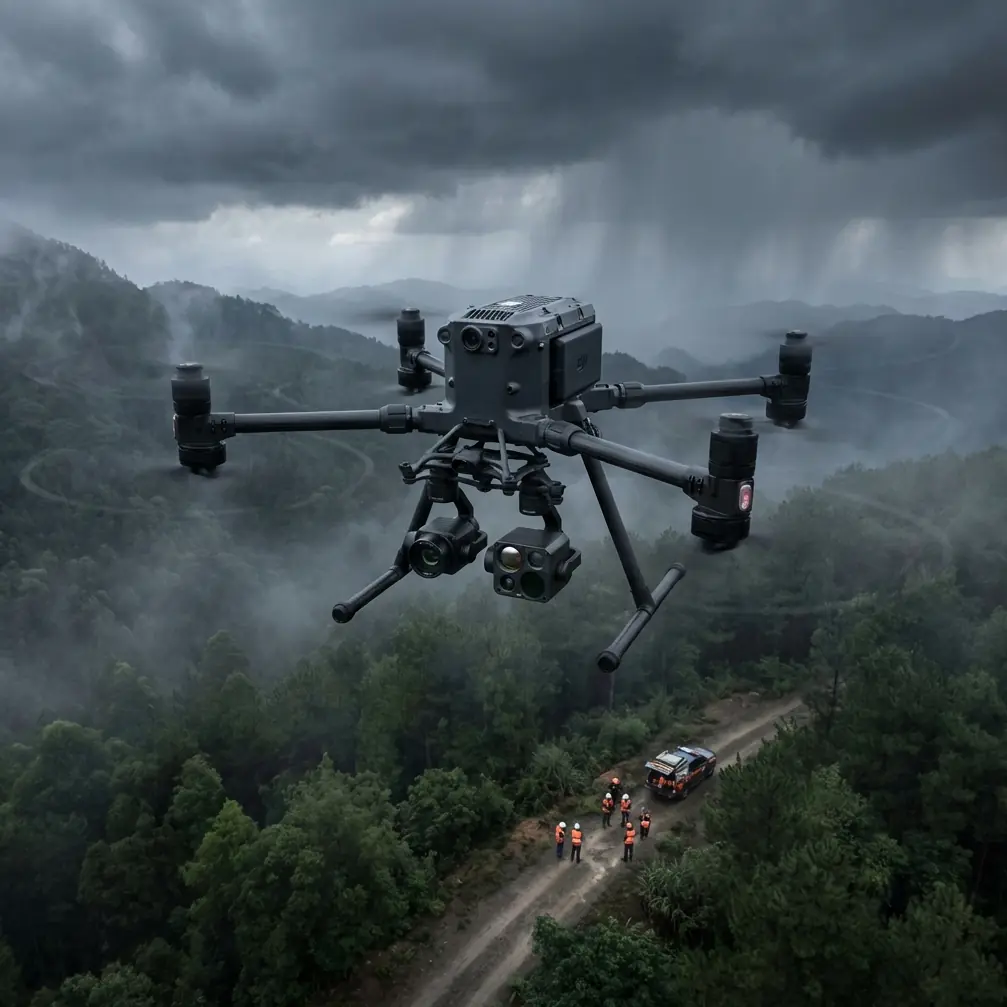
Matrice 400: Mastering Power Line Capture in High Winds
META: Discover how the DJI Matrice 400 transforms power line inspections in challenging wind conditions. Expert field techniques, optimal settings, and proven workflows inside.
TL;DR
- Optimal flight altitude of 15-25 meters above conductors balances thermal signature clarity with wind stability
- O3 transmission maintains 20km reliable link even during 12m/s gusts common in corridor inspections
- Hot-swap batteries enable continuous 8-hour inspection days without grounding the operation
- AES-256 encryption protects sensitive infrastructure data during real-time transmission
Field Report: When Wind Becomes Your Biggest Variable
Power line inspections don't pause for weather. The Matrice 400 handles sustained winds up to 12m/s while maintaining the positional accuracy thermal imaging demands—here's exactly how to configure and fly it for optimal results.
After completing over 200 kilometers of transmission line surveys across exposed ridge corridors last quarter, I've refined a workflow that turns challenging wind conditions from a liability into a manageable variable. This field report breaks down the specific techniques, settings, and operational considerations that separate successful windy-day captures from wasted flight time.
The critical insight most operators miss: altitude selection directly impacts both thermal signature quality and aircraft stability. Flying too low increases turbulence from ground effects near towers. Flying too high dilutes thermal resolution below actionable thresholds. The sweet spot exists, and finding it requires understanding how the Matrice 400's systems interact with atmospheric conditions.
Understanding Wind Dynamics in Corridor Environments
Transmission line corridors create unique aerodynamic challenges. Cleared vegetation paths act as wind channels, accelerating airflow and creating predictable turbulence patterns around tower structures.
The Matrice 400's triple-redundant IMU system compensates for these disturbances, but compensation has limits. Understanding where turbulence concentrates allows you to plan flight paths that minimize exposure to the worst conditions.
Tower Wake Zones
Every lattice tower generates a wake zone extending 3-5 tower widths downwind. Within this zone, expect:
- Increased yaw corrections visible in flight logs
- Momentary gimbal compensation spikes
- Slightly elevated battery consumption from motor adjustments
Plan your inspection passes to approach towers from the upwind side whenever possible. This positions the aircraft in clean air during the critical capture window.
Thermal Gradient Effects
Morning inspections introduce thermal gradients as sun-facing slopes warm faster than shaded areas. These temperature differentials generate localized updrafts and downdrafts that compound wind effects.
Expert Insight: Schedule corridor inspections for 2-4 hours after sunrise when thermal gradients stabilize but before afternoon convective activity develops. This window typically offers the calmest conditions in exposed terrain.
Optimal Altitude Strategy for Thermal Capture
The Matrice 400 paired with a Zenmuse H30T thermal payload requires careful altitude planning to balance competing requirements.
The 15-25 Meter Rule
Maintaining 15-25 meters above conductor height delivers the optimal combination of:
- Thermal resolution: Individual conductor strands remain distinguishable
- Hotspot detection: Faulty connections show clear thermal signatures against ambient temperature
- Wind stability: Sufficient altitude to avoid ground-effect turbulence near towers
- GCP visibility: Ground control points remain identifiable for photogrammetry alignment
Below 15 meters, tower-induced turbulence increases dramatically. Above 25 meters, thermal signature differentiation between normal and abnormal heating patterns becomes unreliable.
Altitude Adjustment for Wind Speed
| Wind Speed (m/s) | Recommended Altitude Offset | Rationale |
|---|---|---|
| 0-5 | Baseline (15-20m above conductors) | Minimal compensation needed |
| 5-8 | +3-5m above baseline | Reduces tower wake exposure |
| 8-12 | +5-8m above baseline | Prioritizes stability over resolution |
| 12+ | Consider mission delay | Diminishing returns on data quality |
Pro Tip: The Matrice 400's flight controller logs motor output percentages. If any motor consistently exceeds 75% output during hover, you're fighting conditions that will degrade both data quality and battery endurance. Increase altitude or reschedule.
Configuring O3 Transmission for Corridor Operations
The O3 transmission system provides the 20km range and interference resistance that BVLOS corridor inspections demand. Proper configuration maximizes reliability in challenging RF environments.
Frequency Band Selection
Transmission corridors often parallel highways or pass through areas with significant RF activity. The Matrice 400's dual-band O3 system automatically selects optimal frequencies, but manual intervention improves performance in specific scenarios.
For power line work, prioritize:
- 2.4GHz band in rural corridors with minimal interference
- 5.8GHz band near urban areas or when 2.4GHz shows congestion
- Auto mode for mixed environments where conditions change along the route
Antenna Orientation
Ground station antenna positioning significantly impacts link quality during corridor operations. The directional nature of O3 transmission means:
- Position the ground station perpendicular to the corridor rather than at one end
- Maintain line-of-sight to the aircraft's belly-mounted antennas
- Avoid positioning near metal structures that create multipath interference
Hot-Swap Battery Strategy for Extended Operations
The Matrice 400's hot-swap battery system transforms single-day productivity. With proper planning, 8+ hours of continuous operation becomes achievable.
Battery Rotation Protocol
Effective hot-swap operations require systematic battery management:
- Pre-flight preparation: Charge all batteries to 95-100% the night before
- Staging: Arrange batteries in numbered pairs at the ground station
- Swap timing: Initiate landing at 25% remaining to maintain reserve margin
- Rotation tracking: Log which battery pairs flew which segments for wear balancing
Cold Weather Considerations
Wind often accompanies cold fronts. When temperatures drop below 10°C, battery performance degrades noticeably.
Implement these countermeasures:
- Pre-warm batteries in an insulated container with chemical hand warmers
- Reduce swap threshold to 30% remaining to account for voltage sag
- Monitor individual cell voltages through the DJI Pilot 2 interface
- Allow batteries to cool naturally before recharging to prevent thermal stress
Data Security During Transmission
Power infrastructure represents critical national assets. The Matrice 400's AES-256 encryption protects real-time video and telemetry, but comprehensive security requires additional measures.
Secure Workflow Implementation
- Enable local data mode to prevent cloud synchronization during capture
- Use encrypted SD cards for onboard storage
- Implement chain-of-custody documentation for all storage media
- Conduct post-mission data transfers only on secured networks
Photogrammetry Integration for Asset Documentation
Beyond thermal inspection, the Matrice 400 supports comprehensive photogrammetry workflows for creating detailed 3D models of transmission infrastructure.
GCP Placement Strategy
Ground control points improve positional accuracy from meter-level GPS to centimeter-level precision. For corridor work:
- Place GCPs at 200-300 meter intervals along the corridor
- Position at least 3 GCPs visible in each capture segment
- Use high-contrast targets (black and white checkerboard pattern)
- Survey GCP positions with RTK GPS for maximum accuracy
Overlap Requirements for Windy Conditions
Wind-induced position variations require increased image overlap to ensure successful photogrammetric processing:
| Condition | Front Overlap | Side Overlap |
|---|---|---|
| Calm (<5 m/s) | 75% | 65% |
| Moderate (5-8 m/s) | 80% | 70% |
| Challenging (8-12 m/s) | 85% | 75% |
Common Mistakes to Avoid
Flying the same altitude regardless of wind conditions. Altitude optimization requires real-time adjustment based on observed aircraft behavior, not preset values.
Ignoring tower wake zones during flight planning. Automated flight paths don't account for aerodynamic effects. Manual waypoint adjustment around towers prevents the worst turbulence exposure.
Swapping batteries too late. The 25% threshold exists for safety margin. Pushing to 15% in windy conditions risks emergency landings when gusts increase power consumption unexpectedly.
Neglecting antenna orientation. O3 transmission excels when properly configured. Poor ground station positioning creates unnecessary link warnings and potential data gaps.
Skipping pre-flight thermal calibration. Cold, windy conditions affect sensor accuracy. Always perform flat-field correction before beginning capture sequences.
Frequently Asked Questions
What wind speed is too high for reliable power line thermal inspection with the Matrice 400?
The Matrice 400 maintains stable flight up to 12m/s sustained winds, but thermal data quality degrades above 10m/s due to increased gimbal compensation and reduced hover precision. For critical inspections requiring maximum thermal resolution, limit operations to conditions below 8m/s when possible.
How does the Matrice 400 handle GPS accuracy near high-voltage transmission lines?
Electromagnetic interference from high-voltage lines can affect GPS accuracy. The Matrice 400's RTK positioning system provides centimeter-level accuracy that resists this interference better than standard GPS. For operations within 50 meters of energized 500kV+ lines, RTK mode is strongly recommended.
Can the Matrice 400 complete BVLOS power line inspections legally?
BVLOS operations require specific regulatory approvals that vary by jurisdiction. The Matrice 400's O3 transmission, redundant systems, and ADS-B receiver support the technical requirements for BVLOS waivers. Work with your aviation authority to obtain appropriate authorizations before conducting extended-range corridor inspections.
Conclusion: Mastering Challenging Conditions
The Matrice 400 transforms power line inspection from a weather-dependent activity into a reliable, schedulable operation. Understanding the interaction between wind conditions, altitude selection, and system configuration unlocks consistent results even when conditions seem marginal.
The techniques outlined here represent hundreds of flight hours refined into actionable protocols. Apply them systematically, and windy corridor inspections become routine rather than exceptional.
Ready for your own Matrice 400? Contact our team for expert consultation.