
Matrice 400 for Coastal Vineyard Capture
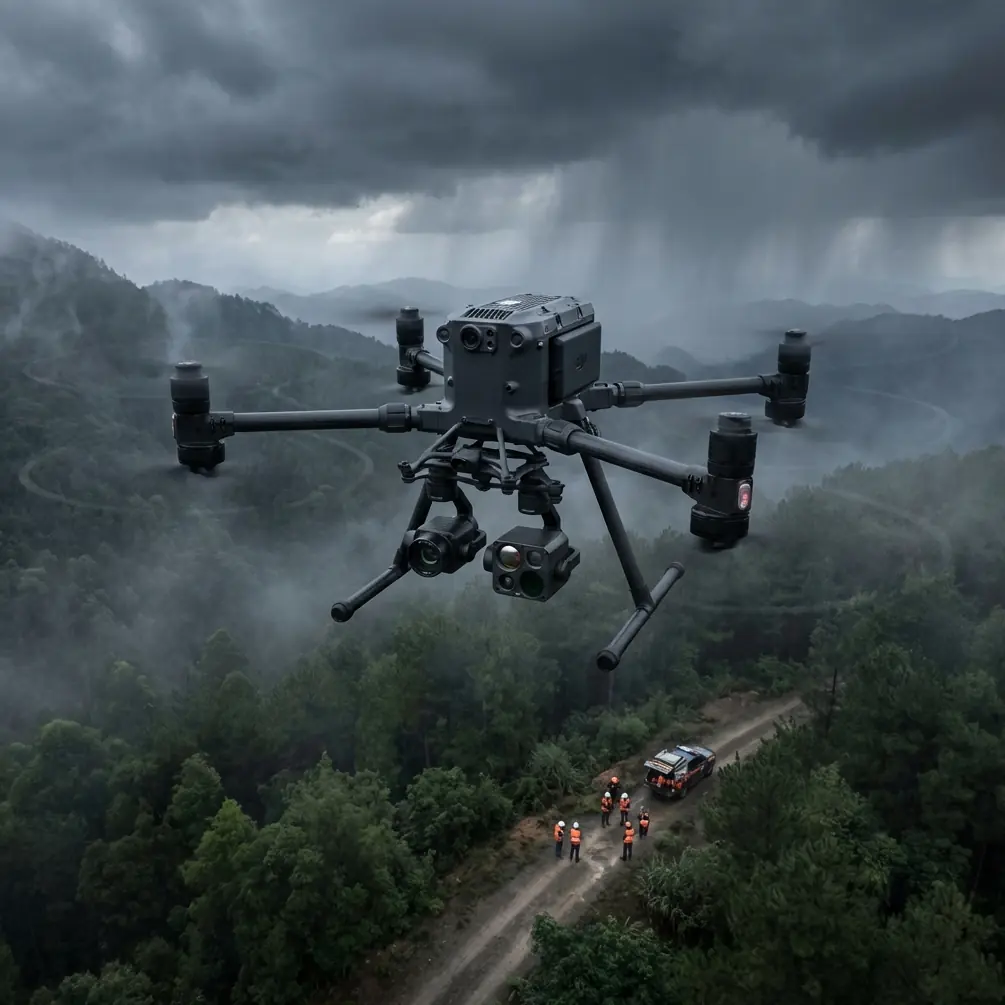
Matrice 400 for Coastal Vineyard Capture: A Structural and Field-Reliability View
META: A technical review of how the Matrice 400 fits coastal vineyard imaging, with a focus on structural durability logic, field-quality reporting discipline, thermal workflows, photogrammetry, and mission continuity.
When people talk about vineyard drone work, they usually jump straight to sensors, orthomosaics, or canopy vigor maps. Useful topics, yes. But along the coast, the real story starts earlier: salt, wind, repeated transport, rushed setup windows, and the kind of tiny faults that only show up after long weeks of field use.
That is why the Matrice 400 deserves a more serious discussion than a feature checklist.
I have worked on coastal vineyard capture projects where the hardest part was not collecting imagery. It was keeping the aircraft dependable across repetitive missions while switching between photogrammetry and thermal signature tasks in changing weather. The drone had to launch early, return quickly, be checked fast, and go back out without introducing uncertainty into the data. In those conditions, platform design and field support discipline matter as much as camera quality.
This is where a useful lens emerges from classic aircraft design practice. One structural design reference highlights that, in detailed design, engineers do much more than size parts. They refine structural parameters using updated loads, complete coordination between structure and systems, finalize load-bearing component configurations, detail connection points, open passages for pipelines or systems, and incorporate maintenance access requirements. That sounds abstract until you apply it to a working drone platform used in vineyards.
For Matrice 400 operators, that principle matters because a serious aircraft is not just a flying sensor mount. It is a system whose utility depends on how well structure, wiring, payload integration, service access, and repair logic have been thought through together. When you are mapping sloped vine rows above a windy coastline, every design decision that improves inspection access or reduces stress concentration around joints has downstream operational value. It can mean faster turnaround after transport, fewer uncertainties during preflight, and better consistency across a season’s worth of flights.
A second detail from the same structural source is even more revealing. It discusses crack growth behavior through the Paris equation, focusing on crack propagation rate, da/dN, and explains that material behavior changes depending on crack size. One cited example compares 7475-T7351 and 7075-T7351 aluminum alloys: 7475-T7351 shows slower crack growth in the small-crack stage, while 7075-T7351 performs better once cracks become larger. That is not vineyard advice on its face. Yet the operational significance is direct.
Coastal drone work is repetitive-load work. Launch, climb, hover, crosswind corrections, landing, packing, vehicle transport, and redeployment. Over time, the challenge is not one dramatic overload event. It is accumulated fatigue and the management of small defects before they become mission-threatening. A platform in the Matrice 400 class is valuable partly because professional users are not buying a toy with occasional utility. They are depending on a machine that must keep structural integrity and serviceability under repeated commercial cycles. The lesson from that aircraft design reference is simple: the difference between “still flying” and “still trustworthy” lies in fatigue thinking, crack-growth tolerance, and inspection-minded design.
That mindset becomes even more relevant in coastal vineyards because corrosion pressure never stays theoretical. The same source explicitly calls corrosion a major factor affecting aircraft safety and structural durability, and notes that improving corrosion resistance through material treatment can be highly effective. For vineyard operators working near sea air, this is not engineering trivia. Salt exposure creeps into connectors, fasteners, interfaces, landing gear joints, and payload mounts. Even if Matrice 400 missions are short, the cumulative environment is hostile. A platform used in this sector should be assessed not just by flight specs, but by how realistically it can be maintained, inspected, and kept reliable after repeated exposure to damp, saline conditions.
This is where my own past challenge comes in.
On one coastal vineyard assignment, we were trying to combine photogrammetry for row reconstruction with thermal signature checks aimed at identifying irrigation irregularities in selected blocks. The site looked ideal on paper. In practice, it was messy. Wind shear near the headlands distorted some flight segments, vehicles tracked dust and moisture into the launch area, and short operational windows forced rapid battery swaps. The data issue was manageable. The reliability issue was harder. We needed a platform that could maintain stable mission logic while supporting frequent field handling and clear maintenance checks between sorties.
The Matrice 400 makes that workflow easier because its value is not only airborne. It is procedural. Features like hot-swap batteries reduce dead time during block-to-block operations, especially when the light window for visible photogrammetry is narrow but the thermal window arrives before or after it. In vineyard practice, that means less interruption between sorties and less pressure to rush restart procedures. When crews rush, they miss things. When the aircraft supports disciplined continuity, data quality improves because mission cadence improves.
Transmission integrity also matters more in vineyards than many people admit. Long rows, terrain undulation, trees, sheds, and coastal haze can complicate command and monitoring. O3 transmission helps preserve confidence in aircraft state and payload view over larger work areas, particularly when you are planning careful line-of-sight operations that may later inform waiver strategies or future BVLOS program planning in suitable regulatory contexts. Add AES-256 for secure data links, and you have a platform architecture that fits commercial operators who care about both operational continuity and client confidentiality. Vineyard maps, thermal anomaly records, irrigation patterns, and yield-related imagery are business-sensitive assets. Secure transmission is not a luxury when the data itself influences field decisions.
Still, good aircraft design only pays off if the field information loop is equally disciplined.
Another reference in the source material focuses on field quality information and makes a point that I wish more drone teams took seriously: field quality data must accurately reflect the real condition of the product in use, and it must not be altered by human bias. It also stresses timeliness. Valuable information loses its value if it is not recorded and fed back quickly. That sounds like something from large-aircraft maintenance culture, but it applies perfectly to Matrice 400 fleet management.
If a vineyard crew notices a recurring gimbal initialization delay after transport, a slight landing gear stiffness in salty mornings, or inconsistent battery seating after dusty field swaps, those observations should not stay informal. They should be logged immediately, with time, place, cause, symptoms, and corrective action. The same source emphasizes completeness of recordkeeping across the full lifecycle, from design and materials to manufacturing, testing, and use. For Matrice 400 operators, the practical version is a simple but rigorous field log: mission date, site conditions, aircraft ID, battery ID, payload used, anomaly observed, whether it affected data collection, and what resolved it.
That discipline is especially useful for coastal vineyard work because many faults first appear as low-grade, intermittent events. The reference even describes field troubleshooting as a critical stage because some faults require repeated checking and testing before the real cause becomes clear. Anyone who has operated professional UAVs in wet, windy agricultural environments knows this pattern. A minor issue seen once at the launch area may be dismissed. Seen three times, always after a humid morning and always on the same airframe or payload setup, it becomes actionable. The point is not bureaucracy. It is protecting mission reliability before a pattern becomes downtime.
I recommend thinking about Matrice 400 deployment in vineyards through three connected layers.
First, the capture layer. This is where photogrammetry, GCP planning, overlap settings, terrain-following logic, and thermal signature collection live. In coastal blocks with elevation change, careful GCP placement remains essential when the map will support drainage analysis, row spacing verification, erosion tracking, or replant planning. The aircraft can carry the mission, but the geometry still depends on disciplined survey control. Thermal work adds another wrinkle: canopy temperature interpretation is only useful when timing, altitude, wind conditions, and radiometric consistency are managed properly.
Second, the platform layer. Here, Matrice 400 stands out when mission continuity matters. Hot-swap batteries keep block transitions efficient. O3 transmission supports stable situational awareness across larger parcels. AES-256 aligns with enterprise handling of sensitive agricultural data. These are not isolated features. Together they reduce friction in real-world capture sequences.
Third, the reliability layer. This is where the aircraft-design references become surprisingly relevant. A professional drone earns trust when its design reflects maintenance access, structural coordination, and tolerance to fatigue and environmental stress. And it stays trustworthy when operators capture field quality information accurately and fast. That combination is what separates a one-off successful flight from a repeatable vineyard program.
For teams building a coastal workflow around the Matrice 400, I would suggest a few practical habits:
Use separate preflight and postflight checks for salt-exposed sites. Preflight is about readiness; postflight is about preserving structural and electrical health after exposure.
Tie each thermal mission to a documented environmental snapshot. Wind, humidity, and time after sunrise affect interpretation more than many newcomers expect.
Do not treat battery change speed as the same thing as operational efficiency. Hot-swap capability is valuable only when paired with consistent inspection during swaps.
Maintain aircraft-specific anomaly logs. If you run multiple units, never lump them together. Reliability patterns often live at the airframe level.
Review transmission behavior by location. Coastal topography can create repeatable weak spots. O3 performance is strong, but site-specific habits still matter.
If you need a field-ready workflow discussion for vineyard mapping or thermal planning, it often helps to compare mission design before choosing payload order or control points. You can reach out here for that kind of practical conversation: message Dr. Lisa Wang’s team.
So, is the Matrice 400 a good fit for capturing vineyards in coastal conditions? Yes, but not for the simplistic reasons usually given.
Its real strength is that it fits a professional operating philosophy. It supports advanced payload work, but it also rewards teams that think like aircraft operators rather than gadget users. The source material behind this discussion makes that clear in an indirect but powerful way. Detailed structural design is about more than strength; it is about load refinement, connection details, system coordination, and maintenance access. Field reliability is about more than fixing faults; it depends on accurate, timely, complete reporting from the place where the aircraft actually works.
Put those ideas together and the Matrice 400 becomes easier to evaluate. For coastal vineyards, the right question is not “Can it capture the site?” Most professional aircraft can. The better question is whether it can keep capturing the site, repeatedly, cleanly, and with a maintenance logic strong enough to sustain seasonal operations.
That is the standard commercial vineyard teams should use.
Ready for your own Matrice 400? Contact our team for expert consultation.