
Matrice 400 for Wildlife Work in Extreme Temperatures
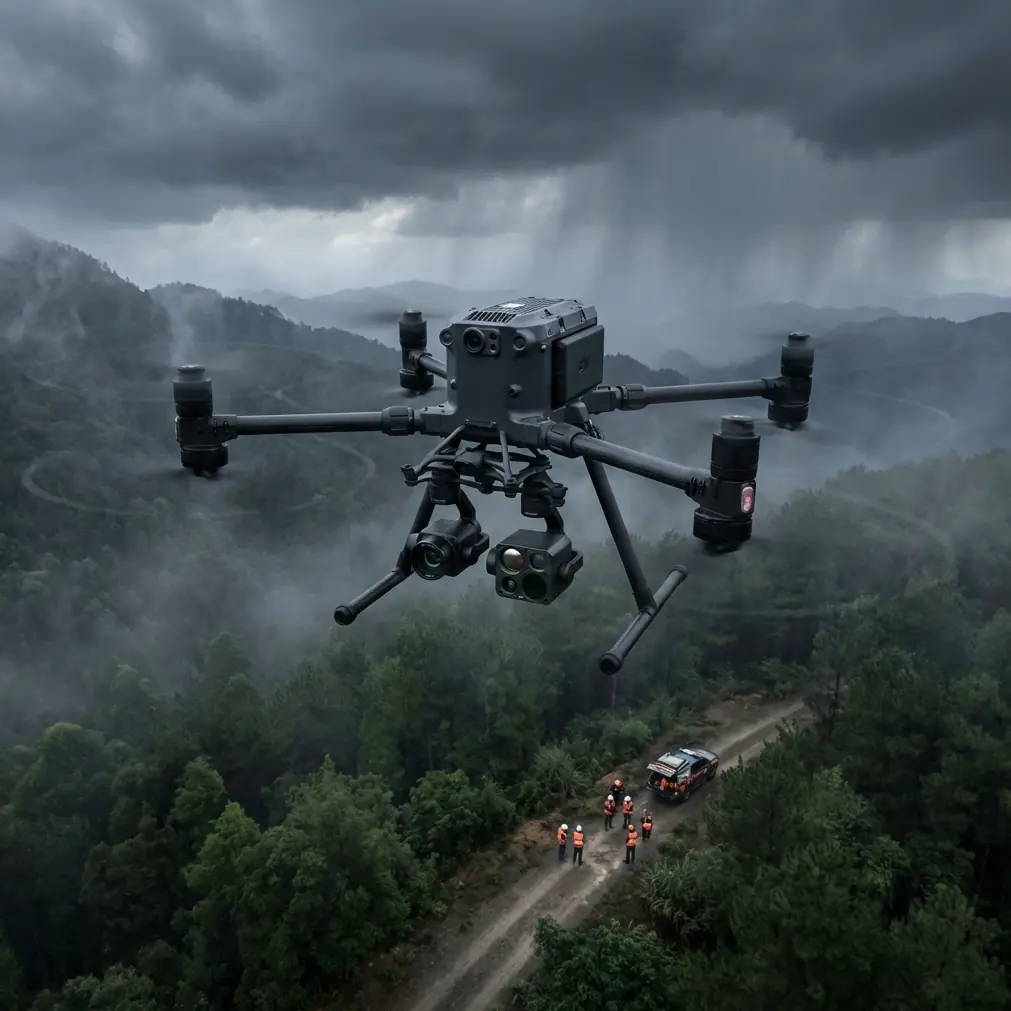
Matrice 400 for Wildlife Work in Extreme Temperatures: A Field Case Study on Electrical Reliability and Battery Discipline
META: A field-based Matrice 400 case study for wildlife capture in extreme temperatures, covering battery management, wiring reliability, connectors, thermal workflow, and mission planning.
I’ve spent enough time around aircraft systems to know that wildlife operations rarely fail for dramatic reasons. Most problems start small. A marginal connector. A cable run that stiffens in cold weather. A battery swap done too late, or too casually, because the crew is focused on the animal and not the aircraft.
That reality matters when the platform is a Matrice 400 and the assignment is wildlife capture or monitoring in extreme temperatures. The drone may be carrying thermal payloads, mapping sensors, or optical systems to identify movement, body heat, terrain breaks, and safe approach corridors. The mission can involve long observation periods, repeated repositioning, and pressure to keep aircraft downtime low while conditions keep getting worse.
For this kind of work, the real story is not just flight performance. It is system integrity.
The overlooked side of a Matrice 400 wildlife mission
People like to talk about thermal signature detection, O3 transmission stability, encrypted links such as AES-256, and whether a platform is suitable for extended-range or even BVLOS-style workflows where regulations allow. Those are valid topics. But in extreme heat or cold, the practical limit is often the electrical chain connecting battery, airframe, sensor, and operator confidence.
That sounds mundane until you’re on site before dawn, trying to relocate a sedated animal by thermal contrast, while wind picks up across an open valley and your batteries are losing efficiency faster than the planning sheet assumed.
In one cold-weather wildlife deployment I advised on, the crew did almost everything right. They had a disciplined launch zone, a dedicated thermal observer, and a photogrammetry plan to build a quick terrain reference with GCP-supported control points for later analysis. What nearly tripped them up was not navigation. It was how the cold changed their handling of batteries and cable interfaces between sorties.
That is where aerospace material and standards thinking becomes surprisingly relevant to a Matrice 400 operation.
Why wire and connector details matter more in extreme temperatures
The reference material behind this discussion comes from aircraft design data, not drone marketing copy. That is useful because it forces us to think in terms of materials, conductor behavior, connection integrity, and temperature tolerance.
One document details aerospace finished wire types such as M22759/16, with conductor and resistance data by gauge. For example, the extract lists M22759/16-10 with a resistance of 1.26 ohms per 1000 ft at 20°C (68°F) and a weight of 35.1 lb per 1000 ft. It also lists M22759/16-12 at 2.02 ohms per 1000 ft, and M22759/16-14 at 3.06 ohms per 1000 ft.
Those numbers are not there to make a wildlife biologist into an airframe engineer. They remind us of something operationally significant: electrical losses and physical cable properties are inseparable from temperature stress.
On a Matrice 400 configured for thermal wildlife work, every power and data path has consequences. Even when the aircraft itself uses tightly integrated factory systems, your broader field kit still depends on wiring quality and connector reliability across chargers, mobile power setups, payload support gear, relay equipment, and sometimes field shelters or vehicle-mounted command stations.
Higher resistance means more voltage loss and more heat sensitivity in the wrong places. In cold weather, crews often focus only on battery chemistry. They should also think about cable behavior, terminal security, and whether accessory power leads are appropriately spec’d for repeated field use. In heat, resistance-related inefficiencies can stack with elevated ambient temperatures and contribute to unstable charging or inconsistent payload support performance.
The second reference document points to another issue that is easy to underestimate: standards for electrical connectors, terminals, protective caps, optical cable connection elements, and O-ring sealing ranges. One extract notes O-ring usage temperatures from -65°F to 250°F, with another line extending to 300°F for a related standard context. That broad range is a clue. In aviation environments, component selection assumes that seals, connector interfaces, and protective hardware must keep performing across large thermal swings.
For wildlife work with the Matrice 400, that translates into a simple field truth: if moisture, dust, or temperature cycling starts degrading your connector surfaces, your mission reliability drops before you see an outright failure.
A battery management tip that actually changes outcomes
Here’s the field habit I recommend to every Matrice 400 crew working in extreme temperatures:
Treat battery swaps as a thermal event, not just an energy event.
That means the crew should never judge batteries only by state of charge. They should log and manage them by temperature exposure history, time since warming or cooling stabilization, and how hard the previous sortie pulled current.
In cold conditions, the common mistake is to keep spare batteries in a vehicle or case that is “not too cold” and assume that is enough. It often isn’t. A battery can show an acceptable percentage and still sag under load more sharply than expected after takeoff. That sag may not trigger an immediate emergency, but it can shrink your effective reposition window right when the thermal operator needs a few more minutes to confirm the target animal’s location.
My preferred workflow is straightforward:
- Separate batteries into ready, recovering, and do not launch yet groups.
- After landing, mark not just remaining charge, but whether the battery came back warm, neutral, or cold-soaked.
- In cold weather, avoid rotating a battery back into service simply because hot-swap capability makes turnaround easy.
- Give each pack enough time to stabilize in the protected environment you’ve established, whether that is an insulated field case or climate-managed vehicle station.
Hot-swap batteries are a major advantage on a platform like the Matrice 400 because they reduce mission interruption. But the convenience can encourage crews to cycle packs too aggressively. In wildlife operations, where hover time and sensor continuity matter, that can erode the safety margin without anybody noticing until the aircraft starts returning earlier than planned.
The inverse applies in hot weather. Packs fresh off a demanding flight should not be rushed back into another mission just because they still look healthy. Heat accumulation is sneaky. You may complete the sortie, but repeated exposure can reduce consistency across the day and complicate charger behavior.
Thermal wildlife capture is not only about finding the animal
Thermal signature work changes with ambient temperature. In severe cold, body heat contrast can improve target detection, but batteries, cables, and plastic interface components are under more stress. In extreme heat, the drone may be mechanically comfortable enough, but the thermal scene becomes harder to interpret because ground and rock surfaces retain heat in confusing ways.
This is where the Matrice 400’s value emerges less as a generic “powerful drone” and more as a mission node that supports several workflows at once.
A practical wildlife capture team may use:
- thermal imaging for animal location and movement confirmation,
- a daylight camera for route assessment and team coordination,
- fast terrain modeling through photogrammetry,
- and secure long-range communications support through systems aligned with O3 transmission expectations.
But none of those layers work cleanly if the aircraft or field kit develops avoidable electrical instability. That is why connector discipline matters. The standards-based reference to electrical connection components, terminals, and protective caps is more than engineering trivia. In the field, every uncapped interface exposed to dust, frost, or condensation is an invitation for intermittent faults.
When crews ask why one setup seems “temperamental” in harsh weather while another remains predictable, the answer is often buried in small handling details: clean caps, dry interfaces, strain relief, and never forcing cold-stiffened cables into awkward bends.
What this means for Matrice 400 mission planning
If your Matrice 400 is supporting wildlife work in extreme conditions, plan the mission around three layers rather than one.
1. Airframe endurance
This is the obvious layer: route, hover reserve, return profile, wind margin, and payload impact.
2. Sensor objective
Know whether the sortie is for locating, tracking, documenting, or mapping. Thermal search flights should be flown differently from photogrammetry runs tied to GCP-based outputs.
3. Electrical continuity
This is the layer many teams leave implicit. Don’t.
Build checklists that include:
- battery temperature status before launch,
- visual inspection of payload and charging cables,
- confirmation that connector caps were used during transport,
- terminal cleanliness,
- and a rule for pulling any lead or accessory cable that has become stiff, cracked, or intermittently loose.
The aerospace wire tables reinforce why this matters. Cable characteristics like resistance, diameter, and weight are tradeoffs. A conductor sized incorrectly for its role may still function in mild conditions and then become the weak link under thermal stress. Even if your Matrice 400 itself is factory-optimized, the rest of your field support ecosystem rarely is unless you make it so.
A real-world workflow that works better
For wildlife capture support, I like a two-aircraft logic even when only one Matrice 400 is flying.
The aircraft handles:
- primary thermal search,
- visual confirmation,
- and terrain awareness.
The ground team handles:
- battery thermal stewardship,
- charging rotation,
- connector protection,
- mission logging,
- and map updates.
That division sounds basic, but it prevents a common failure mode: the pilot becoming the default manager of every technical variable. In extreme temperatures, that is too much cognitive load.
One of the best teams I’ve worked with designated a single crew member as “energy and interfaces.” That person did not fly. They tracked pack history, checked every connection before handoff, and kept protective covers on anything not actively in use. Their aircraft availability across a long, cold operational window was markedly better than teams with more casual swap procedures.
If you are building out that kind of field discipline and want a direct line for discussing setup details, mission fit, or payload planning, you can message a Matrice 400 specialist here.
Where photogrammetry fits into wildlife operations
At first glance, photogrammetry may seem secondary when the immediate task is finding animals by heat signature. In practice, it becomes more valuable after the first detection.
A Matrice 400 crew can use a quick mapping pass to establish terrain models, access routes, water boundaries, brush density zones, and safe team movement corridors. Add well-managed GCP references where appropriate, and the output becomes more than a pretty map. It becomes a planning layer for retrieval, veterinary access, habitat analysis, and repeatable monitoring.
Extreme temperatures raise the stakes here too. Teams moving on foot in snow, mud, or heat-stressed terrain benefit from accurate surface context. If the aircraft can provide both thermal search and mapping support in the same operational window, the mission becomes safer and more efficient.
Again, the hidden constraint is electrical reliability. Mapping sorties are data-heavy and often repetitive. A small connector problem may not show up during a quick visual flight but can derail a longer capture-and-process workflow.
The bigger lesson from the reference material
The documents provided are dense and technical, but they point to a useful mindset for anyone serious about the Matrice 400 in environmental fieldwork.
One reference gives hard conductor data such as 1.26 ohms per 1000 ft at 20°C for one aerospace wire variant and 3.06 ohms per 1000 ft for a smaller gauge example. Another highlights standards categories for electrical connectors, terminals, protective electrical caps, optical connection elements, and seal temperature ranges down to -65°F.
Operationally, those details say this:
A mission in extreme temperatures is won by respecting the boring components.
Not just the aircraft. Not just the payload. The interfaces.
If you are relying on a Matrice 400 to support wildlife capture, relocation, or monitoring, don’t reduce readiness to battery percentage and signal bars. Build your process around temperature-aware battery rotation, connector hygiene, and field support hardware that behaves predictably when the environment stops being forgiving.
That is what separates a drone that merely flies from a system that stays useful through the full mission cycle.
Ready for your own Matrice 400? Contact our team for expert consultation.