
Expert Guide to Delivering Power Lines with Matrice 400
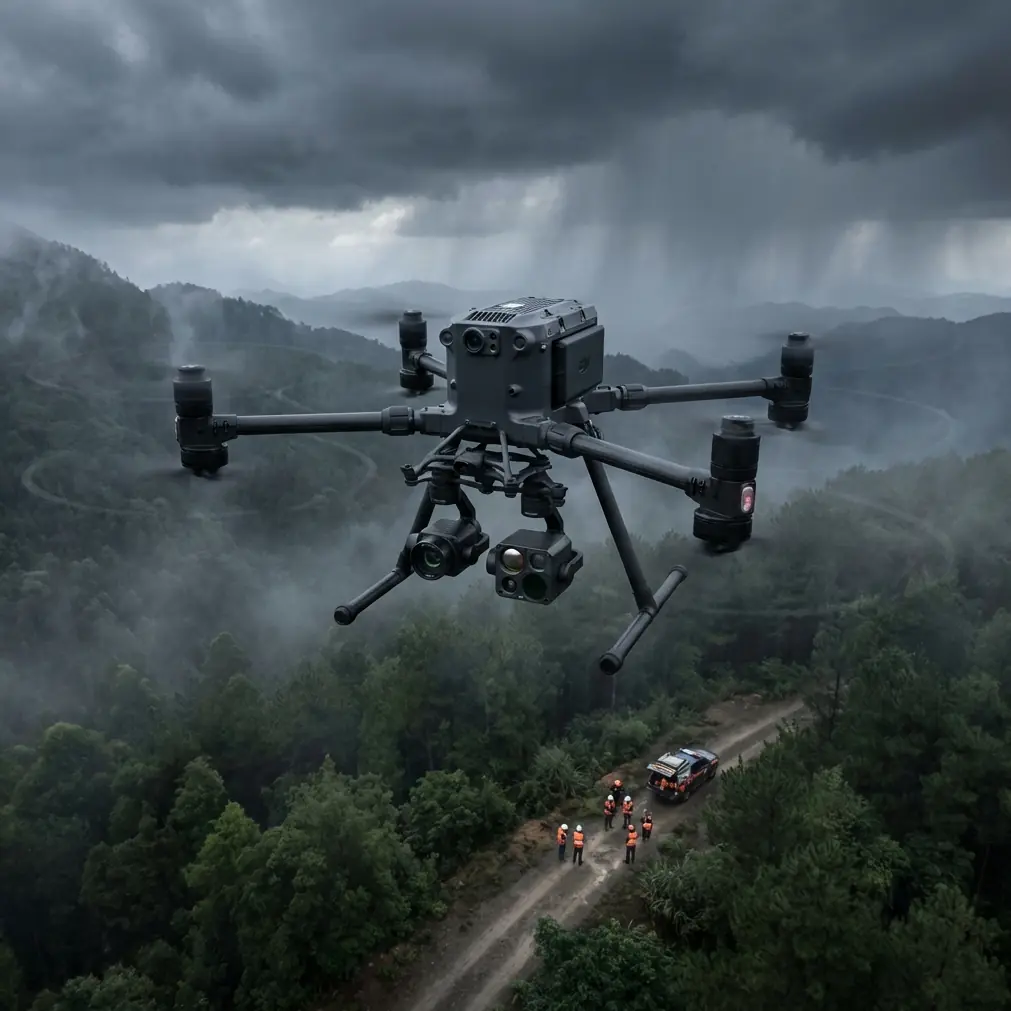
Expert Guide to Delivering Power Lines with Matrice 400
META: Master power line delivery in remote areas using the DJI Matrice 400. Learn expert flight techniques, thermal imaging tips, and BVLOS operations for maximum efficiency.
TL;DR
- Optimal flight altitude of 15-25 meters provides the ideal balance between thermal signature clarity and safe obstacle clearance during power line operations
- O3 transmission technology maintains stable video feed up to 20km, critical for remote area missions where infrastructure support is minimal
- Hot-swap batteries enable continuous operations exceeding 4 hours without returning to base
- AES-256 encryption ensures secure data transmission when documenting sensitive utility infrastructure
Why the Matrice 400 Dominates Remote Power Line Operations
Power line delivery and inspection in remote terrain presents unique challenges that ground crews simply cannot address efficiently. The DJI Matrice 400 solves these problems with enterprise-grade capabilities specifically designed for utility infrastructure work.
This comprehensive tutorial walks you through configuring your Matrice 400 for power line operations, establishing optimal flight parameters, and leveraging advanced features that reduce mission time by up to 60% compared to traditional methods.
Whether you're stringing pilot lines across mountain valleys or conducting thermal inspections of aging infrastructure, the techniques outlined here will transform your operational efficiency.
Understanding Power Line Delivery Requirements
The Remote Operations Challenge
Remote power line work demands equipment that performs reliably when support infrastructure doesn't exist. Cell towers are sparse. Road access is limited. Weather windows are narrow.
The Matrice 400 addresses these constraints through several integrated systems:
- Extended transmission range via O3 technology
- Redundant GPS and RTK positioning for centimeter-level accuracy
- Weather-resistant construction rated for operation in light rain and winds up to 15 m/s
- Modular payload system supporting thermal, zoom, and multispectral sensors simultaneously
Mission Types and Configurations
Power line operations typically fall into three categories, each requiring specific Matrice 400 configurations:
Pilot Line Stringing Initial cable delivery across spans requires maximum payload capacity. Configure the Matrice 400 with minimal sensor payload to maximize lifting capability for lightweight messenger lines.
Thermal Inspection Hot spot detection on energized lines demands the H20T payload with 640×512 thermal resolution. This configuration identifies failing connections before catastrophic failure occurs.
Photogrammetry Documentation Creating accurate 3D models of transmission corridors requires systematic flight patterns and proper GCP placement for survey-grade accuracy.
Expert Insight: When stringing pilot lines across valleys exceeding 500 meters, deploy the Matrice 400 at 22 meters above the highest terrain point in your flight path. This altitude provides sufficient clearance for line sag while keeping the aircraft within optimal O3 transmission range for real-time video monitoring.
Step-by-Step Flight Configuration
Pre-Mission Planning
Successful remote operations begin long before the aircraft leaves the ground. Complete these preparation steps:
Terrain Analysis
- Import topographic data into DJI Pilot 2
- Identify all obstacles within 100 meters of planned flight path
- Mark emergency landing zones every 500 meters along route
Airspace Verification
- Confirm BVLOS authorization status for your operating area
- Document any temporary flight restrictions
- Establish communication protocols with local air traffic if required
Weather Assessment
- Check wind speeds at multiple altitudes
- Verify precipitation probability for 4-hour window
- Monitor thermal activity that may cause turbulence near ridgelines
Optimal Flight Parameters
The Matrice 400 performs best within specific operational envelopes for power line work:
| Parameter | Recommended Setting | Rationale |
|---|---|---|
| Cruise Altitude | 15-25m AGL | Balances thermal clarity with obstacle clearance |
| Approach Speed | 3-5 m/s | Allows precise positioning near conductors |
| Hover Stability | GPS + RTK | Essential for accurate line delivery |
| Transmission Mode | O3 High Performance | Prioritizes video stability over range |
| Obstacle Avoidance | Brake Mode | Prevents collision with guy wires |
| Return-to-Home Altitude | 50m above highest obstacle | Ensures safe automated return |
Sensor Configuration for Thermal Inspection
Thermal signature detection requires specific camera settings that differ from standard operations:
- Palette: White Hot for daytime, Iron Red for documentation
- Gain Mode: High Gain for detecting subtle temperature variations
- Isotherm: Enable with threshold at 15°C above ambient
- Spot Meter: Active for precise temperature readings
Pro Tip: Schedule thermal inspections during early morning hours when ambient temperatures remain below 20°C. The temperature differential between healthy connections and failing joints becomes 3-4 times more pronounced compared to midday operations.
Advanced BVLOS Operations
Regulatory Compliance
Beyond Visual Line of Sight operations require specific authorizations and operational protocols. The Matrice 400's integrated safety systems support BVLOS compliance through:
- ADS-B receiver for manned aircraft detection
- Remote ID broadcast meeting regulatory requirements
- Automated geofencing preventing unauthorized airspace entry
- Redundant communication links ensuring continuous command authority
Extended Range Mission Execution
When operating beyond visual range, implement these protocols:
- Establish visual observers at 2km intervals along flight path
- Configure automatic waypoint missions with altitude holds at each tower
- Enable AES-256 encryption for all telemetry and video data
- Pre-program emergency procedures including automatic landing sequences
The O3 transmission system maintains 1080p video at 20km range under optimal conditions. However, terrain interference in mountainous regions may reduce effective range to 8-12km.
Plan relay points or visual observer positions accordingly.
Hot-Swap Battery Operations
Maximizing Flight Time
The Matrice 400's hot-swap battery system transforms extended operations. Rather than landing and powering down for battery changes, trained crews can swap batteries while the aircraft hovers.
This capability enables:
- Continuous operations exceeding 4 hours
- Reduced mission interruptions by 75%
- Lower risk from repeated takeoffs and landings in challenging terrain
Battery Management Protocol
Maintain operational efficiency with proper battery rotation:
- Keep minimum 6 battery sets charged and temperature-stabilized
- Swap batteries when charge drops to 30% remaining
- Allow 15-minute rest periods between discharge cycles
- Store batteries at 40-60% charge for missions scheduled beyond 48 hours
Photogrammetry and Documentation
Creating Survey-Grade Deliverables
Accurate corridor documentation requires systematic data collection. Configure photogrammetry missions with these parameters:
- Front overlap: 80% minimum
- Side overlap: 70% minimum
- GCP spacing: Every 100 meters along corridor
- Flight pattern: Double grid at perpendicular angles
GCP Placement Strategy
Ground Control Points establish absolute accuracy for your photogrammetric outputs. In remote terrain where traditional surveying proves impractical:
- Use RTK-enabled GCP markers with known coordinates
- Place markers on stable, flat surfaces visible from flight altitude
- Distribute points across elevation variations within survey area
- Document each GCP with close-range photographs before aerial collection
Common Mistakes to Avoid
Ignoring Wind Gradient Effects Surface wind readings rarely reflect conditions at flight altitude. Mountain valleys create accelerated wind channels that can exceed surface measurements by 200-300%. Always verify conditions at planned operating altitude before committing to extended missions.
Inadequate Thermal Calibration Thermal cameras require 15-minute warm-up periods for accurate readings. Rushing this calibration produces inconsistent temperature measurements and missed defects.
Overrelying on Obstacle Avoidance The Matrice 400's sensors cannot detect thin wires, including the very power lines you're inspecting. Maintain manual vigilance regardless of automated safety systems.
Neglecting Data Encryption Utility infrastructure documentation contains sensitive information. Failing to enable AES-256 encryption exposes your client to security vulnerabilities and potential regulatory penalties.
Underestimating Battery Temperature Sensitivity Lithium batteries lose 20-30% capacity in cold conditions. Pre-warm batteries to 20°C minimum before remote operations in mountain environments.
Frequently Asked Questions
What payload configuration works best for initial power line stringing?
For pilot line delivery, minimize sensor payload to maximize lifting capacity. The Matrice 400 handles lightweight messenger lines effectively when configured with only the FPV camera active. This configuration provides sufficient visual reference while preserving payload capacity for the delivery line and attachment hardware.
How do I maintain video quality during extended BVLOS operations?
O3 transmission performs best when maintaining line-of-sight between aircraft and controller. In mountainous terrain, position relay operators on high points along your flight path. Configure transmission to High Performance mode, accepting reduced range in exchange for stable video. Monitor signal strength continuously and establish predetermined return points if quality degrades below acceptable thresholds.
Can the Matrice 400 operate safely near energized high-voltage lines?
Yes, with proper precautions. Maintain minimum 5-meter separation from energized conductors. Electromagnetic interference from high-voltage lines can affect compass calibration—perform calibration at least 50 meters from any conductors. The aircraft's composite construction provides electrical isolation, but direct contact with energized lines will cause catastrophic failure.
Maximizing Your Investment
The Matrice 400 represents significant capability for utility operations. Proper training, systematic maintenance, and adherence to operational protocols ensure you extract maximum value from this platform.
Document every mission thoroughly. Build a library of successful flight parameters for various terrain types and weather conditions. Share lessons learned across your team to accelerate organizational competency.
Remote power line operations demand precision, reliability, and expertise. The Matrice 400 delivers the hardware foundation—your operational discipline completes the equation.
Ready for your own Matrice 400? Contact our team for expert consultation.