
Matrice 400 Delivery Guide: Mastering Windy Conditions
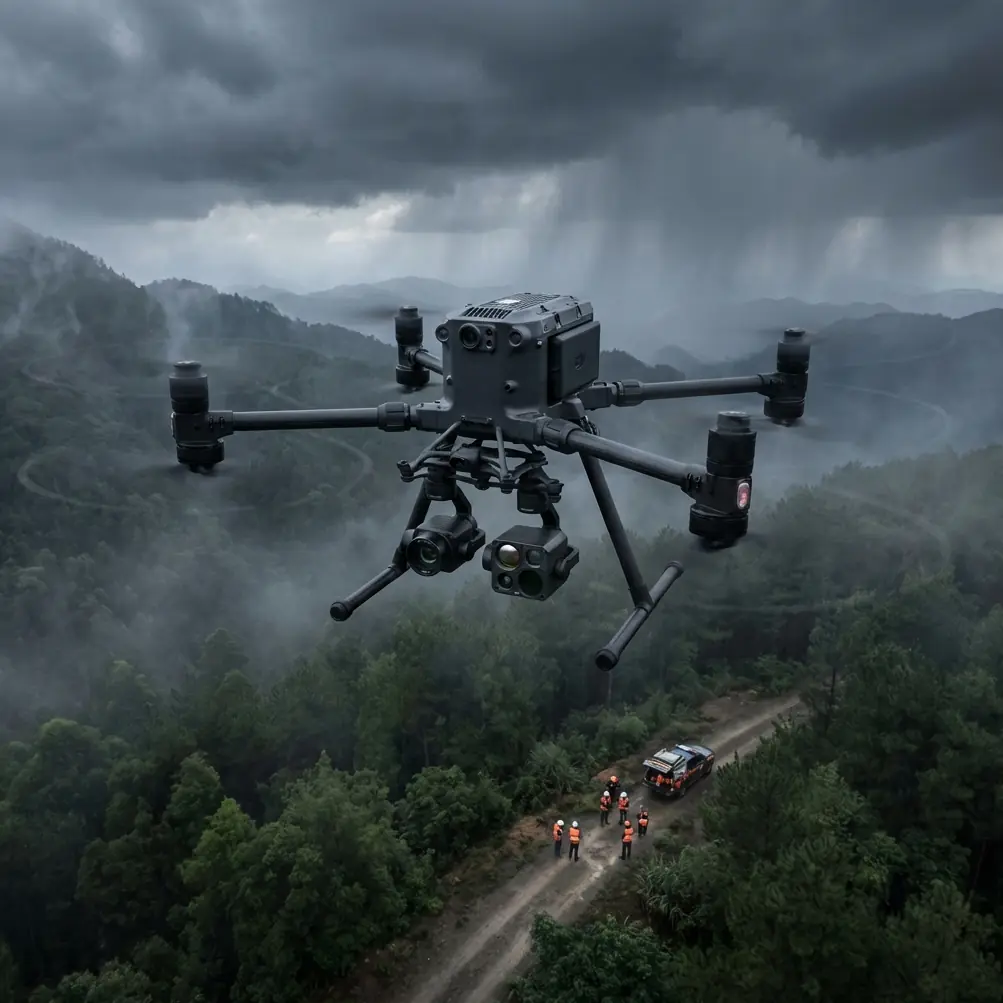
Matrice 400 Delivery Guide: Mastering Windy Conditions
META: Master venue deliveries with the Matrice 400 in challenging wind conditions. Expert tips on battery management, flight planning, and payload security for reliable operations.
TL;DR
- Hot-swap batteries enable continuous delivery operations with zero downtime between flights
- Wind speeds up to 12 m/s are manageable with proper flight planning and payload configuration
- Pre-heating batteries to 25°C minimum prevents voltage sag during high-wind hover maneuvers
- O3 transmission maintains reliable control links even in electromagnetically noisy venue environments
Why Wind Challenges Venue Delivery Operations
Delivering to venues—stadiums, concert halls, outdoor festivals—presents unique aerodynamic challenges. Structures create turbulent wind corridors, thermal updrafts rise from parking lots, and sudden gusts funnel between buildings.
The Matrice 400 handles these conditions through its redundant propulsion system and advanced flight controller algorithms. But hardware alone doesn't guarantee success. Operational expertise separates reliable delivery services from grounded fleets.
I learned this lesson during a medical supply delivery to an outdoor amphitheater last spring. Winds were gusting to 10 m/s, well within spec. What I hadn't accounted for was the thermal signature rising from 15,000 spectators—creating unpredictable lift that nearly compromised my payload drop.
Battery Management: The Foundation of Wind Operations
Expert Insight: Cold batteries are your biggest enemy in windy conditions. I keep spare packs in an insulated cooler with chemical hand warmers during winter operations. This simple field hack maintains cells at 28°C and adds roughly 15% to effective flight time when fighting headwinds.
Pre-Flight Battery Protocol
Wind resistance demands more power. The Matrice 400's motors work harder to maintain position, draining cells faster than calm-weather flights.
Follow this checklist before every windy delivery:
- Verify all cells show voltage differential under 0.1V
- Confirm battery temperature reads between 25°C and 40°C
- Check remaining cycle count (replace after 200 cycles for delivery operations)
- Inspect contact pins for corrosion or debris
- Test hot-swap mechanism releases smoothly
In-Flight Power Management
The Matrice 400's intelligent battery system provides real-time consumption data. During high-wind operations, monitor these metrics:
- Instantaneous discharge rate: Should stay below 65A during normal flight
- Voltage under load: Watch for drops exceeding 0.5V per cell
- Temperature climb: Cells heating beyond 45°C indicate excessive strain
When delivering to venues, plan your approach to minimize hover time. Hovering in wind consumes 40-60% more power than forward flight at the same airspeed.
Flight Planning for Venue Deliveries
Understanding Wind Patterns Around Structures
Venues create predictable—but dangerous—wind effects. Photogrammetry data from pre-mission surveys helps identify:
- Venturi acceleration zones between buildings
- Rotor downwash reflection from flat rooftops
- Thermal columns above HVAC exhaust systems
- Wind shadows that create sudden calm-to-gust transitions
Use GCP (Ground Control Points) to map these zones before your first delivery. The investment in survey time pays dividends in operational reliability.
Optimal Approach Vectors
| Wind Direction | Recommended Approach | Altitude Adjustment | Speed Reduction |
|---|---|---|---|
| Headwind | Direct into wind | +15m above obstacles | None required |
| Crosswind | 45° offset angle | +20m above obstacles | 25% reduction |
| Tailwind | Wide circuit to headwind | +25m above obstacles | 30% reduction |
| Variable/Gusty | Abort or delay | N/A | N/A |
The Matrice 400's O3 transmission system maintains 15km theoretical range, but venue environments often contain significant RF interference. Plan approaches that keep the aircraft within 2km line-of-sight for delivery precision.
Pro Tip: Always approach delivery zones into the wind. The Matrice 400's forward-facing obstacle sensors work best when the aircraft moves forward, not when wind pushes it backward during a tailwind approach.
Payload Security in Turbulent Conditions
Securing Delivery Packages
Wind doesn't just affect flight—it affects your payload. Unsecured packages shift weight distribution, creating control challenges the flight computer must constantly correct.
Essential payload preparation steps:
- Center payload mass within 2cm of gimbal centerline
- Secure loose packaging with non-reflective tape (prevents sensor interference)
- Verify total payload weight includes packaging, straps, and release mechanism
- Test release mechanism three times before flight
- Confirm AES-256 encrypted release commands function properly
Weight Distribution Calculations
The Matrice 400 handles payloads up to 2.7kg in standard configuration. Wind operations demand more conservative limits:
- Winds 5-8 m/s: Maximum 2.3kg payload recommended
- Winds 8-10 m/s: Maximum 1.8kg payload recommended
- Winds 10-12 m/s: Maximum 1.2kg payload recommended
These reductions maintain adequate power reserves for wind compensation and emergency maneuvers.
BVLOS Considerations for Venue Operations
Beyond Visual Line of Sight operations require additional planning for venue deliveries. The Matrice 400's redundant systems support BVLOS certification, but wind adds complexity.
Communication Redundancy
Maintain three independent communication paths:
- Primary O3 transmission link
- Cellular backup via 4G LTE module
- Satellite emergency beacon for lost-link scenarios
Automated Wind Response
Program these automated responses into your flight plan:
- Wind exceeds 10 m/s: Reduce speed to 8 m/s maximum
- Wind exceeds 12 m/s: Initiate return-to-home sequence
- Gust differential exceeds 5 m/s: Hold position and await pilot input
- Battery below 35%: Abort delivery and return immediately
Common Mistakes to Avoid
Ignoring thermal signatures from crowds: Large gatherings generate significant heat. A stadium with 50,000 fans creates thermal updrafts that can lift the Matrice 400 unexpectedly. Account for this in altitude planning.
Trusting weather forecasts over ground observations: Forecasts predict general conditions. Venue microclimates differ dramatically. Always conduct a 5-minute hover test at delivery altitude before committing to the approach.
Skipping hot-swap battery conditioning: Swapping a warm battery for a cold one mid-mission causes immediate voltage sag. Keep replacement batteries at operating temperature.
Flying the same route regardless of wind direction: Each wind condition demands a unique approach vector. The route that worked yesterday may be dangerous today.
Underestimating electromagnetic interference: Venues contain massive speaker systems, broadcast equipment, and thousands of cell phones. Test control link quality at multiple positions before establishing your delivery corridor.
Frequently Asked Questions
What wind speed should cancel a Matrice 400 delivery operation?
The Matrice 400 rates for 12 m/s sustained wind, but delivery operations should implement a 10 m/s operational limit. This provides margin for gusts and ensures adequate power reserves for precision payload release. When gusts exceed 15 m/s, ground all operations regardless of sustained wind readings.
How does cold weather affect battery performance during windy deliveries?
Cold batteries experience increased internal resistance, reducing available power precisely when wind demands more. Below 15°C ambient temperature, expect 20-30% reduction in effective flight time. Pre-heat batteries to 25°C minimum and keep spares insulated. The Matrice 400's battery heating system helps, but cannot fully compensate for severely cold cells.
Can the Matrice 400 perform autonomous deliveries in variable wind conditions?
Yes, with proper waypoint programming and wind response parameters. The flight controller adjusts motor output automatically to maintain position. However, autonomous delivery in winds exceeding 8 m/s should include human oversight with immediate manual takeover capability. Program conservative speed limits and generous position tolerances for wind-affected waypoints.
Venue delivery operations in challenging wind conditions separate professional operators from hobbyists. The Matrice 400 provides the hardware foundation—your operational discipline builds upon it.
Master battery management, respect wind limitations, and plan approaches that work with atmospheric conditions rather than against them. Your delivery success rate will reflect this preparation.
Ready for your own Matrice 400? Contact our team for expert consultation.