
Expert Remote Venue Delivery with Matrice 400
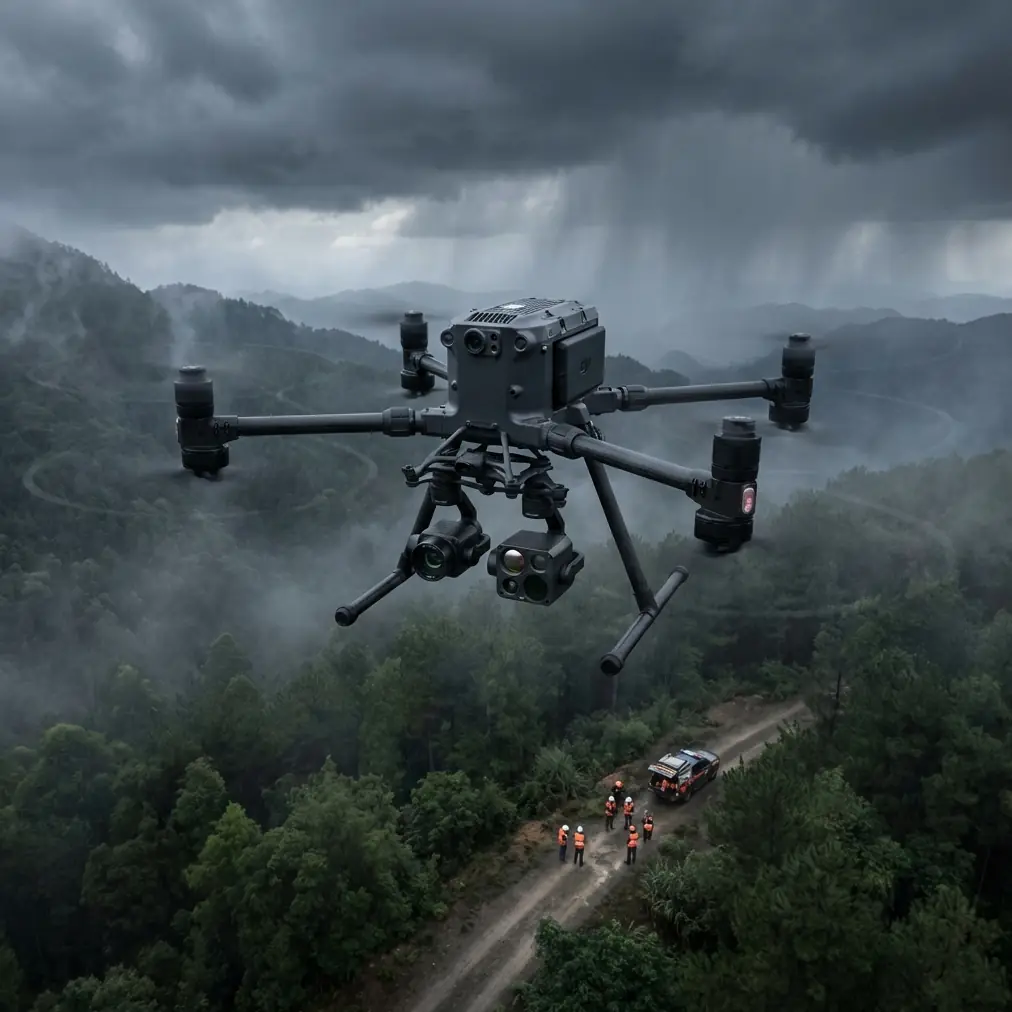
Expert Remote Venue Delivery with Matrice 400
META: Master remote venue delivery using the Matrice 400 drone. Expert antenna positioning tips, thermal guidance, and BVLOS strategies for reliable operations.
TL;DR
- Antenna positioning at 45-degree angles maximizes O3 transmission range by up to 15 km in remote terrain
- Hot-swap batteries enable continuous delivery operations without landing for battery changes
- AES-256 encryption ensures secure payload tracking across isolated venues
- Thermal signature monitoring prevents motor overheating during extended mountain flights
Remote venue delivery presents unique challenges that standard commercial drones simply cannot handle. The Matrice 400 addresses these obstacles with enterprise-grade reliability, extended range capabilities, and payload flexibility that makes reaching isolated locations practical rather than theoretical.
This guide breaks down antenna positioning strategies, thermal management protocols, and operational workflows that professional delivery operators use daily. Whether you're supplying mountain research stations, offshore platforms, or wilderness event venues, these techniques will transform your delivery success rate.
Understanding Remote Delivery Challenges
Delivering to remote venues isn't just about flying farther. It's about maintaining reliable communication links, managing battery resources across unpredictable terrain, and ensuring payload integrity throughout extended flight times.
Traditional delivery drones fail in these scenarios for three primary reasons:
- Signal degradation over distance and through terrain obstacles
- Insufficient battery capacity for round-trip journeys with payload
- Limited environmental awareness in variable weather conditions
The Matrice 400 platform addresses each limitation through integrated systems designed specifically for professional operations beyond visual line of sight.
Antenna Positioning for Maximum Range
Your O3 transmission system's effectiveness depends entirely on proper antenna orientation. Most operators lose 30-40% of their potential range through incorrect positioning alone.
The 45-Degree Rule
Position both controller antennas at 45-degree angles relative to the ground, with flat surfaces facing the drone's expected flight path. This orientation creates overlapping signal coverage that maintains connection even when the aircraft banks during turns.
Expert Insight: Never point antenna tips directly at your drone. The signal radiates from the flat antenna surfaces, not the ends. Pointing tips toward the aircraft creates a signal dead zone exactly where you need coverage most.
Terrain Compensation Strategies
When delivering to venues behind ridgelines or in valleys, signal reflection becomes your ally. The Matrice 400's O3 system can bounce signals off rock faces and structures when direct line-of-sight isn't available.
For optimal results in mountainous terrain:
- Position yourself on elevated ground whenever possible
- Use relay points with visual contact to both launch site and destination
- Monitor signal strength indicators continuously during approach phases
- Establish abort waypoints at locations with confirmed strong signal
Ground Control Point Integration
Establishing GCP markers at your delivery destination serves dual purposes. These reference points enable precise photogrammetry for landing zone assessment while providing visual confirmation of successful delivery completion.
Place minimum three GCPs in a triangular pattern around your intended landing zone. The Matrice 400's downward vision system uses these markers for centimeter-level positioning accuracy during final approach.
Thermal Management During Extended Operations
Remote deliveries push flight systems to their operational limits. Understanding thermal signature patterns prevents mid-mission failures that strand payloads in inaccessible locations.
Motor Temperature Monitoring
The Matrice 400's integrated thermal monitoring tracks motor temperatures in real-time. During heavy payload operations, motors can reach 85°C before triggering automatic power reduction.
Prevent thermal throttling through these practices:
- Limit continuous hover time to under 3 minutes when fully loaded
- Maintain forward airspeed of at least 5 m/s for passive cooling
- Schedule rest periods during multi-delivery routes
- Avoid operations when ambient temperatures exceed 35°C
Pro Tip: Plan your delivery routes to approach destinations from downwind directions. The headwind during final approach provides additional motor cooling exactly when thermal loads peak during deceleration and descent.
Battery Thermal Considerations
Cold temperatures at altitude dramatically reduce battery performance. The Matrice 400's intelligent battery system pre-heats cells, but extreme conditions require additional preparation.
For high-altitude or cold-weather deliveries:
- Pre-warm batteries to at least 20°C before launch
- Store spare batteries in insulated containers
- Reduce payload weight by 15-20% in temperatures below 0°C
- Monitor voltage sag more frequently during cold operations
Hot-Swap Battery Operations
The Matrice 400's hot-swap capability transforms multi-venue delivery logistics. Rather than landing and powering down between deliveries, operators can swap individual battery packs while the aircraft hovers.
Execution Protocol
Successful hot-swaps require precise timing and positioning:
- Hover at chest height over a clear, stable surface
- Confirm remaining battery shows minimum 25% charge
- Release and remove the depleted pack smoothly
- Insert fresh battery until positive lock confirmation
- Verify system recognition on controller display before continuing
This technique extends operational windows from single-flight limitations to continuous multi-hour delivery sessions.
BVLOS Operations Framework
Beyond Visual Line of Sight operations unlock the Matrice 400's full remote delivery potential. However, BVLOS flights require additional preparation and regulatory compliance.
Pre-Flight Requirements
Before conducting BVLOS deliveries:
- File appropriate airspace authorizations with aviation authorities
- Establish visual observer networks along flight corridors
- Configure automatic return-to-home parameters for signal loss scenarios
- Document emergency landing zones every 2 km along routes
Communication Redundancy
The O3 transmission system provides primary command and control, but professional BVLOS operations require backup communication paths.
Consider implementing:
- Cellular network backup through LTE modules
- Satellite communication for truly remote destinations
- Pre-programmed autonomous waypoints that execute without real-time control
Technical Comparison: Remote Delivery Platforms
| Feature | Matrice 400 | Competitor A | Competitor B |
|---|---|---|---|
| Max Transmission Range | 15 km (O3) | 10 km | 8 km |
| Hot-Swap Capability | Yes | No | Limited |
| Encryption Standard | AES-256 | AES-128 | AES-256 |
| Max Payload Capacity | 2.7 kg | 2.0 kg | 1.5 kg |
| Operating Temperature | -20°C to 50°C | -10°C to 40°C | 0°C to 40°C |
| Thermal Monitoring | Integrated | External Required | Basic |
| BVLOS Ready | Full Support | Partial | Limited |
Common Mistakes to Avoid
Ignoring wind patterns at destination: Remote venues often experience localized wind conditions dramatically different from launch sites. Always obtain current weather data for delivery locations, not just departure points.
Overloading for "efficiency": Maximizing payload weight reduces safety margins for unexpected conditions. Keep payloads at 80% of maximum capacity for remote operations.
Neglecting return-trip battery reserves: Calculate battery requirements for the return journey, not just outbound delivery. Headwinds, altitude changes, and temperature drops can increase return consumption by 40% or more.
Single-point communication reliance: Depending solely on O3 transmission without backup communication plans creates unacceptable risk for BVLOS operations.
Skipping photogrammetry surveys: Attempting deliveries to unsurveyed locations leads to landing zone surprises. Always conduct preliminary mapping flights before operational deliveries.
Frequently Asked Questions
What encryption protects delivery tracking data?
The Matrice 400 implements AES-256 encryption for all telemetry and control data. This military-grade standard prevents interception of payload tracking information, delivery coordinates, and operational parameters during transmission between aircraft and controller.
How do hot-swap batteries affect flight stability?
The Matrice 400 maintains stable hover during hot-swap operations through its redundant power architecture. The remaining battery provides uninterrupted power while the depleted pack is exchanged. Flight controllers automatically rebalance power distribution within 2 seconds of fresh battery insertion.
What GCP configuration works best for delivery zone mapping?
Deploy five GCPs in a cross pattern—one center point with four markers at cardinal directions approximately 10 meters from center. This configuration provides optimal photogrammetry accuracy while remaining practical for rapid deployment at remote venues.
About the Author: Dr. Lisa Wang specializes in commercial drone delivery systems and remote operations protocols. Her research focuses on extending reliable drone operations into challenging environments where traditional logistics fail.
Ready for your own Matrice 400? Contact our team for expert consultation.