
Matrice 400 for Vineyards in Low Light: A Field Case Study
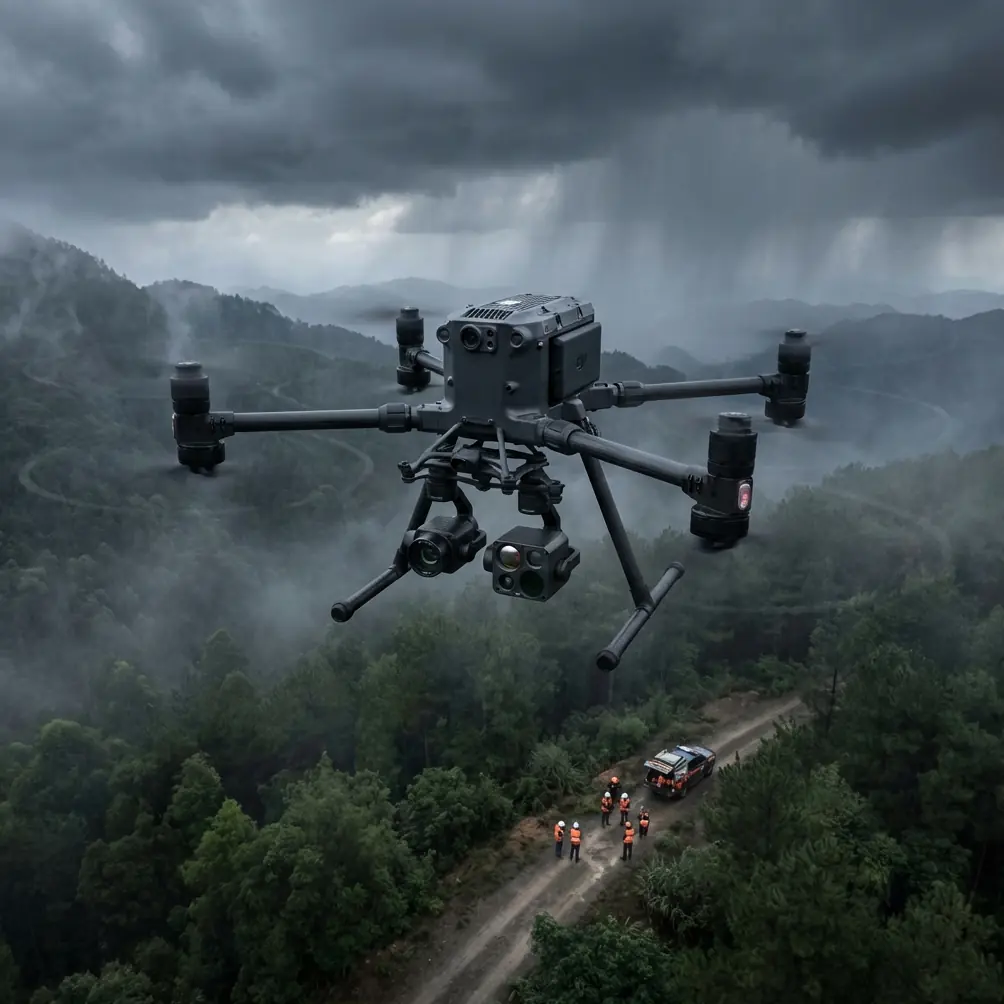
Matrice 400 for Vineyards in Low Light: A Field Case Study on Time, Terrain, and Airspace Confidence
META: A specialist case study on using the Matrice 400 for vineyard work in low light, with practical insight on thermal interpretation, transmission stability, hot-swap workflows, BVLOS readiness, and why regulatory structure matters.
I’m Dr. Lisa Wang, and when growers ask whether a heavy-duty enterprise drone is excessive for vineyard operations, my answer is usually the same: that depends on what problem you are actually trying to solve.
If the mission is a sunny mid-morning photo flight over a flat block, plenty of platforms can do the job. If the mission is early dawn, uneven terrain, narrow access roads, variable fog, and a short decision window before crews move in, the conversation changes. That is where the Matrice 400 becomes interesting—not as a spec-sheet trophy, but as a working aircraft for time-sensitive vineyard operations in low light.
The reference point that frames this well comes from outside agriculture. In Doha, EHang’s EH216-S completed a series of urban flights between Doha Port and Katara Cultural Village, under operating authorization from the Qatar Civil Aviation Authority and with support from the transport ministry. The route took about 8 minutes and reportedly cut comparable ground travel by roughly 70%. That story is about urban air mobility, not vineyards. Still, the operational lesson is highly relevant: when aviation is inserted into a real transport problem and backed by clear authorization, the value is not abstract. It is measured in minutes saved, routes simplified, and terrain made less limiting.
That same logic applies in vineyard management. Low-light drone work is not simply about getting airborne before sunrise. It is about reducing the operational penalty of geography. A vineyard spread across ridgelines, terraces, and fragmented parcels can make ground inspection slow and inconsistent. Add darkness or low-angle light, and the old habit of “just send someone to check” becomes expensive. The Matrice 400 is one of the few platforms that starts to make sense when the real issue is not image capture alone, but dependable aerial access under difficult timing and site conditions.
The vineyard scenario: why low light changes everything
A recent vineyard case I worked through involved three distinct needs compressed into one early-morning window.
First, the grower wanted to identify irrigation irregularities before the day warmed up enough to blur thermal contrast. Second, the operations team needed a photogrammetry refresh over selected rows where machinery access had been restricted after overnight moisture. Third, the estate manager wanted a single aircraft that could move between blocks without repeated shutdown delays.
This is exactly the kind of assignment where a lighter competitor often starts strong and then falls apart operationally. Many aircraft can produce an acceptable map in ideal light. Fewer can maintain clean transmission over rolling terrain, support secure data handling, carry the right payload stack for thermal plus visual interpretation, and keep flying through battery transitions without turning the morning into a stop-start exercise.
The Matrice 400 stands out because it is built around continuity. In vineyards, continuity matters more than many buyers realize.
What thermal signature actually tells you in vines
Low-light vineyard missions are often described too loosely. People say they are “doing thermal,” as if the camera itself answers the question. It does not. The value comes from reading thermal signature in context.
In vineyards, pre-dawn and dawn flights can expose differences in vine vigor, water stress patterns, blocked emitters, pooling near low sections, and occasional equipment-related anomalies. But that only works if the aircraft can hold a stable mission profile and return reliable imagery across the full block. In marginal light, every weakness in the platform becomes more obvious. Small interruptions in transmission, inconsistent hover behavior near slope edges, or battery changes that break your timing all reduce confidence in the data.
This is where the Matrice 400 earns its place against more limited enterprise alternatives. Its ecosystem is suited to serious thermal work because it treats sensing, flight endurance, and connectivity as one system. That sounds obvious until you compare it with mid-tier competitors that force operators into compromise: either fly a shorter thermal pass, or switch payload priorities, or accept shakier links near obstructed rows and tree lines.
For a vineyard manager, that compromise shows up later as uncertainty. Is that cool patch a genuine irrigation issue, or did the aircraft drift and smear the thermal frame set? Is that edge-row heat difference real, or did you lose link quality over the far parcel and end up with inconsistent capture timing?
A premium platform is not about vanity here. It is about reducing interpretive ambiguity.
The hidden importance of O3 transmission in broken terrain
Transmission quality is still undervalued in agriculture. Vineyard operators often focus on payloads first, batteries second, and only later discover that unreliable signal behavior is what limits productivity on the ground.
In hilly wine regions, line of sight is rarely perfect even when the drone itself remains visible. Terrain shoulders, shelter belts, structures, and row orientation can all complicate signal stability. A robust O3 transmission architecture is not just a convenience feature; it directly affects whether low-light data capture stays orderly enough to trust.
The Matrice 400’s advantage here is practical. On a cold morning, with crews waiting and multiple blocks scheduled, you need clean control and predictable video downlink to decide in real time whether to rerun a strip, widen overlap, or shift to a different parcel. Lesser aircraft often become “maybe machines” in these conditions. They may finish the mission, but they do so with enough link inconsistency that the operator spends the next hour second-guessing the dataset.
That is not an efficiency problem alone. It is a decision problem. In precision viticulture, poor confidence can be almost as damaging as poor data.
Photogrammetry still matters, even when thermal gets the attention
A mistake I see regularly is treating low-light vineyard flights as thermal-only missions. In practice, photogrammetry remains essential, especially when paired with GCP discipline and repeated capture over key management zones.
Why? Because thermal tells you where to look, while photogrammetry often helps explain what you are looking at. If a low-light flight flags irregular temperature patterns along a section of slope, the map-derived surface model and visual context can reveal whether the issue aligns with drainage, compaction, canopy density, or infrastructure layout.
The Matrice 400 is especially effective when growers want one aircraft to support that layered workflow instead of separating thermal scouting from later mapping on a second platform. Competitors sometimes claim similar flexibility, but the real test is field rhythm. Can you move from thermal interpretation to mapping validation without losing the best part of the morning? Can you maintain enough endurance and workflow continuity to finish before ground activity contaminates the scene?
This is where hot-swap batteries stop being a brochure detail and become a vineyard advantage.
Why hot-swap batteries matter more in vineyards than on flat farms
On broad, uniform farmland, a battery change is usually a minor pause. In vineyards, especially terraced or segmented sites, battery handling has a larger operational cost. You may be staged in a cramped turnout, moving between blocks via rough access tracks, or trying to preserve a narrow low-light interval across several parcels. A full shutdown cycle introduces delay precisely when temperature gradients are most useful.
Hot-swap batteries help the Matrice 400 sustain mission momentum. You preserve the working window. You keep the operator focused. You avoid the frustrating chain reaction where a short interruption pushes the next parcel into changing light conditions, reducing comparability across the morning’s captures.
Compared with smaller competitors that require more disruptive battery turnover, this is one of the clearest areas where the Matrice 400 feels designed for professionals rather than occasional flyers. In vineyards, those minutes count.
That is the same broader truth reflected in the Doha reference. The EH216-S route was only about 8 minutes, but the significance was not the number by itself. It was what that number represented: a real route in a real environment performing materially faster than ground movement. In vineyard operations, your “route compression” may not involve passengers and city landmarks, but it can still define the value of the aircraft. If aerial workflow cuts inspection delays across scattered blocks, the operational result is just as tangible.
AES-256 and why data security is no longer optional
Wine estates are becoming more data-aware. That includes canopy analytics, block-level productivity records, water-use review, and increasingly sensitive geospatial archives tied to property planning. Once growers start integrating drone outputs into management systems, secure transmission and data handling become part of the procurement discussion.
AES-256 matters because enterprise drone operations now sit inside broader digital infrastructure. If you are collecting high-resolution imagery and thermal datasets over a premium estate, data protection is not an afterthought. It is part of professional standards.
The Matrice 400’s security posture gives it an edge over lower-tier systems that may be easier to buy but harder to defend in an IT review. For vineyard groups operating across multiple sites—or working with consultants, agronomists, and ownership teams in different locations—this matters more every season.
BVLOS readiness and the regulatory lesson from Doha
The Doha flight story offers another lesson that vineyard operators should not ignore: aviation value grows when operations are structured within authorization, not improvised around it. The flights in Qatar were conducted under civil aviation authorization and ministry support. That is what turned a demonstration into a credible operational milestone.
For the Matrice 400, this matters in the context of BVLOS planning. Many large vineyard properties are ideal candidates for expanded beyond visual line of sight workflows, especially where parcels are dispersed and routine inspection routes are repeatable. But BVLOS is not a checkbox feature. It is a concept that only becomes useful when the aircraft, the operating procedures, and the regulatory path align.
A strong enterprise platform gives operators a better foundation for that future. Not because every vineyard should immediately fly BVLOS, but because serious estates are increasingly thinking in that direction: larger footprints, more frequent aerial checks, fewer unnecessary redeployments, and more standardized mission profiles.
The wrong aircraft can trap an operation in pilot-intensive, short-hop routines. The right one helps build a more scalable program.
Where the Matrice 400 clearly outperforms weaker alternatives
Let’s be blunt. A lot of competing platforms are good enough for occasional agronomy visuals. They are not good enough for repeatable, low-light vineyard intelligence at enterprise quality.
The Matrice 400 excels in four ways that show up in the field rather than on a marketing poster:
Signal confidence across difficult topography
O3 transmission supports cleaner execution when terrain and vegetation interrupt ideal geometry.Better mission continuity through battery changes
Hot-swap workflow preserves the thermal window and reduces unproductive resets.Enterprise-grade data handling
AES-256 support fits modern estate IT and consultant collaboration requirements.A more credible path toward advanced operating models
For organizations considering routine inspections at scale, BVLOS-readiness thinking is far more realistic on a platform built for enterprise operations.
None of that means every vineyard needs one. It means vineyards with complex terrain, premium quality targets, and serious operational tempo usually benefit from a platform that removes friction rather than adding it.
A practical workflow that works
For growers delivering vine health assessments in low light, I generally recommend a phased mission structure with the Matrice 400:
- Pre-dawn thermal reconnaissance over priority blocks
- Immediate review of anomalies while maintaining field position
- Follow-on visual or photogrammetric capture over selected zones
- GCP-backed validation on management-critical areas
- Cross-checking thermal patterns against terrain, irrigation layout, and canopy structure
This sequence works because the aircraft can support it without feeling like three separate jobs stitched together awkwardly. That is the real hallmark of a productive enterprise drone in viticulture.
If you are building a similar workflow and want to compare payload strategy or flight planning for low-light vineyard conditions, you can send field details directly through this vineyard ops chat line.
Final assessment
The Matrice 400 is not compelling because it is large or advanced. It is compelling because it solves the exact problems that become expensive in vineyards at dawn: fragmented terrain, narrow timing windows, transmission uncertainty, and workflow interruptions.
The Doha EH216-S flights showed how aerial systems create value when they compress movement, operate on meaningful routes, and do so under proper authorization. That same operational logic translates surprisingly well to vineyard drone work. When a platform helps you move faster across dispersed blocks, capture more trustworthy low-light data, and build toward a more structured flight program, it stops being just another aircraft. It becomes part of the estate’s decision system.
For vineyard operators working in low light, that distinction matters.
Ready for your own Matrice 400? Contact our team for expert consultation.