
Delivering in Mountain Vineyards With Matrice 400
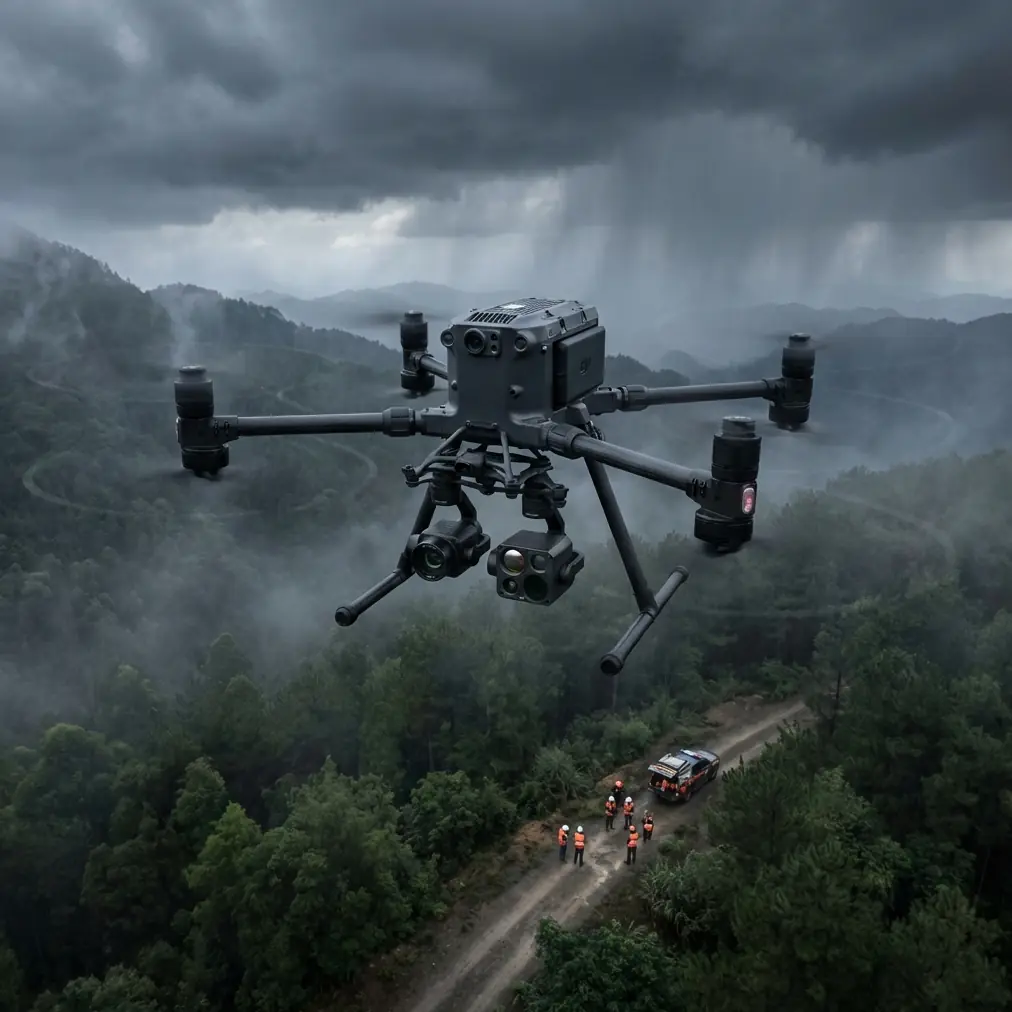
Delivering in Mountain Vineyards With Matrice 400: A Practical Field Method From Reliability to Repeatability
META: A specialist’s field-focused guide to using Matrice 400 for mountain vineyard delivery, with lessons on reliability testing, onboard self-checks, BVLOS readiness, payload workflow, and safer repeatable operations.
Mountain vineyard delivery is never really about the aircraft alone. It is about margins.
Margins in terrain clearance. Margins in battery planning. Margins in signal stability when a ridge line sits between the crew and the far end of the property. And, if you are carrying time-sensitive supplies between steep rows and isolated work points, margins in reliability.
I learned that the hard way on a mountain estate where the road network looked reasonable on paper and failed in practice. A short vehicle run became a 40-minute detour after rain turned one access track into soft clay. The job itself was simple: move inspection tools, sample containers, and small maintenance items between a base area and crews working at elevation. The terrain was the real problem. That is the setting where Matrice 400 starts to make sense—not as a flashy platform, but as a system that reduces uncertainty.
This article is not a generic overview. It is a working method for vineyard delivery in steep terrain, built around two reliability ideas drawn from classical aircraft engineering: impact tolerance under repeated loading, and layered onboard self-test before and during flight. Those details matter more than most operators realize.
Why mountain vineyards expose weak workflow design
A flat agricultural site can forgive sloppy planning. A mountain vineyard usually will not.
You have terrace edges, narrow launch options, changing wind on slopes, and visual contrast issues in early morning and late afternoon. If you are also operating near workers, cable runs, irrigation hardware, and utility structures, every unnecessary landing and every preventable delay adds risk.
That is why Matrice 400 should be treated as a workflow platform rather than just a drone. Features people often mention in isolation—hot-swap batteries, long-range transmission, thermal support, photogrammetry compatibility, encrypted links—only become valuable when connected to the actual operating pattern.
For mountain delivery, the pattern looks like this:
- Build a route model that respects terrain instead of drawing a straight line.
- Validate departure and recovery zones with precise site data.
- Reduce avoidable interruptions between sorties.
- Catch faults before takeoff and log anomalies that emerge in flight.
- Preserve enough operational margin to recover from wind shifts, partial route blockage, or a landing zone change.
That is where the engineering references become useful.
The overlooked lesson from landing gear testing
One of the source references describes landing gear dynamic testing in a way that seems far removed from UAV delivery. It is not.
The text discusses repeated testing under different load conditions, including loads such as 0.75 times, 1.174 times, 1.397 times, and even 1.5 times landing design weight, with vertical descent values in ranges like 4.157 to 4.619 m/s and 3.05 to 3.389 m/s. It also states that the structure should not suffer permanent deformation that causes loss of function, and that the maximum vertical load generally should not exceed 90% of the design load during certain tests. Another point is especially practical: after completing the prescribed tests, the same landing gear continues into reserve-energy testing, not a fresh unit.
That matters operationally because it reflects a philosophy: a trustworthy aircraft component is not just strong once. It remains functional after cumulative stress.
For Matrice 400 operators delivering into vineyards, the equivalent question is not “Can the aircraft land today?” It is “Can the aircraft keep performing after repeated cycles on uneven, improvised, or dusty touchdown areas over a full operating week?”
In mountain delivery work, repeated takeoff and landing quality often matters more than headline endurance. Small variations in touchdown surface—compacted soil at the base station, gravel at a ridge turnaround, a mat placed near a service road—create cumulative wear patterns. A professional operator should evaluate the platform the same way the test reference evaluates landing gear: by repeatability after many cycles, not by one successful demo flight.
That changes how I set up a Matrice 400 delivery program:
- I standardize landing surfaces whenever possible.
- I track landing count by site type, not just total flight hours.
- I inspect for changes in damping behavior, stance symmetry, and post-landing stability.
- I avoid operating too close to the practical edge of payload mass and descent aggressiveness, even if the airframe could technically handle it.
The “90%” test principle is a good mental model. Don’t build a mountain workflow that lives at the edge of your aircraft’s vertical or payload envelope. Leave room.
What onboard self-test means in real vineyard operations
The second reference is even more directly relevant. It covers onboard self-test logic in flight-control systems, including power-on BIT, preflight BIT, in-flight BIT, and maintenance BIT. It describes preflight testing on the ground to verify hardware components and record detected faults into NVM for later maintenance review. It also describes in-flight BIT as a mix of redundancy management and airborne checks such as power voltage monitoring and recording faults reported by online monitors. Specific IFBIT items include ROM testing, power level checks, CCDL tests, gyro rotor rate checks, analog loopback testing, and online monitoring signal records.
If you run mountain vineyard delivery, this framework should shape your standard operating procedure.
Why? Because many field failures do not begin as dramatic failures. They begin as weak signals: intermittent power irregularity, sensor mismatch, a communications issue that appears only after heating, or a fault that doesn’t stop the flight but should absolutely change your go/no-go call for the next sortie.
With Matrice 400, the smart move is to turn every sortie into part of a continuous health-monitoring loop:
Before first launch
Use a preflight routine that does more than confirm propellers and payload lock. Review aircraft status with the same discipline implied by PBIT logic. You want confidence that the system is in a true launch-ready state, not merely powered on.
Between missions
When cycling batteries in a hot-swap workflow, don’t treat the turnaround as a pit stop only. Treat it as a health checkpoint. If the aircraft or payload recorded any anomaly, inspect and log before launching again.
After long route segments
When flying beyond direct close-range observation conditions, especially in BVLOS-style planning environments where regulation and authorization permit, recorded in-flight anomalies become crucial. You may not feel a small issue from the sticks. The logs often know first.
This is one reason Matrice 400 fits demanding commercial work. Not because the phrase “industrial platform” sounds reassuring, but because serious field operations need disciplined fault detection and traceability.
A practical Matrice 400 method for mountain vineyard delivery
Here is the procedure I recommend when the mission is moving vineyard supplies, samples, or technical items between base and hillside teams.
1) Map the vineyard as a transport network, not just a visual survey area
Many operators begin with imagery. That is useful, but delivery needs a route model.
Start by producing a terrain-aware mission map using photogrammetry and, where needed, GCP control to tighten positional confidence around launch and delivery points. In a mountain vineyard, a route that looks clean on an orthomosaic can still have poor rotor clearance relative to trellis infrastructure, trees, or slope break lines.
Photogrammetry gives you more than a pretty map. It gives you a transport geometry model.
Operational significance:
- It helps define approach and departure corridors with fewer surprises.
- It reveals whether one central launch site is realistic or whether you need distributed handoff zones.
- It reduces ad hoc piloting in complex topography.
If crews are working across elevations, I usually create separate route classes: base-to-mid slope, mid-slope-to-ridge, and contingency return paths.
2) Use thermal intelligently, not as a gimmick
Thermal signature data can help in vineyards, but not always in the way people assume.
For delivery operations, thermal can be useful for spotting human work groups early in low-contrast conditions, identifying equipment that has been left running, or locating warm mechanical assets around pump stations or power equipment near the route. It can also help verify whether a temporary landing area is clear of people before descent in dawn haze or under canopy shadow transitions.
The mistake is to think thermal replaces route discipline. It does not. It supplements situational awareness.
3) Build around transmission resilience
Mountain terrain punishes weak link planning. A ridge, retaining slope, or row orientation can degrade line quality unexpectedly. If you are relying on O3 transmission, do not plan as though signal strength is uniform across the property. Test route segments under real topographic conditions.
Operational significance:
- Segment testing tells you where to place your ground crew.
- It helps decide whether one pilot position is enough.
- It exposes blind sections where a route needs elevation offset or a relay strategy within legal operational frameworks.
Link security also matters when you are moving operational data across commercial sites. If your workflow uses AES-256 link protection, that is not just a box to tick for IT teams. It reduces exposure when route plans, site imagery, and operational records move through environments where proprietary agricultural data matters.
4) Design battery turns for continuity, not speed alone
Hot-swap batteries are one of the most useful features for this kind of work because the mountain site rarely gives you long, comfortable setup windows. Weather can open and close quickly. Crews may only be available for a narrow handoff period. Battery changes that preserve mission continuity are not just convenient; they protect the value of your route timing.
Still, there is a discipline here: a hot-swap capable platform can tempt teams into launching too quickly between cycles. Don’t.
Use each swap to do a compressed but intentional status review:
- battery condition,
- payload security,
- airframe contamination from dust or vine debris,
- logged alerts from the previous leg,
- landing gear and underbody visual check after rough-surface contact.
That last point ties back to the landing test reference. Repeated cycles are where hidden degradation shows up.
5) Establish a “non-perfect landing” threshold
On mountain properties, not every landing will be textbook clean. But every team should define what counts as acceptable and what triggers inspection or mission pause.
The aircraft design handbook reference emphasizes no permanent deformation that results in loss of function after dynamic testing. In field terms, your standard should be simpler: if a landing is harder, more tilted, or more surface-compromised than your threshold allows, the next mission does not launch until the aircraft is checked.
This is not bureaucracy. It is how you stop a minor landing event from becoming a serious reliability problem later that day.
6) Treat BVLOS planning as a systems problem
Where regulations, waivers, and operator approvals permit BVLOS, mountain vineyard delivery becomes much more efficient. But BVLOS does not start with route length. It starts with proof that your operation is observable through systems.
That means:
- reliable route geometry from mapping,
- monitored link performance,
- robust preflight verification,
- recorded in-flight health checks,
- predictable battery turnover,
- clear contingency landing logic.
The source material’s emphasis on PBIT and IFBIT is a useful lens here. A BVLOS-capable workflow is only as strong as its ability to detect, record, and respond to faults before they become operationally visible.
The field lesson that changed my setup
The first time I reworked a vineyard delivery program around these principles, the biggest improvement was not range. It was confidence in repetition.
We moved from “Can we get this payload up there?” to “Can we do this eight times today without accumulating hidden risk?” That shift changed everything. We tightened our route models with GCP-backed mapping, used thermal only where it genuinely helped, tested O3 link behavior against terrain rather than trusting assumptions, and built every hot-swap into a brief technical checkpoint.
Most importantly, we stopped rewarding speed at the expense of mechanical and system margin.
If you are planning a Matrice 400 deployment for mountain vineyards and want a field-oriented workflow review, you can message our team here and describe the terrain, payload type, and route profile.
A smarter way to judge whether Matrice 400 fits the job
Do not judge the aircraft by a single spec line.
Judge it by whether it supports a disciplined operating model in difficult terrain:
- Can you map routes accurately enough for repeatable transport?
- Can you maintain link confidence across slope changes?
- Can you exploit hot-swap capability without skipping airworthiness checks?
- Can your crew interpret in-flight system logs and preflight test results as operational signals, not background noise?
- Can your landing and turnaround process withstand cumulative stress over repeated sorties?
That is where Matrice 400 becomes valuable for vineyards in the mountains. Not because it removes complexity, but because it gives a professional team a stronger structure for managing it.
The two engineering references behind this approach point in the same direction. First, reliability has to survive repeated loading, not one ideal event. Second, self-checking systems only help if operators use them to drive decisions on the ground and in the air.
Applied properly, those lessons turn a drone from a useful tool into a dependable transport node across difficult agricultural terrain.
Ready for your own Matrice 400? Contact our team for expert consultation.