
Delivering Wildlife Supplies in Windy Conditions With the Ma
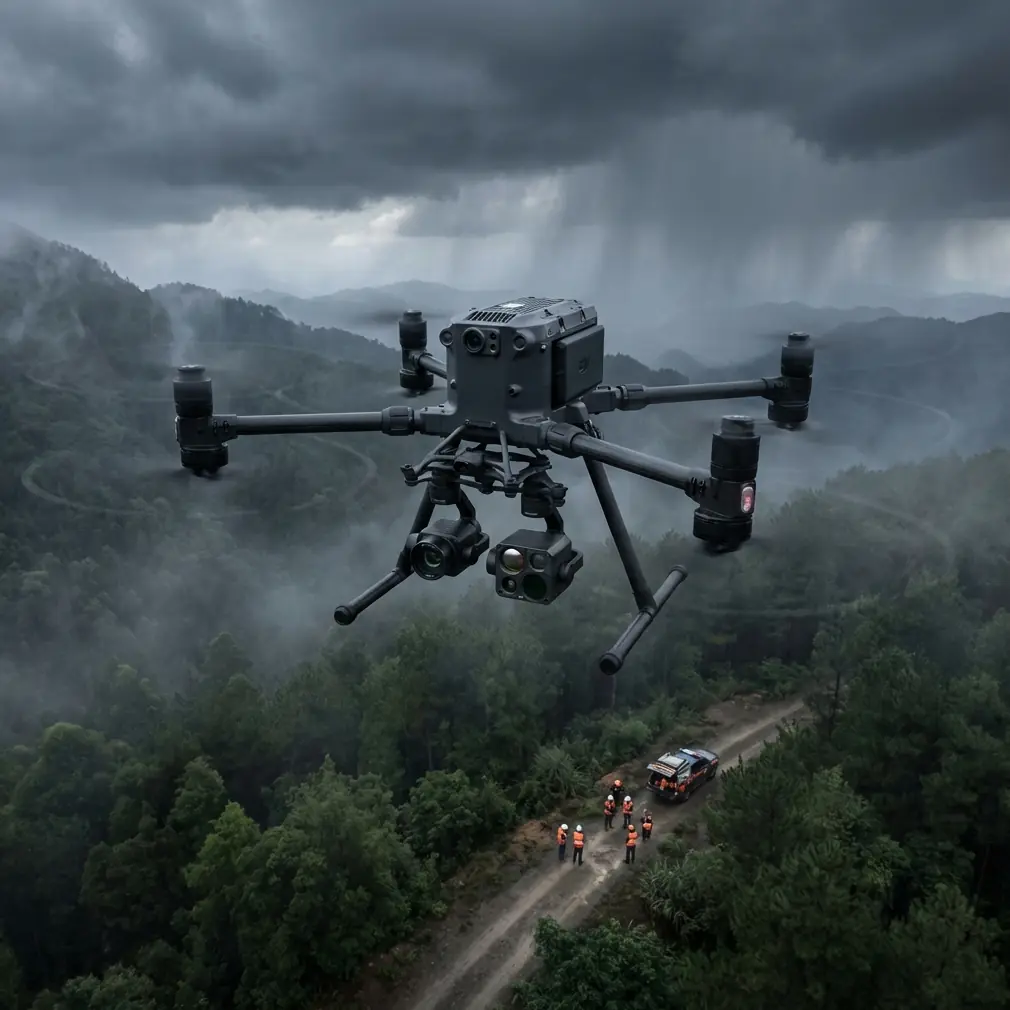
Delivering Wildlife Supplies in Windy Conditions With the Matrice 400
META: Expert analysis of how the Matrice 400 handles windy wildlife delivery missions, with practical insight on payload stability, hot-swap batteries, O3 transmission, thermal workflows, and changing weather.
Wildlife logistics rarely happen on perfect days.
If you are moving veterinary kits, tagged samples, emergency feed, or field sensors into remote habitat, wind is not a side issue. It is usually the mission. Open grassland gusts, ridge lift near nesting zones, coastal turbulence, and sudden weather swings can turn a straightforward delivery flight into a test of aircraft stability, link reliability, and pilot judgment. That is where the Matrice 400 starts to matter—not as a spec-sheet trophy, but as a platform built for jobs where conditions shift after takeoff.
I’ve seen this become very real on conservation support flights. The assignment sounds simple when written on paper: deliver time-sensitive supplies to a field team monitoring wildlife activity in a hard-to-reach zone. The actual challenge is that the aircraft has to hold a predictable line in moving air, preserve enough margin for a safe return, and keep the pilot informed when visibility, terrain, and weather no longer cooperate.
For that kind of work, the Matrice 400 makes sense because it addresses the chain of operational risk, not just one part of it.
The problem: wind changes the mission faster than most teams plan for
Wildlife delivery flights often start with a narrow launch window. You may be trying to avoid heat stress for animals, reduce disturbance during active periods, or get supplies to a team before ground access becomes impractical. In those settings, wind affects far more than groundspeed.
It affects package behavior.
It affects hover accuracy over a drop or handoff point.
It affects battery planning.
And it affects whether the pilot still trusts the aircraft when conditions stop matching the morning forecast.
A lot of aircraft can fly in light wind. That is not the standard that matters in the field. The real question is what happens when the weather changes mid-flight.
That is where a heavier enterprise airframe with stronger control authority becomes valuable. The Matrice 400 is designed for serious commercial operations, and that matters immediately when carrying useful payloads into uneven air. Wildlife teams do not need drama from the aircraft. They need a machine that stays composed when the environment does not.
Why platform stability matters more than raw speed
In windy delivery operations, speed can be misleading. An aircraft may be fast in clean conditions but become inefficient and difficult to place once it meets crosswinds, rotor wash near slopes, or a turbulent approach path through vegetation gaps.
The Matrice 400’s value is not simply that it moves quickly. It is that it maintains a controlled, predictable flight profile under load. For wildlife support missions, that changes the quality of the whole operation.
Imagine carrying a compact insulated medical pack to a conservation team on a ridgeline. Halfway through the route, the wind shifts 30 degrees and begins gusting harder than expected. A lighter platform may still remain airborne, but the pilot often starts paying a penalty in constant corrections, greater battery drain, and a less stable final approach. The result is not just inconvenience. It can mean abandoning the original drop point or cutting return margins too close.
The Matrice 400 is better suited to absorb that shift because enterprise delivery work depends on more than motor power. It depends on stable flight control, useful payload handling, and enough system maturity to let the pilot focus on decisions instead of wrestling the aircraft.
Mid-flight weather changes are where enterprise features earn their keep
This is the moment that separates hobby assumptions from operational reality.
Let’s say the mission launches in manageable wind. Visibility is good. The route to the wildlife team is clear, and telemetry looks healthy. Then conditions deteriorate. Gusts build over open terrain, and a passing shower line introduces turbulence and a flatter light profile. What matters next is not one magic feature. It is how the aircraft systems work together.
The Matrice 400 benefits from enterprise-grade transmission architecture, including O3 transmission capability, which is especially relevant in environments where terrain and vegetation can interfere with situational awareness. A stable control and video link is not a luxury on a wildlife mission. It allows the pilot to verify route conditions, assess approach options, and make conservative choices when weather starts shifting faster than expected.
That operational significance is straightforward: when wind increases, the pilot needs better information, not less. If your link quality degrades just as the mission becomes harder, you lose the timing needed to adjust altitude, route shape, and return thresholds. O3 transmission helps preserve that decision window.
Security also matters more than people assume. The inclusion of AES-256 encryption is not just an IT checkbox. Wildlife operations often involve sensitive location data—nesting sites, endangered species monitoring zones, veterinary activity, and private land access routes. Protecting transmitted data reduces the risk of exposing sensitive conservation work while teams coordinate flights across field stations and mobile operations units.
Battery strategy is not an afterthought in windy operations
Wind changes endurance calculations fast. A route that looks comfortable during planning can become tight on the way home if the aircraft spends more time fighting a headwind or holding position for a safer approach.
This is why hot-swap batteries deserve more attention than they usually get. On the Matrice 400, hot-swap capability supports faster turnaround between sorties, which is a major advantage during wildlife support operations where timing is linked to weather windows and field-team movement. Instead of shutting down for a full battery replacement cycle, crews can maintain momentum and relaunch more efficiently.
That sounds like a convenience feature until you are managing a live operation.
Suppose a ranger team requests a second delivery of tagged sample containers after the weather briefly settles. With hot-swap batteries, the crew can inspect the aircraft, refresh power, confirm mission parameters, and get airborne again with less delay. Operationally, that means more missions completed inside a short weather gap. In wildlife work, that often determines whether the drone actually solves the problem or just documents it.
Thermal signature awareness changes how you fly near wildlife
One of the subtler parts of wildlife delivery is minimizing disturbance. That requires more than quiet intentions. It requires sensor awareness and route discipline.
Thermal signature matters here in two ways. First, thermal imaging can help field teams or pilots identify the target zone safely in low contrast conditions, particularly around dawn, dusk, or shaded terrain where a visual scene may not be enough to confirm exact positioning. Second, understanding the thermal behavior of the environment helps operators avoid unnecessary loitering over animals or heat-sensitive habitats.
The Matrice 400’s ecosystem is well aligned with this kind of work because enterprise wildlife missions are rarely only about transport. They often blend delivery, observation, and post-flight analysis. A pilot may bring supplies in, then use the same sortie profile or a follow-up mission to verify team position, inspect a corridor, or check for animal movement before another approach.
That kind of flexibility matters when the weather turns. If the original delivery path becomes unsuitable, thermal data can support a safer reroute or alternate handoff point without pushing the aircraft lower than necessary.
Mapping discipline supports better delivery outcomes
At first glance, photogrammetry and GCP workflows may seem unrelated to windy wildlife delivery. In practice, they are deeply connected.
If you regularly support conservation teams, pre-mission mapping with photogrammetry can reveal safer approach corridors, landing clearings, and obstacle patterns that are not obvious from ground perspective alone. Add properly placed GCPs during survey work, and the resulting maps become much more reliable for route planning and site coordination.
That operational significance is easy to miss until the weather changes mid-flight.
When gusts rise, a pilot does not want to improvise around terrain. They want pre-built confidence in the route structure: where the crosswind is likely to intensify, which tree lines create turbulence, where a backup delivery point exists, and how much lateral space is available for a stabilized approach. Photogrammetry supported by GCP accuracy gives mission planners a more truthful picture of the terrain they are asking the drone to fly through.
This is one reason the Matrice 400 fits serious field programs. It can be part of a wider workflow, not just a one-off transport tool. One day it supports survey-grade mapping. The next day, those maps inform a supply drop into the same area under less forgiving weather.
BVLOS conversations should be grounded in mission discipline
BVLOS is often discussed as if it were simply a range issue. For wildlife logistics, that framing is too shallow.
Beyond visual line of sight operations only become useful when the aircraft, communication link, route planning, crew procedures, and regulatory framework all support a controlled mission. The Matrice 400 is relevant to BVLOS-minded operators because it sits in the category of aircraft serious teams evaluate for repeatable infrastructure and remote-area workflows.
For wildlife supply delivery, BVLOS significance is practical. Field teams are often beyond easy ground access, and maintaining efficient support over large reserves or coastal habitat can require route structures that exceed comfortable visual-only operations. But windy conditions raise the standard. They demand conservative planning, stronger communications, and clear return logic.
So the real value is not “can this fly BVLOS?” The value is whether the platform supports the level of reliability and operational awareness needed for organizations building toward that kind of mission profile within legal and safety boundaries.
What the Matrice 400 changes on a real wildlife delivery day
Here is the simplest way to put it.
A weather-resilient wildlife delivery mission depends on four things:
- The drone must stay stable carrying a useful payload.
- The pilot must retain situational awareness as conditions shift.
- The crew must manage energy and turnaround efficiently.
- The wider workflow must support planning, adaptation, and data protection.
The Matrice 400 aligns with all four.
Its flight behavior and enterprise design make it a stronger candidate for wind-exposed transport work than lighter, less capable systems. O3 transmission helps keep command and video confidence where terrain and weather can interfere. AES-256 supports organizations handling sensitive environmental and location data. Hot-swap batteries improve sortie tempo when weather windows are short. And the broader mission ecosystem—from thermal workflows to photogrammetry and GCP-backed planning—makes it more than a delivery platform.
That is what matters when the forecast proves wrong after takeoff.
Instead of forcing a crew into binary choices—press on or abort—the aircraft gives them room to adapt intelligently. Shift the route. Raise the approach altitude. Use thermal confirmation. Choose the backup handoff zone. Return, swap batteries, and relaunch while the weather gap remains usable.
That is how professional drone operations should feel: not invincible, just controlled.
Final thought for operators planning windy conservation missions
If your work involves supporting wildlife teams in exposed terrain, do not evaluate the Matrice 400 as a generic flagship. Evaluate it as a risk-management tool.
Look at how it handles a mission chain where wind, terrain, data sensitivity, and time pressure all show up at once. Ask whether your current aircraft can keep its composure when gusts rise on the outbound leg. Ask whether your communications link remains trustworthy when the landscape starts working against you. Ask whether your crews can turn aircraft quickly enough to use a 20-minute weather opening. Those are the questions that matter.
And if you are designing a real workflow around those challenges, it helps to talk through the mission logic with someone who understands field operations rather than just product labels. If that would be useful, you can message a drone specialist directly here.
The Matrice 400 is not interesting because it is new or large. It is interesting because, in the kind of wildlife delivery work where the wind changes and the mission still has to get done, it gives experienced crews more control over the variables that usually end flights early.
Ready for your own Matrice 400? Contact our team for expert consultation.