
Expert Filming With Matrice 400 on Remote Construction Sites
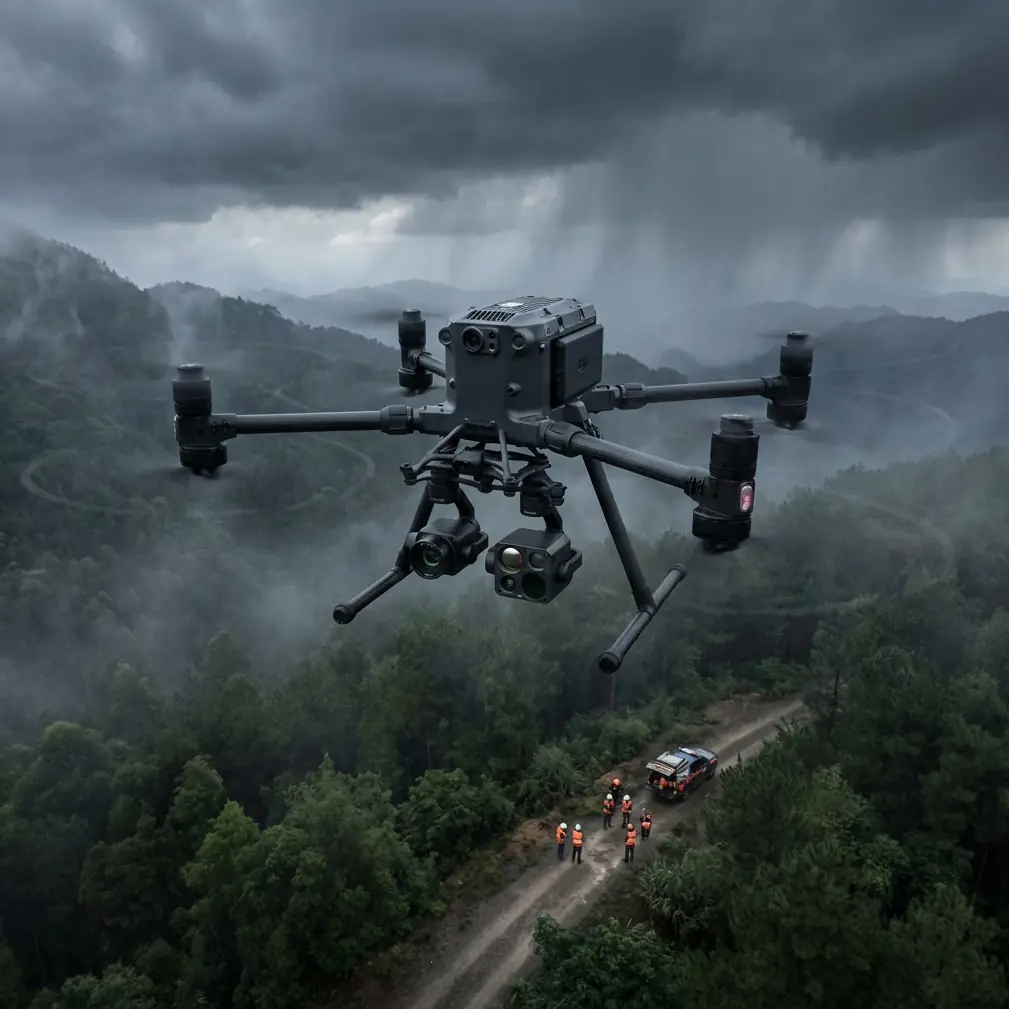
Expert Filming With Matrice 400 on Remote Construction Sites: Battery Discipline, Payload Choices, and Why Small Tolerances Matter
META: A field-focused Matrice 400 guide for filming remote construction sites, covering battery management, thermal workflows, photogrammetry, transmission reliability, and the engineering details that shape dependable operations.
Remote construction filming looks straightforward until the site reminds you it is not a studio. Wind comes off unfinished structures. Dust finds every gap. Distances that seemed manageable on a map start eating flight time. And once you are operating far from paved access, every weak point in your workflow gets exposed.
That is why the Matrice 400 conversation should not begin with marketing claims. It should begin with operational discipline. If you are filming a remote construction project, the aircraft matters, but the real differentiator is how you plan energy use, payload transitions, data security, and mission repeatability.
I have seen crews lose half a day not because the drone was incapable, but because they treated the airframe as the whole system. On remote jobs, the system includes battery timing, thermal and visible-light capture strategy, mapping control, transmission stability, and even respect for the kind of engineering tolerances that aircraft design manuals obsess over for good reason.
Start with the mission, not the drone
Construction filming usually blends three different tasks that people wrongly lump together:
- Progress visuals for stakeholders
- Technical image capture for photogrammetry
- Condition checks using thermal signature data
A Matrice 400 setup can support all three, but the way you fly each mission should be different.
For stakeholder video, you can prioritize smooth reveal shots, crane or tower context, and recurring angles that show progress week by week. For photogrammetry, your priorities shift to overlap, consistent altitude, shutter planning, and disciplined GCP placement. For thermal work, the timing of the flight, surface heating, and environmental conditions suddenly matter more than cinematic movement.
If you try to do all three in one improvised sortie, you usually end up compromising each one.
The field mistake I see most often: battery decisions made too late
Here is the battery management tip that matters most in remote operations: rotate packs by mission type, not just by charge percentage.
Crews often look at a battery set and think in simple terms: “These two are full, those are half-used.” That is not enough. A mapping flight, a thermal pass near structural elements, and a cinematic perimeter orbit stress the aircraft differently. In the field, I label battery usage by sortie profile and log how each pair behaved under wind, payload, and ambient temperature. That gives you a better prediction of real endurance than battery percentage alone.
Why does this matter on a remote construction site?
Because the return margin that felt comfortable during a light visual flight may be too thin when you are carrying a different payload or pushing farther down a corridor of unfinished infrastructure. Hot-swap batteries help keep the aircraft productive, but hot-swapping is only valuable if the batteries being inserted are part of a managed cycle, not a guess.
My rule is simple: never assign your least predictable pack pair to your most distant flight leg. Use your best-tracked batteries for the longest outbound task, and save shorter, near-homepoint missions for batteries with less ideal recent history.
That one habit prevents rushed recoveries and sloppy decisions late in the day.
Why transmission stability changes how you frame the site
On remote jobs, the value of strong transmission is not just that you can “fly farther.” That is the least mature way to think about it.
Reliable O3 transmission changes how confidently you can inspect staging yards, elevated steel, roof decks, haul roads, and temporary access routes without constantly repositioning your ground crew. It also changes how safely and efficiently you can maintain composition while working around cranes, stockpiles, and changing topography.
When a remote site has multiple elevation levels, the signal path becomes part of your planning. A stable link gives you more than control; it gives you cleaner decision-making. You spend less mental bandwidth second-guessing the feed and more attention on obstacle spacing, framing, and mission objectives.
If your client expects both progress video and actionable site intelligence, that matters.
Thermal is not an add-on. It is a different layer of jobsite truth.
Construction teams increasingly want more than polished visuals. They want evidence. Thermal signature work can reveal uneven heat patterns across roofing sections, moisture intrusion indicators, overloaded electrical areas, or inconsistencies in building envelope behavior during commissioning phases.
But thermal flights fail when pilots treat them like standard camera missions.
The trick is to define what problem you are trying to see. Are you looking for insulation anomalies? HVAC performance issues? Temporary power hotspots? Water ingress suspicion after weather exposure? Your flight altitude, angle, and timing should change accordingly.
This is where the Matrice 400 becomes useful as a platform rather than just a flying camera. You can structure the day so visible imaging handles your cinematic and progress needs, then switch into a thermal workflow when conditions are best for contrast.
On remote construction sites, that often means planning thermal capture early or late rather than squeezing it into midday because the crew happens to be ready.
Photogrammetry is where discipline pays off
A lot of remote construction stakeholders say they want “a map,” but what they actually need is a repeatable spatial record. That means photogrammetry with consistent procedures.
The basics are familiar: overlap, altitude consistency, exposure control, and precise GCP use. The advanced part is operational consistency across weeks or months. If you are documenting mass grading, foundations, structural rise, or road progress, your real advantage comes from being able to compare datasets over time without introducing unnecessary capture variance.
GCPs are still one of the easiest places to lose quality. On a messy remote site, ground control points get moved, obscured, or damaged. If your crew does not verify them before launch, your model accuracy suffers. The result may still look attractive, but attractive is not the same as trustworthy.
I recommend a preflight mapping checklist that includes:
- GCP visibility confirmation
- Surface condition review for reflective glare or standing water
- Lighting consistency decision
- Battery assignment by route length
- Return-to-home logic review based on temporary vertical obstacles
That last point is often missed. Construction sites grow upward. A return path that was clean last month may now cross a crane, temporary mast, or partially completed structure.
Small engineering tolerances explain big reliability outcomes
This may sound far removed from a Matrice 400 filming workflow, but it is not. One of the reference materials behind this discussion comes from an aircraft design handbook section on pipeline connection seals and dimensional control. It specifies, among other things, that when the outer diameter is below 100 mm, the thickness is 1 mm, and when it exceeds 100 mm, the thickness increases to 1.5 mm. It also specifies tolerance grades such as H10 for outer diameter and h10 for inner diameter, with thickness deviation controlled to ±0.1 mm. The material noted is polytetrafluoroethylene.
Why should a remote construction drone operator care about that?
Because dependable aircraft operations are built on the same principle: tiny physical details create large differences in field reliability. Seals, connectors, tolerances, and material behavior under stress determine whether a machine remains stable when heat, dust, vibration, and repeated assembly cycles start accumulating.
Most pilots think about batteries and cameras. Fewer think about the integrity of interfaces. Yet remote filming punishes every weak mechanical decision. Repeated payload changes, travel vibration in hard cases, temperature swings, and long setup days all place stress on connection points. The handbook’s emphasis on sub-millimeter variation is a reminder that aviation reliability comes from respecting details too small to look dramatic in a spec sheet.
That mindset makes you a better Matrice 400 operator. You inspect mating surfaces. You protect connectors from contamination. You do not force assemblies. You watch for wear patterns before they become faults.
Weight and balance thinking belongs in drone operations too
Another source referenced here comes from a civil aircraft design manual section on weight and balance. Even though it discusses much larger aircraft, one practical detail stands out: the table notes a configuration that includes a tail support weighing 2360 lb. That is a very specific reminder that aircraft performance assessments depend on what is actually onboard, not what is assumed.
For Matrice 400 work, the operational significance is direct.
Any time you alter the aircraft’s mission configuration—different payload, additional accessories, changed mounting arrangement, alternate battery condition—you are changing the practical performance envelope of the sortie. No, you are not doing airliner-level mass calculations in the field. But the discipline behind weight-and-balance thinking still applies.
Remote construction pilots should ask:
- What payload is mounted for this flight?
- How does that change endurance and handling?
- Is this a mapping leg, a hover-intensive inspection leg, or a moving video leg?
- Are wind and climb requirements higher than on the previous sortie?
- Has the site added vertical elements that increase power demand during repositioning?
The crews that answer these questions before takeoff are usually the crews that come home with cleaner data and fewer surprises.
Remote jobsite workflow that actually works
If I were building a repeatable Matrice 400 filming workflow for remote construction, it would look like this:
1. Split the day into capture blocks
Do not blend everything. Assign separate windows for cinematic video, mapping, and thermal imaging.
2. Log batteries by behavior
Track not just state of charge, but which packs handled long outbound routes, hover-heavy inspection work, or windy conditions. Hot-swap batteries save time, but only if your swap plan is deliberate.
3. Reconfirm the site geometry every visit
A construction site changes fast. Cranes move. Towers rise. Material stacks appear. Update your flight logic before every mission.
4. Use GCPs like they matter
Because they do. In photogrammetry, weak control turns a polished deliverable into a questionable one.
5. Treat transmission as a planning tool
O3 transmission is not there to encourage lazy standoff distance. It is there to support stable, informed piloting across uneven terrain and complex line-of-sight conditions.
6. Secure your data path
If you are capturing sensitive commercial progress imagery, client expectations around data handling are rising. AES-256 matters because some construction projects involve infrastructure layouts, internal build sequencing, or asset documentation that should not be casually exposed.
7. Build in battery reserve for terrain, not just distance
Remote sites often involve hidden energy costs: elevation changes, headwinds down haul roads, or extended climbs to clear structures on return.
A note on BVLOS planning
BVLOS gets discussed too casually in the drone world. For construction operators, the real point is not ambition; it is procedure. If your operation is structured in a way that contemplates longer-range work, your mission design, compliance planning, site communication, and contingency thinking all have to mature with it.
The Matrice 400 may fit into that broader operational conversation, but on a remote construction site, discipline should arrive before range confidence. Good operators earn distance by building reliable habits first.
What clients remember
Clients do not usually remember your aircraft model first. They remember whether you delivered a stable weekly record of progress, whether the map aligned with site needs, whether thermal findings were actionable, and whether the team looked composed in the field.
That composure comes from preparation.
If you want a practical discussion about configuring a Matrice 400 workflow for remote construction filming, including payload planning and battery rotation logic, you can message our flight team here.
The aircraft is only part of the story. The real edge comes from operating it like a system shaped by aviation logic: manage energy carefully, respect tolerances, understand configuration changes, and capture the right data in the right window.
That is how remote site filming stops being just impressive footage and starts becoming dependable project intelligence.
Ready for your own Matrice 400? Contact our team for expert consultation.