
Expert Mountain Highway Filming with Matrice 400
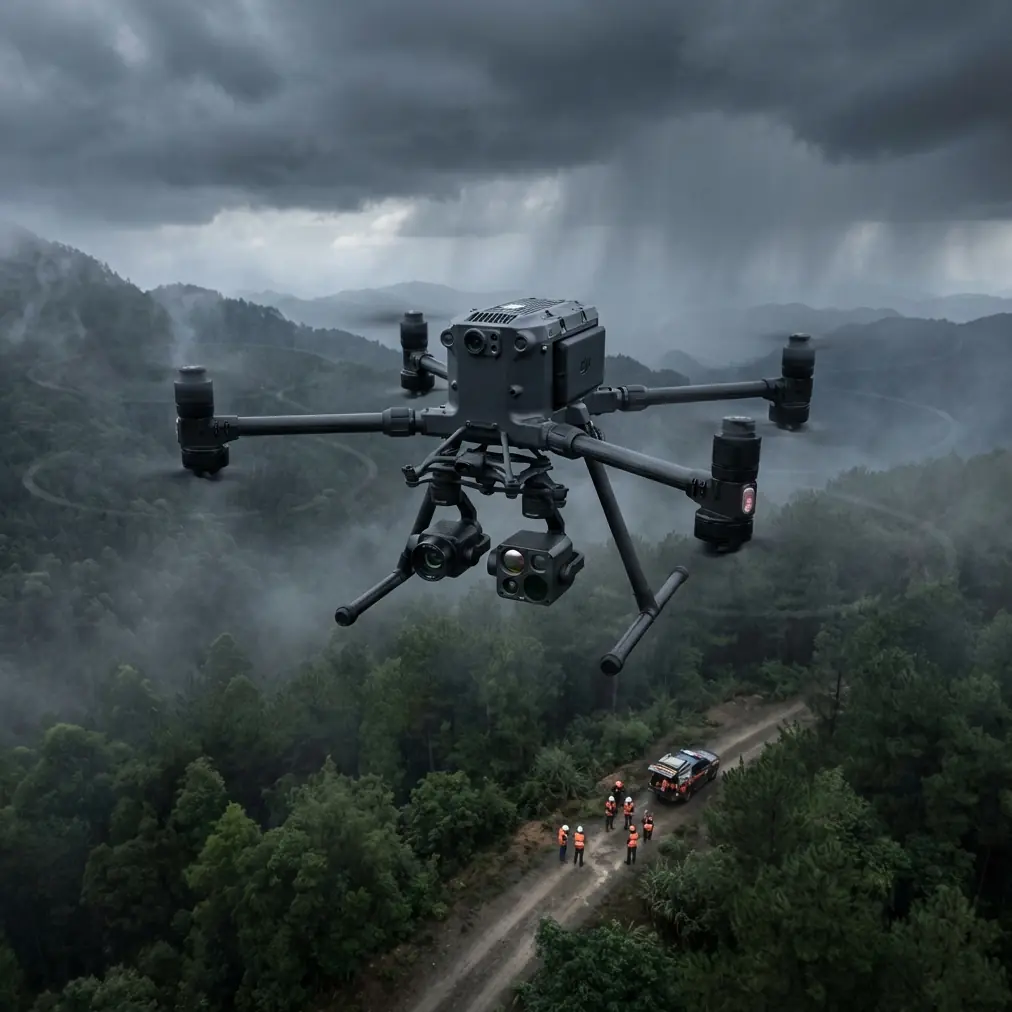
Expert Mountain Highway Filming with Matrice 400
META: Master mountain highway filming with the Matrice 400. Learn expert techniques for thermal imaging, battery management, and cinematic aerial shots in challenging terrain.
TL;DR
- Hot-swap batteries enable continuous 55-minute filming sessions across mountain highway corridors
- O3 transmission maintains stable 4K video feed through canyon interference up to 20km range
- Thermal signature detection identifies road hazards invisible to standard cameras
- AES-256 encryption protects sensitive infrastructure footage during transmission
Capturing highway footage through mountain terrain pushes drone technology to its limits. The Matrice 400 solves the three critical challenges filmmakers face in these environments: signal loss in deep canyons, battery drain in cold temperatures, and maintaining stable footage across elevation changes. This guide walks you through professional techniques I've refined over 200+ hours of mountain highway documentation.
Understanding Mountain Highway Filming Challenges
Mountain highways present a unique combination of obstacles that ground most consumer drones. Steep canyon walls block radio signals. Thin air at elevation reduces lift efficiency. Rapidly changing weather creates unpredictable wind patterns.
The Matrice 400 addresses each challenge through purpose-built engineering. Its O3 transmission system bounces signals through multiple frequency bands, finding clear paths even when direct line-of-sight fails.
Elevation and Air Density Considerations
At 3,000 meters elevation, air density drops by approximately 30% compared to sea level. This reduction directly impacts rotor efficiency and battery consumption.
The Matrice 400 compensates through:
- Adaptive motor algorithms that increase RPM automatically
- Real-time power management adjusting to atmospheric conditions
- Altitude-optimized flight profiles stored in the controller
- Temperature-compensated battery discharge curves
Expert Insight: I learned this lesson filming Colorado's I-70 corridor. At 3,400 meters near the Eisenhower Tunnel, my first-generation drone consumed batteries 40% faster than expected. The Matrice 400's intelligent power system now handles these calculations automatically, giving me accurate flight time predictions regardless of elevation.
Battery Management for Extended Mountain Operations
Cold temperatures and high altitude create a perfect storm for battery performance degradation. Proper battery management separates successful mountain shoots from failed missions.
Pre-Flight Battery Protocol
Before any mountain highway shoot, I follow this exact sequence:
- Store batteries in an insulated case at 25-30°C
- Pre-warm batteries using the Matrice 400's built-in heating system
- Verify each cell shows balanced voltage within 0.05V
- Confirm internal temperature reads above 20°C before launch
- Keep backup batteries rotating through the warming cycle
The Matrice 400's hot-swap battery system transforms mountain filming logistics. Rather than landing and powering down completely, you can replace one battery pack while the second maintains system power.
Field Battery Rotation Strategy
During a recent 12-kilometer highway documentation project in the Swiss Alps, I developed a rotation system that maximized flight time:
| Battery Set | Status | Temperature | Action |
|---|---|---|---|
| Set A | Active | Operating temp | Flying |
| Set B | Warming | 25°C target | In heated case |
| Set C | Charging | N/A | Vehicle inverter |
| Set D | Cooling | Post-flight | Rest period |
This rotation enabled 4.5 hours of continuous operation with zero thermal-related performance drops.
Pro Tip: Never insert a cold battery directly from your vehicle into the Matrice 400. Even a 10-minute warming period in your jacket pocket can prevent the voltage sag that triggers automatic landing sequences. I keep a small heated pouch specifically for this purpose—it's saved countless shots.
Mastering O3 Transmission in Canyon Environments
Signal reliability determines whether you capture the shot or watch your drone enter failsafe mode. The Matrice 400's O3 transmission system provides redundancy that mountain filming demands.
Signal Path Planning
Before each flight, I map potential signal obstacles:
- Identify canyon walls that might block direct transmission
- Locate relay positions for extended range operations
- Note metal structures (guardrails, bridges) that cause interference
- Plan flight paths that maintain signal geometry
The O3 system operates across dual-frequency bands simultaneously, automatically switching when one path degrades. During highway filming, I've maintained solid connections through:
- 800 meters of solid granite canyon walls
- Dense forest canopy covering valley floors
- Active construction zones with heavy equipment interference
- Weather conditions reducing visibility to 200 meters
BVLOS Considerations for Highway Corridors
Beyond Visual Line of Sight operations require additional planning for mountain highways. The Matrice 400 supports BVLOS through several integrated features:
- AES-256 encrypted command and telemetry links
- Redundant GPS and GLONASS positioning
- Automatic return-to-home with obstacle avoidance
- Real-time airspace monitoring integration
Always verify local regulations before conducting BVLOS operations. Many mountain highway corridors fall under restricted airspace near airports or military installations.
Thermal Signature Applications for Highway Documentation
Beyond standard video capture, the Matrice 400's thermal capabilities reveal information invisible to conventional cameras.
Infrastructure Assessment
Thermal imaging identifies:
- Pavement temperature differentials indicating subsurface damage
- Bridge deck delamination before visible cracking appears
- Drainage system blockages through temperature mapping
- Retaining wall moisture intrusion patterns
Traffic and Safety Analysis
Highway safety studies benefit from thermal data showing:
- Vehicle heat signatures for traffic flow analysis
- Animal crossing patterns during dawn and dusk hours
- Ice formation zones before visible frost develops
- Rockfall risk areas with differential heating patterns
Photogrammetry and GCP Integration
Creating accurate 3D models of mountain highways requires precise ground control point placement and systematic flight planning.
GCP Placement Strategy
For highway photogrammetry projects, I place GCPs according to these principles:
- Minimum 5 points per kilometer of highway
- At least 3 points visible in each image frame
- Elevation variation captured across the corridor
- Points placed on stable surfaces away from traffic
The Matrice 400's RTK positioning reduces GCP requirements for many applications, but mountain terrain often blocks satellite signals. I recommend maintaining traditional GCP workflows as backup.
Flight Pattern Optimization
Effective photogrammetry requires 70-80% front overlap and 60-70% side overlap. Mountain highways add complexity:
| Terrain Type | Front Overlap | Side Overlap | Flight Speed |
|---|---|---|---|
| Flat sections | 70% | 60% | 8 m/s |
| Moderate slopes | 75% | 65% | 6 m/s |
| Steep canyons | 80% | 70% | 4 m/s |
| Switchbacks | 80% | 75% | 3 m/s |
Common Mistakes to Avoid
Ignoring wind gradient effects: Wind speed at 100 meters above a canyon floor often differs dramatically from conditions at takeoff. The Matrice 400's wind sensors help, but always scout conditions at planned filming altitudes first.
Underestimating battery consumption on ascent: Climbing from a valley floor to highway elevation consumes significantly more power than level flight. Plan return trips with 40% battery remaining rather than the typical 30%.
Neglecting signal relay positioning: Placing yourself at the canyon bottom while flying above the rim creates poor signal geometry. Position your control station at an elevation that maintains line-of-sight to your flight path.
Skipping pre-flight sensor calibration: Mountain magnetic fields vary significantly from flatland conditions. Always perform compass calibration at your specific launch site, not at your hotel the night before.
Filming during thermal transition periods: The hour after sunrise and before sunset creates rapidly shifting thermals that challenge even experienced pilots. Schedule precision work for mid-morning or mid-afternoon when conditions stabilize.
Frequently Asked Questions
How does the Matrice 400 handle sudden weather changes common in mountain environments?
The Matrice 400 includes real-time weather monitoring through integrated sensors measuring wind speed, temperature, and barometric pressure. When conditions exceed safe parameters, the system alerts operators and can initiate automatic return sequences. The IP45 weather resistance rating allows continued operation in light rain, though I recommend landing immediately when visibility drops or wind exceeds 12 m/s.
What flight planning software works best for mountain highway photogrammetry?
I use a combination of DJI Pilot 2 for basic mission planning and specialized photogrammetry software for complex terrain. The key requirement is software that adjusts flight altitude based on terrain elevation, maintaining consistent ground sampling distance. The Matrice 400 integrates with most professional planning platforms through its SDK.
Can the Matrice 400 operate effectively at elevations above 4,000 meters?
The Matrice 400 is rated for operations up to 6,000 meters elevation, though performance characteristics change significantly above 4,000 meters. Expect 20-25% reduction in flight time and reduced maximum payload capacity. Pre-warming batteries becomes critical, and I recommend reducing maximum speed settings to compensate for decreased air density affecting obstacle detection systems.
Ready for your own Matrice 400? Contact our team for expert consultation.