
Matrice 400 for Urban Highway Filming: A Technical Review
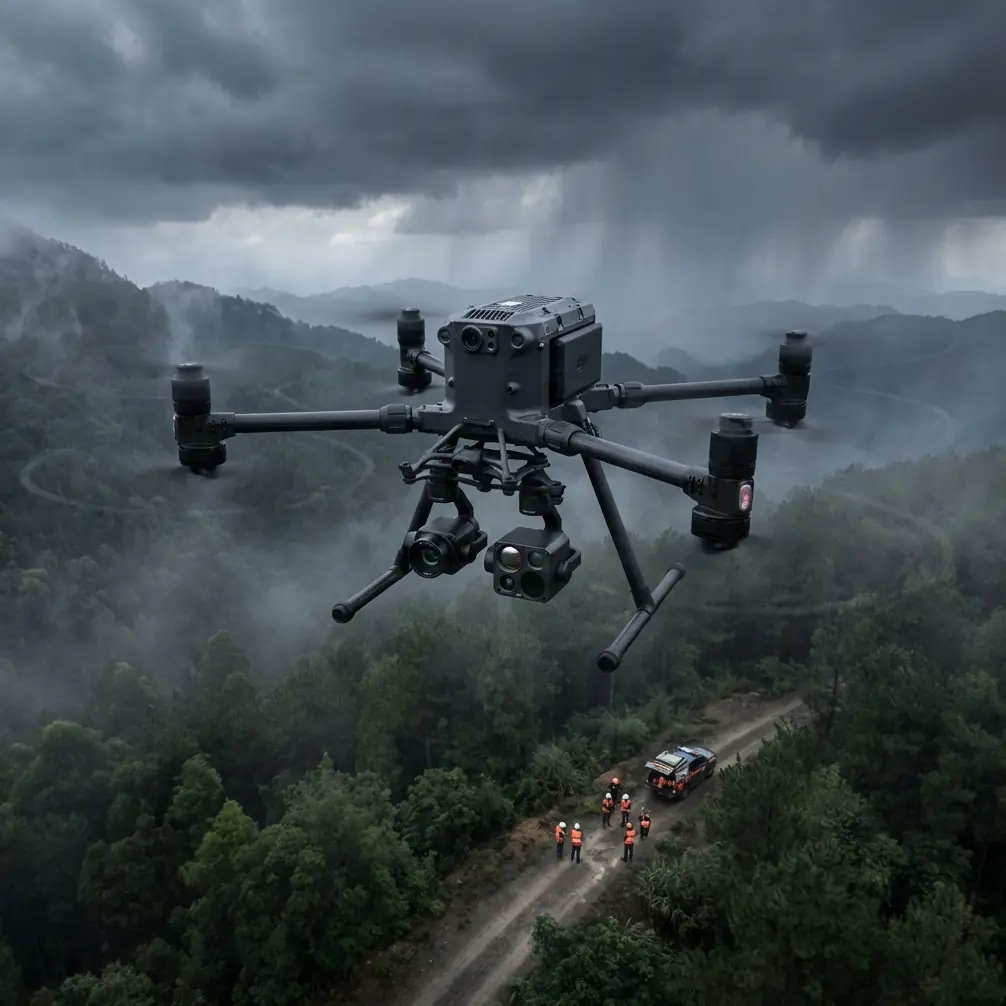
Matrice 400 for Urban Highway Filming: A Technical Review from the Flight Line
META: Expert technical review of the Matrice 400 for urban highway filming, covering transmission reliability, hot-swap workflow, thermal checks, photogrammetry support, and pre-flight cleaning practices.
Urban highway filming looks straightforward on paper. Long corridors. Predictable traffic flow. Easy visual references. In practice, it is one of the more demanding environments you can hand to a heavy-lift enterprise UAV. You are dealing with layered RF noise, reflective surfaces, overpasses, changing thermal conditions, tight takeoff zones, and pressure to capture usable footage without disrupting normal city movement.
That is where the Matrice 400 starts to separate itself from lighter platforms.
I am not talking about spec-sheet theater. I mean the practical value of systems that keep a crew efficient on a live urban assignment: stable transmission, battery management that does not force awkward pauses, payload flexibility for optical and thermal work, and enough airframe confidence to support repeatable corridor flights when the brief includes both cinematic footage and engineering-grade data capture.
For a highway project in a city, those details matter more than headline claims.
Why the Matrice 400 fits the highway filming brief
Highway work rarely stays in one lane, so to speak. A client may ask for sweeping establishing footage in the morning, inspection-style passes over ramps before noon, and georeferenced imagery for asset mapping later in the day. A platform that can switch between visual storytelling and structured data capture saves time and reduces operational friction.
The Matrice 400 sits in that enterprise category where payload capacity and mission flexibility become the real story. For urban highway filming, that means you can configure the aircraft around the assignment rather than forcing the assignment to fit a narrow camera setup. If one segment requires thermal signature review of expansion joints, drainage anomalies, or heat buildup on road surfaces and nearby utility infrastructure, that is not a separate aircraft day. If the next task requires photogrammetry for a bridge approach or interchange model, the same platform can support a more disciplined capture workflow.
That flexibility is not a luxury in urban production. It is operational efficiency.
Start with the least glamorous step: cleaning the safety sensors
Before I talk cameras, transmission, or battery strategy, there is one pre-flight step that deserves more respect than it usually gets: cleaning the vision and sensing surfaces before every urban highway sortie.
On these jobs, the aircraft is often launched from roadside lots, construction staging areas, rooftops, or paved shoulders with a film permit window that does not leave much room for error. Dust, diesel residue, road grit, brake particulates, pollen, and light moisture film all collect faster than many crews realize. If the aircraft uses obstacle sensing, positioning cameras, and other environmental awareness systems to maintain precise flight behavior, dirty sensor windows can quietly degrade the reliability of that safety layer.
A proper pre-flight cleaning routine is simple: inspect the forward, lateral, upward, and downward sensing areas; remove dust with a blower or soft brush; wipe lenses and covers with the right material; check for road grime around vents and camera glass. It takes minutes. On a highway set, those minutes can be the difference between smooth obstacle awareness near signs and gantries versus nuisance warnings or reduced confidence in tight urban geometry.
This is not just housekeeping. It directly affects how confidently you can work around overpasses, light poles, barriers, and elevated signage while maintaining the buffer and line discipline that professional urban filming demands.
O3 transmission is not a buzzword when the city starts fighting your signal
One of the most operationally significant features in this class of aircraft is the transmission system. The reason is obvious once you have flown along urban highways: there are few cleaner demonstrations of RF hostility than a city corridor filled with vehicles, telecom infrastructure, concrete, steel, and layered wireless traffic.
That is why O3 transmission deserves attention here.
On a highway filming mission, signal integrity is not only about preserving a live image for the camera operator. It affects confidence in framing, route control, repositioning speed, and crew communication around changing traffic patterns and temporary obstructions. If you lose trust in the link, the entire mission profile becomes conservative and slower. You fly shorter legs, reset more often, and spend more time verifying telemetry than capturing useful footage.
With O3 in the picture, the Matrice 400 is better suited to maintain a robust control and video link in environments where interference is a practical concern, not a theoretical one. For urban highway work, that translates into fewer unnecessary interruptions and a stronger ability to hold clean framing while the aircraft tracks a road segment or works laterally across ramps and stacked interchanges.
For teams dealing with sensitive infrastructure footage, AES-256 also matters. Encryption is not glamorous, but city projects often involve transport departments, engineering consultants, or contractors who care deeply about how imagery and flight data are protected. AES-256 is operationally meaningful because it supports a more defensible workflow for securing transmission and project information, especially when multiple stakeholders are involved and data governance is part of the job.
Hot-swap batteries change the pace of the day
Every experienced pilot knows how much mission quality depends on battery handling. Highway filming often involves waiting for the right traffic density, the right light angle, or a temporary clearance from the ground coordinator. Those delays can chew through your productivity if the aircraft requires lengthy power-down cycles between flights.
Hot-swap batteries are one of those features that sound incremental until you use them on a long urban assignment.
For the Matrice 400, hot-swapping means the crew can turn the aircraft around much faster while preserving mission continuity. That has obvious benefits for filming, but it also helps when you are gathering structured data in segments. If your team is working through multiple highway blocks, bridge approaches, or elevated exits, quick battery changes reduce the risk of losing momentum between flight sets. You keep the same launch zone secured, maintain crew roles, and get back in the air before the environmental conditions shift.
In urban filming, conditions shift constantly. Sun angle changes the look of asphalt and concrete. Traffic density changes the visual story. Wind around overpasses can become less predictable later in the day. A platform with hot-swap support lets you exploit the good window instead of watching it pass while the aircraft sits offline.
Thermal signature work is more useful on highways than many filming teams expect
Most people hear “highway filming” and think only of conventional video. That is too narrow.
The stronger value proposition for the Matrice 400 in this environment is that it can support both media capture and analytical imaging in the same operational ecosystem. Thermal signature data can be relevant for more than dramatic visuals. It can help reveal surface temperature differences, drainage patterns after weather events, heat concentration around mechanical equipment near tunnel entries or service zones, and anomalies in adjacent infrastructure.
For civil engineering teams, utility consultants, and transport asset managers, thermal data adds a layer that standard RGB footage simply cannot provide. The significance is not the image itself; it is the comparison between visual condition and heat behavior. If a client wants a documentary-style deliverable and a technical review package from the same field day, the Matrice 400 is a practical platform for that crossover.
That crossover matters because urban flight windows are difficult to secure. When one aircraft can serve multiple project goals, the operator’s day becomes easier to justify and easier to plan.
Photogrammetry and GCP discipline make the aircraft useful beyond video
This is where many “filming” discussions fall apart. The client says they want footage, but once the drone is on site, somebody asks whether the same mission can support measurements, models, or progress documentation. If the platform and crew are prepared, that is an opportunity. If not, it becomes a compromised add-on.
The Matrice 400 is better understood as a production-and-data aircraft than a pure camera ship.
For highway environments, photogrammetry can be valuable for interchange visualization, retaining wall condition records, construction progress tracking, embankment monitoring, and digital surface modeling. If you pair that with disciplined Ground Control Point workflow, the results become much more useful for engineering and planning teams. GCPs are not exciting, but they are often the difference between imagery that merely looks good and imagery that supports defensible spatial outputs.
This is one of the clearest operational advantages of using a platform like the Matrice 400 for an urban highway brief. You can collect aesthetically strong footage, then fly a more structured grid or corridor pattern for mapping without changing your aircraft ecosystem. That continuity reduces setup errors and simplifies crew logistics.
Urban BVLOS conversations should stay practical
BVLOS is a term that attracts too much fantasy and too little operational restraint. For highway corridors, the idea is naturally attractive because roads stretch far beyond a single vantage point. But in urban environments, BVLOS planning must be approached through local regulation, airspace constraints, visual environment complexity, risk controls, and mission design discipline.
The Matrice 400 is the kind of platform that belongs in that conversation because it is built for serious enterprise tasks, not casual recreational flying. Still, the relevant point for urban highway crews is not whether the aircraft can support long corridor operations in theory. The real issue is whether your specific project, authority approvals, observer plan, communication protocol, and environment justify that profile safely and legally.
Used properly, the platform can support highly efficient corridor work. Used carelessly, any aircraft becomes the wrong aircraft.
For most city highway jobs, the smarter approach is often segmented operations with strong visual oversight, clear emergency procedures, and disciplined launch-point planning. That still allows the Matrice 400 to show its strengths without pretending the urban environment is simpler than it is.
Camera movement is only half the job; airframe composure is the other half
What experienced crews appreciate about larger enterprise aircraft is not just their payload options. It is the way they hold themselves in space. Highways create strange wind behavior around barriers, bridge edges, sound walls, and high-rise corridors. Smaller aircraft can capture beautiful shots in these spaces, but they often require more compromises in movement speed, angle, or lens choice.
The Matrice 400’s enterprise design philosophy gives it the kind of composure that benefits urban corridor filming. That composure shows up when you are trying to keep a long tracking shot steady, hold a reveal over a stack interchange, or maintain a consistent angle on elevated infrastructure while the environment throws mixed airflow at the aircraft.
For film crews, that means fewer fights with the platform. For engineering teams, it means cleaner repeat passes and more consistent data collection.
Where it shines most: mixed-purpose city assignments
If your work is only beauty footage, there are lighter tools that can do excellent work. If your work is only mapping, there are mission-specific configurations that may fit neatly into a narrower workflow. The Matrice 400 earns its place when the project blends visual production, technical inspection, secure data handling, and sustained field operations.
That combination is common in urban highway jobs.
A transport authority may want cinematic context for public communication, thermal review for selected assets, photogrammetry for planning, and a secure operational workflow because the imagery touches critical infrastructure. In that situation, details like O3 transmission, AES-256, hot-swap batteries, and payload flexibility stop looking like checklist items and start looking like the backbone of the mission.
If you are planning that kind of deployment and want to compare configurations or workflow options, you can reach out here via direct project chat.
Final assessment
The Matrice 400 is not interesting because it is new or large or enterprise-branded. It is interesting because it matches the messy reality of urban highway work. It supports crews that need reliable transmission in dense city RF conditions, faster aircraft turnaround through hot-swap batteries, protected data pathways with AES-256, and enough payload flexibility to move between visual capture, thermal signature analysis, and photogrammetry supported by GCP discipline.
And that first pre-flight cleaning step I mentioned? Keep it in your routine. On urban roadside jobs, clean sensing surfaces are one of the cheapest ways to preserve the aircraft’s safety systems and maintain confidence in close, infrastructure-heavy environments.
That is the real theme of the Matrice 400 for highway filming: not extravagance, but operational control. Better control of time. Better control of data quality. Better control of risk in places where small oversights become expensive quickly.
Ready for your own Matrice 400? Contact our team for expert consultation.