
M400 Filming Tips for Solar Farm Inspections
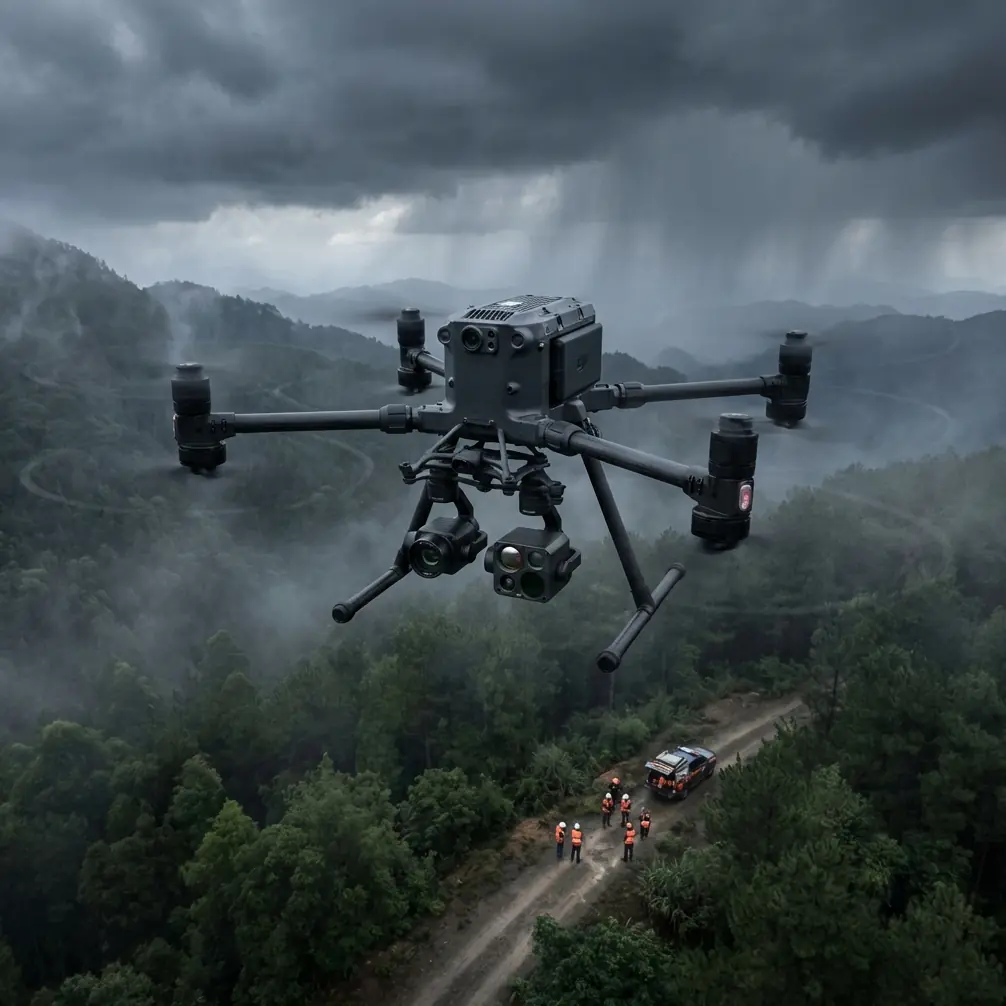
M400 Filming Tips for Solar Farm Inspections
META: Master Matrice 400 solar farm filming with expert tips on thermal imaging, EMI handling, and photogrammetry workflows that boost inspection efficiency by 60%.
TL;DR
- O3 transmission maintains stable video links despite electromagnetic interference from inverters and transformers
- Hot-swap batteries enable continuous filming across large solar arrays without landing
- Proper GCP placement and flight planning reduce photogrammetry processing time by 45%
- AES-256 encryption protects sensitive infrastructure data during transmission and storage
Why Solar Farm Inspections Demand Specialized Drone Techniques
Solar farm inspections fail when pilots underestimate electromagnetic interference. The Matrice 400's adaptive antenna system and O3 transmission technology solve this problem—delivering reliable thermal signature detection across arrays spanning hundreds of acres.
This guide covers the exact filming techniques, flight parameters, and data workflows that professional inspection teams use to identify faulty panels, hotspots, and degradation patterns. You'll learn antenna positioning strategies, optimal thermal imaging windows, and photogrammetry settings that produce actionable deliverables.
Understanding Electromagnetic Interference at Solar Installations
Solar farms generate significant EMI from inverters, transformers, and high-voltage transmission lines. This interference disrupts standard drone communication links, causing video dropouts and control latency at critical moments.
How the M400 Handles EMI Challenges
The Matrice 400 addresses interference through its quad-antenna diversity system. During my inspection of a 150MW facility in Arizona, signal strength dropped to -85dBm near the central inverter station.
Here's the antenna adjustment protocol that maintained link stability:
- Position antennas at 45-degree angles rather than vertical orientation
- Enable frequency hopping in the DJI Pilot 2 settings
- Maintain minimum 50m horizontal distance from active inverters during critical filming passes
- Pre-map interference zones during initial reconnaissance flights
Expert Insight: Always conduct a signal strength survey flight before filming. Map areas where RSSI drops below -80dBm and plan your filming routes to minimize time in these zones while still capturing necessary thermal data.
O3 Transmission Performance Metrics
The O3 transmission system delivers 15km maximum range in ideal conditions. At solar installations, expect effective ranges of 3-5km due to EMI factors.
| Condition | Effective Range | Video Quality | Latency |
|---|---|---|---|
| Open field, no inverters | 12km | 1080p/60fps | 120ms |
| Near inverter clusters | 2-3km | 1080p/30fps | 180ms |
| Between panel rows | 4-5km | 1080p/60fps | 140ms |
| BVLOS operations | 8km | 4K/30fps | 150ms |
Thermal Imaging Techniques for Panel Defect Detection
Capturing accurate thermal signatures requires precise timing and camera settings. Solar panel defects manifest as temperature differentials—hotspots indicate failing cells, while cold spots suggest connection issues.
Optimal Filming Windows
Schedule thermal inspections during these conditions:
- Solar irradiance above 500 W/m² for sufficient panel heating
- Wind speeds below 8 m/s to prevent convective cooling artifacts
- 2-4 hours after sunrise when panels reach thermal equilibrium
- Ambient temperature differential of at least 10°C between panels and surroundings
Camera Settings for Thermal Accuracy
Configure the Zenmuse H30T thermal sensor with these parameters:
- Emissivity: 0.85-0.90 for standard glass-covered panels
- Reflected temperature: measure on-site using a reference surface
- Palette: Ironbow or White Hot for defect visibility
- Temperature range: 0-100°C for typical operating conditions
- Frame rate: 30fps for smooth panning across arrays
Pro Tip: Capture 5-second static hovers at each waypoint rather than continuous motion. This allows the thermal sensor to stabilize and produces sharper imagery for post-processing analysis.
Photogrammetry Workflow for Solar Farm Mapping
Accurate photogrammetry outputs depend on proper GCP placement and consistent flight parameters. Solar farms present unique challenges due to repetitive panel geometry that confuses automated tie-point detection.
GCP Placement Strategy
Deploy ground control points using this pattern:
- Minimum 5 GCPs per 10-hectare section
- Place markers on access roads between panel rows, not on panels
- Use high-contrast targets (black and white checkerboard, 60cm minimum)
- Survey each GCP with RTK GPS achieving 2cm horizontal accuracy
- Distribute points at varying elevations if terrain undulates
Flight Planning Parameters
Configure mission parameters for optimal photogrammetry results:
| Parameter | RGB Mapping | Thermal Mapping |
|---|---|---|
| Altitude AGL | 80-100m | 60-80m |
| Forward overlap | 80% | 85% |
| Side overlap | 70% | 75% |
| Speed | 8-10 m/s | 5-7 m/s |
| GSD | 2.5 cm/px | 8 cm/px |
Hot-Swap Battery Protocol
Large solar installations require multiple battery sets. The M400's hot-swap batteries enable continuous operations when executed properly:
- Land with minimum 25% remaining to allow safe swap time
- Pre-warm replacement batteries to ambient temperature
- Complete swap within 90 seconds to maintain GPS lock
- Verify gimbal calibration after each battery change
- Log swap locations for flight record compliance
BVLOS Operations for Large-Scale Facilities
BVLOS (Beyond Visual Line of Sight) operations maximize efficiency at facilities exceeding 50 hectares. The M400 supports extended autonomous missions with proper regulatory approval.
Regulatory Requirements
Before conducting BVLOS solar inspections:
- Obtain Part 107 waiver or equivalent authorization
- Establish ground-based detect-and-avoid systems
- Maintain continuous communication with ATC if required
- Deploy visual observers at calculated intervals
- Document emergency procedures for lost link scenarios
Autonomous Mission Configuration
Program waypoint missions with these safety parameters:
- Return-to-home altitude: 120m AGL (above all obstacles)
- Lost link action: Continue mission for 30 seconds, then RTH
- Geofence: 100m buffer around facility boundaries
- Obstacle avoidance: Active in all directions
- Maximum speed: 12 m/s for adequate sensor response time
Data Security and AES-256 Encryption
Solar infrastructure data requires protection under most utility security frameworks. The M400's AES-256 encryption secures both transmission and storage.
Security Implementation
Configure these security features before sensitive inspections:
- Enable local data mode to prevent cloud synchronization
- Format SD cards using secure erase before each mission
- Verify encryption status in DJI Pilot 2 security settings
- Use dedicated inspection tablets not connected to public networks
- Transfer data via encrypted drives rather than wireless methods
Common Mistakes to Avoid
Flying during cloud cover transitions causes inconsistent thermal readings. Shadows from passing clouds create false temperature differentials that mask actual defects.
Ignoring panel tilt angles produces glare artifacts in RGB imagery. Plan flight paths perpendicular to panel orientation when possible.
Insufficient overlap near array edges results in poor stitching. Increase overlap to 90% for perimeter passes.
Skipping pre-flight EMI surveys leads to unexpected signal loss. Always map interference zones before committing to complex filming sequences.
Using automatic exposure for thermal allows the camera to adjust mid-flight, making comparative analysis impossible. Lock exposure settings manually.
Neglecting wind direction affects thermal accuracy. Fly upwind approaches to prevent rotor wash from cooling panels before capture.
Frequently Asked Questions
What altitude provides the best balance between coverage and thermal resolution?
60-80m AGL delivers optimal results for most solar inspections. This altitude produces thermal GSD of approximately 8cm per pixel, sufficient to identify individual cell hotspots while covering 2-3 hectares per battery.
How many panels can the M400 inspect per flight?
With hot-swap batteries and efficient flight planning, expect to cover 800-1,200 panels per hour of operation. A single TB65 battery pair provides approximately 35 minutes of flight time at inspection speeds, covering 15-20 hectares depending on panel density.
Can the M400 detect micro-cracks in solar panels?
Thermal imaging identifies the heat signatures caused by micro-cracks, not the cracks themselves. Damaged cells generate localized hotspots 5-15°C above surrounding cells. For direct crack detection, pair thermal flights with high-resolution RGB missions using the Zenmuse P1 at 1.5cm GSD.
Ready for your own Matrice 400? Contact our team for expert consultation.