
Expert Filming in Dusty Venues With the Matrice 400
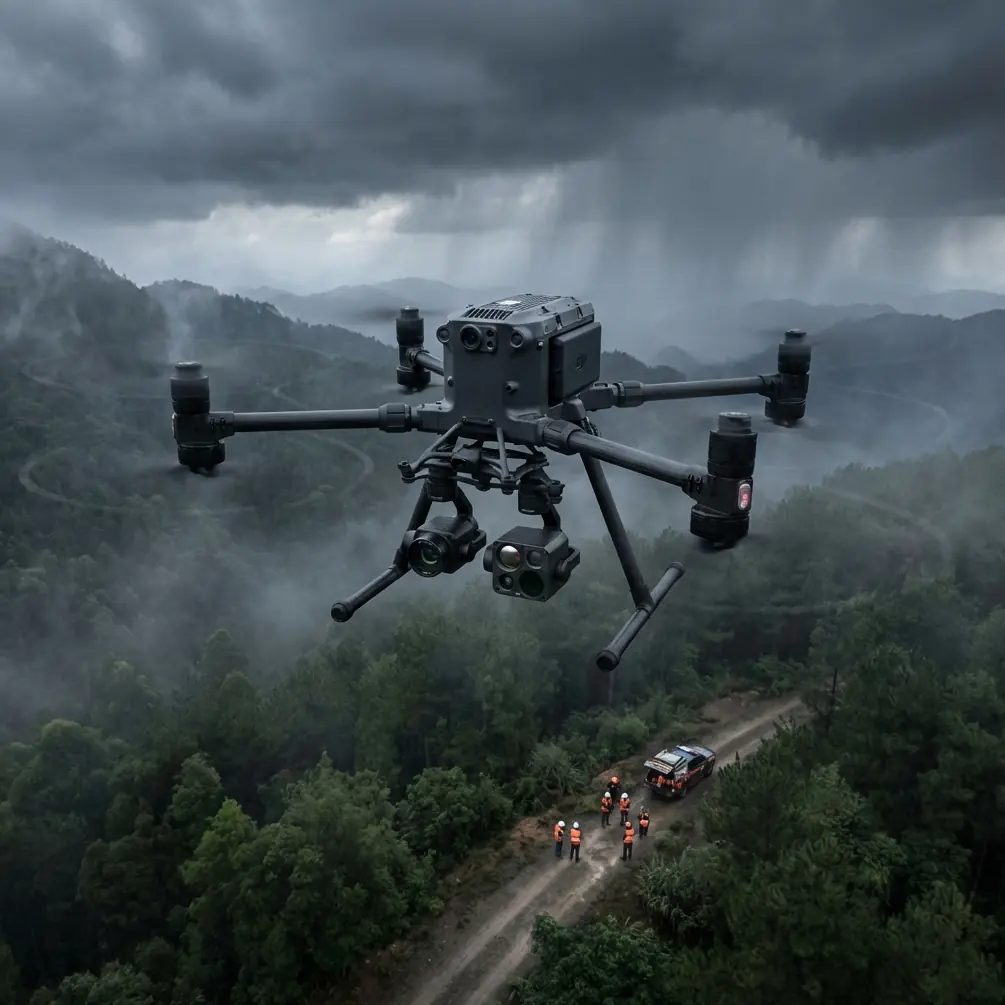
Expert Filming in Dusty Venues With the Matrice 400
META: Learn how the Matrice 400 can be configured for reliable filming in dusty venues, with practical guidance on payload strategy, transmission security, battery workflow, and mission planning.
Dust changes everything.
It gets into gimbals, settles on lenses, softens contrast, clogs vents, and turns a routine flight into a reliability test. For crews filming motorsport tracks, demolition sites, outdoor arenas, quarry events, desert festivals, or construction-heavy venues, the aircraft matters less in theory than it does in the final ten minutes of the shoot, when visibility drops, batteries are cycling fast, and the director still needs clean footage.
That is exactly where the Matrice 400 conversation becomes interesting.
With no single breaking news event to anchor this piece, the real story is operational: how a platform like the Matrice 400 fits a modern filming workflow when the venue itself is hostile to precision. Dusty environments punish weak transmission links, rushed battery swaps, exposed accessories, and improvised payload decisions. They also reveal the difference between an aircraft that is merely capable on paper and one that can support repeatable work under pressure.
For production teams shooting in dusty venues, the Matrice 400 stands out not because it solves every problem automatically, but because it gives you enough system-level control to reduce failure points where they usually appear.
The Real Problem Is Not Dust Alone
Most crews start by thinking about image quality. That is fair, but incomplete.
The first issue in a dusty venue is usually continuity. You need stable framing, predictable transmission, and enough endurance to avoid breaking the rhythm of a live or semi-live production. Dust creates secondary effects that compound fast. Pilots fly more cautiously because visual cues degrade. Spotters work harder because line-of-sight becomes less reliable in haze. Lens changes become riskier. Ground equipment ends up covered in particulate. By the time the aircraft returns, every minute on the ground is carrying more friction than it would on a clean set.
This is where features like hot-swap batteries stop being a convenience and become operationally meaningful.
If your aircraft supports a proper hot-swap workflow, you can keep momentum without forcing a full system reset between turns. In dusty venues, shorter ground handling windows matter because the aircraft spends less time exposed while open, less time near idling vehicles or wind-blown grit, and less time delaying the next shot. That translates into cleaner turnaround, steadier sortie planning, and fewer mistakes when the team is already under environmental stress.
A second issue is signal confidence. Dust itself is not a hard radio barrier, but the venues associated with dust often are. Large steel structures, temporary staging, earthworks, concrete walls, broadcast gear, and moving machinery can all make transmission less forgiving. That is why O3 transmission remains a relevant talking point in professional mission planning. A robust link is not just about seeing the image; it is about making calm, precise decisions when the environment starts stealing your margin.
For venue filming, that means fewer hesitant repositioning moves, better coordination between pilot and camera operator, and more reliable execution when the aircraft is skimming a perimeter line or tracking action across a wide site.
Why the Matrice 400 Makes Sense for Dust-Heavy Shoots
A serious aircraft for dirty environments needs to do three things well: carry the right payload mix, keep the crew informed in real time, and return usable data even when conditions are imperfect.
The Matrice 400 is compelling because it sits in that upper tier of enterprise logic. It is not just there to lift a camera. It is there to support a mission stack.
That distinction matters when you are filming a dusty venue and the brief changes halfway through the day. One moment the client wants hero shots for promotion. Next, they want thermal signature analysis around machinery, crowd flow documentation, a terrain pass for photogrammetry, or a safety sweep over restricted access areas before vehicles move again.
An aircraft that can support multiple mission types without becoming a compromise machine has a real advantage. That is the frame in which the Matrice 400 should be understood.
For example, thermal imaging in a dusty venue is not a gimmick add-on. Dust can obscure visual detail, especially in late afternoon backlight or under venue floodlighting. Thermal signature data can help identify active equipment, overheated infrastructure, recently used paths, or personnel presence in low-clarity zones. For crews operating near generators, pyrotechnic setups, industrial machinery, or temporary field power systems, that extra layer of awareness can affect both safety and shot planning.
Photogrammetry is another underappreciated angle. Many venue operators now want more than cinematic footage. They want a measurable digital record of the site. A Matrice 400 deployment that captures film assets and then supports a photogrammetry mission provides far more long-term value than a drone flight that only produces a highlight reel. If you establish clean GCP placement before launch, you can improve the spatial reliability of your map outputs and create data that is actually useful for planners, engineers, or event managers after the shoot is over.
That combination—cinematic capture plus measurable site intelligence—is why enterprise aircraft are increasingly crossing from inspection and public safety into advanced media production.
Dusty Venues Demand Better Accessory Decisions
This is also the category where third-party accessories stop being afterthoughts.
One of the smartest upgrades I have seen on dusty filming jobs is a high-quality third-party landing pad system with raised edges and weighted corners. On paper, it sounds mundane. In practice, it changes launch discipline. It keeps rotor wash from pulling loose debris into the takeoff zone, gives the crew a repeatable clean handling area, and reduces the amount of dust thrown toward the camera during liftoff and landing.
That accessory does not make for dramatic marketing copy, but it improves footage consistency and protects hardware.
The same logic applies to lens filtration and transport workflow. A third-party protective filter solution can help preserve front-element clarity when the venue is constantly shedding fine particulate. The key is not to stack random accessories onto the aircraft. The key is to choose accessories that reduce contamination events without introducing balance issues, glare, or needless setup time.
With the Matrice 400, accessory discipline should focus on preserving reliability. Dusty shoots reward boring decisions made early.
The Security Side Is Often Overlooked
Professional filming teams do not always think like enterprise operators, but they should when the job involves a large venue, restricted back-of-house routes, or pre-release event content.
AES-256 matters here.
Not because every shoot is a high-security operation, but because venue filming often includes sensitive material before the public ever sees it. That can mean stage layouts, crowd-control infrastructure, sponsor placements, test operations, VIP movement paths, or industrial processes happening adjacent to the event footprint. Encrypted links and secure handling practices reduce exposure when footage or control data could reveal more than the client intends.
When people hear “secure transmission,” they often think only in terms of cyber policy. On the ground, it is simpler than that: the client wants confidence that the aircraft is not the weak point in the production chain.
The Matrice 400 fits that expectation better when crews actually use the system as intended, with disciplined device management and mission segmentation rather than casual ad hoc flying.
BVLOS Is Relevant Even When You Are Not Flying Full BVLOS
BVLOS is one of those terms that gets thrown around too loosely, but it still belongs in this discussion.
Most venue filming is not conducted as full BVLOS work. Even so, aircraft and workflows designed with BVLOS-adjacent operational thinking tend to be better organized. They emphasize route planning, handoff logic, communication discipline, site awareness, and contingency structure. Those habits are valuable in dusty venues where visibility can degrade quickly and where obstacles are frequently temporary rather than fixed.
In other words, you do not need to be conducting a formal BVLOS mission to benefit from BVLOS-grade planning.
For a Matrice 400 crew, that means predefining holding points, emergency landing alternatives, dust-driven visibility thresholds, and payload priorities before the first takeoff. It also means knowing when the venue has become too visually unstable for precision filming, even if the client still wants “one more pass.”
That judgment is part of professional work. Aircraft capability does not replace it.
A Practical Problem-Solution Workflow for Dusty Venue Filming
If I were building a Matrice 400 workflow for this exact scenario, I would structure it around control, not speed.
First, establish a clean launch and recovery pocket away from traffic lanes and loose debris. This is where the third-party landing pad earns its keep. You are trying to create a micro-environment that protects optics and reduces contamination during the most vulnerable phases of handling.
Second, set the mission order by environmental risk. Capture your highest-value visual shots before the venue is fully active and before dust density peaks. If the day includes racing, heavy machinery, or crowd movement, your best clean-air window is usually earlier than the production team wants to admit.
Third, use the Matrice 400’s transmission and battery architecture to maintain sortie rhythm. Hot-swap batteries are not just about staying airborne longer across a day; they help preserve shot sequencing. Instead of long interruptions that force everyone to re-brief, you keep the team mentally locked into the scene.
Fourth, separate capture objectives. Do not mix cinematic improvisation with mapping discipline in the same pass unless the site is extremely simple. If the client wants photogrammetry, treat it as its own deliverable and support it with proper overlap strategy and GCP planning. If the client wants thermal output, define what thermal question you are answering before launch. “Let’s get some thermal too” is how useful data turns into a folder of ambiguous imagery.
Fifth, watch for dust effects on the footage before they become obvious. By the time the screen looks visibly compromised, you may already have lost contrast or introduced fine particulate artifacts that only show up in post. This is where a tight pilot-camera operator loop matters. A robust O3 transmission link helps the crew trust what they are seeing while there is still time to adjust.
If you need a fast second opinion on mission setup or payload strategy, you can reach out directly through this Matrice 400 planning chat and keep the conversation specific to your venue conditions.
What Readers Should Take From This
The Matrice 400 is not interesting merely because it is powerful. Plenty of aircraft are powerful. What makes it relevant for filming dusty venues is the way its enterprise DNA supports stable execution when the environment is actively trying to disrupt the job.
Two details illustrate that clearly.
The first is hot-swap battery support. In clean conditions, that feature saves time. In dusty conditions, it reduces exposure, protects workflow continuity, and helps crews preserve focus during repeated launch cycles.
The second is secure, stable transmission through technologies associated with O3 and AES-256. In practical terms, that means more dependable control and monitoring in cluttered venues, while also aligning with the expectations of clients who care about operational discretion.
Add thermal capability, photogrammetry potential, disciplined GCP use, and sensible third-party accessories, and the Matrice 400 becomes more than a camera platform. It becomes a field system that can adapt to the realities of difficult venues without turning every production day into a workaround exercise.
That is the real benchmark for professional drone work. Not whether the aircraft looks impressive on a spec sheet, but whether it keeps delivering when the venue gets dirty, the schedule tightens, and the crew needs answers instead of excuses.
Ready for your own Matrice 400? Contact our team for expert consultation.