
Matrice 400 in Mountain Filming: What Flight
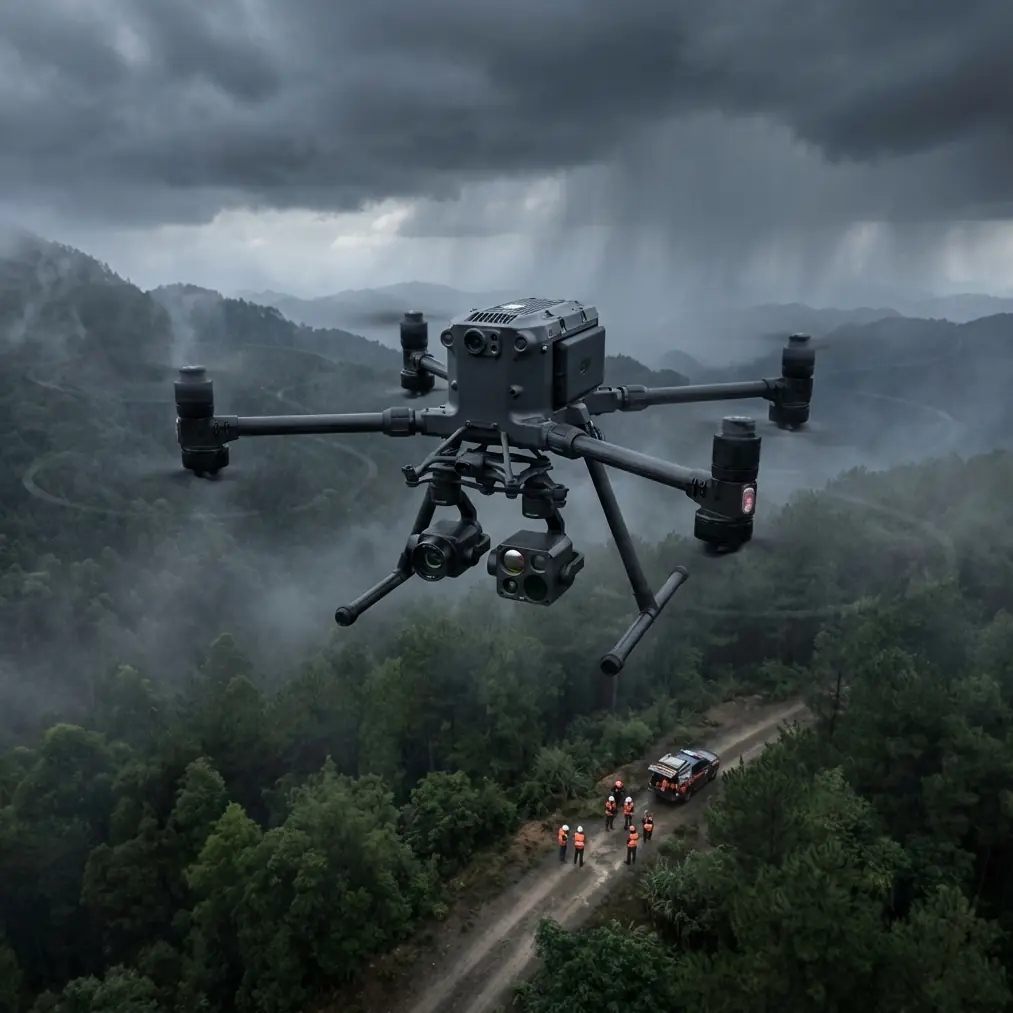
Matrice 400 in Mountain Filming: What Flight-Control Discipline and Avionics Testing Really Mean on Location
META: A field-focused Matrice 400 case study for mountain filming, connecting flight-control logic, altitude hold behavior, and avionics software validation to safer, steadier UAV operations.
Mountain filming exposes every weak habit in a drone operation. Wind shifts are sharper. Vertical relief confuses depth judgment. A shot that looks simple on a storyboard can demand repeated climbs, precise heading control, and stable holds near ridgelines where turbulence is never as mild as it appears from the ground.
That is exactly why the Matrice 400 conversation should not start with marketing bullets. It should start with control architecture and software discipline.
When I advise production teams planning to fly in mountain venues, I look past the surface question — camera, payload, or transmission range — and focus on whether the aircraft can keep composure when the environment stops cooperating. The reference material behind this article, although drawn from broader aircraft design manuals rather than a consumer brochure, points to two issues that matter directly to a Matrice 400 operator in the field:
- how a flight-control system manages attitude, roll, heading, and altitude hold when pilot inputs are reduced or absent, and
- how tightly integrated airborne software must be with hardware before it deserves trust in live operations.
Those are not abstract engineering topics. They shape whether a mountain filming day stays productive or turns into a cycle of aborted takes.
A mountain venue case: why stability is worth more than raw speed
Consider a typical shoot brief: a sunrise establishing shot over a winding mountain road, followed by a lateral reveal across a cliffside lodge, then a slow rise that keeps the subject framed while the terrain falls away behind it. This is the kind of sequence where the Matrice 400 tends to separate itself from lighter platforms and from competitors that may look similar on a spec table.
The reason is not just payload flexibility or endurance. It is the way a serious aircraft has to behave between commands.
One of the reference documents describes a flight control computer system basic mode in which, when no force is applied on the control column, the system maintains pitch, roll, and/or heading. That detail matters more than it first appears. In mountain filming, there are many moments when the pilot is intentionally minimizing stick input to let the aircraft settle into a clean movement while the camera operator refines composition. If the aircraft’s control logic can hold attitude and heading predictably during those quiet moments, the result is smoother footage and fewer corrective movements that show up as micro-wobbles in the shot.
For a Matrice 400 crew filming along a ridge, that translates into real operational benefits. A stable heading hold reduces drift in framing during a slow pan. Roll stability helps preserve horizon control when local gusts try to lift one side of the aircraft. Pitch hold makes vertical reveals feel deliberate rather than nervous. Competitor aircraft may claim stabilization too, but the practical difference shows up when the air becomes irregular and the aircraft must stop “hunting” for equilibrium.
That is where a larger professional platform usually excels: not merely in resisting disturbance, but in returning to the intended flight state with less fuss.
Altitude hold is not a convenience feature in the mountains
The first source also describes a height-hold function using a preset barometric altitude value together with altitude error, barometric rate of change, pitch and roll angle references, and vertical acceleration to compute control inputs. Even though this wording comes from manned-aircraft control logic, the operational lesson carries neatly into enterprise drone work.
Altitude hold in mountain filming is not just there to make piloting easier. It is one of the foundations of repeatability.
Imagine you need three passes of the same cliffside reveal: one in visible light, one capturing thermal signature for a mixed documentary sequence, and one in a mapping-style pass to support photogrammetry of the venue for previsualization. If the aircraft varies in vertical behavior on each pass, your edit becomes harder, your thermal comparison less consistent, and your reconstruction workflow less clean even if you later rely on GCP corrections in post-processing.
A platform like the Matrice 400 is valuable because crews often ask one aircraft to do all three jobs in the same day: cinematic capture, situational imaging, and spatial documentation. In that environment, disciplined altitude behavior matters more than headline maneuverability. A drone that can hold a chosen flight level with less vertical wandering will produce cleaner overlaps for photogrammetry and more consistent thermal capture, especially during dawn operations when mountain surfaces change temperature rapidly.
This is one area where advanced control integration matters more than a flashy feature list. The mountain venue does not care what the brochure said. It only responds to whether your aircraft can maintain a stable line when the air over a sunlit rock face begins to rise.
Why software acceptance testing should matter to filmmakers
The second reference document shifts from flight control to airborne software development, but it may be even more relevant for commercial drone crews than people expect. It states that airborne software is tightly coupled with hardware, that testing in a simulation or integrated environment is used to verify whether software and hardware interfaces meet system specifications, and that acceptance testing is effectively part of subsystem or full-system acceptance.
This is not glamorous material. It is also exactly the kind of discipline that keeps a high-end UAV trustworthy.
Mountain shoots are hard on assumptions. You may launch from a constrained platform. You may switch payload tasks during the same mission block. You may be depending on O3 transmission quality through terrain shadows, while also expecting encrypted handling of sensitive venue footage through AES-256-grade security workflows. In these conditions, the aircraft is no longer a camera with propellers. It is an integrated avionics platform.
That integration is where the Matrice 400 should be judged against competitors.
A less mature aircraft might perform well in isolated demos but become unpredictable when multiple subsystems interact: transmission, gimbal response, battery state management, obstacle sensing, flight-mode transitions, and operator interface behavior. The avionics reference emphasizes that acceptance should not be separated from the hardware context because software only proves itself when running with the actual target machine and its interfaces. For a Matrice 400 crew, that logic supports a simple field truth: confidence comes from system behavior under integrated load, not from isolated feature claims.
This matters when filming in mountains because there is little spare capacity for troubleshooting. If your aircraft hesitates during a mode transition, mishandles altitude references, or reacts inconsistently after a payload or battery event, you lose time and possibly the only weather window of the day.
A practical edge: repeatability under pressure
Let me make the comparison plain.
Many drones can capture a pretty mountain shot in calm weather. Fewer can do it at dawn, in changing wind, on a compressed call sheet, while also producing location-reference imagery useful for planning, thermal overlays for technical storytelling, and safe data handling for clients who do not want unsecured footage moving around the production chain.
The Matrice 400 stands out when the job becomes layered.
That is why features such as hot-swap batteries are more than logistical conveniences. On a mountain set, relaunch speed affects continuity. If light breaks through clouds for only a few minutes, a crew that can swap power quickly without rebuilding the entire mission flow has a measurable advantage. This is especially true when the pilot has already dialed in route geometry, heading behavior, and camera rhythm. Competitors may offer decent endurance, but efficient turnaround often decides whether the second take matches the first.
The same applies to BVLOS-adjacent planning logic, even when operations remain strictly within legal and approved civilian frameworks. Mountain venues often introduce line-of-sight complications because terrain interrupts visual and signal geometry. Strong transmission resilience and disciplined mission planning become central to maintaining safe command links and reliable framing feedback. In practical terms, O3 transmission capability can be operationally significant not because it sounds advanced, but because terrain is excellent at exposing weak links.
What mountain crews should borrow from large-aircraft thinking
The aircraft design references suggest a mindset that mountain film teams would do well to adopt: stop treating the drone as a standalone gadget and start treating it like a coordinated flight-and-software system.
Three habits follow from that.
1. Build shots around hold performance, not manual correction
If the control system is good at maintaining heading, roll, and altitude when pilot input relaxes, then use that strength. Design shot paths that let the aircraft settle rather than forcing continuous micro-corrections. This is especially effective for long reveals and elevated tracking moves across valleys.
2. Validate integrated behavior before the light gets good
The avionics reference stresses integrated testing in simulation or combined environments before acceptance. On set, the commercial equivalent is a full mission rehearsal that checks aircraft behavior with the actual payload, transmission path, display setup, and battery state logic you will use for the real take. Do not only hover-test. Run the actual route profile.
3. Treat altitude references as creative tools
A stable vertical profile is central to cinematic consistency, thermal comparability, and clean photogrammetry overlaps. If you are documenting a venue for both production and planning, altitude discipline reduces downstream correction work even when GCP workflows are available.
The hidden value of fault reporting culture
Another useful detail from the software reference is the mention of software problem reporting and preserving fault documentation through integration and acceptance testing. That may sound far removed from a mountain filming day, but good enterprise UAV operations benefit from the same mentality.
After each complex shoot, especially in difficult terrain, crews should log anomalies with precision: delayed gimbal response, unusual altitude oscillation, brief transmission degradation in a specific valley corridor, battery swap timing effects, or interface quirks after payload changes. This is not bureaucracy for its own sake. It creates operational memory.
For Matrice 400 teams running repeated venue shoots, that record becomes a competitive advantage. It improves safety margins, reduces setup time on future projects, and helps determine whether an issue came from terrain, procedure, configuration, or the aircraft itself.
A specialist’s view on where Matrice 400 really earns its place
As a platform for mountain filming, the Matrice 400 should be valued less for spectacle and more for discipline. Its strongest case is not that it can fly in the mountains — plenty of aircraft can, on a good day. Its strongest case is that it is better suited to maintaining controlled, repeatable, production-grade behavior when the terrain starts adding complexity.
That is the practical takeaway from the reference material.
A control system that can maintain pitch, roll, and heading when the operator relaxes input is directly relevant to smooth cinematic work. A height-hold logic built around multiple state references is directly relevant to repeatable reveals, thermal consistency, and mapping overlap quality. A software philosophy that insists on hardware-coupled integration and acceptance testing is directly relevant to trusting the aircraft when the margin for error is small.
Those are serious advantages. They are also the kind that rarely look dramatic in a product launch video.
If your mountain venue project involves multiple mission types in one aircraft session — filming, survey support, thermal capture, or route rehearsal — the Matrice 400 is the kind of platform that tends to justify itself through composure rather than theatrics.
And if you are planning a mountain filming workflow and want to compare route design, payload strategy, or signal planning before committing a flight day, you can message a specialist here and discuss the setup in practical terms.
The best professional drone operations are usually the least eventful. That is not a contradiction. It is the goal. In mountain environments, the aircraft that quietly holds its line, keeps its altitude, and behaves predictably as a complete system is the one that gives the crew room to focus on the image.
Ready for your own Matrice 400? Contact our team for expert consultation.