
Matrice 400 in High-Altitude Vineyards: What Changed When
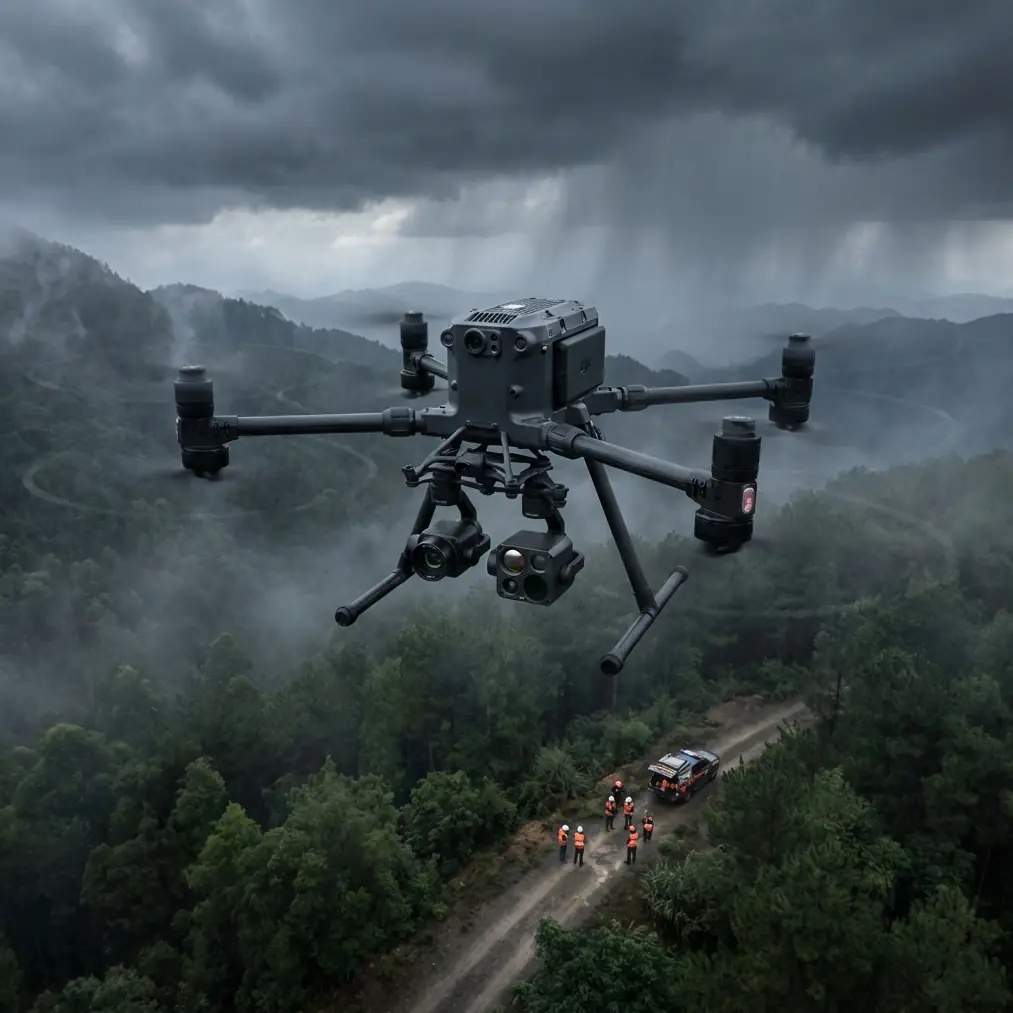
Matrice 400 in High-Altitude Vineyards: What Changed When Reliability Became the Real Payload
META: A field-based Matrice 400 case study for high-altitude vineyard filming, mapping, and thermal work, with expert insight on transmission, hot-swap batteries, BVLOS planning, and why aircraft-grade system thinking matters.
High-altitude vineyard work punishes weak assumptions.
I learned that the hard way on a mountain estate where the brief looked simple on paper: capture cinematic rows at dawn, build a usable photogrammetry model by midday, then run a thermal signature pass before evening winds picked up. The terrain said otherwise. Narrow access roads. Steep contour lines. Thin air. Intermittent signal shadows behind ridges. And a client who did not care how elegant our excuses sounded if the data came back incomplete.
That job is exactly why the Matrice 400 deserves a more serious conversation than the usual spec-sheet chatter.
When people talk about a platform for vineyard work, they often reduce the choice to camera quality. In practice, camera quality matters only after the aircraft has solved the real mission: stable flight in complex terrain, clean data continuity, safe recovery windows, and enough onboard resilience to let the crew adapt without resetting the whole day.
For me, the Matrice 400 fits into that conversation because it addresses the operational friction points that show up in mountain agriculture and not just in ideal test conditions.
The mission profile no one should underestimate
A high-altitude vineyard is rarely a single-task environment. The same operator may be asked to deliver three very different outputs:
- cinematic footage for brand and tourism use
- photogrammetry for row analysis, drainage review, or terrain planning
- thermal signature review for irrigation irregularities, vine stress indicators, or equipment checks
Those jobs place contradictory demands on the aircraft. Filming wants fluid movement and timing around light. Mapping demands repeatability, overlap discipline, and trustworthy geospatial consistency. Thermal work cares less about beauty and more about data integrity, environmental timing, and line-of-sight planning across uneven ground.
Older workflows often break at the handoff between these tasks. You finish one sortie, power down, swap hardware, recalibrate, move to a new launch point, and lose weather margin. In mountain vineyards, that delay can erase the best light or push the thermal pass into a useless heat window.
That is where the Matrice 400 starts earning its place. Not as a glamorous upgrade, but as a platform that compresses operational drag.
Why aircraft design logic matters, even in a vineyard
This may sound unusual in a drone case study, but some of the best lessons for commercial UAV operations come from traditional aircraft design thinking.
The reference material I was reviewing recently included sections from Chinese aircraft design manuals that focus on emergency evacuation systems and landing-system design. At first glance, those seem far removed from a vineyard drone mission. They are not.
One manual, 飞机设计手册 第15册 生命保障和环控系统设计, dedicates Chapter 15 to civil aircraft emergency life-saving systems. It specifically breaks out emergency exits and evacuation channels in section 15.2, and later covers internal emergency lighting in 15.3.1 and external emergency lighting in 15.3.2. Another, 飞机设计手册 第14册 起飞着陆系统设计, includes section 7.4.2 on anti-skid braking control principles and 7.4.3 comparing typical anti-skid braking systems, alongside material on buffer strut self-locking causes in 5.8.2.
Why bring that up in a Matrice 400 article?
Because the real value is the mindset. Good flight systems are designed around failure pathways, not just nominal performance. Emergency egress in crewed aircraft is about preserving safe options when conditions deteriorate. Anti-skid control is about maintaining authority when traction margins collapse. Translate that logic to UAV field work and you get the same operational principle: a useful platform is one that keeps the crew in control when the environment stops cooperating.
In a high-altitude vineyard, “safe options” means strong link performance behind terrain breaks, predictable battery management, clean return decisions, and enough system stability to avoid wasting a narrow weather slot. The Matrice 400 makes sense when viewed through that lens.
The ridge problem: where O3 transmission stops being a brochure term
On one estate, the far side of the vineyard sat just behind a fold in the hillside. With older aircraft, transmission quality would degrade at exactly the point where the most visually dramatic shots began. That was more than an annoyance. A weak link affects shot confidence, but it also compromises mapping discipline. Pilots start compensating. They hesitate. They cut lines short. They abandon edge coverage. Then the model returns with holes.
This is why O3 transmission matters in the field. Not because it sounds advanced, but because robust signal handling changes crew behavior. You fly the mission you planned instead of the one the link quality forces on you.
For vineyard teams working toward eventual BVLOS-style workflows where regulation permits and procedures support it, transmission reliability is not an extra. It is foundational. Even in standard visual operations, ridge-shadowed terrain acts like an early stress test for any air link. A platform that remains composed in those conditions saves more than footage. It protects the schedule and the dataset.
If your team is planning complex vineyard missions and wants to discuss setup logic rather than hype, message an operator-focused specialist here.
Hot-swap batteries changed the pace of the day
The first time I used hot-swap batteries in a serious mountain agriculture workflow, the benefit was immediate. Not dramatic. Just deeply practical.
When filming vineyards at elevation, the aircraft is only one part of the timing equation. So is the sun angle. So is wind onset. So is crew fatigue from moving equipment up and down terraces. A battery workflow that forces long pauses creates a chain reaction: the thermal window shifts, the photogrammetry block overlaps with stronger gusts, and the cinematic team loses the soft side-light they were waiting for.
Hot-swap capability cuts that dead space. You preserve continuity between sorties, which matters far more than many people realize. Terrain interpretation stays fresh in the pilot’s mind. The observer does not need to rebuild situational awareness from scratch. The camera operator stays aligned with the visual plan. Across several flights, those small savings add up to cleaner output.
For vineyards in high-altitude areas, that has a secondary benefit: fewer unnecessary aircraft cool-down and restart cycles while the team stands exposed on a ridge line. It is not glamorous, but it is exactly the kind of practical efficiency that separates smooth field days from messy ones.
Thermal signature work needs discipline, not just the right sensor
Many vineyard operators hear “thermal” and think immediate diagnosis. Real thermal work is less forgiving. At altitude, terrain angle, shadow movement, and temperature gradients create interpretation traps. You need stable collection practices and repeatable flight behavior.
The Matrice 400 helps here if you use it properly. Stable routing, reliable link quality, and quick sortie turnover allow thermal passes to happen during the right micro-window instead of “whenever the aircraft is finally ready.” That distinction matters.
A poor thermal pass in vineyards can lead to false confidence. A good one can reveal uneven irrigation behavior, drainage issues, stressed sections, or heat anomalies around infrastructure. But only if the platform supports disciplined acquisition.
This is where AES-256 also deserves mention, especially for estates treating crop health data, yield strategy, and terrain modeling as commercially sensitive information. Secure transmission is not just an IT talking point. High-value agricultural operations increasingly view remote sensing outputs as proprietary. If the mission involves sharing live views or moving operational imagery across teams, secure handling matters.
Photogrammetry in steep vineyards: where GCP discipline still wins
No aircraft solves lazy survey planning.
I have seen teams expect miracle-grade outputs from advanced UAVs while skipping the fundamentals. In steep vineyard blocks, photogrammetry quality still depends on flight planning, overlap control, consistent speed, sensible altitude relative to terrain, and well-placed GCPs when the project requires measurable accuracy.
The Matrice 400 makes this easier because it is less disruptive to the workflow. The aircraft can hold up its side of the job. That frees the crew to focus on mission design instead of platform babysitting.
In one hillside mapping session, we used GCPs to stabilize a model that would later support drainage review and row planning. The aircraft’s role was not to “create accuracy.” Its role was to fly a repeatable mission cleanly enough that our control points could do their job. That is how professionals should think about these systems. The drone is part of a measurement chain, not a magic shortcut.
This is another place where the old aircraft-design references are surprisingly relevant. The landing-system manual’s attention to anti-skid control principles and parameter calculation reflects a broader engineering truth: system reliability comes from controlling edge-case behavior, not assuming ideal conditions. In UAV photogrammetry, edge-case behavior includes slope transitions, gust exposure, variable lighting, and mission interruptions. The Matrice 400 stands out when those edge cases appear.
Filming value: the client sees elegance, the crew sees reduced risk
The client usually notices the final reveal shot. A clean rise over terraced rows. Low-angle morning light tracing vine geometry. A lateral move across a ridgeline with the valley opening behind it.
The crew notices something else. Fewer aborted passes. Less signal anxiety. Faster turnarounds between flight phases. More confidence when transitioning from cinematic work to technical capture. Better coordination because everyone trusts the aircraft to do predictable things at predictable moments.
That trust changes the tone of the job.
On the mountain estate I mentioned earlier, the biggest difference was not a single standout feature. It was that the Matrice 400 removed the small frustrations that usually accumulate in difficult terrain. We completed the hero footage before the wind became unhelpful. We finished the photogrammetry block without patching obvious coverage gaps. We still had time to run a thermal signature pass before the temperature profile flattened out.
That kind of day used to require more compromise.
What the Matrice 400 actually solves for vineyard operators
If I strip the experience down to its essentials, the Matrice 400 is most useful in high-altitude vineyard work because it addresses four practical realities:
Terrain complicates signal paths
O3 transmission helps maintain mission continuity where ridge lines and slope geometry would otherwise interrupt flow.Multi-phase jobs punish slow battery workflows
Hot-swap batteries preserve the timing windows that matter for both visual and thermal capture.Data value is now strategic
AES-256 matters when agricultural imagery, thermal insights, and terrain models are business-sensitive assets.Advanced aircraft still depend on disciplined survey practice
Photogrammetry in vineyards remains a method problem as much as a hardware problem, and GCPs are still part of serious accuracy work.
These are not abstract benefits. They show up directly in the field.
My take after real use
If your work is centered on flat, forgiving terrain and single-purpose flights, the Matrice 400 may feel like overcapacity. But that is not the scenario that exposes the value of a serious platform.
Take it into high-altitude vineyards where a single day may combine filming, mapping, and thermal review across fractured terrain, and the picture changes. Then the aircraft is no longer just a camera carrier. It becomes the piece that holds the mission together.
That is the part many buyers miss. They compare payloads and resolution charts when they should be asking a simpler question: does this platform preserve good decisions under pressure?
The best crewed-aircraft design work has always revolved around that principle. The reference manuals I mentioned do not celebrate ideal conditions. They focus on emergency exits, evacuation channels, anti-skid behavior, parameter calculation, and system response when margins narrow. Those details exist because robust aviation is built around what happens when things get awkward.
Commercial drone operations deserve the same standard.
In my experience, the Matrice 400 comes closer to that standard than most people realize. Especially on a mountain vineyard, where the air is thinner, the ground is less forgiving, and the mission is bigger than a pretty shot.
Ready for your own Matrice 400? Contact our team for expert consultation.