
Filming Wildlife Offshore in Wind: A Field Report on Where
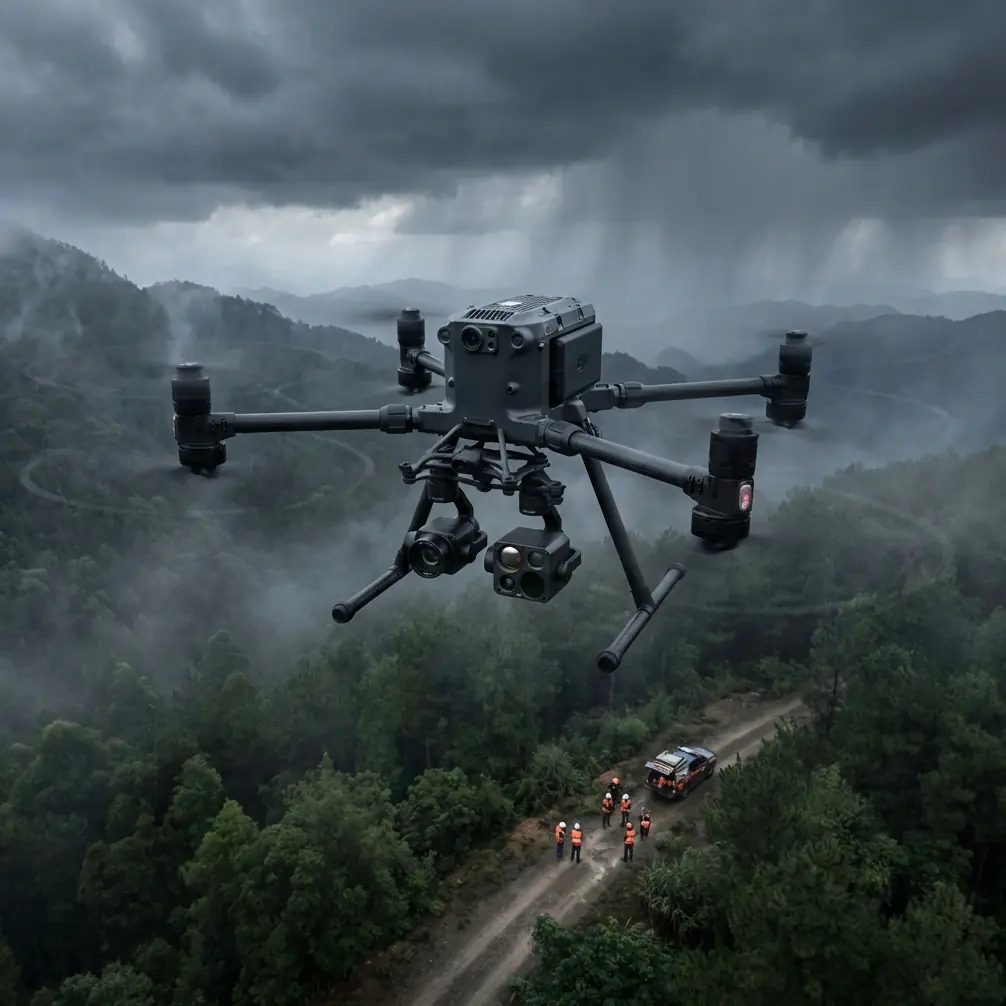
Filming Wildlife Offshore in Wind: A Field Report on Where Matrice 400 Fits the New Maritime Drone Moment
META: A field report on using Matrice 400 for windy maritime wildlife filming, with practical insight on O3 transmission, AES-256, hot-swap batteries, BVLOS planning, and antenna handling near electromagnetic interference.
The maritime drone sector is getting a £50m boost, according to a BBC report published on 2026-04-07. That headline matters for more than ship inspections and port infrastructure. It tells us something bigger: offshore and nearshore drone work is no longer a niche edge case. Investment is flowing into an operating environment that has always punished weak aircraft, weak planning, and weak signal discipline.
The same report also carried a note of caution from an MP who welcomed the funding but argued that more still needs to be done for the industry to stay afloat. That line lands harder than it first appears. In real field conditions, maritime drone operations are rarely limited by enthusiasm. They are limited by wind, salt, glare, unstable launch points, magnetic clutter, and the simple fact that recovering a drone over water leaves less room for error than almost any inland mission.
That is exactly why the Matrice 400 deserves attention in this moment.
Not as a vague “best drone” talking point. As a serious platform for a very specific job: filming wildlife in windy maritime environments where reliability, image continuity, transmission integrity, and recovery margins matter as much as sensor quality.
The offshore wildlife brief is harder than most people think
Filming seabirds, seals, shoreline mammals, or migratory activity from a coastal vessel or exposed headland looks elegant in the final edit. The flight itself is anything but elegant.
Wind direction shifts across cliffs and superstructures. Sea reflection can make visual orientation harder. Takeoff zones are cramped. Antennas compete with radios, navigation electronics, and other sources of electromagnetic interference. Add long stand-off distances to avoid disturbing wildlife, and suddenly the aircraft has to hold framing while the pilot and camera operator fight for clean signal and stable control.
This is where the current maritime investment story intersects with Matrice 400 in a practical way. If the sector is receiving tens of millions in support, operators working around water will be expected to deliver cleaner workflows, better data, safer missions, and more dependable footage. Aircraft choice becomes part of operational credibility, not just a gear preference.
Why Matrice 400 makes sense for this niche
For wildlife filming offshore, the strongest case for Matrice 400 is not one headline spec. It is system behavior.
Start with O3 transmission. In a windy coastal environment, your shot often depends on maintaining separation from the subject while preserving a solid link across cluttered RF conditions. Over water, signal paths can behave unpredictably because of reflection and environmental interference. Near vessels, harbors, radar installations, and communications equipment, that challenge becomes worse. A drone platform built around robust transmission gives the crew more room to stay where they should be instead of creeping closer just to protect control confidence.
Then there is AES-256. For wildlife filmmakers, this is less about drama and more about professional operating standards. If you are flying for a conservation organization, production house, marine research partner, or infrastructure-adjacent client, secure transmission is part of trust. Offshore missions can involve sensitive location data, operational routing, or footage gathered near commercial assets. Strong encryption is not a glamorous talking point in the field, but it matters when drone operations become part of broader maritime workflows.
And then there are hot-swap batteries. Anyone who has filmed changing light over the water knows how valuable continuity is. Wildlife behavior windows do not pause because your aircraft needs downtime. If your platform supports rapid turnaround, the production team can stay on the rhythm of the scene rather than rebuilding momentum after every battery cycle. In practical terms, that can mean keeping a vessel on station for less time, preserving crew focus, and reducing missed moments during feeding runs, surfacing cycles, or flock movements.
Wind is not the only enemy. EMI is often the hidden one.
One detail too many crews underestimate: electromagnetic interference near maritime infrastructure.
I have seen pilots blame “bad weather” for issues that were really signal management problems. On offshore support vessels, harbor walls, ferries, and industrial waterfronts, the RF environment can degrade a mission long before the aircraft’s aerodynamic limits are reached. The result may not be a total signal loss. More often, it shows up as hesitation in camera response, inconsistent downlink quality, reduced confidence at exactly the wrong moment, or the temptation to overcorrect aircraft positioning.
This is where disciplined antenna adjustment becomes operationally significant.
With a platform like Matrice 400, transmission performance is only as good as the operator’s understanding of line-of-sight geometry and interference sources. If the aircraft is working downwind off the port side of a vessel, and the control station is partly shadowed by metal structures or competing onboard electronics, you do not fix that by pushing farther or climbing blindly. You fix it by repositioning the operator where possible, re-orienting the controller antennas to match the aircraft’s relative angle, and actively avoiding alignment that points the weak edge of the antenna pattern toward the drone.
That sounds basic. Offshore, it is not. It is often the difference between a stable wildlife tracking shot and a mission that gets cut short before the best behavior unfolds.
For crews planning repeated maritime filming runs, I strongly recommend treating EMI checks as part of preflight, not post-problem troubleshooting. Walk the deck. Identify the clutter. Test link quality in the planned launch orientation. If the vessel can yaw or drift during the flight window, factor that into your antenna strategy from the start.
Wildlife filming needs stand-off discipline, and transmission quality supports it
Ethical wildlife filming is often a question of distance and patience. That is one reason the maritime funding story is relevant here. As drone use expands at sea, the best operators will be the ones who gather footage without forcing proximity.
With BVLOS workflows becoming increasingly relevant in commercial maritime sectors, the underlying lesson is that range and link stability are not just about going farther. They are about operating more responsibly within approved frameworks. Even when a wildlife shoot remains within visual line of sight, the same mindset applies: maintain buffer, preserve behavior, and keep the aircraft in a zone that minimizes disturbance.
Matrice 400’s value here is not simply that it can work in demanding environments. It is that it supports a style of operation where the pilot does not have to trade subject welfare for signal confidence.
Sensor workflow matters more over water than over land
Many people approach offshore wildlife filming as a pure cinema task. That misses half the opportunity.
The better crews are increasingly blending visual storytelling with environmental documentation. A single mission may need beauty footage, habitat context, and georeferenced site information that can feed scientific or management work later. That is where tools and concepts like photogrammetry and GCPs enter the conversation, even if the primary brief is filming rather than mapping.
For example, if a conservation team wants footage of a seal haul-out area but also needs shoreline change context over time, a Matrice 400-based workflow can support both operational styles in the same deployment window, provided planning is disciplined. Over water margins are tight, so every launch should do more than one job if safely possible.
Granted, GCP placement in coastal terrain is never as tidy as a flat inland survey. Tide movement, access constraints, and unstable surfaces complicate setup. But where fixed reference points are practical, they can materially improve the usefulness of coastal datasets captured alongside film missions. That has real value for habitat monitoring, erosion studies, and environmental communication pieces that need more than cinematic appeal.
Thermal signature changes the story in low-contrast conditions
The prompt around thermal signature is especially relevant offshore. Windy marine environments often produce deceptively poor visual conditions even when the sky appears bright enough. Glare, haze, spray, and low-contrast backgrounds can flatten details that are obvious onshore.
Thermal capability can help crews locate animals or confirm activity patterns without repeated low passes. That is the operational significance. It reduces unnecessary repositioning and can help the team establish a cleaner flight pattern before switching to visible-light capture. Used responsibly, thermal can support less intrusive filming because the crew spends less time guessing where the subject is and more time holding a stable, respectful stand-off position.
This is particularly useful at dawn, dusk, or in overcast coastal weather where visual textures compress. For documentary teams, that can mean fewer wasted minutes searching in deteriorating wind.
Battery strategy offshore is really a recovery strategy
People talk about endurance. Offshore, I talk about recovery margin.
A windy wildlife mission from land near cliffs is one thing. From a boat, it is another. Return paths are dynamic. Landing zones move. Crew attention gets split between aircraft, subject, sea state, and deck safety.
That is why hot-swap batteries matter beyond convenience. They let the crew cycle aircraft back into readiness without unnecessary downtime, but just as importantly, they support more conservative flight planning. You are less tempted to squeeze every minute from the pack if rapid relaunch is realistic. That often leads to smarter decisions: earlier returns, cleaner landings, lower stress, and less rushed behavior near the recovery point.
The strongest maritime operators are not the ones who boast about wringing out every last percent. They are the ones who build repeatable sorties and preserve margin.
The policy signal behind the £50m headline
The £50m investment reported by the BBC is not just a budget number. It is a signal that maritime drone capability is moving from experimentation toward institutional relevance. When that happens, aircraft like Matrice 400 stop being judged only by isolated feature sets. They are judged by whether they can slot into professional marine operations that demand documentation, training discipline, secure links, and resilience in poor conditions.
The MP’s warning that the sector still needs more support is equally useful as a reading of the market. Funding can accelerate adoption, but it does not remove the operational complexity of working over water. Crews still need better training, clearer mission design, stronger maintenance habits, and aircraft platforms that tolerate real-world coastal abuse.
In that sense, Matrice 400 sits at an interesting intersection. It is not just a tool for getting dramatic footage. It is a platform aligned with a broader shift toward mature maritime drone operations, where the aircraft must serve safety, consistency, and multi-role mission value.
What I would brief a wildlife crew before launch
If I were preparing a Matrice 400 team for windy maritime wildlife filming tomorrow, my briefing would be simple:
- Prioritize launch and recovery margins over shot ambition.
- Use stand-off distance to protect animal behavior, not as a fallback.
- Validate O3 transmission in the actual RF environment before the mission begins.
- Treat antenna orientation as an active control input, especially near metallic structures and vessel electronics.
- Use thermal signature tools to reduce unnecessary searching.
- Build sortie timing around hot-swap battery efficiency, not battery depletion.
- If the mission includes habitat documentation, decide in advance whether photogrammetry and GCP support are worth the complexity.
- Keep security standards high; AES-256 is part of professional practice, not a brochure detail.
That is the difference between a drone flight and a field operation.
The bigger takeaway
Maritime drone work has entered a new phase. Public investment is rising, expectations are rising with it, and operators who film in harsh coastal conditions will be expected to produce more than eye-catching clips. They will need dependable aircraft, disciplined workflows, and crews who understand that offshore performance is a systems problem.
For wildlife filming in wind, Matrice 400 makes a strong case because it supports that systems approach. Solid transmission, secure communications, efficient battery handling, and mission flexibility all matter more over water than they do in easy inland conditions. Add the ability to manage EMI intelligently through correct antenna adjustment, and the aircraft becomes a practical answer to one of the hardest civilian filming environments there is.
If your team is building a maritime filming workflow around Matrice 400 and wants to compare notes on configuration, field procedures, or payload planning, message us directly here: https://wa.me/85255379740
Ready for your own Matrice 400? Contact our team for expert consultation.