
Matrice 400 for Mountain Wildlife Work: What Actually
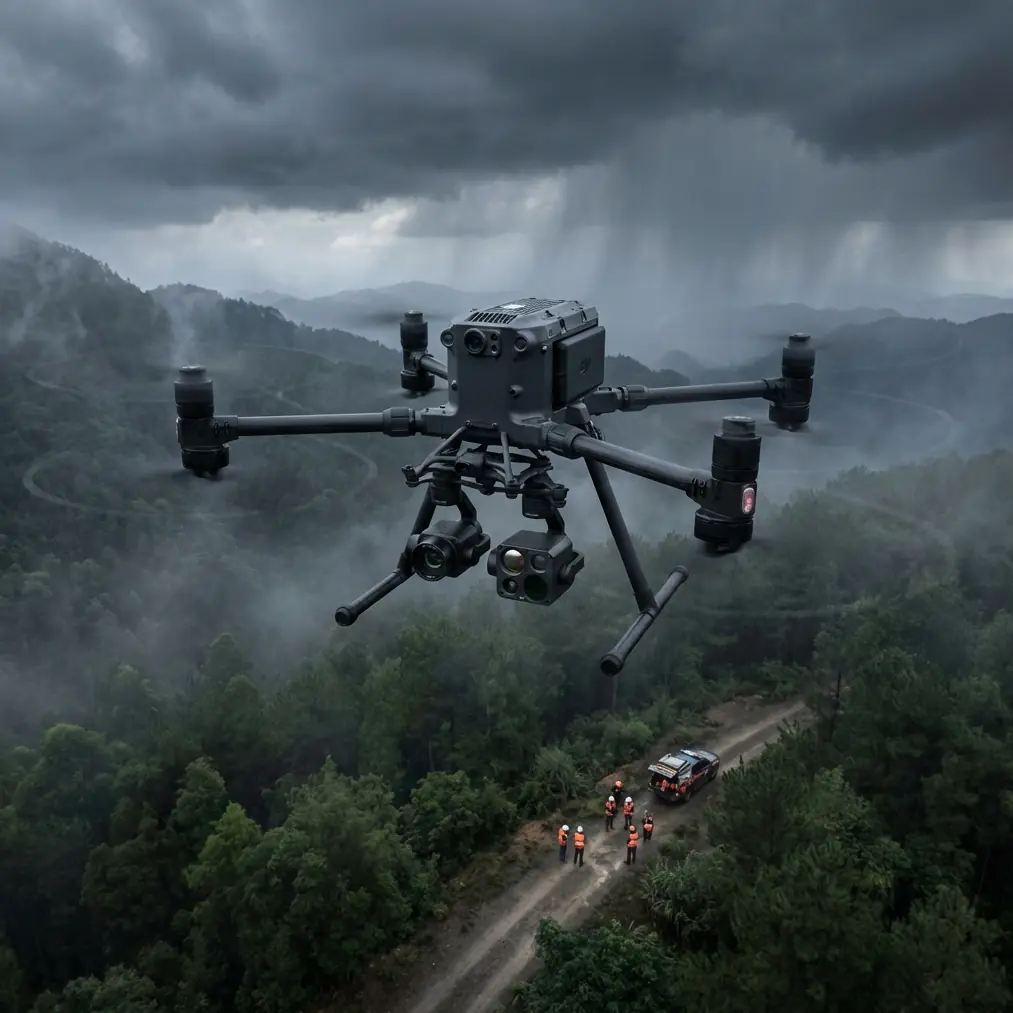
Matrice 400 for Mountain Wildlife Work: What Actually Matters in the Field
META: Expert analysis of how Matrice 400 fits mountain wildlife filming by connecting aircraft maintenance logic, environmental testing discipline, thermal workflows, and real operational demands.
I’ve filmed wildlife in mountain terrain long enough to distrust spec-sheet optimism.
The problem is rarely just distance. Or wind. Or cold. It’s the stack of small failures that appear when all three combine: a connector that behaves differently after repeated temperature swings, a maintenance habit copied from lowland operations, an inspection routine that looks thorough on paper but misses the parts that matter after rough transport and repeated climbs. In mountain wildlife work, you don’t get punished by one dramatic mistake. You get punished by neglected discipline.
That is the lens I’d use for the Matrice 400.
A lot of people want to discuss a platform like this in terms of payloads, transmission, thermal signature capture, photogrammetry support, BVLOS readiness, or whether hot-swap batteries reduce downtime on a ridge line. Those are valid questions. But if your assignment is filming wildlife in the mountains, the real separator is whether the aircraft can be integrated into a maintenance and environmental-control mindset that matches the terrain. The reference material here, although drawn from manned-aircraft design handbooks, points to something surprisingly useful for Matrice 400 operators: treat reliability as an operating system, not an accessory.
The mountain problem most crews underestimate
A few seasons ago, I was working a wildlife survey-and-capture project in high country where visual filming and thermal observation had to happen in the same operational window. We weren’t dealing with combat conditions or anything remotely sensitive—just steep terrain, early starts, shaded valleys, sun-exposed launch points, and repeated elevation changes that created big temperature differentials over short periods.
That kind of work is hard on aircraft.
You may launch from a cold, damp saddle, climb into brighter air, descend toward tree lines, pack the drone into a vehicle, then repeat the cycle before the aircraft and payload have truly stabilized. What looked like a “battery” issue can turn out to be a temperature transition issue. What looked like random image inconsistency can be linked to equipment acclimation. What looked like an isolated wear item can reveal a weak daily inspection routine.
This is where the Matrice 400 conversation gets interesting. Not because the aircraft magically solves mountain operations, but because a serious platform deserves serious operating discipline.
Why a maintenance-program mindset belongs in drone wildlife work
One of the reference documents lays out what a proper maintenance outline should contain. It doesn’t stop at saying “inspect the aircraft regularly.” It specifies that the program should define its purpose, scope, notes, standards, and procedures. It also calls for clear rules around inspection intervals using concrete units like flight hours, cycles, and calendar time. That level of structure matters more for Matrice 400 work than many drone teams realize.
In mountain wildlife filming, calendar time alone is too crude. Flight hours alone are too crude. Battery swaps alone are too crude.
A drone used for repeated uphill transport, cold starts, uneven landing zones, and frequent packing/unpacking accumulates stress differently from one doing predictable urban mapping runs. The handbook’s emphasis on multiple interval units—hours, usage cycles, and calendar time—offers a better template. For a Matrice 400 program, that means tracking not just airtime, but repeated takeoff/landing events, transport events, payload changes, and environmental exposure days.
That is especially relevant if you are relying on hot-swap batteries to keep a wildlife crew moving. Hot-swap capability can be a genuine operational advantage in mountain work because it reduces reset time and preserves mission rhythm. But it also increases the temptation to treat the aircraft as continuously available. A disciplined operator counters that temptation with scheduled inspection triggers, not gut feel.
The same handbook also highlights daily and line maintenance checks, with attention to the inspection scope, depth, procedure, and method. That language is blunt for a reason. A “pre-flight check” is only useful if it is defined. On a Matrice 400 operating in mountain wildlife scenarios, the difference between a superficial once-over and a real line-maintenance routine can determine whether your afternoon sortie is safe and whether your morning footage can actually be repeated tomorrow.
What structural inspection means for a drone in rough terrain
Another point from the maintenance reference deserves more attention than it usually gets: structural inspection should account for fatigue damage, environmental deterioration, and accidental damage, using visual inspection or non-destructive inspection methods where appropriate. It also specifically mentions problems like corrosion, stress corrosion, small accidental damage, fuel leakage, fastener loosening, and cabin pressure loss in the manned-aircraft context.
You don’t copy those categories literally onto a Matrice 400, but the logic transfers cleanly.
For a mountain-based drone operation, the drone’s structural risk profile is shaped by vibration during transport, repeated deployment on uneven ground, rotor wash kicking up abrasive grit, moisture cycling, and occasional hard handling while moving quickly between observation sites. Fastener loosening is not an abstract concern. Neither is environmental degradation. If you’ve ever had a field case slammed shut in sleet and then reopened in dry wind at elevation, you already know how quickly conditions can turn.
That makes the reference document’s split between internal and external structural inspection especially useful. External checks catch obvious airframe issues. Internal checks, even if simplified for a drone platform, force crews to think beyond cosmetic condition. For a Matrice 400 carrying imaging payloads for wildlife work, subtle mounting integrity matters. So do cable routing, connector seating, gimbal isolation condition, and the cumulative effect of cold-weather handling.
This matters operationally because wildlife work often depends on repeatability. If you are trying to compare thermal signature behavior across multiple mornings, or build photogrammetry outputs that align with GCP-backed mapping passes, consistency is everything. A slightly degraded mount, a micro-shift after transport, or vibration introduced by unnoticed wear can compromise data quality long before it creates an obvious flight issue.
The environmental-testing lesson mountain crews should steal
The second reference document shifts from maintenance to environmental conditions and testing. One detail jumps out immediately: the handbook describes temperature transition testing down to -55°C, with 3 cycles and a transfer interval not greater than 5 minutes between high- and low-temperature conditions.
No, that does not mean your Matrice 400 is meant to operate at -55°C in the field. That would be a lazy reading. The real lesson is that temperature transition itself is a reliability event.
For mountain wildlife filming, this is critical.
A drone may not fail because the ambient temperature is low in a static sense. It may struggle because equipment is repeatedly moved between thermal states faster than the system can settle. That can affect batteries, optics, thermal payload behavior, mechanical tolerances, and even the crew’s interpretation of what they are seeing.
The same reference also organizes airborne equipment by altitude classes, including categories around 4600 m, 7600 m, 10700 m, 15200 m, and 16800 m, with distinctions based on pressure and temperature control conditions. Again, a Matrice 400 operator does not need to treat a mountain wildlife mission like a transport aircraft certification exercise. But the altitude classification logic is valuable because it reminds you that “high-altitude environment” is not one thing. Conditions change with both elevation and equipment enclosure.
That has direct implications for drone workflow.
A battery stored in a protected vehicle is not in the same condition as a payload exposed on a ridge. A thermal camera acclimated in shade may not behave identically after a fast move into solar heating. A drone unpacked at one elevation and launched at another can present small but meaningful differences in response and endurance. If your Matrice 400 program acknowledges those transitions, you’ll get cleaner operations and better footage.
How this changes the way I’d run Matrice 400 in wildlife filming
If I were building a mountain wildlife operating template around the Matrice 400, I would anchor it around four disciplines.
1. Define maintenance by mission stress, not just by time
The source material’s insistence on inspection units—flight hours, cycles, and calendar intervals—is the right starting point. For Matrice 400, mountain use should trigger extra attention after repeated cold starts, frequent relocations, hard-case transport over rough tracks, and dense sortie schedules enabled by hot-swap batteries.
That gives you a maintenance program that reflects actual wear, not office assumptions.
2. Separate daily checks from deeper structural checks
The handbook explicitly treats daily or line-maintenance inspection as its own category and also treats structural inspection as a separate program. That distinction is useful for drone teams.
Your daily check covers mission readiness: airframe condition, propeller state, payload seating, connector integrity, battery interface, transmission health, and basic control response. Your deeper check looks for cumulative effects: loosening, wear, moisture ingress indicators, mounting shifts, and transport-related damage.
If your Matrice 400 is being used for repeated wildlife observation in mountain terrain, this split reduces the chance that a “we checked it this morning” mentality hides a longer-term issue.
3. Respect thermal transitions before trusting thermal data
The environmental reference’s 3-cycle transition test and 5-minute transfer limit underline a principle many crews skip: temperature change can be more disruptive than absolute temperature.
For thermal signature work, that means not rushing from storage to data collection and assuming your imagery is immediately stable. Let systems settle. Build acclimation into your SOPs. Record conditions. If your mission combines thermal observation with photogrammetry, the discipline becomes even more valuable because cross-mission consistency matters when you’re aligning outputs against GCPs or comparing repeat passes.
4. Treat transmission security and continuity as operational tools, not marketing points
Mountain wildlife work often means variable terrain masking, distant observation positions, and the need to avoid unnecessary repositioning that could disturb animals. Features like O3 transmission and AES-256 matter in that context because they support link reliability and data protection across more demanding workflows. Not because they sound advanced, but because they help crews maintain clean operations while minimizing repeated passes.
That is especially relevant when BVLOS planning is part of a compliant, civilian workflow. The platform’s value grows when communication integrity, inspection discipline, and environmental preparation all reinforce one another.
The hidden advantage: fewer compromised days
The biggest operational gain from approaching Matrice 400 this way is not glamour. It’s salvage.
Wildlife crews lose days in small ways. A sensor doesn’t settle fast enough. A mounting issue appears only after transport. A battery rotation plan looks fine until cold exposure changes performance assumptions. A “normal” pre-flight check misses a wear trend that should have triggered intervention two days earlier.
The maintenance handbook’s ideas about program scope, interval definitions, daily inspection depth, and structural monitoring help prevent those losses. The environmental handbook’s details about temperature transitions and altitude-conditioned equipment categories help crews interpret why mountain operations behave differently from valley testing.
Put those together and the Matrice 400 stops being just a capable aircraft. It becomes a platform you can run with more confidence when your subject is unpredictable, your launch site is rough, and your weather window is narrow.
That’s the standard I care about.
Not whether a drone looks impressive on a checklist. Whether it comes back from repeated mountain wildlife assignments with stable imaging, predictable behavior, and maintenance records that explain the aircraft instead of merely documenting it.
If you’re planning that kind of workflow and want to talk through payload matching, thermal setup, inspection routines, or mountain mission design, you can message our field team here.
For mountain wildlife filming, the Matrice 400 should be judged by how well it fits disciplined operations under repeated environmental stress. The reference material makes that point indirectly but clearly: reliability starts before takeoff, and maintenance quality shapes mission quality. In that sense, the smartest way to use a Matrice 400 in the mountains is to borrow the rigor of larger aviation systems and scale it intelligently for drone work.
Ready for your own Matrice 400? Contact our team for expert consultation.