
Matrice 400 for Mountain Coastline Inspection: A Field
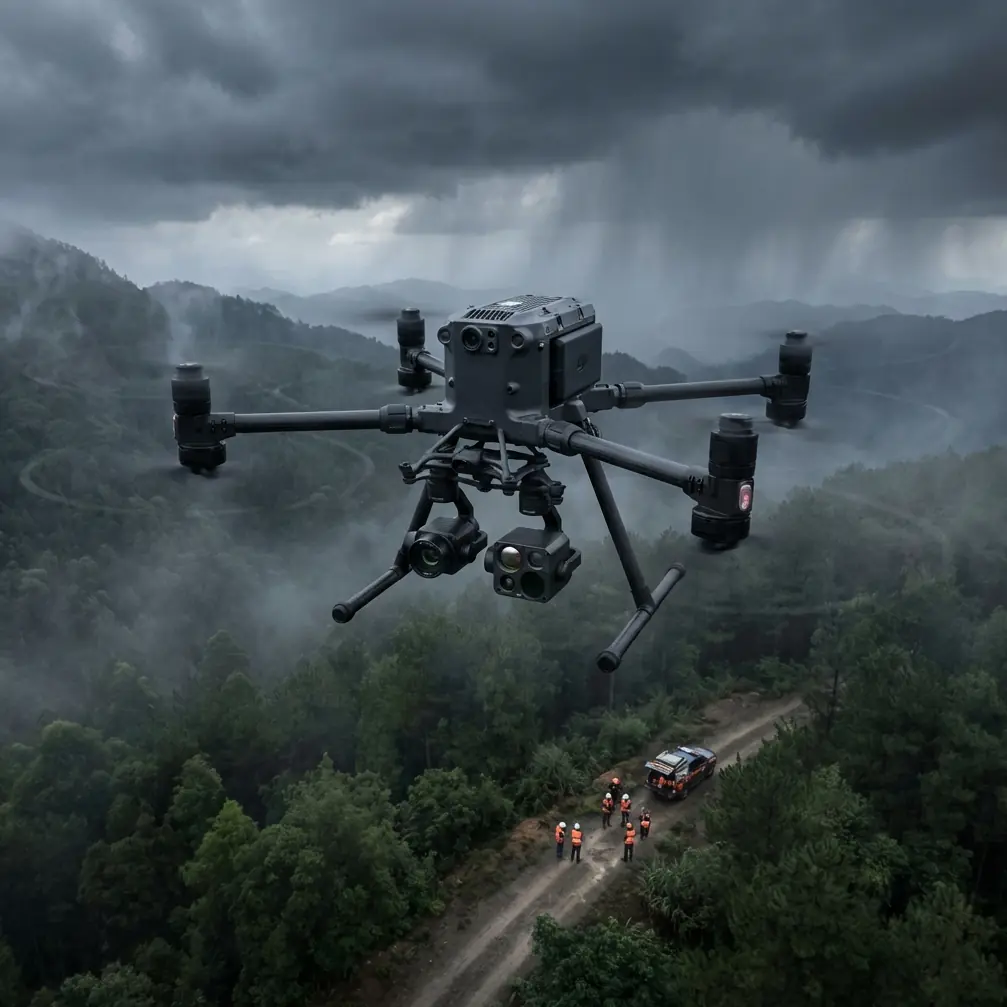
Matrice 400 for Mountain Coastline Inspection: A Field-Ready How-To from the Edge
META: Practical Matrice 400 guidance for mountain coastline inspection, covering thermal workflows, photogrammetry, O3 transmission, AES-256 security, hot-swap batteries, and BVLOS planning.
Mountain coastlines punish weak inspection workflows. Cliffs block line of sight. Salt haze softens contrast. Wind shifts fast, then faster. Add long access times and poor footing, and a routine survey turns into a problem of endurance, signal reliability, and data discipline.
That is exactly where the Matrice 400 conversation gets interesting.
I have spent enough time around coastal inspection teams to know the old failure points by heart. A pilot hikes to a narrow launch spot, only to find the ridge shoulder swallowing the link. The visual team burns precious minutes repositioning because the aircraft battery window is too tight for a second pass. Thermal data looks promising in flight, then disappoints later because the mission geometry was not tight enough for comparison across sorties. On paper, the job was simple: inspect a damaged coastline segment in mountainous terrain. In the field, the terrain made the rules.
For operators planning this type of work, the Matrice 400 deserves attention not because of branding or buzz, but because its feature set lines up with the specific constraints of coastal mountain inspection. If your objective is to document erosion, detect seepage, identify void risk, map unstable rock faces, or monitor man-made assets built into a coastal slope, this platform can simplify the mission in ways that matter operationally.
This guide explains how I would approach a mountain coastline inspection workflow around the Matrice 400, and why details such as O3 transmission, AES-256, hot-swap batteries, thermal signature capture, photogrammetry planning, GCP control, and BVLOS readiness are not side notes. They are the difference between a clean data collection day and a compromised mission.
Why mountain coastlines are a different kind of inspection
A flat shoreline is one thing. A coastline cut into steep terrain is another entirely.
The aircraft has to cope with vertical relief, changing wind exposure, and highly uneven radio conditions. A bluff can hide a cove. A ridge can force the pilot to choose between safe standoff distance and strong signal geometry. Sun angle can blow out visible-light detail on pale rock, while wet surfaces distort thermal interpretation. If there is infrastructure involved—retaining walls, drainage paths, road cuts, utility corridors, or protective barriers—you also need repeatable geospatial accuracy, not just attractive imagery.
This is where many teams make the wrong assumption. They think of the aircraft as a camera carrier. For coastline work in mountain terrain, the aircraft is really the center of a sensing system. The mission only works when communications, payload planning, power management, and positional control all support each other.
The Matrice 400 fits that reality well because it is built for serious field operations rather than short, improvised flights.
Start with the inspection question, not the flight plan
Before you set a waypoint or mount a payload, define what the coastline team actually needs to know.
For most mountain coastline jobs, the inspection objective falls into one or more of these buckets:
- Detect thermal anomalies linked to water ingress, subsurface voids, or structural separation.
- Build a photogrammetric model of a cliff, seawall, access road, or slope stabilization feature.
- Compare erosion progression against prior data.
- Inspect exposed infrastructure where rope access or direct human entry is hazardous.
- Capture evidence for engineering review, regulatory reporting, or maintenance prioritization.
The reason this step matters is simple: thermal signature collection and photogrammetry often require different flight logic. Thermal work values repeatability, controlled angle, and environmental timing. Photogrammetry values overlap, geometry, and stable positional reference. If you try to “grab everything at once,” you usually return with a dataset that is broad but weak.
With the Matrice 400, I would structure the day in phases rather than one mixed mission.
Phase 1: Secure the link before you trust the data
In mountain coastline operations, transmission reliability is not a luxury. It is mission architecture.
This is where O3 transmission has real significance. In broken coastal terrain, signal quality can degrade not only because of distance but because of terrain masking. The practical value of a robust O3 link is that it gives the crew a better chance of maintaining stable control and video feedback when flying along irregular slopes and around contour changes. That matters when the aircraft is tracking a cliff face where a brief signal drop can force a reposition, break image continuity, or reduce confidence in what the remote pilot is seeing.
I learned this lesson years ago on a shoreline rockfall assessment. The aircraft itself was capable enough, but the ridge geometry kept interrupting the live feed just as we moved into the most relevant section of the wall. We got home with partial coverage and no reliable thermal comparison because the team had to prioritize recovery over consistency. In mountain terrain, you do not just need range. You need confidence when topography becomes an obstacle.
My recommendation with the Matrice 400 is to scout the link geometry before the main run:
- Identify launch points with a clear horizon to the target segment.
- Avoid standing directly behind rock shoulders or dense vertical obstruction.
- Build the route so the aircraft does not repeatedly disappear behind relief features.
- Use a spotter or secondary observer when the coastline bends around a headland.
If your operation sits within a BVLOS framework, that planning becomes even more important. BVLOS is not merely an authorization category; it changes the standard for route design, communications, contingency planning, and crew coordination. A platform associated with BVLOS-ready operations has real value here because mountain coastlines often stretch beyond what a single visual position can support safely.
Phase 2: Protect the mission with disciplined power strategy
Battery management becomes a bigger deal when access is difficult. On a mountain coastline, you may spend an hour reaching the launch area. That means every interruption costs more than time. It costs field rhythm.
Hot-swap batteries are one of those features that sound incremental until you use them in harsh terrain. Then they become central. The operational significance is straightforward: when the aircraft supports battery replacement without a full shutdown workflow, crews can turn the platform faster between sorties, preserve system continuity, and reduce the downtime that often breaks concentration on technical inspections.
For coastline jobs, that matters in three ways.
First, thermal consistency. If you are trying to compare a seep line, delamination zone, or wet intrusion area, a long pause between flights can change the surface condition enough to reduce comparability.
Second, environmental windows. Coastal wind often has a usable morning period, then becomes unstable. A faster turnaround helps you finish the second and third block before conditions decay.
Third, crew fatigue. When you are operating from uneven ground near steep drop-offs, fewer unnecessary resets mean less physical and cognitive wear on the team.
So instead of planning one oversized mission, I would use the Matrice 400 to break the inspection into compact, high-certainty sorties:
- One thermal pass for anomaly screening.
- One photogrammetry pass for measurable reconstruction.
- One targeted inspection pass for engineering close-ups.
That structure makes better use of hot-swap capability and produces cleaner datasets.
Phase 3: Use thermal correctly, or do not use it at all
Thermal is often the most misunderstood layer in coastline inspection. A warm patch on a rock face does not automatically mean a defect. A cool streak does not automatically indicate active seepage. Surface moisture, material density, solar loading, and recent weather all influence what the sensor sees.
That said, when used properly, thermal signature work can reveal patterns that visible imagery misses. On a mountain coast, this includes:
- Water movement behind retaining structures.
- Differential drying across fracture zones.
- Heat behavior around concrete repairs or void-prone sections.
- Stress indicators on built coastal assets exposed to wave action and salt cycling.
The Matrice 400 becomes particularly useful here when paired with a disciplined workflow rather than casual “look around” flying.
My field rule is simple: thermal first, interpretation later.
Fly the thermal mission at a consistent offset from the target, keep speed controlled, and avoid constantly changing angle unless the objective specifically requires it. If you identify anomalies, mark them for follow-up with visible imaging or secondary passes from a slightly altered perspective. The goal is not to make an on-site diagnosis from raw thermal footage. The goal is to isolate meaningful targets for engineering review.
If your team needs help organizing that workflow, I usually suggest sharing the mission brief and terrain profile in advance through a direct planning channel such as message our flight support desk, especially when the launch site and observation points are constrained.
Phase 4: Build photogrammetry around terrain, not around convenience
Photogrammetry on a steep coastline fails when crews treat it like a flat-land mapping exercise.
In mountain terrain, the vertical face is the subject. That changes overlap strategy, camera angle, and the role of GCPs. Ground Control Points are still vital, but on a coastline they must be placed where they are visible, stable, and safe to deploy. Too many teams scatter GCPs based on easy access and then wonder why the model is weakest precisely where the slope is most critical.
With the Matrice 400, I would design photogrammetry around three priorities:
1. Angled capture for vertical relief
A nadir-only approach is rarely enough for cliff faces, retaining walls, or stacked rock geometry. You need oblique passes that preserve feature detail across the vertical plane.
2. GCP placement that matches the risk area
If the inspection concern is a failing section of coastal slope, your control layout should anchor the model around that zone, not just around the launch area.
3. Repeatability for future comparison
The real value is often not the first model. It is the second and third model, collected months later, that show movement, material loss, or progression.
This is why photogrammetry on the Matrice 400 should not be an afterthought added after visual inspection. It should be a defined survey product with target accuracy, known control, and a route built to suit the terrain.
Phase 5: Treat data security as part of the inspection
Coastal infrastructure inspections often involve sensitive sites: transport corridors, utilities, defense-adjacent zones, protected shorelines, or private industrial assets. In those cases, security is not abstract.
AES-256 matters because the mission is not only about flying safely; it is also about protecting the integrity and confidentiality of transmitted and handled information. For operators working with municipal authorities, engineering consultants, or regulated asset owners, strong encryption helps support a defensible workflow when sharing live feeds or handling operational data.
That may not sound glamorous, but it is practical. If your team is documenting an unstable shoreline section that affects public access or critical infrastructure, secure transmission is part of professional responsibility. The Matrice 400’s association with AES-256 is therefore not a checkbox feature. It is a signal that the platform is suitable for higher-trust operational environments.
A practical mission template for the Matrice 400
If I were briefing a coastline crew tomorrow, I would structure the inspection day like this:
Arrive early enough to observe wind behavior before launch. Coastal mountain airflow can look manageable at ground level and still be turbulent along the face. Confirm emergency landing options before the aircraft leaves the pad.
Run a short link verification toward the first target segment. This is where O3 transmission earns its keep. If the live feed degrades near ridge transitions, revise the route immediately rather than trying to “push through” during the main mission.
Fly the first sortie as a thermal screening pass while environmental contrast is still favorable. Keep altitude and stand-off distance consistent. Flag anomalies, but do not over-interpret them on-site.
Hot-swap batteries and transition directly into the photogrammetry block. Capture both broad context and oblique detail over the highest-risk section. Use GCPs where safe and useful, especially if the model will support measurements or change detection.
Finish with a targeted visual inspection route for engineering context: cracks, drainage outfalls, armor stone displacement, corrosion, repair interfaces, or protective structure deformation.
Then review the data not as separate files, but as a single inspection record. The thermal layer tells you where something may be happening. The model tells you where it is and how it relates to the terrain. The close visuals tell you what the surface is doing.
That is the difference between flying a drone and running an inspection program.
Why the Matrice 400 makes this easier than older approaches
The biggest improvement is not one isolated feature. It is the way several capabilities reinforce each other.
O3 transmission supports confidence in difficult terrain. Hot-swap batteries reduce downtime during narrow weather windows. AES-256 helps make the platform acceptable for sensitive operations. BVLOS-oriented planning suitability expands what can be covered safely when coastline geometry is complex. Thermal and photogrammetry workflows can be organized into distinct, efficient sorties rather than one compromised flight.
For a mountain coastline team, that means fewer trade-offs.
You spend less time fighting terrain and more time collecting interpretable data. You are less likely to lose continuity between inspection blocks. You can build a more repeatable method for future monitoring. And perhaps most important, you reduce the temptation to improvise when the environment starts dictating terms.
That is what I look for in a serious inspection aircraft. Not spectacle. Stability. Not marketing language. Useful field behavior.
The Matrice 400 stands out when the job is uncomfortable, exposed, and technically demanding—exactly the conditions that define coastline inspection in mountain terrain.
Ready for your own Matrice 400? Contact our team for expert consultation.