
Matrice 400: Master Construction Inspections in Wind
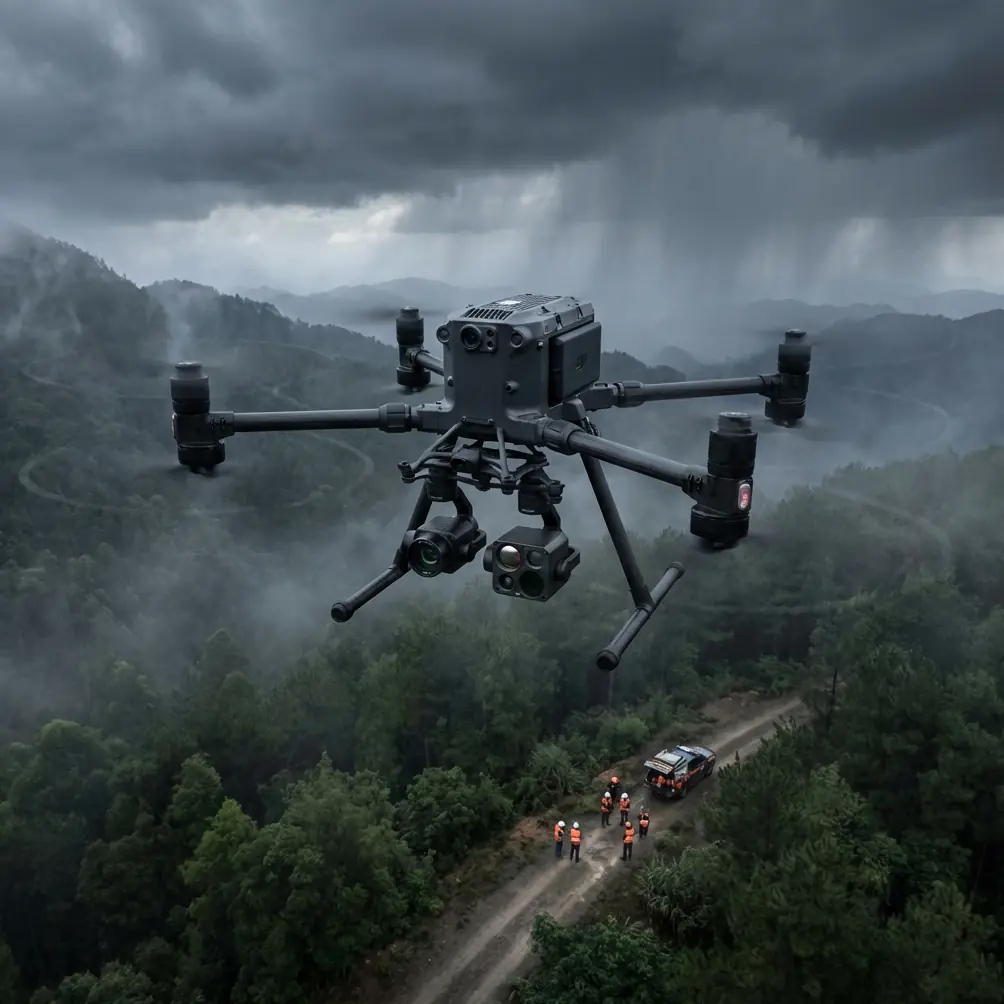
Matrice 400: Master Construction Inspections in Wind
META: Learn how the DJI Matrice 400 handles windy construction site inspections with advanced stabilization, thermal imaging, and BVLOS capabilities for professionals.
TL;DR
- Wind resistance up to 15 m/s enables reliable construction inspections in challenging conditions
- O3 transmission technology maintains stable video feeds across sprawling job sites
- Hot-swap batteries eliminate downtime during multi-structure inspection workflows
- Pre-flight sensor cleaning is critical for accurate thermal signature readings in dusty environments
Construction site inspections in windy conditions separate professional drone operators from amateurs. The DJI Matrice 400 series delivers enterprise-grade stability and sensor performance that keeps your inspection data reliable when gusts threaten to ground lesser aircraft. This tutorial walks you through optimizing your M400 workflow for wind-challenged construction environments.
Why Wind Performance Matters for Construction Inspections
Construction sites present unique aerodynamic challenges. Partially completed structures create unpredictable wind tunnels. Crane operations generate turbulence. Dust and debris become airborne projectiles.
The Matrice 400 addresses these challenges with a redundant propulsion system and advanced flight controllers that compensate for sudden gusts. Unlike consumer drones that struggle above 8 m/s winds, the M400 maintains precise positioning in sustained winds up to 15 m/s.
This stability directly impacts your deliverables. Blurry thermal signature captures mean missed structural defects. Unstable photogrammetry flights produce unusable 3D models. The M400's wind resistance translates to billable inspection data, not wasted flight time.
Pre-Flight Protocol: The Cleaning Step That Saves Missions
Before discussing flight techniques, let's address a critical safety step that many operators overlook: sensor cleaning for dusty construction environments.
Construction sites coat everything in fine particulate matter. This dust accumulates on:
- Obstacle avoidance sensors
- Thermal camera lenses
- GPS antenna surfaces
- Cooling intake vents
- Battery contact points
Expert Insight: I carry a dedicated sensor cleaning kit with microfiber cloths, compressed air, and lens cleaning solution. A 30-second pre-flight wipe-down of all optical surfaces prevents the thermal camera from producing hazy images that mask critical temperature differentials in structural elements.
Cleaning Sequence for Maximum Safety
Step 1: Power down completely and remove batteries
Step 2: Use compressed air on cooling vents and propeller motors
Step 3: Clean obstacle avoidance sensors with microfiber cloth
Step 4: Apply lens solution to thermal and visual cameras
Step 5: Inspect battery contacts for dust accumulation
Step 6: Verify GPS antenna is clear of debris
This process takes under three minutes but prevents sensor malfunctions that could compromise both safety systems and data quality.
Configuring the M400 for Windy Construction Flights
Flight Controller Settings
The Matrice 400's flight controller offers adjustable parameters that optimize performance in wind. Access these through DJI Pilot 2:
- Attitude Mode Gain: Increase to 120% for aggressive wind compensation
- Braking Sensitivity: Set to High for precise positioning near structures
- Max Velocity: Reduce to 8 m/s to maintain stability during inspection passes
- Obstacle Avoidance: Enable APAS 5.0 with construction-specific parameters
Gimbal Configuration for Stable Footage
Wind-induced vibrations transfer through the airframe to your payload. The M400's three-axis gimbal compensates, but optimal settings matter:
- Gimbal pitch speed: 15°/second for smooth thermal pans
- Gimbal roll compensation: Enabled
- FPV mode: Disabled during inspection (maintains horizon lock)
Pro Tip: When inspecting vertical structures in crosswinds, position the drone so wind pushes it toward the structure rather than away. This creates a more stable hover as the flight controller works with gravity rather than against it.
Thermal Inspection Techniques for Construction Sites
Thermal signature analysis reveals hidden construction defects invisible to standard cameras. The M400's thermal payload options excel at detecting:
- Moisture intrusion in concrete and masonry
- Insulation gaps in building envelopes
- Electrical hotspots in temporary power systems
- HVAC system leaks in mechanical installations
Optimal Thermal Flight Parameters
| Parameter | Recommended Setting | Rationale |
|---|---|---|
| Flight altitude | 15-25 meters | Balances resolution with coverage |
| Overlap | 75% front, 65% side | Ensures complete thermal mapping |
| Time of day | Early morning | Maximum thermal differential |
| Emissivity setting | 0.95 for concrete | Accurate temperature readings |
| Palette | Ironbow | Best contrast for construction materials |
GCP Placement for Photogrammetry Accuracy
Ground Control Points transform thermal mosaics into survey-grade deliverables. For construction sites, place GCPs:
- At each corner of the inspection area
- Every 50 meters along linear structures
- On stable surfaces away from equipment traffic
- With high-contrast targets visible in both thermal and visual spectrums
The M400's RTK positioning reduces GCP requirements, but construction sites benefit from redundancy given the dynamic environment.
Leveraging O3 Transmission for Site-Wide Coverage
Construction sites often span hundreds of meters with signal-blocking structures. The M400's O3 transmission system maintains 1080p/60fps video feeds at distances up to 20 kilometers in optimal conditions.
Real-world construction environments reduce this range due to:
- Steel structural elements
- Active crane operations
- Competing radio frequencies from site equipment
- Temporary structures and scaffolding
Transmission Optimization Strategies
Antenna positioning: Mount the controller antenna vertically when operating near steel structures
Channel selection: Use manual channel selection to avoid interference from site radios
Relay positioning: For BVLOS operations, position a visual observer with a relay controller at signal midpoints
Dual-operator mode: Assign camera control to a second operator, freeing the pilot to focus on navigation
BVLOS Operations for Large Construction Projects
Beyond Visual Line of Sight operations maximize the M400's capabilities on sprawling construction sites. However, BVLOS requires:
- Part 107 waiver approval from the FAA
- AES-256 encrypted command links for security
- Redundant communication systems
- Detailed operational procedures specific to the site
The M400's dual-battery hot-swap system supports extended BVLOS missions. With proper technique, you can replace depleted batteries without landing, maintaining continuous coverage of time-sensitive inspection windows.
Hot-Swap Battery Procedure
- Hover at safe altitude away from structures
- Engage tripod mode for maximum stability
- Remove one battery while monitoring power levels
- Insert fresh battery and verify connection
- Repeat for second battery
- Resume mission with full power
This technique extends effective flight time from 55 minutes to theoretically unlimited duration, constrained only by battery inventory and pilot fatigue.
Technical Comparison: M400 vs. Alternative Platforms
| Feature | Matrice 400 | Competitor A | Competitor B |
|---|---|---|---|
| Max wind resistance | 15 m/s | 12 m/s | 10 m/s |
| Transmission range | 20 km | 15 km | 8 km |
| Hot-swap batteries | Yes | No | No |
| RTK accuracy | 1 cm + 1 ppm | 2.5 cm | N/A |
| Obstacle sensing | Omnidirectional | Forward/downward | Forward only |
| Encryption standard | AES-256 | AES-128 | Proprietary |
| IP rating | IP55 | IP43 | IP44 |
Common Mistakes to Avoid
Ignoring wind gradient effects: Wind speed increases with altitude. A calm ground-level reading doesn't reflect conditions at 30 meters where you're inspecting upper floors.
Skipping sensor calibration: Construction sites' magnetic interference requires IMU and compass calibration before each flight session, not just each day.
Underestimating battery drain: Wind resistance consumes 20-40% more power than calm conditions. Plan missions with conservative battery reserves.
Flying during active concrete pours: Fresh concrete releases moisture that coats sensors and creates false thermal readings. Schedule inspections for cured sections.
Neglecting airspace coordination: Construction cranes operate in the same altitude band as inspection drones. Establish communication protocols with crane operators before flight.
Using automatic exposure for thermal: Manual thermal camera settings ensure consistent data across multiple flights, enabling accurate comparison of thermal signatures over time.
Frequently Asked Questions
Can the Matrice 400 operate in rain during construction inspections?
The M400's IP55 rating provides protection against water jets and dust ingress. Light rain operations are possible, though thermal imaging accuracy decreases when surfaces are wet. Heavy rain grounds all operations due to reduced visibility and potential water intrusion through payload connections.
What certifications do I need for commercial construction site inspections?
At minimum, you need a Part 107 Remote Pilot Certificate. Many construction clients also require proof of liability insurance (typically 1-2 million dollars), site-specific safety training, and OSHA 10 or 30 certification. BVLOS operations require additional FAA waivers with detailed operational procedures.
How do I integrate M400 thermal data with construction management software?
The M400 outputs industry-standard formats compatible with major platforms. Export thermal orthomosaics as GeoTIFF files for integration with Procore, Autodesk Construction Cloud, or PlanGrid. Photogrammetry outputs in LAS or OBJ formats import directly into BIM software for comparison against design models.
Mastering construction site inspections in challenging wind conditions requires the right equipment and refined techniques. The Matrice 400 provides the stability, transmission reliability, and sensor quality that professional inspectors demand. Combined with proper pre-flight protocols and optimized flight parameters, you'll deliver consistent, high-value inspection data regardless of weather conditions.
Ready for your own Matrice 400? Contact our team for expert consultation.