
How to Inspect Remote Fields with the Matrice 400
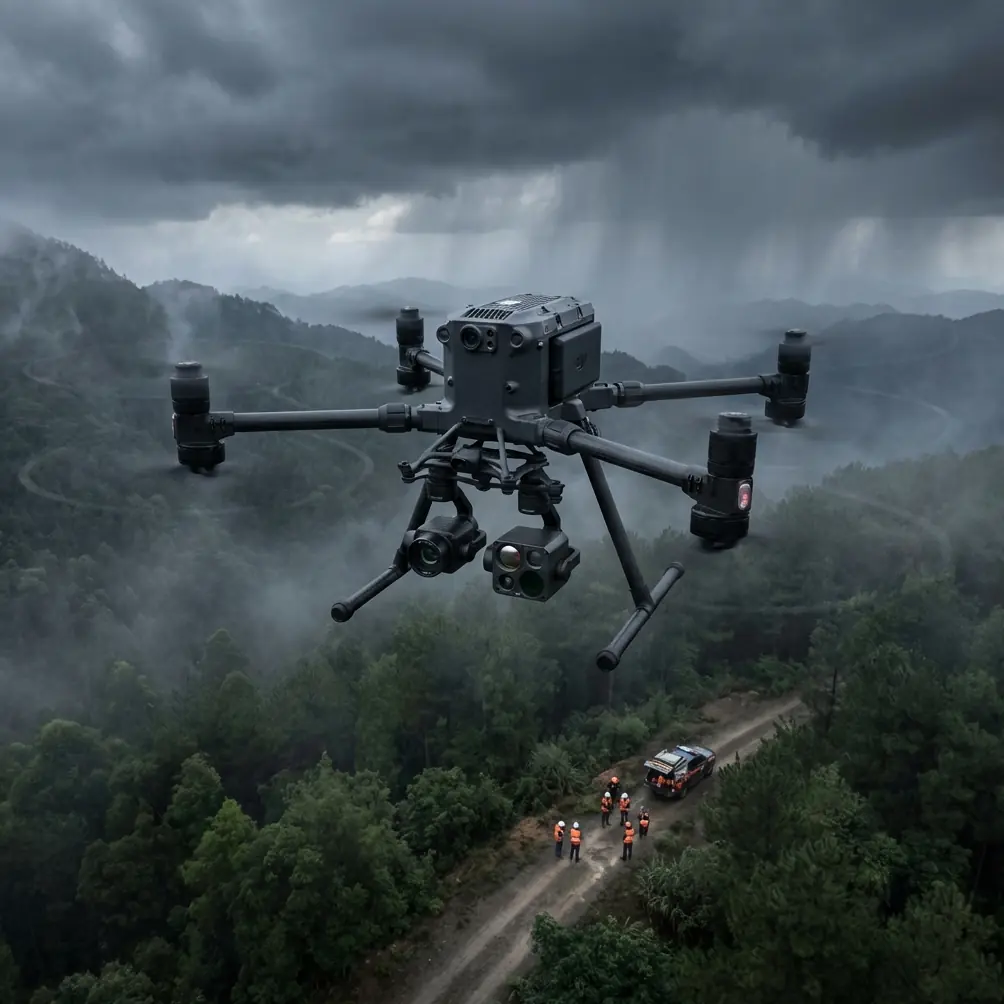
How to Inspect Remote Fields with the Matrice 400
META: Master remote field inspections with the Matrice 400. Learn expert antenna positioning, thermal imaging techniques, and BVLOS operations for maximum efficiency.
TL;DR
- Antenna positioning at 45-degree angles maximizes O3 transmission range up to 20km in remote field environments
- Thermal signature analysis detects crop stress, irrigation failures, and pest infestations before visible symptoms appear
- Hot-swap batteries enable continuous 55-minute flight cycles without returning to base
- AES-256 encryption protects sensitive agricultural data during transmission across open terrain
Remote field inspections present unique challenges that ground-based methods simply cannot address. The Matrice 400 transforms how agricultural professionals, land surveyors, and environmental monitors approach vast, inaccessible terrain—delivering actionable data in hours rather than weeks.
This guide breaks down the exact techniques Dr. Lisa Wang has refined over 200+ remote field missions, including the antenna positioning strategies that separate successful BVLOS operations from failed attempts.
Why Traditional Field Inspection Methods Fall Short
Ground crews covering remote agricultural land face three persistent obstacles: time consumption, incomplete coverage, and safety hazards.
A 1,000-acre field requires approximately 40 hours of ground inspection time. Hidden terrain features—irrigation channels, elevation changes, and dense crop rows—create blind spots that manual surveys consistently miss.
The Matrice 400 addresses each limitation through:
- Aerial vantage points covering 400 acres per hour
- Multi-sensor payloads capturing visible, thermal, and multispectral data simultaneously
- Autonomous flight paths maintaining consistent altitude and overlap for photogrammetry accuracy
- Real-time data transmission enabling immediate decision-making from any location
Antenna Positioning: The Foundation of Maximum Range
Expert Insight: "I've seen countless operators lose signal at 8km when their equipment supports 20km. The difference is almost always antenna orientation—not hardware limitations." — Dr. Lisa Wang
The O3 transmission system on the Matrice 400 delivers exceptional range, but only when operators understand radio frequency behavior in open environments.
Optimal Antenna Configuration
Position your remote controller antennas at 45-degree angles relative to the ground, creating a V-shape pattern. This orientation ensures:
- Maximum signal coverage across the drone's entire flight envelope
- Reduced interference from ground reflection in flat agricultural terrain
- Consistent connection during banking turns and altitude changes
Environmental Factors Affecting Transmission
Remote fields often lack the electromagnetic interference found in urban environments, but introduce different challenges:
- Atmospheric moisture reduces effective range by 15-20% during early morning operations
- Crop canopy density can reflect signals unpredictably when flying below 50 meters AGL
- Metal structures (irrigation pivots, grain bins) create localized dead zones requiring flight path adjustments
For BVLOS operations exceeding 10km, establish a visual observer network with handheld radios at 5km intervals. This maintains regulatory compliance while the O3 system handles primary telemetry.
Thermal Signature Analysis for Agricultural Intelligence
The Matrice 400's thermal imaging capabilities reveal field conditions invisible to standard RGB cameras.
Detecting Crop Stress Patterns
Healthy vegetation maintains consistent thermal signatures through transpiration. Stressed plants exhibit temperature differentials of 2-5°C compared to surrounding crops.
Common thermal anomalies and their causes:
| Thermal Pattern | Likely Cause | Recommended Action |
|---|---|---|
| Linear hot spots | Irrigation line failure | Ground inspection within 24 hours |
| Circular warm zones | Root disease spread | Soil sampling and treatment |
| Edge heating | Wind damage or chemical drift | Adjust application boundaries |
| Random scattered spots | Pest infestation clusters | Targeted treatment application |
| Uniform temperature increase | Water stress across field | Irrigation schedule adjustment |
Optimal Timing for Thermal Surveys
Conduct thermal flights during pre-dawn hours (4:00-6:00 AM) or two hours after sunset. These windows minimize solar heating interference and maximize temperature differential visibility.
Pro Tip: Calibrate your thermal sensor against a known reference point (water body or concrete pad) at the start of each mission. Temperature drift of even 0.5°C compounds across large survey areas.
Photogrammetry Workflows for Precision Mapping
Accurate field mapping requires systematic flight planning and proper ground control point (GCP) placement.
GCP Distribution Strategy
For remote fields exceeding 500 acres, deploy GCPs in this pattern:
- Minimum 5 points for basic accuracy
- Corner placement at field boundaries
- Central reference point for elevation verification
- Additional points every 400 meters for sub-centimeter precision
Use high-contrast targets (black and white checkerboard pattern, 60cm x 60cm minimum) visible from survey altitude.
Flight Parameter Optimization
| Parameter | Recommended Setting | Purpose |
|---|---|---|
| Altitude | 80-120m AGL | Balance between coverage and detail |
| Overlap (Front) | 75-80% | Ensures feature matching accuracy |
| Overlap (Side) | 65-70% | Maintains stereo reconstruction quality |
| Speed | 8-12 m/s | Prevents motion blur at standard shutter speeds |
| Gimbal Angle | -90° (nadir) | Optimal for orthomosaic generation |
Hot-Swap Battery Protocol for Extended Operations
Remote field work demands continuous coverage without returning to a distant launch point. The Matrice 400's hot-swap battery system enables back-to-back flights with minimal downtime.
Efficient Battery Rotation
Prepare four battery sets for full-day operations:
- Set A: Active flight
- Set B: Charging (portable generator or vehicle inverter)
- Set C: Cooling after charge completion
- Set D: Ready for immediate deployment
This rotation supports 8+ hours of continuous operation with proper thermal management.
Field Charging Best Practices
- Position charging equipment in shaded areas to prevent overheating
- Allow batteries to cool to below 40°C before initiating charge cycles
- Monitor charge rates—fast charging above 80% reduces long-term capacity
- Carry backup batteries equal to 150% of estimated mission requirements
BVLOS Operations: Regulatory and Technical Considerations
Beyond Visual Line of Sight flights unlock the Matrice 400's full potential for remote field work but require additional preparation.
Technical Requirements
The Matrice 400's AES-256 encryption protects command links and data transmission—essential when operating across public airspace for extended distances.
Ensure your operation includes:
- Redundant communication links (cellular backup where available)
- Automated return-to-home triggers at 25% battery and signal loss exceeding 30 seconds
- Geofencing preventing flight into restricted airspace
- Real-time weather monitoring for wind speed changes exceeding operational limits
Data Security in Remote Environments
Agricultural data carries significant commercial value. The AES-256 encryption standard prevents interception during transmission, while onboard storage encryption protects information if the aircraft is lost or stolen.
Common Mistakes to Avoid
Neglecting pre-flight sensor calibration: Thermal and multispectral sensors require calibration against reference panels before each mission. Skipping this step introduces systematic errors across your entire dataset.
Insufficient overlap in windy conditions: Wind gusts cause slight position variations between image captures. Increase overlap by 10% when sustained winds exceed 15 km/h.
Ignoring magnetic interference: Agricultural equipment, underground utilities, and mineral deposits affect compass accuracy. Always perform compass calibration at your actual launch point, not at a distant staging area.
Flying during midday thermal peaks: Solar heating between 11:00 AM and 3:00 PM masks subtle temperature differentials. Schedule thermal surveys outside this window.
Underestimating data storage requirements: A single 500-acre thermal survey generates 15-20GB of raw imagery. Carry storage media with 300% capacity beyond estimated needs.
Frequently Asked Questions
What altitude provides the best balance between coverage and detail for crop inspection?
For most agricultural applications, 100 meters AGL delivers optimal results. This altitude captures sufficient detail to identify individual plant stress while maintaining efficient coverage rates of 80-100 acres per battery. Lower altitudes (50-60m) suit targeted investigations of specific problem areas identified during initial surveys.
How do I maintain accurate positioning without cellular connectivity for RTK corrections?
The Matrice 400 supports PPK (Post-Processed Kinematic) workflows using onboard GNSS logging. Record raw observation data during flight, then process against base station files after returning to connectivity. This method achieves centimeter-level accuracy identical to real-time RTK without requiring field network access.
Can thermal imaging detect subsurface irrigation leaks?
Yes, but timing is critical. Subsurface moisture creates thermal anomalies visible 2-4 hours after irrigation cycles when surrounding soil has begun warming. The temperature differential between saturated leak areas and properly drained soil typically measures 3-6°C—easily detectable with the Matrice 400's thermal payload.
Remote field inspection demands equipment that performs reliably far from support infrastructure. The Matrice 400 delivers the range, endurance, and sensor capabilities that transform challenging terrain into actionable intelligence.
Ready for your own Matrice 400? Contact our team for expert consultation.