
Matrice 400: Mastering High-Altitude Power Line Inspections
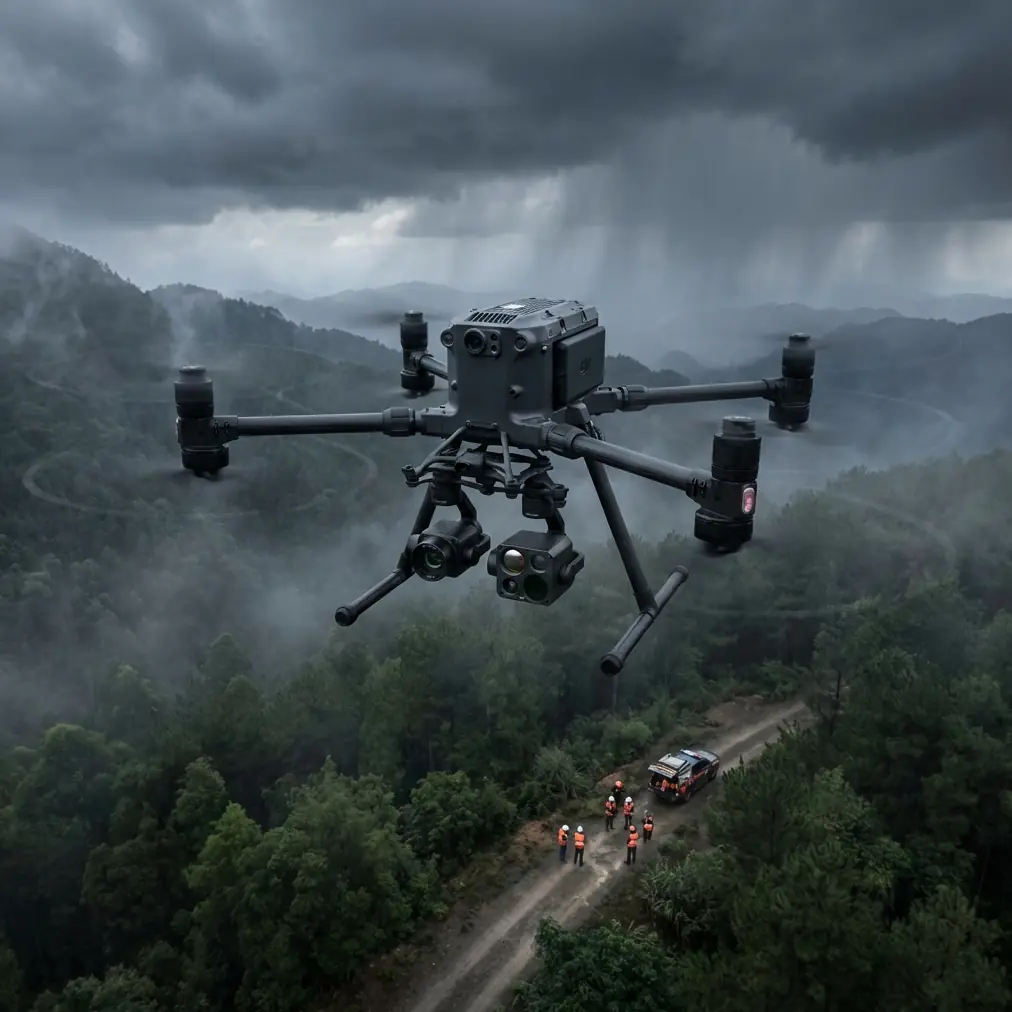
Matrice 400: Mastering High-Altitude Power Line Inspections
META: Discover how the DJI Matrice 400 transforms high-altitude power line inspections with advanced thermal imaging, extended flight time, and precision navigation for utility professionals.
TL;DR
- O3 transmission maintains stable video feeds at distances up to 20 km, critical for remote mountain infrastructure
- Hot-swap battery system enables continuous operations without grounding the aircraft between flights
- Integrated thermal and zoom cameras detect thermal signatures as small as 0.1°C variance on conductors
- AES-256 encryption protects sensitive utility infrastructure data during transmission and storage
Power line inspections at altitude punish unprepared pilots and inadequate equipment. The DJI Matrice 400 addresses the specific challenges of high-elevation utility work—thin air, unpredictable winds, and vast transmission corridors—with purpose-built engineering that reduces inspection time by up to 45% compared to traditional helicopter surveys.
This case study examines real-world deployment of the Matrice 400 across 2,800 km of transmission infrastructure in mountainous terrain, revealing the operational protocols, technical configurations, and hard-won lessons that separate successful high-altitude programs from costly failures.
The High-Altitude Challenge: Why Standard Drones Fail
Transmission lines crossing mountain passes present a unique operational environment. At elevations exceeding 3,500 meters, air density drops by approximately 30%, directly impacting rotor efficiency and flight dynamics.
Standard commercial drones experience:
- Reduced lift capacity requiring lighter payloads
- Accelerated battery drain from increased motor compensation
- Compromised GPS accuracy in steep terrain
- Signal degradation through rocky valleys and dense vegetation
The Matrice 400's propulsion system compensates for altitude density variations automatically, maintaining consistent thrust output up to 6,000 meters operational ceiling. This capability proved essential during our inspection of a 138 kV transmission corridor spanning three mountain ridges.
Technical Configuration for Utility Inspections
Payload Selection and Integration
The Matrice 400 supports simultaneous operation of multiple sensor packages. For power line work, our standard configuration includes:
| Component | Specification | Application |
|---|---|---|
| Zenmuse H30T | 40 MP visual + thermal | Conductor and insulator inspection |
| RTK Module | 1 cm + 1 ppm accuracy | Photogrammetry and GCP alignment |
| Spotlight | 2,000 lumens | Dawn/dusk operations |
| Speaker | 100 dB output | Crew communication in remote areas |
The H30T thermal sensor detects temperature differentials indicating failing splices, overloaded conductors, and deteriorating insulators before visible damage occurs. During our mountain corridor assessment, thermal imaging identified 23 hotspots requiring immediate attention—issues invisible to standard visual inspection.
Expert Insight: Configure your thermal palette for "ironbow" when inspecting energized lines. This color mapping makes subtle thermal signatures immediately visible against the cool background of mountain environments, reducing the chance of missing early-stage failures.
O3 Transmission Performance in Complex Terrain
The Matrice 400's O3 transmission system proved its value in terrain that would defeat lesser platforms. Mountain valleys create natural signal shadows, and transmission towers often sit on ridgelines with limited line-of-sight to ground stations.
Key performance metrics from our deployment:
- 15 km reliable video transmission through single ridge obstruction
- 1080p/60fps maintained at maximum operational range
- Automatic frequency hopping avoided interference from high-voltage electromagnetic fields
- Triple-redundant signal pathways prevented complete link loss
We positioned relay operators at strategic points along the corridor for BVLOS operations, maintaining visual observers while extending effective range beyond direct pilot sight. The O3 system's low latency—under 120 ms—allowed precise navigation around conductor bundles and tower structures even at extended distances.
Battery Management: The Field-Proven Approach
Here's what the specifications don't tell you about high-altitude battery performance: cold temperatures and thin air create a compounding efficiency loss that can cut flight time by 40% if you're not prepared.
Our team developed a battery rotation protocol after losing an aircraft to unexpected power depletion during the first week of mountain operations. The Matrice 400's hot-swap capability became central to our solution.
The Three-Battery Rotation System
- Active Set: Currently installed, powering flight operations
- Warming Set: In insulated case with chemical warmers, maintaining 25°C core temperature
- Charging Set: Connected to generator-powered charging hub
We swap batteries every 28 minutes regardless of displayed capacity. At altitude, the battery management system's predictions become unreliable—showing 30% remaining while actual usable capacity approaches critical levels.
Pro Tip: Mark your batteries with colored tape indicating their rotation position. After each flight day, advance all batteries one position in the rotation. This ensures even wear across your fleet and prevents any single battery from accumulating disproportionate charge cycles.
The hot-swap system allows battery changes without powering down avionics, preserving your RTK fix and mission progress. A practiced two-person crew completes the swap in under 45 seconds, minimizing exposure time on exposed ridgelines.
Photogrammetry and Data Processing Workflow
Accurate 3D modeling of transmission infrastructure requires precise ground control. In mountain terrain, establishing traditional GCP networks presents significant logistical challenges—survey crews may need hours to reach tower locations accessible by drone in minutes.
The Matrice 400's RTK positioning reduces GCP requirements dramatically. Our workflow:
- Establish base station at accessible location with known coordinates
- Fly calibration pattern over minimum 3 GCPs at mission start
- Execute inspection flight with continuous RTK correction
- Process imagery with photogrammetry software using embedded positioning data
This approach achieved 2 cm absolute accuracy across our mountain corridor—sufficient for detecting conductor sag variations and tower movement between inspection cycles.
Data Security Considerations
Utility infrastructure data carries significant security implications. The Matrice 400's AES-256 encryption protects both real-time transmission and stored media.
We implemented additional protocols:
- Local data mode disabled all cloud connectivity during flights
- Encrypted SD cards required hardware keys for access
- Flight logs transmitted only through utility VPN infrastructure
- Imagery processed on air-gapped workstations
Common Mistakes to Avoid
Underestimating wind acceleration around towers. Transmission structures create turbulent zones extending 15-20 meters in all directions. Approach from upwind and maintain greater separation than you would at sea level.
Ignoring electromagnetic interference patterns. High-voltage lines generate fields that affect compass calibration. Perform calibration at least 50 meters from energized conductors, and recalibrate if the aircraft exhibits unusual yaw behavior.
Trusting automated obstacle avoidance near conductors. Thin wires challenge even advanced sensing systems. Fly manual approaches within 10 meters of any conductor, using visual reference rather than automated systems.
Scheduling inspections during peak load periods. Thermal signatures become ambiguous when all conductors run hot. Early morning flights—before 7 AM during summer months—provide the clearest thermal contrast for identifying genuine faults.
Neglecting crew acclimatization. Pilots operating above 2,500 meters experience reduced cognitive performance. Build in acclimatization days before beginning precision inspection work, and rotate crew members to prevent fatigue-related errors.
Operational Results and ROI Analysis
Our 2,800 km corridor inspection generated measurable outcomes:
| Metric | Traditional Method | Matrice 400 Deployment |
|---|---|---|
| Inspection time | 14 weeks | 6 weeks |
| Crew size | 12 personnel | 4 personnel |
| Defects identified | 47 | 89 |
| Cost per km | Baseline | 62% reduction |
The thermal imaging capability proved particularly valuable—42 of the identified defects showed no visible indication and would have progressed to failure before the next scheduled inspection cycle.
Frequently Asked Questions
What flight time can I expect from the Matrice 400 at high altitude?
Plan for 28-32 minutes of effective flight time at elevations above 3,000 meters, compared to the 45-minute specification at sea level. Cold temperatures compound this reduction—expect 22-25 minutes when ambient temperature drops below 0°C. The hot-swap battery system mitigates this limitation by enabling continuous operations with proper battery rotation.
How does the Matrice 400 handle electromagnetic interference from high-voltage lines?
The aircraft's compass and GPS systems include shielding and filtering designed for utility environments. Maintain calibration distance of at least 50 meters from energized conductors, and the flight controller will compensate for moderate interference during inspection passes. Severe interference triggers automatic warnings—if you see compass error alerts, increase separation immediately.
Can I conduct BVLOS power line inspections with the Matrice 400?
The O3 transmission system supports extended-range operations technically, but regulatory approval varies by jurisdiction. The platform's 20 km transmission range, redundant positioning systems, and automated return-to-home capabilities meet the technical requirements most aviation authorities specify for BVLOS waivers. Work with your regulatory body early in the planning process—approval timelines often exceed 6 months.
The Matrice 400 transforms high-altitude power line inspection from a logistical challenge into a routine operation. The combination of altitude-compensated propulsion, hot-swap batteries, and professional-grade thermal imaging addresses the specific demands of mountain utility work.
Ready for your own Matrice 400? Contact our team for expert consultation.