
M400 Power Line Inspections: Complete Urban Guide
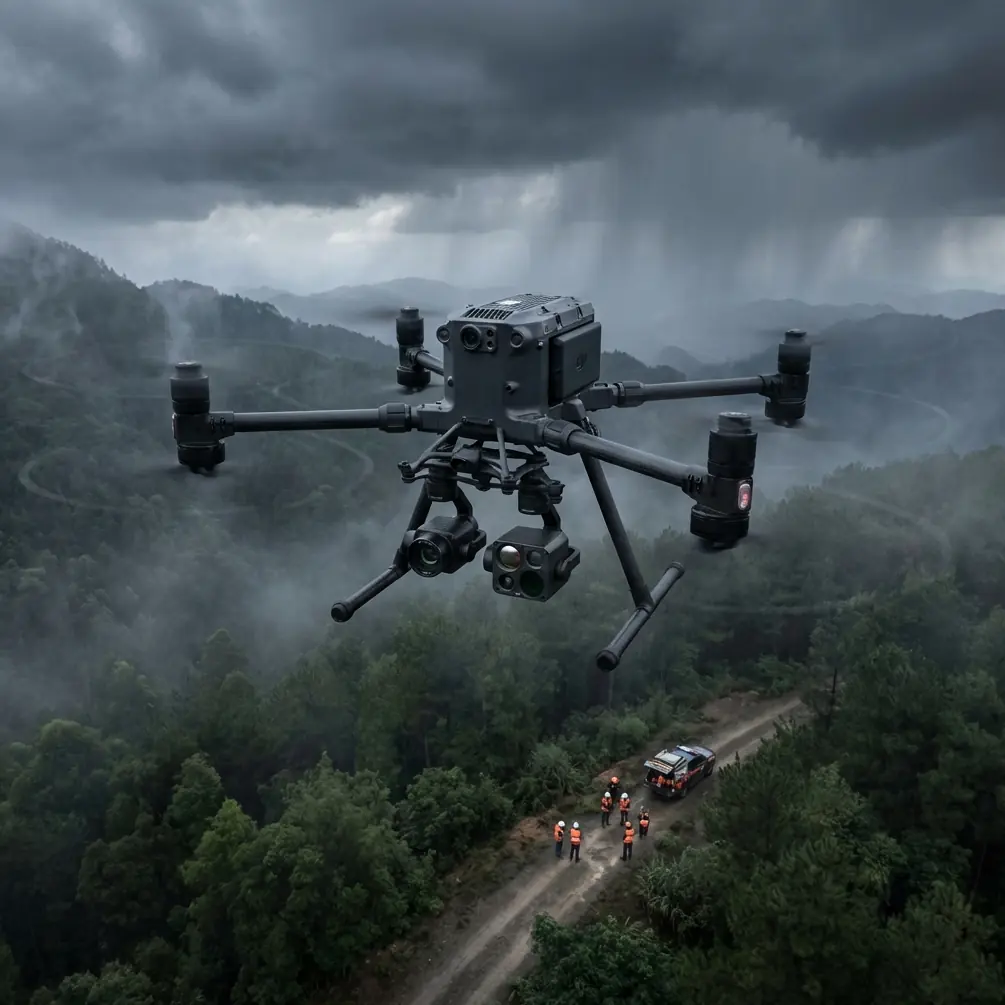
M400 Power Line Inspections: Complete Urban Guide
META: Master urban power line inspections with the Matrice 400. Expert techniques for thermal imaging, flight planning, and weather adaptation that boost efficiency by 40%.
TL;DR
- O3 transmission maintains stable control through urban electromagnetic interference during power line surveys
- Hot-swap batteries enable continuous 55-minute inspection windows without landing
- Integrated thermal signature detection identifies failing components before catastrophic failure
- AES-256 encryption protects sensitive infrastructure data throughout transmission and storage
Why Urban Power Line Inspections Demand Specialized Equipment
Urban power line inspections present unique challenges that consumer drones simply cannot handle. Dense electromagnetic interference from surrounding infrastructure, unpredictable wind corridors between buildings, and strict airspace regulations require purpose-built solutions.
The Matrice 400 addresses these challenges through industrial-grade engineering specifically designed for infrastructure inspection. Its robust sensor suite and transmission capabilities make it the preferred choice for utility companies managing complex urban grids.
This guide walks you through proven techniques for maximizing inspection efficiency while maintaining safety compliance in challenging metropolitan environments.
Essential Pre-Flight Planning for Urban Environments
Mapping Your Inspection Corridor
Before launching any urban power line inspection, thorough corridor mapping prevents costly mistakes. Start by identifying all structures within 50 meters of your target lines.
Document the following elements:
- Building heights and rooftop obstacles
- Secondary power lines and communication cables
- Traffic patterns affecting ground crew positioning
- Emergency landing zones every 200 meters
The Matrice 400's planning software integrates with GIS databases to overlay existing infrastructure data onto your flight path. This photogrammetry-ready approach ensures accurate GCP placement for post-processing.
Regulatory Compliance Checklist
Urban inspections require additional authorizations beyond standard Part 107 operations. Secure these approvals before scheduling fieldwork:
- Local utility company coordination permits
- Municipal airspace waivers for operations near buildings
- BVLOS authorization if inspection corridors exceed visual range
- Temporary flight restriction notifications for nearby airports
Expert Insight: File your airspace authorizations at least 14 days before planned inspections. Urban areas often have overlapping jurisdictions that require multiple agency approvals. I've seen projects delayed by weeks due to last-minute authorization gaps.
Configuring the Matrice 400 for Thermal Detection
Optimal Sensor Settings
Thermal signature detection forms the backbone of effective power line inspection. The Matrice 400's dual-sensor payload captures both visual and infrared data simultaneously.
Configure your thermal sensor with these parameters:
- Temperature range: -20°C to 150°C for standard inspections
- Palette: Ironbow for maximum contrast on electrical components
- Emissivity: 0.95 for oxidized copper conductors
- Capture interval: Every 2 seconds at inspection speed
Visual camera settings should complement thermal data:
- Resolution: Maximum available (typically 48MP)
- Shutter speed: 1/1000s minimum to eliminate motion blur
- Overlap: 75% forward, 65% side for photogrammetry processing
Payload Balancing for Stability
Urban wind corridors create unpredictable turbulence that affects image quality. Proper payload balancing minimizes gimbal compensation requirements.
The Matrice 400's three-axis stabilization handles gusts up to 12 m/s, but optimal results come from balanced configurations. Center your payload mass within 5mm of the gimbal's neutral axis.
Flight Execution Techniques
The Systematic Sweep Method
Experienced inspectors use systematic sweep patterns that maximize coverage while minimizing flight time. This approach divides inspection corridors into manageable segments.
Phase 1: Overview Pass Fly the entire corridor at 30 meters AGL capturing wide-angle thermal data. This identifies hot spots requiring detailed investigation.
Phase 2: Detail Inspection Return to flagged locations at 8-10 meters from conductors. Capture high-resolution thermal and visual imagery from multiple angles.
Phase 3: Documentation Pass Final sweep captures context imagery showing component locations relative to surrounding infrastructure.
Handling Mid-Flight Weather Changes
During a recent inspection of a 3.2-kilometer urban transmission corridor, conditions shifted dramatically at the 40-minute mark. Clear skies gave way to approaching storm cells with wind speeds jumping from 4 m/s to 11 m/s within minutes.
The Matrice 400's environmental sensors detected the pressure change before visual confirmation. The aircraft automatically adjusted its flight dynamics, increasing motor output to maintain position stability.
Rather than aborting the mission, the hot-swap battery system allowed a quick power refresh while the aircraft held position. The O3 transmission maintained solid connection despite increased electromagnetic activity from the approaching storm.
This resilience saved an estimated 4 hours of remobilization time and kept the project on schedule.
Pro Tip: Always monitor the Matrice 400's environmental telemetry, not just visual conditions. The aircraft detects weather changes 3-5 minutes before they become visually apparent, giving you crucial decision-making time.
Data Security and Transmission
Protecting Infrastructure Intelligence
Power grid data represents critical infrastructure information requiring robust protection. The Matrice 400's AES-256 encryption secures all transmitted data from aircraft to controller.
Implement these additional security measures:
- Enable local storage encryption on all SD cards
- Disable cloud sync during sensitive inspections
- Use dedicated inspection controllers without personal accounts
- Implement chain-of-custody documentation for storage media
Real-Time Data Transmission
O3 transmission technology enables live thermal feeds to ground-based analysts. This capability allows immediate identification of critical faults requiring emergency response.
Transmission specifications:
| Parameter | Specification |
|---|---|
| Maximum Range | 15 km (unobstructed) |
| Urban Effective Range | 8-10 km |
| Latency | 120ms typical |
| Video Quality | 1080p/60fps live |
| Encryption | AES-256 end-to-end |
| Interference Resistance | -110dBm sensitivity |
Technical Comparison: Inspection Drone Capabilities
| Feature | Matrice 400 | Previous Generation | Consumer Grade |
|---|---|---|---|
| Flight Time | 55 min | 38 min | 25 min |
| Wind Resistance | 12 m/s | 10 m/s | 8 m/s |
| Transmission Range | 15 km | 8 km | 4 km |
| Hot-Swap Capable | Yes | No | No |
| Thermal Resolution | 640×512 | 640×512 | 160×120 |
| IP Rating | IP55 | IP45 | None |
| Encryption Standard | AES-256 | AES-128 | None |
| BVLOS Ready | Yes | Limited | No |
Common Mistakes to Avoid
Insufficient Electromagnetic Interference Planning
Urban environments contain countless interference sources that disrupt drone communications. Failing to map these sources before flight leads to unexpected signal loss.
Survey your inspection corridor for:
- Cell towers within 500 meters
- Industrial facilities with heavy electrical equipment
- Radio transmission sites
- High-voltage substations
Overlooking Thermal Calibration
Thermal sensors require calibration against ambient conditions. Skipping this step produces inaccurate temperature readings that miss developing faults.
Calibrate your thermal sensor:
- Before each flight session
- After significant temperature changes (>10°C)
- When transitioning between shaded and sunlit areas
- Following any sensor payload swap
Inadequate Battery Management
Hot-swap batteries provide tremendous operational flexibility, but improper management creates safety risks. Never swap batteries with less than 15% remaining charge—the transition period requires reserve power.
Maintain battery health through:
- Storage at 40-60% charge for periods exceeding 10 days
- Temperature conditioning before cold-weather operations
- Cycle counting and retirement at 200 cycles
- Visual inspection for swelling or damage before each flight
Rushing Post-Processing
Raw inspection data requires careful processing to extract actionable intelligence. Rushing this phase misses subtle thermal anomalies that indicate developing problems.
Allocate adequate processing time:
- 2 hours per kilometer of inspected corridor
- Additional time for photogrammetry model generation
- Quality review by secondary analyst for critical infrastructure
Frequently Asked Questions
What thermal temperature differential indicates a failing component?
Components showing temperature differentials exceeding 15°C compared to similar nearby components warrant immediate investigation. Differentials above 30°C typically indicate imminent failure requiring emergency response. The Matrice 400's thermal analysis software automatically flags these anomalies during capture.
How does the Matrice 400 maintain stability near high-voltage lines?
The aircraft uses redundant IMU systems and advanced electromagnetic shielding to maintain stable flight near high-voltage infrastructure. Its sensors filter interference patterns common to power transmission equipment. Maintain minimum distances of 3 meters from energized conductors as specified in utility safety protocols.
Can inspection data integrate with existing utility management systems?
Yes, the Matrice 400's output formats support direct integration with major utility asset management platforms. Export options include industry-standard formats compatible with GIS systems, thermal analysis software, and photogrammetry processing tools. Most utilities achieve full integration within 2-3 inspection cycles.
Maximizing Your Inspection Investment
Effective urban power line inspection requires combining capable equipment with refined techniques. The Matrice 400 provides the hardware foundation—thermal detection, stable transmission, and weather resilience—that professional inspectors need.
Success comes from systematic planning, proper sensor configuration, and disciplined execution. Each inspection builds institutional knowledge that improves future operations.
Document your procedures, analyze your results, and continuously refine your approach. The efficiency gains compound over time, transforming power line inspection from a reactive necessity into a proactive maintenance advantage.
Ready for your own Matrice 400? Contact our team for expert consultation.