
Matrice 400 for Remote Venue Inspection: A Practical Field
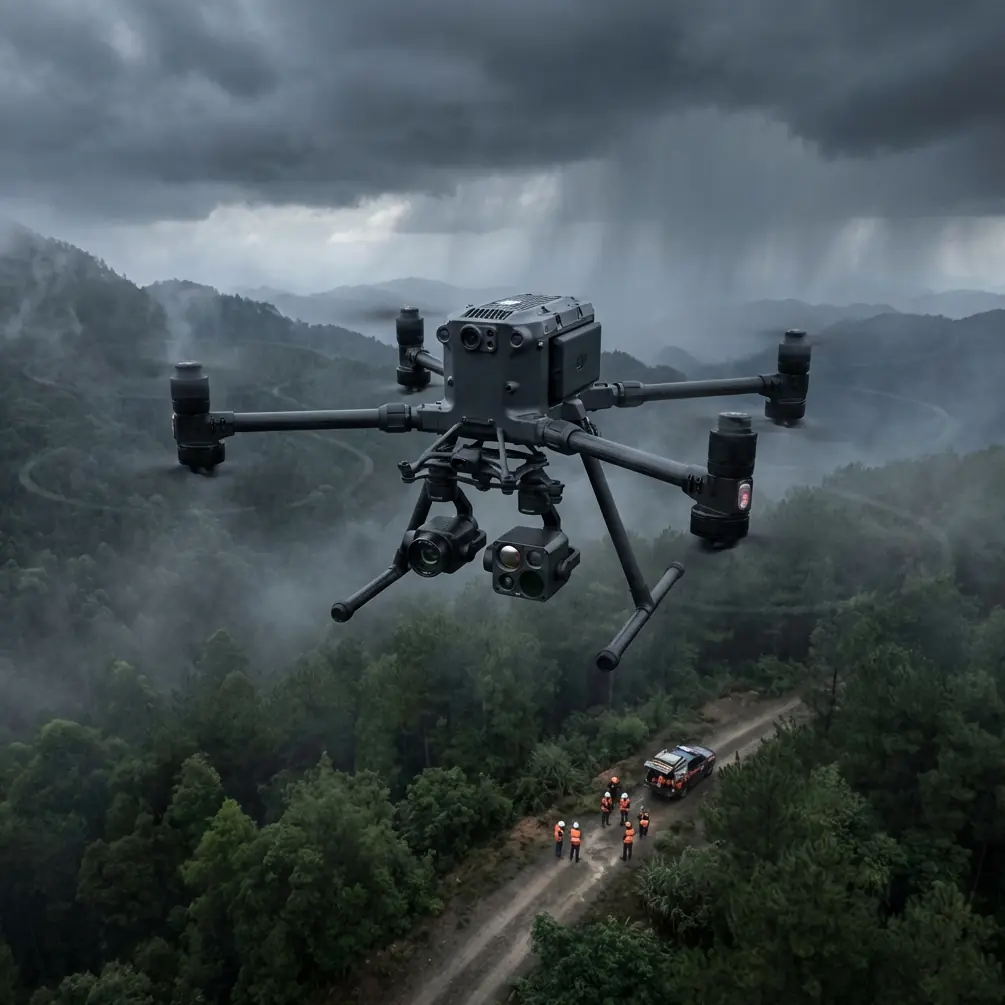
Matrice 400 for Remote Venue Inspection: A Practical Field Tutorial Built on Real Aircraft Design Logic
META: Learn how to plan safer, more reliable remote venue inspections with Matrice 400 by applying proven aircraft vibration, system integration, and mission-management principles.
By Dr. Lisa Wang, Specialist
Remote venue inspection looks simple on paper. Fly out, capture imagery, check structural conditions, head home. In the field, it is rarely that clean. Mountain amphitheaters, race venues beyond road access, temporary festival grounds near ridgelines, and eco-lodges cut into forests all create the same operational problem: you need dependable data from a platform that stays stable when the environment is not.
That is why the most useful way to think about the Matrice 400 is not as a feature checklist, but as a system that succeeds or fails on integration. The reference material behind this article comes from aircraft design literature, not drone marketing copy, and that matters. It shifts the discussion from “what can the drone do” to “what has to work together so the mission data is trustworthy.”
For remote venue inspection, that distinction is everything.
Why remote venue work exposes weak system thinking
A venue in a remote area asks a lot from the aircraft and the crew at the same time. You may be collecting photogrammetry for slope stabilization, thermal signature data for power or HVAC anomalies, and oblique imagery for roof, seating, tower, or cable-route assessment. Add changing winds, long transit legs, and intermittent signal conditions, and small design assumptions start to surface.
One of the strongest ideas in the source material is that vibration and modal behavior cannot be judged by isolating one component. In helicopter design, engineers do not evaluate the rotor and fuselage as if they live in separate worlds. They model isolated blade elastic vibration, overall rotor modal vibration, and fuselage system vibration separately, then combine them through modal synthesis into one coupled analysis. That is a very specific technical point, and it has operational significance for a Matrice 400 operator.
Here is the practical translation: if your inspection drone, gimbal, payload, mounts, airframe, and mission profile are treated as separate boxes, you can still get airborne, but you may not get reliable outputs. A venue inspection depends on image sharpness, repeatable geometry, stable thermal reads, and predictable hover behavior near structures. The aircraft has to behave as one tuned system.
That is why payload selection on a Matrice 400 should never start with “Which sensor is best?” It should start with “What combination of aircraft behavior and sensor output keeps data quality intact over the whole mission?”
The hidden lesson from rotorcraft dynamics: stability is designed, not assumed
One technical detail from the helicopter reference deserves more attention than it usually gets: engineers specifically analyze aircraft global modes and local modes that sit close to the rotor passage frequency. If those frequencies do not meet the design requirement, they perform sensitivity analysis to determine how stiffness and mass affect those modes, then adjust the design to retune the structure.
That sounds remote from UAV venue inspection. It is not.
When a Matrice 400 is assigned to inspect a remote performance venue or sports infrastructure, the operator may attach different payload stacks, fly in different wind envelopes, and conduct repeated hover-and-pan sequences around lighting trusses, roofs, and tower elements. Every one of those choices changes how the aircraft responds dynamically. You may not be conducting a full sensitivity study in the engineering sense, but the mindset should be the same: identify what changes the system response, and tune the mission before the mission exposes the weakness.
Examples:
- A heavier optical payload can alter handling and endurance margins.
- Long-lens inspection at standoff distance magnifies small oscillations.
- Thermal work at dawn may improve contrast but increase condensation risk.
- Orbit paths around grandstands or antenna masts can create airflow disturbances that show up as blur or unstable hover.
The source text also notes that connection stiffness matters. When the structural connection between the rotor system and fuselage is insufficient, vibration frequencies can differ significantly from simplified calculations. In drone terms, this is a reminder to pay close attention to payload mounting integrity, gimbal isolation condition, landing gear fit, and accessory attachment quality. A loose interface is not just a maintenance annoyance. It can quietly degrade the entire inspection dataset.
A field workflow for Matrice 400 remote venue inspection
Let’s turn those design principles into a practical tutorial.
1. Define the inspection output before defining the flight
For remote venues, there are usually three deliverables:
- A visual condition record
- A measurable map or 3D model
- A thermal anomaly layer
If photogrammetry is part of the job, establish your GCP plan before arriving on site if access is possible, or define checkpoint alternatives if ground placement is limited. Remote sites often make traditional control placement difficult, especially where terrain, vegetation, or event infrastructure blocks direct access.
On a Matrice 400 mission, this means your flight geometry should support the final model, not just produce “enough” images. Side overlap, nadir and oblique mixing, and repeatable altitude bands should be built around the structure you need to understand. Grandstand corrosion, drainage patterns, retaining walls, roof membrane failures, and service-road washout all require different capture logic.
2. Treat transmission planning as part of airworthiness
For remote venue work, O3 transmission performance is not just a convenience item. It changes how confidently you can maintain command and situational awareness when terrain or structures interfere with line quality. If your venue sits inside a bowl, against a cliff face, or behind a wooded ridge, your signal plan deserves the same level of attention as your battery plan.
This is where mature system thinking from the aircraft reference becomes useful. The second document emphasizes a conservative design philosophy: use mature technology carefully, reduce technical risk, and manage target changes under strict control. Applied to Matrice 400 operations, that means you should avoid improvising a brand-new workflow on a high-consequence remote job.
Use known controller placement rules. Confirm relay or observation positions if needed. Pre-brief lost-link behavior. Verify AES-256 settings where data security matters, especially when the venue owner treats construction details, utility layouts, or event preparations as sensitive commercial information.
A secure link is not only about confidentiality. It helps maintain chain-of-custody confidence when inspection imagery may drive contractor decisions or maintenance sign-off.
3. Build the payload stack around mission continuity
Hot-swap batteries are operationally significant on remote venue inspections because they compress the dead time between sorties. That sounds obvious. The less obvious value is continuity of lighting, temperature, and geometry.
If your thermal signature pass starts just after sunrise, every minute of delay changes surface heating behavior. If your photogrammetry sequence is split by a long battery turnaround, shifting shadows can complicate reconstruction. In remote areas, where every launch window may be shaped by weather or access constraints, battery exchange speed protects dataset consistency.
This is where good planning beats brute endurance. Segment the venue by deliverable, not by geography alone. For example:
- Sortie 1: perimeter orthomosaic
- Sortie 2: roof and tower obliques
- Sortie 3: thermal of electrical and mechanical assets
- Sortie 4: targeted follow-up on defects
That sequencing lets the Matrice 400 use its time in the air on coherent data blocks rather than fragmented opportunistic passes.
4. Watch for dynamic clues in the live feed
During inspection, do not focus only on the structure. Watch the aircraft behavior in relation to the structure. Small, repeating corrections can tell you something before the data review does.
If the gimbal appears to be working harder than expected while hovering near one side of a stadium roof, ask why. Is the wind curling off the edge? Is the aircraft fighting a localized updraft? Is the payload setup amplifying micro-movement? These are field equivalents of the sensitivity questions aircraft designers ask when frequencies approach undesirable ranges.
One morning at a forest-edge outdoor venue, our team was running a thermal and visual inspection of a cable-supported canopy line when a large hornbill crossed directly through the flight corridor and then perched above the seating edge. The Matrice 400’s sensors allowed us to hold off safely, reposition, and continue with a wider standoff rather than pushing the line for the perfect angle. That was not just a wildlife moment. It was a reminder that remote venue inspection is a real environment mission, not a studio exercise. Stability and awareness are inseparable.
5. Use BVLOS planning only where the operation actually supports it
BVLOS can transform large venue inspection in remote areas, especially for linear access roads, utility corridors, perimeter fencing, and drainage infrastructure extending beyond the core site. But the same logic from civil aircraft development applies here: mature methods first, controlled changes second.
The second reference highlights that development targets evolve over time, and that strict technical state management prevents disorder. For drone operations, the lesson is simple. Do not stretch a VLOS workflow into pseudo-BVLOS because the terrain is inconvenient. If the mission genuinely requires BVLOS, build it as a proper operation with route logic, procedures, communication structure, and regulatory alignment from the start.
That discipline is one of the clearest signs of a professional Matrice 400 program.
Why economic discipline matters even in a single inspection
The aircraft design handbook makes a blunt point: if target cost is ignored or underestimated early, the result is overrun and lost competitiveness even if performance is excellent. While that statement comes from full-scale aircraft development, it applies surprisingly well to remote drone inspection.
A Matrice 400 venue mission becomes expensive fast when the plan is vague. Crews revisit the site. Data has gaps. Thermal timing was wrong. Control points were insufficient. Transmission blind spots forced aborts. A second day is added. Suddenly the problem is not aircraft capability. It is planning discipline.
The same source also mentions that technical inheritance in successful civil aircraft programs often falls in the 75% to 80% range. That number is useful as a field rule of thumb. For remote venue inspections, around three-quarters of your mission architecture should come from proven templates: checklist structure, battery rotation method, image naming, GCP workflow, thermal timing, data backup, and emergency procedures. The remaining portion can adapt to the venue’s unique geometry, terrain, or sensor mix.
That balance is what keeps the Matrice 400 productive instead of experimental.
A practical template for a remote venue mission
Here is a field-ready sequence I recommend.
Pre-mission
- Review venue layout, terrain, vegetation, and access constraints
- Define required outputs: map, model, thermal, defect imagery
- Set GCP or checkpoint strategy
- Choose launch and observer positions based on terrain and O3 link quality
- Confirm AES-256 and data handling requirements
- Build battery rotation around lighting and thermal windows
On site
- Conduct a low-altitude familiarization lap
- Identify reflective surfaces, dust, birds, and turbulence zones
- Verify gimbal stability before high-value capture
- Separate mapping passes from inspection passes
- Reserve one sortie for anomaly re-checks
Post-flight
- Check image sharpness before leaving site
- Validate thermal files against timestamps and environmental conditions
- Confirm control quality in photogrammetry set
- Log any unusual aircraft behavior tied to payload, wind, or flight mode
If you are building this workflow for your own operation and need to compare payload, transmission, and inspection planning choices, you can message our field team here.
What makes Matrice 400 the right conversation for this kind of work
The real value of discussing Matrice 400 through the lens of aircraft design is that it discourages shallow thinking. Remote venue inspection is not won by one spec. It is won by a tuned system, disciplined mission architecture, and repeatable outputs.
The first source teaches that coupled systems must be modeled as coupled systems. The second teaches that risk falls when mature methods, controlled updates, and economic realism are built in from the start. Put those together, and you get a better way to operate a Matrice 400:
- Tune payload and airframe behavior as a single inspection platform
- Respect how structural and environmental dynamics affect data quality
- Use secure, stable transmission as a mission-critical layer
- Protect continuity with hot-swap battery planning
- Standardize most of the workflow and customize only what the site truly requires
That is how you inspect a remote venue without turning the mission into an expensive experiment.
Ready for your own Matrice 400? Contact our team for expert consultation.