
Inspecting Vineyards with Matrice 400 | Altitude Tips
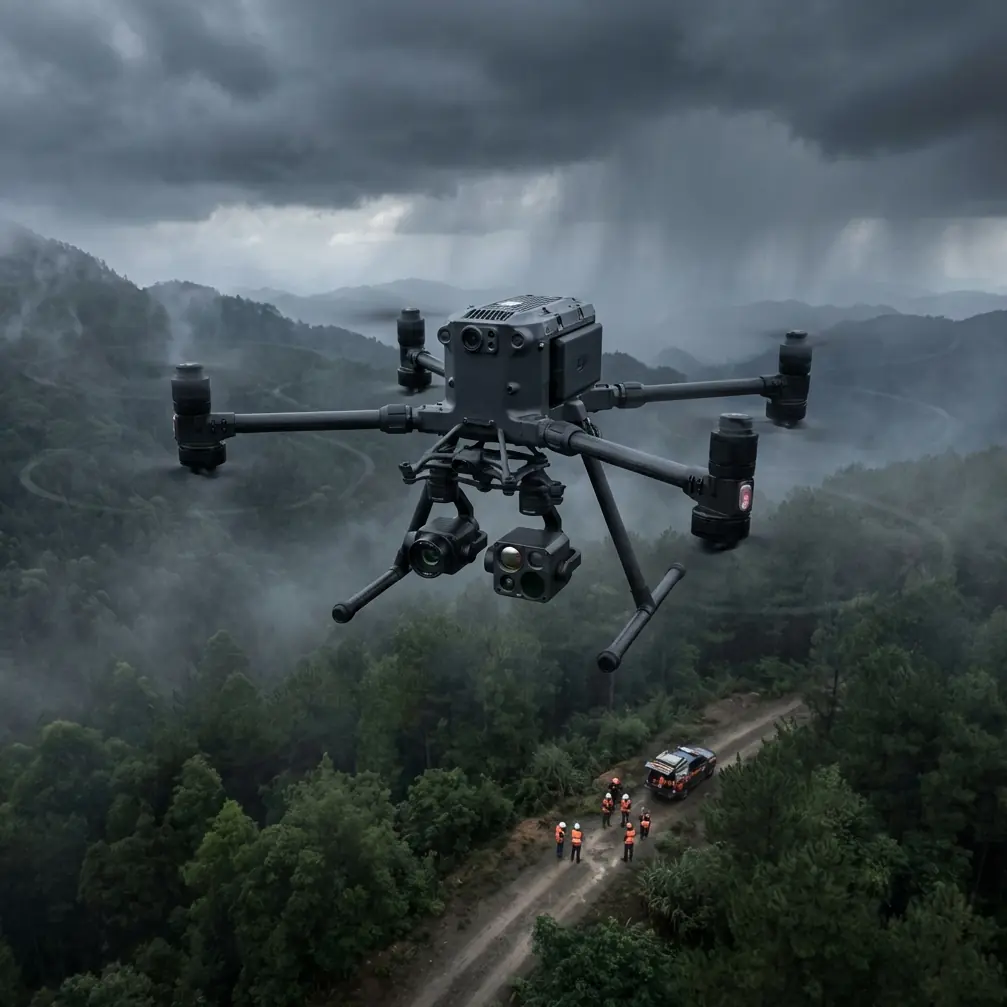
Inspecting Vineyards with Matrice 400 | Altitude Tips
META: Master high-altitude vineyard inspections with the Matrice 400. Expert guide covers thermal imaging, flight planning, and safety protocols for precision viticulture.
TL;DR
- Pre-flight lens cleaning prevents thermal signature distortion that leads to missed vine stress detection at altitude
- The Matrice 400's O3 transmission system maintains stable links up to 20km, critical for expansive hillside vineyard operations
- Hot-swap batteries enable continuous 4-hour inspection sessions without returning to base
- Proper GCP placement at 50-meter intervals ensures photogrammetry accuracy within 2cm horizontal precision
Why High-Altitude Vineyards Demand Specialized Drone Solutions
Vineyard inspections above 1,500 meters elevation present unique challenges that ground-based scouting simply cannot address. Thin air reduces lift efficiency. Temperature swings affect battery performance. Steep terrain creates dangerous blind spots.
The Matrice 400 was engineered precisely for these demanding agricultural environments. Its robust airframe handles wind gusts up to 15 m/s, while the advanced thermal imaging payload detects irrigation deficiencies invisible to the naked eye.
This guide walks you through every step of conducting professional vineyard inspections at altitude—from critical pre-flight preparations to post-processing your photogrammetry data for actionable insights.
The Critical Pre-Flight Step Most Pilots Skip
Before discussing flight planning or payload configuration, we need to address the single most overlooked safety procedure: sensor cleaning protocols.
Dust accumulation on thermal sensors creates false readings. A single fingerprint on the lens introduces thermal artifacts that mimic vine stress patterns. At high altitude, where atmospheric particulates concentrate differently than at sea level, this problem compounds rapidly.
Proper Sensor Cleaning Protocol
Start with a microfiber cloth specifically rated for optical coatings. Generic cleaning materials scratch protective lens treatments, degrading image quality over time.
Follow this sequence:
- Remove loose debris with a rocket blower (never compressed air cans—propellant residue damages coatings)
- Apply lens cleaning solution to the cloth, not directly to the sensor
- Wipe in single directional strokes from center to edge
- Inspect under bright light at multiple angles
- Repeat if any smudges remain visible
Expert Insight: I've seen vineyard managers lose entire inspection datasets because thermal anomalies from dirty sensors triggered false positive alerts across 40% of their acreage. Ten minutes of proper cleaning saves hours of re-flying and prevents costly misdiagnosis of vine health.
This cleaning step directly impacts the Matrice 400's AES-256 encrypted data integrity. Corrupted thermal data still transmits securely—but garbage in means garbage out, regardless of encryption strength.
Flight Planning for Hillside Terrain
High-altitude vineyards rarely sit on flat ground. The rolling topography of premium wine regions—think Mendoza's foothills or Oregon's Willamette Valley highlands—demands sophisticated flight path design.
Terrain-Following Configuration
The Matrice 400's terrain-following radar maintains consistent ground sampling distance (GSD) across elevation changes. For vineyard applications, configure these parameters:
- Set terrain-following altitude to 25-30 meters AGL for optimal thermal resolution
- Enable obstacle avoidance sensitivity to medium (high sensitivity causes unnecessary altitude adjustments over vine canopy)
- Program 70% front overlap and 65% side overlap for photogrammetry missions
- Establish return-to-home altitude 50 meters above highest terrain point in mission area
Wind Considerations at Altitude
Thinner air at elevation means the Matrice 400 works harder to maintain position. Battery consumption increases approximately 12% per 500 meters of elevation gain above sea level.
Plan missions during morning thermal windows—typically between sunrise and 10:00 AM local time. Afternoon convective heating creates unpredictable updrafts along hillside vineyards that stress stabilization systems.
Thermal Signature Analysis for Vine Health
The Matrice 400's radiometric thermal payload captures temperature data accurate to ±2°C across the entire sensor array. This precision enables detection of:
- Water stress indicators appearing as elevated canopy temperatures
- Disease onset showing as thermal anomalies in specific vine sections
- Irrigation system failures visible as temperature gradients along drip lines
- Frost damage patterns from previous cold events
Optimal Thermal Capture Settings
Configure your thermal payload for vineyard-specific parameters:
| Parameter | Recommended Setting | Rationale |
|---|---|---|
| Palette | Ironbow or White Hot | Best contrast for vegetation analysis |
| Temperature Range | 15°C to 45°C | Covers typical vine canopy variance |
| Emissivity | 0.95 | Standard for healthy leaf tissue |
| Capture Interval | 2 seconds | Balances coverage with file management |
| Resolution Mode | High (radiometric) | Enables post-processing temperature extraction |
Pro Tip: Fly thermal missions when ambient temperature exceeds 20°C and at least 2 hours after sunrise. Earlier flights capture residual overnight cooling rather than actual plant stress signatures. The temperature differential between stressed and healthy vines becomes most pronounced during peak photosynthetic activity.
GCP Placement Strategy for Photogrammetry Accuracy
Ground Control Points transform your aerial imagery from pretty pictures into survey-grade datasets. For vineyard photogrammetry, proper GCP deployment determines whether your maps achieve 2cm accuracy or 2-meter accuracy.
GCP Distribution Pattern
Deploy a minimum of 5 GCPs per 10 hectares of vineyard coverage. Position them according to these principles:
- Place one GCP at each corner of the survey area
- Add central GCPs at 50-meter maximum spacing
- Position GCPs on stable, flat surfaces between vine rows
- Avoid placement near highly reflective surfaces (irrigation equipment, vehicle windshields)
- Mark GPS coordinates with RTK-corrected receivers for sub-centimeter positioning
The Matrice 400's onboard RTK module synchronizes with your ground control network, enabling real-time positioning corrections that eliminate post-processing georeferencing headaches.
Leveraging O3 Transmission for Extended Operations
Vineyard properties often span hundreds of hectares across challenging terrain. The Matrice 400's O3 transmission system maintains 1080p video feed at distances exceeding 15km in optimal conditions.
At high altitude, reduced atmospheric interference actually improves transmission performance. However, hillside terrain creates signal shadows that require strategic planning.
Maintaining Link Integrity
Position your ground station at the highest accessible point overlooking the survey area. The O3 system's triple-channel redundancy handles brief obstructions, but sustained signal blockage triggers automatic return-to-home protocols.
For BVLOS operations—increasingly common in large vineyard inspections—establish visual observer positions at 500-meter intervals along the flight path. Regulatory requirements vary by jurisdiction, but the Matrice 400's transmission range far exceeds typical visual line-of-sight limitations.
Hot-Swap Battery Protocol for Continuous Operations
High-altitude flight consumes batteries faster than sea-level operations. The Matrice 400's hot-swap capability enables uninterrupted multi-hour missions when executed properly.
Battery Management Best Practices
- Pre-warm batteries to 25°C minimum before flight (cold batteries lose 30% capacity)
- Swap batteries when charge drops to 35% (not lower—reserve power ensures safe landing if swap fails)
- Rotate through battery sets systematically to ensure even wear
- Log cycle counts per battery for predictive replacement scheduling
- Store batteries at 60% charge between mission days
A typical 50-hectare vineyard inspection requires 4-6 battery swaps depending on payload configuration and wind conditions.
Common Mistakes to Avoid
Flying during midday heat: Thermal blooming from hot soil overwhelms subtle vine temperature differentials. Schedule missions for morning or late afternoon windows.
Insufficient overlap on slopes: Standard overlap percentages assume flat terrain. Increase both front and side overlap by 10% when surveying grades exceeding 15 degrees.
Ignoring humidity effects on thermal readings: High humidity reduces apparent temperature differentials. Note relative humidity in your flight logs for accurate post-processing calibration.
Skipping pre-flight sensor calibration: The Matrice 400's thermal sensor requires flat-field calibration before each mission. This 30-second procedure eliminates sensor drift that accumulates during transport.
Neglecting GCP visibility in dense canopy: Place GCPs in row middles where overhead imagery captures them clearly. GCPs hidden under vine canopy provide zero value to your photogrammetry pipeline.
Frequently Asked Questions
What flight altitude provides the best thermal resolution for detecting vine water stress?
Fly at 25-30 meters AGL for optimal balance between thermal resolution and coverage efficiency. Lower altitudes increase resolution but dramatically extend mission duration. Higher altitudes reduce your ability to detect subtle temperature variations between adjacent vines. At 25 meters, the Matrice 400's thermal payload achieves approximately 3cm per pixel resolution—sufficient to identify individual stressed plants within rows.
How do I compensate for reduced battery performance at high elevation?
Plan missions assuming 15-20% reduced flight time compared to manufacturer specifications. Pre-warm batteries using insulated cases with chemical hand warmers during transport. Schedule more frequent battery swaps and carry 50% more battery capacity than sea-level operations would require. The Matrice 400's battery management system automatically adjusts power delivery for altitude, but physical capacity limitations cannot be overcome through software.
Can I conduct BVLOS vineyard inspections with the Matrice 400?
The Matrice 400's technical capabilities fully support BVLOS operations through its 20km O3 transmission range and automated flight systems. However, regulatory approval varies significantly by country and region. In the United States, BVLOS requires specific FAA waivers. European regulations under EASA provide more streamlined pathways for agricultural applications. Consult local aviation authorities and consider working with certified BVLOS operators for large-scale vineyard programs.
Transforming Vineyard Management Through Precision Data
High-altitude vineyard inspection represents one of the most demanding applications for commercial drone technology. The combination of thin air, challenging terrain, and precision agriculture requirements pushes equipment and operators to their limits.
The Matrice 400 meets these challenges through robust engineering, reliable transmission systems, and payload flexibility that adapts to evolving vineyard management needs. From early-season frost damage assessment through harvest timing optimization, aerial thermal and multispectral data transforms reactive farming into predictive viticulture.
Mastering the techniques outlined in this guide—particularly the often-overlooked pre-flight cleaning protocols—ensures your inspection data delivers actionable insights rather than expensive confusion.
Ready for your own Matrice 400? Contact our team for expert consultation.