
Matrice 400 for Vineyard Inspection in Extreme Temperatures
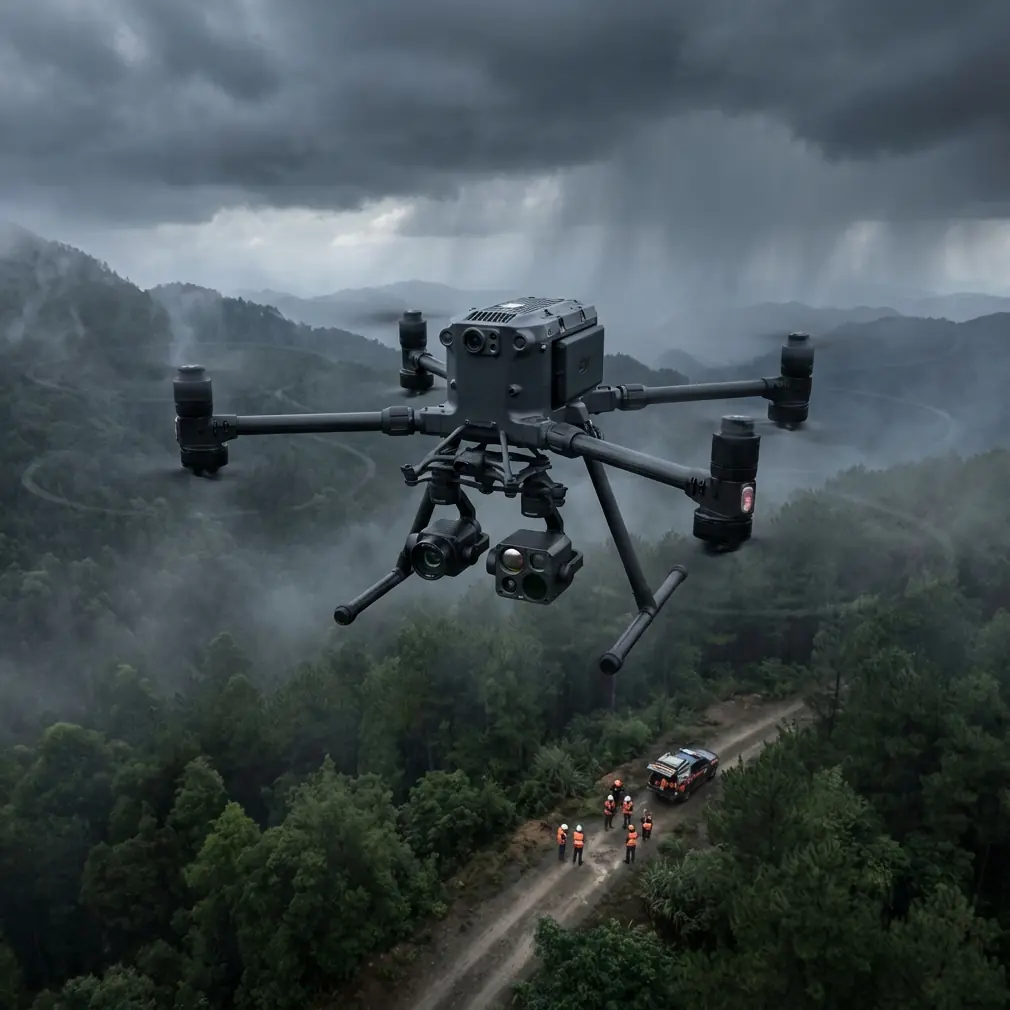
Matrice 400 for Vineyard Inspection in Extreme Temperatures: A Specialist’s Technical Review
META: Expert review of the Matrice 400 for vineyard inspection in extreme heat and cold, with practical guidance on thermal signature capture, photogrammetry workflow, battery strategy, and antenna positioning for maximum range.
When vineyard managers ask whether a heavy-duty enterprise drone is justified for field scouting, canopy stress detection, and terrain mapping, the real answer depends on conditions. Mild weather and flat blocks make many aircraft look capable. Extreme heat, cold dawn launches, steep rows, reflective irrigation lines, and patchy connectivity expose the difference between “can fly” and “can work.”
That is where the Matrice 400 deserves a closer look.
I am approaching this from a vineyard operations standpoint rather than a spec-sheet contest. For growers and inspection teams working through heat spikes, frost windows, and long row structures, the Matrice 400 is most useful when its platform strengths are tied to repeatable data capture. The airframe matters, of course, but the operational significance lies in how well it supports thermal signature analysis, photogrammetry accuracy, transmission stability, and power continuity when conditions are working against you.
The most overlooked truth in vineyard inspection is that extreme temperatures distort decision-making long before they distort imagery. Teams rush launches in summer because crews want to beat midday heat. They compress mission planning during winter because batteries and fingers both lose performance at dawn. That is exactly why a robust platform with hot-swap batteries is not just a convenience feature. It changes how disciplined your workflow can remain under pressure.
Hot-swap capability has direct value in vineyards with multiple blocks separated by access roads or elevation changes. Instead of fully powering down between sorties, crews can cycle batteries and keep payloads warm, mission settings preserved, and turnaround times tight. In cold-weather inspection, that reduces the idle periods that can drag battery chemistry into a weaker performance band. In high-heat environments, it shortens the time the aircraft sits exposed on bare soil or gravel while crews reboot systems and reconfigure flights. Operationally, that translates into more consistent sortie pacing and fewer rushed takeoffs.
For vineyard users, the second major issue is sensor trust. Thermal signature work in agriculture sounds straightforward until you try to interpret it across mixed canopy density, varying irrigation coverage, and row orientation changes. A thermal payload mounted on a Matrice 400 can be incredibly useful, but only if teams understand what they are actually seeing. Heat anomalies inside vineyard blocks may indicate water stress, clogged emitters, disease progression, exposed soil between weak vines, or simply an acquisition time that exaggerated surface heating.
This is why I do not recommend treating thermal imaging as a standalone answer. Pair it with photogrammetry. A proper visible-spectrum mapping pass gives structure to thermal findings. You can align temperature irregularities to row gaps, trellis damage, erosion patterns, wheel tracks, and slope transitions rather than guessing from isolated hotspots. In practice, that means using the Matrice 400 as a stable inspection platform that can support both thermal investigation and mapping-grade collection in the same field program.
Ground control points, or GCPs, still matter here. Even with strong onboard positioning, vineyards are unforgiving environments for false confidence. Repeating missions over a season to compare vigor trends or drainage-related stress demands dependable geospatial alignment. A GCP-backed workflow lets your orthomosaics and elevation products line up from one mission to the next, especially in blocks with repetitive geometry where rows can visually blur into each other. When managers want to know whether a stressed patch expanded by 8 meters or merely shifted in appearance due to angle and alignment drift, that precision stops being academic.
The Matrice 400 is particularly compelling when these jobs need to continue at the edges of safe operating windows. Vineyard inspections often happen when temperatures are least friendly because those windows reveal the most. Early cold flights can expose frost effects and irrigation patterns. Midday heat can make canopy stress stand out more clearly. But both conditions amplify strain on aircraft systems, pilots, and communication reliability.
That brings us to transmission.
In long agricultural corridors, signal quality is shaped as much by pilot behavior as by platform capability. O3 transmission is one of the most practically relevant features in this kind of work because vineyards routinely produce awkward line-of-sight conditions. Rows rise and dip. Tree lines interrupt clean paths. Utility poles and farm structures fragment the radio environment. The challenge is not simply distance. It is maintaining a stable and usable link while the aircraft moves through subtly changing terrain.
Antenna positioning is where experienced crews quietly outperform everyone else.
For maximum range, the biggest mistake is pointing antenna tips directly at the aircraft. Most enterprise operators know this in theory but still drift into bad habits during real missions. With directional antennas, the strongest part of the radiation pattern typically projects broadside, not off the narrow tip. In practical terms, you want the flat face or broad side of the antennas oriented toward the aircraft’s operating area, with your controller held at chest height and your own body not blocking the path. If the Matrice 400 is flying a long row set to your right, rotate your torso and controller together so the antennas maintain broadside orientation to the aircraft’s route rather than to where it started.
In vineyards with elevation changes, this matters even more. If the aircraft drops behind a contour break, operators often raise the controller overhead and angle it sharply upward, which can worsen the link geometry. A better method is to move to a slightly higher staging point before launch and maintain a clean frontal relationship to the mission area. Even a few meters of improved pilot position can stabilize the O3 link more effectively than awkward antenna movements mid-flight. For teams planning complex blocks, I often advise a simple pre-mission drill: walk the intended route edge, identify terrain dips and tree barriers, and choose a pilot station based on radio path quality rather than shade or vehicle proximity.
Security also deserves attention, especially for commercial vineyard operators handling sensitive crop health data, site layouts, and infrastructure imagery. AES-256 encryption is not marketing trivia. It is operationally relevant when flights document proprietary irrigation architecture, facility access points, labor routes, or disease pressure zones that a grower would not want casually exposed. Drone data in agriculture is often more commercially sensitive than people assume. A platform built around strong link security helps reduce risk when teams are transmitting live feeds or moving mission files across multiple operators and managers.
The Matrice 400 also aligns well with the gradual shift toward more ambitious mission planning, including longer linear inspections and, where regulations and approvals allow, BVLOS-style operational thinking. I am being precise here: legal authority always comes first. But from a workflow perspective, vineyards spread across large estates push teams toward beyond-visual-line strategies because the economics of stopping every few rows to reposition are poor. Even if a mission remains strictly within current line-of-sight rules, planning it with BVLOS discipline improves safety and efficiency. That means thinking carefully about transmission continuity, emergency landing options, terrain masking, and battery reserves before takeoff rather than improvising once the aircraft is already at the far edge of the block.
Extreme temperature operations sharpen every one of those considerations.
In hot conditions, surface radiance can muddy thermal interpretation, especially over bare ground, rock, and metallic irrigation components. Pilots should avoid assuming the brightest signature is the most urgent agronomic issue. The value comes from pattern recognition across the block. Are stressed vines clustered near a pressure drop in the irrigation system? Do warm signatures trace wheel-compacted areas that are reducing water infiltration? Is a hot patch persistent across repeated flights tied to GCP-supported maps, or was it a transient artifact from capture timing? The Matrice 400’s utility increases when crews build repeatability into their mission design.
Cold-weather inspections bring a different set of problems. Battery performance margins tighten, prop wash may interact with frost or moisture differently near canopy edges, and early-morning low-angle light can complicate visual reconstructions. Here, hot-swap batteries again provide operational resilience. Crews can keep rotations efficient, minimize exposure during swap cycles, and preserve a cleaner cadence across multiple blocks. That sounds mundane until you compare a disciplined two-hour inspection session against one that loses rhythm every time the aircraft is shut down and restarted in freezing conditions.
One of the reasons I view the Matrice 400 favorably for vineyard work is that it is not limited to one inspection logic. It can support quick reaction flights after a heat event, detailed thermal sweeps for irrigation diagnosis, and photogrammetry missions for terrain and drainage analysis. That versatility matters because viticulture rarely presents isolated problems. Water management, vine vigor, disease vectors, and topography interact. A drone platform that lets you examine those factors through multiple capture methods is more valuable than one optimized for a single dramatic image type.
The best results still come from disciplined operators, not from the aircraft alone. Use repeatable launch points. Keep GCP placement consistent. Log temperature, wind, and capture time for each block. Review antenna orientation before every long pass. Do not treat encrypted transmission as a substitute for good data handling practices. And never let a “strong link” on the controller screen tempt you into lazy route planning around terrain or obstacles.
If you are setting up a Matrice 400 program for vineyards and want a field-ready checklist, you can message me here for a workflow discussion: https://wa.me/example
The larger takeaway is simple. The Matrice 400 makes the most sense in vineyard inspection when weather stress and acreage scale are high enough to punish weak systems and sloppy methods. Its real strengths show up in the details: stable O3 transmission across difficult row geometry, AES-256 protection for sensitive operational data, hot-swap battery support that preserves mission continuity in heat and cold, and the ability to combine thermal signature analysis with photogrammetry and GCP-backed mapping.
That combination is not abstract. It is what allows a viticulture team to move from “we flew the block” to “we trust what the data is telling us.” In extreme temperatures, that difference can shape irrigation response, labor allocation, disease scouting priorities, and the timing of the next flight.
Ready for your own Matrice 400? Contact our team for expert consultation.