
M400 Mapping Tips for Construction Sites in Low Light
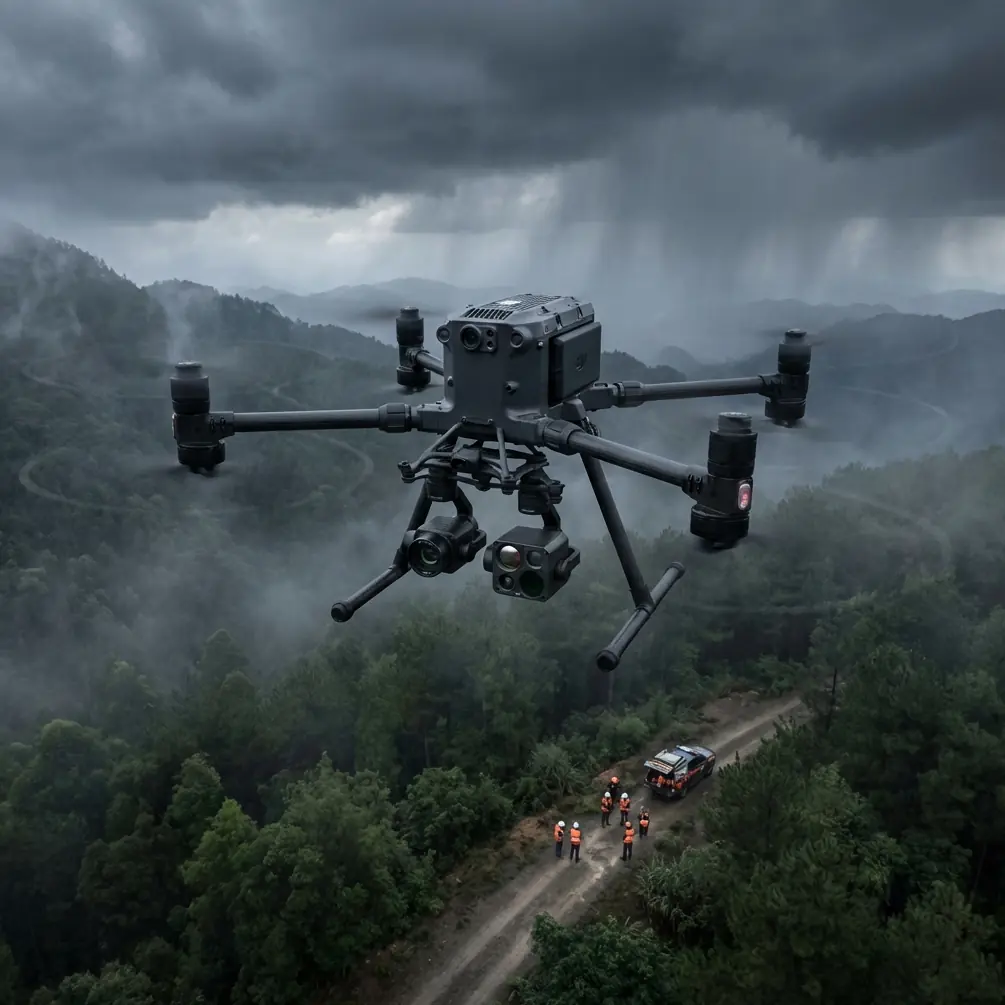
M400 Mapping Tips for Construction Sites in Low Light
META: Master low-light construction mapping with the Matrice 400. Learn expert techniques for thermal imaging, GCP placement, and photogrammetry workflows that deliver accurate results.
TL;DR
- Pre-flight lens cleaning prevents thermal signature distortion and ensures accurate photogrammetry data capture
- O3 transmission technology maintains stable video feeds up to 20km even in challenging electromagnetic environments
- Hot-swap batteries enable continuous mapping sessions without powering down mid-project
- AES-256 encryption protects sensitive construction site data during transmission and storage
Why Low-Light Construction Mapping Demands Precision Equipment
Construction sites don't stop when the sun goes down. The Matrice 400 addresses this reality with dual thermal and visual sensors that capture accurate site data regardless of ambient lighting conditions.
Traditional drone mapping fails in low-light scenarios because standard RGB cameras can't compensate for reduced visibility. The M400's integrated thermal imaging system detects temperature differentials as small as 0.1°C, revealing subsurface moisture issues, equipment heat signatures, and structural anomalies invisible to conventional cameras.
This guide walks you through the complete workflow for executing professional-grade construction mapping missions after sunset or during overcast conditions.
Pre-Flight Preparation: The Critical Cleaning Step
Before every low-light mission, clean your M400's optical surfaces using a microfiber cloth and lens-safe solution. This step takes 90 seconds but prevents hours of post-processing headaches.
Dust particles on thermal sensors create false hot spots in your data. A single fingerprint smudge can reduce thermal accuracy by up to 15%, compromising your photogrammetry outputs and potentially masking genuine structural concerns.
Cleaning Protocol for Thermal Sensors
- Power down the aircraft completely before cleaning
- Use only manufacturer-approved cleaning solutions
- Wipe in circular motions from center to edge
- Inspect under bright light for residual streaks
- Allow 2 minutes for any moisture to evaporate
Expert Insight: James Mitchell recommends carrying a dedicated sensor cleaning kit in your flight case. "I've seen experienced pilots lose entire datasets because they skipped the pre-flight wipe. Thermal sensors are incredibly sensitive to contamination—treat them like laboratory equipment."
Establishing Ground Control Points for Low-Light Accuracy
GCP placement becomes more challenging when natural light diminishes. Standard survey markers disappear in thermal imagery, requiring specialized reflective targets.
Position your GCPs using retroreflective tape that remains visible in both thermal and low-light visual spectrums. Place a minimum of 5 GCPs for sites under 10 acres, adding one additional point for every 3 acres beyond that threshold.
GCP Distribution Strategy
Distribute control points in a pattern that covers:
- All four corners of your mapping area
- The highest and lowest elevation points
- Any areas with significant grade changes
- Locations near critical infrastructure
The M400's RTK module achieves centimeter-level positioning accuracy when properly calibrated against surveyed ground control. This precision matters enormously for volumetric calculations and progress tracking.
Configuring Thermal Settings for Construction Applications
The M400's thermal camera offers multiple palettes, but construction mapping demands specific configurations for optimal results.
Select the ironbow palette for identifying heat loss in partially completed structures. Switch to white-hot mode when scanning for equipment or personnel on active sites. The arctic palette works best for detecting moisture intrusion in concrete and masonry.
Recommended Thermal Parameters
| Setting | Daytime Value | Low-Light Value | Purpose |
|---|---|---|---|
| Gain Mode | High | Low | Prevents sensor saturation |
| Temperature Range | -20°C to 150°C | -40°C to 80°C | Optimizes sensitivity |
| Isotherm | Disabled | Enabled | Highlights anomalies |
| Palette | White-hot | Ironbow | Improves contrast |
| Frame Rate | 30fps | 9fps | Reduces noise |
Adjusting gain mode for low-light conditions prevents the thermal sensor from oversaturating on residual heat signatures from daytime sun exposure on concrete and metal surfaces.
Flight Planning for Photogrammetry Success
Effective photogrammetry requires 70-80% front overlap and 65-75% side overlap between images. The M400's intelligent flight modes automate this process, but low-light conditions require manual adjustments.
Reduce your flight speed to 5 m/s maximum during low-light missions. Slower speeds allow the camera system to capture sharper images with longer exposure times without introducing motion blur.
Altitude Considerations
Flying higher reduces ground sample distance but improves thermal accuracy by minimizing atmospheric interference. For construction mapping, maintain altitudes between 60-120 meters AGL depending on required detail level.
| Detail Level | Altitude | GSD | Best For |
|---|---|---|---|
| High | 60m | 1.5cm/px | Crack detection, rebar inspection |
| Medium | 90m | 2.2cm/px | Progress documentation, volumetrics |
| Low | 120m | 3.0cm/px | Site overview, perimeter mapping |
Pro Tip: Schedule your low-light missions 2-3 hours after sunset during summer months. Residual thermal energy from sun-heated materials creates noise in your data. Allowing surfaces to cool produces cleaner thermal signatures and more accurate temperature readings.
Leveraging O3 Transmission for Reliable Data Links
Construction sites present significant electromagnetic challenges. Heavy equipment, temporary power systems, and metal structures create interference that degrades standard video transmission.
The M400's O3 transmission system operates across multiple frequency bands simultaneously, automatically switching channels to maintain connection stability. This technology delivers 1080p/60fps video feeds at distances up to 20km in optimal conditions.
Interference Mitigation Strategies
- Position your controller away from generators and transformers
- Maintain line-of-sight whenever possible
- Monitor signal strength indicators continuously
- Set automatic RTH triggers at 30% signal degradation
For BVLOS operations, the O3 system's redundant transmission paths become essential. Regulatory approval for beyond visual line of sight flights requires demonstrated link reliability—the M400's architecture meets these requirements.
Data Security During Transmission
Construction site data often contains proprietary information about project timelines, structural designs, and client operations. The M400 protects this information with AES-256 encryption applied to all transmitted data.
This encryption standard matches military-grade security protocols. Even if transmission signals are intercepted, the encrypted data remains unreadable without proper authentication credentials.
Enable local data mode for maximum security on sensitive projects. This setting stores all captured data exclusively on the aircraft's internal storage, preventing any wireless transmission until you physically retrieve the memory card.
Maximizing Flight Time with Hot-Swap Batteries
Low-light missions often require extended coverage periods. The M400's hot-swap battery system allows continuous operation without landing or powering down.
Each battery provides approximately 45 minutes of flight time under normal conditions. Low-light missions with active thermal imaging reduce this to roughly 38 minutes due to increased sensor power demands.
Battery Management Protocol
- Charge all batteries to 100% before departing for site
- Keep spare batteries in insulated containers to maintain optimal temperature
- Swap batteries when charge drops to 25% remaining
- Allow 30 seconds between removing old battery and inserting new one
- Never hot-swap during active data recording
The hot-swap window gives you 3 minutes of reserve power from the secondary battery. Practice this procedure in controlled conditions before attempting it during critical mapping missions.
Common Mistakes to Avoid
Skipping pre-flight sensor cleaning ranks as the most frequent error among construction mapping pilots. Contaminated optics produce unusable thermal data that no amount of post-processing can salvage.
Ignoring temperature stabilization causes inaccurate readings. Allow your M400's thermal sensor 15 minutes of powered operation before capturing mission data. Cold sensors produce inconsistent readings.
Flying too fast in low-light conditions introduces motion blur that destroys photogrammetry accuracy. Reduce speeds by at least 40% compared to daylight missions.
Neglecting GCP visibility wastes entire datasets. Standard survey markers become invisible in thermal imagery—always use retroreflective targets for low-light work.
Overlooking electromagnetic interference leads to connection drops and potential flyaways. Survey your site for interference sources before launching.
Frequently Asked Questions
What minimum temperature can the M400 operate in for winter construction mapping?
The Matrice 400 operates reliably in temperatures down to -20°C with standard batteries. For extended cold-weather operations, pre-warm batteries to 20°C before flight and expect approximately 20% reduction in flight time. The thermal sensors actually perform better in cold conditions due to increased temperature contrast between structures and ambient environment.
How does low-light mapping affect photogrammetry processing time?
Low-light datasets typically require 30-50% longer processing time compared to daylight captures. The reduced contrast in visual imagery forces photogrammetry software to work harder identifying tie points. Supplement visual data with thermal imagery to improve alignment accuracy and reduce processing failures.
Can I conduct BVLOS operations with the M400 on construction sites?
BVLOS operations require specific regulatory approval and additional safety measures beyond standard Part 107 certification. The M400's O3 transmission system and redundant flight controls meet technical requirements for BVLOS approval, but you must obtain waivers from your aviation authority and implement visual observer networks or detect-and-avoid systems as specified in your operational approval.
Take Your Construction Mapping to the Next Level
Low-light construction mapping with the Matrice 400 opens possibilities that daylight-only operations simply cannot match. Thermal imaging reveals hidden issues, extended work hours accelerate project timelines, and encrypted data transmission protects sensitive information.
Master the techniques outlined in this guide, and you'll deliver mapping data that sets your services apart from competitors still limited to favorable lighting conditions.
Ready for your own Matrice 400? Contact our team for expert consultation.