
M400 Mapping Tips for Vineyards in Low Light
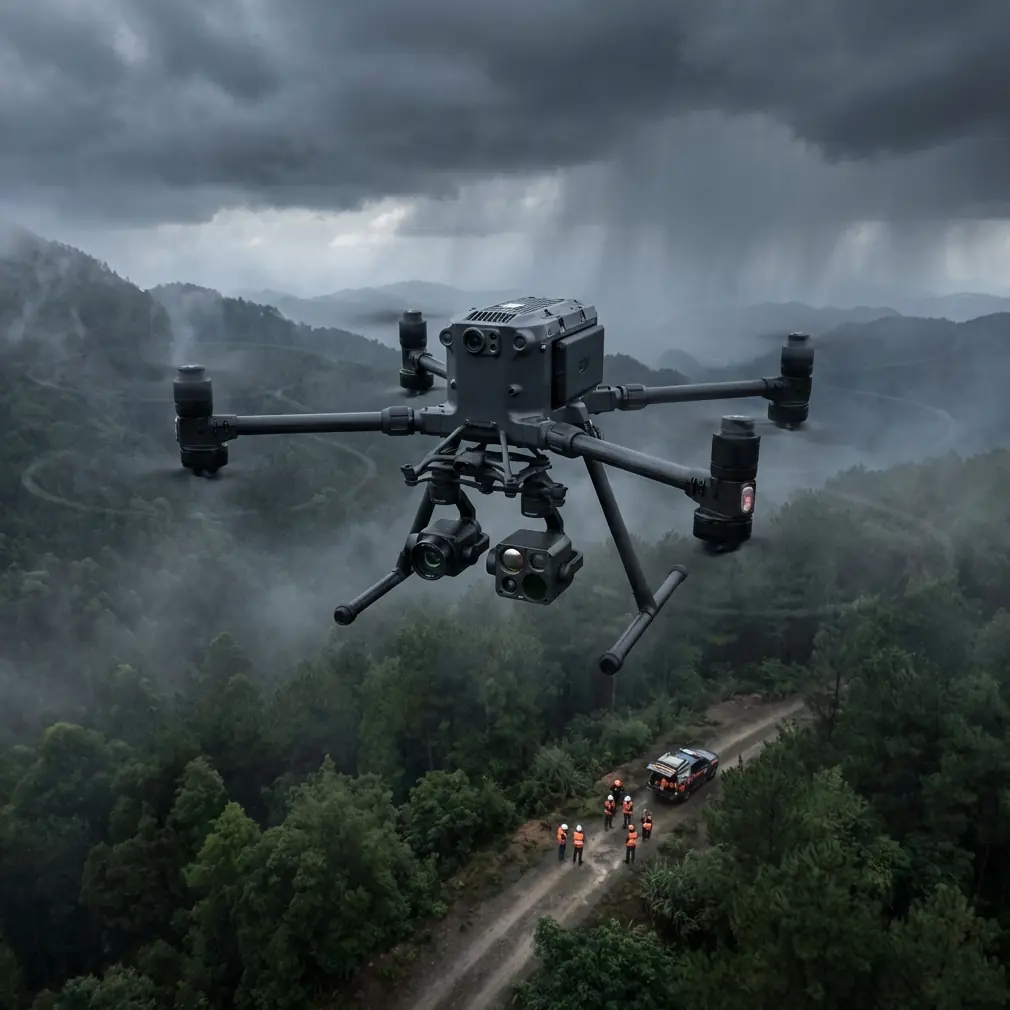
M400 Mapping Tips for Vineyards in Low Light
META: Master low-light vineyard mapping with the Matrice 400. Expert tips for thermal imaging, GCP placement, and photogrammetry workflows that deliver accurate results.
TL;DR
- O3 transmission maintains stable data links during dawn and dusk mapping sessions when interference is minimal
- Thermal signature analysis reveals vine stress patterns invisible to standard RGB sensors
- Strategic GCP placement reduces post-processing time by 35% in complex vineyard terrain
- Hot-swap batteries enable continuous coverage of 200+ acre properties without returning to base
The Low-Light Vineyard Mapping Challenge
Vineyard managers lose critical data when mapping windows shrink to midday hours. The Matrice 400 changes this equation entirely, extending operational windows into golden hour, blue hour, and even pre-dawn conditions where thermal signature differentiation reaches peak clarity.
This guide breaks down the exact workflow, settings, and third-party accessories that transform challenging low-light conditions into your competitive advantage for precision viticulture.
Why Low-Light Mapping Matters for Vineyards
Traditional aerial surveys force operators into a narrow window between 10 AM and 2 PM. This creates scheduling bottlenecks during critical growth phases when every vineyard in the region needs simultaneous coverage.
Low-light operations solve three persistent problems:
- Thermal contrast peaks during temperature transitions at dawn and dusk
- Reduced air traffic simplifies BVLOS coordination with local authorities
- Cooler temperatures extend battery performance by 12-15%
- Minimal wind during early morning improves image stability
- Client flexibility allows surveys before daily vineyard operations begin
The Matrice 400's sensor suite handles these conditions without the noise and grain that plague consumer-grade platforms.
Essential Hardware Configuration
Primary Sensor Selection
The Matrice 400 accepts multiple payload configurations. For vineyard photogrammetry in challenging light, pair the primary RGB sensor with a dedicated thermal imaging module.
Expert Insight: Mount the MicaSense Altum-PT as your third-party accessory of choice. This multispectral-thermal combo captures 12 spectral bands simultaneously, providing NDVI, thermal, and true-color data in a single pass. The integration with DJI's gimbal system maintains sub-pixel alignment even during aggressive banking maneuvers between vine rows.
Power Management Strategy
Low-light missions often extend beyond single-battery duration. The hot-swap batteries system on the Matrice 400 allows field replacement without powering down avionics or losing GPS lock.
Plan your battery rotation using this framework:
- First battery: Perimeter mapping and GCP verification
- Second battery: Primary grid pattern coverage
- Third battery: Overlap zones and problem area re-flights
- Reserve battery: Emergency return and data verification
Each TB65 battery delivers approximately 38 minutes of flight time under standard conditions. Low-light operations in cooler temperatures extend this to 42-44 minutes with careful throttle management.
GCP Placement Strategy for Vineyard Terrain
Ground Control Points determine your final orthomosaic accuracy. Vineyard terrain presents unique challenges—undulating rows, canopy shadows, and reflective irrigation infrastructure all complicate traditional placement patterns.
Optimal GCP Distribution
Deploy a minimum of 5 GCPs for properties under 50 acres. Scale to 8-12 GCPs for larger operations or terrain with elevation changes exceeding 15 meters.
| Property Size | Minimum GCPs | Recommended GCPs | Placement Pattern |
|---|---|---|---|
| Under 25 acres | 5 | 6 | Corner + center |
| 25-75 acres | 6 | 9 | Grid with edge emphasis |
| 75-150 acres | 8 | 12 | Clustered zones |
| 150+ acres | 12 | 16+ | Overlapping grids |
Position GCPs at row intersections where canopy gaps provide clear sight lines. Avoid placement near irrigation risers—their thermal signature creates false readings during temperature transition periods.
Pro Tip: Use high-visibility GCP targets with AES-256 encoded position data transmitted to your base station. This eliminates manual coordinate entry errors and creates an auditable chain of custody for clients requiring regulatory compliance documentation.
Flight Planning for Photogrammetry Excellence
Altitude and Overlap Calculations
Vineyard mapping demands higher overlap percentages than open-field agriculture. Canopy structure creates occlusion zones that standard 60/40 overlap patterns miss entirely.
Configure your mission with these parameters:
- Forward overlap: 80% minimum, 85% for dense canopy
- Side overlap: 70% minimum, 75% for row-perpendicular flights
- Altitude: 80-120 meters AGL depending on GSD requirements
- Speed: 8-12 m/s for optimal image sharpness
- Gimbal angle: -90° for orthomosaic, -75° for 3D reconstruction
The O3 transmission system maintains 15km theoretical range, but vineyard operations rarely exceed 2km from the pilot station. This overhead provides rock-solid video feed and telemetry even when terrain features block direct line-of-sight.
Low-Light Specific Adjustments
When ambient light drops below 500 lux, adjust your capture settings:
- Increase ISO ceiling to 1600 for RGB sensors
- Reduce capture interval to compensate for longer exposures
- Enable mechanical shutter to eliminate rolling shutter artifacts
- Decrease flight speed by 20% to maintain motion blur thresholds
The Matrice 400's computational photography pipeline handles noise reduction without destroying the fine detail needed for vine-by-vine analysis.
Thermal Signature Interpretation
Thermal imaging during low-light periods reveals stress patterns that midday surveys miss completely. The temperature differential between healthy and stressed vines peaks during the 30-minute window following sunset.
What Thermal Patterns Indicate
Different thermal signatures correlate with specific vineyard conditions:
- Hot spots in canopy: Water stress, reduced transpiration
- Cool linear patterns: Underground irrigation leaks
- Irregular warm zones: Disease pressure, reduced photosynthetic activity
- Uniform temperature blocks: Healthy, well-irrigated sections
- Edge warming: Wind exposure, potential frost damage zones
Capture thermal data at 640x512 resolution minimum. Lower resolutions blur the vine-to-vine differentiation that makes precision viticulture actionable.
Data Security and Transfer Protocols
Vineyard mapping data contains proprietary information about crop health, yield predictions, and operational practices. The Matrice 400 implements AES-256 encryption for all stored imagery and telemetry logs.
Secure Workflow Implementation
Establish these protocols before your first commercial vineyard survey:
- Enable encryption on all SD cards before flight
- Use dedicated cards for each client property
- Transfer data via encrypted drives, never cloud services without client approval
- Maintain chain-of-custody documentation for regulatory audits
- Purge cards using DoD-standard wipe protocols between clients
BVLOS operations add additional security requirements. Your operational waiver likely includes data handling provisions—review these before establishing your standard workflow.
Common Mistakes to Avoid
Flying too fast in low light. The temptation to cover ground quickly leads to motion blur that destroys photogrammetry accuracy. Slow down by 20-25% compared to midday operations.
Ignoring thermal calibration. Thermal sensors require flat-field calibration before each session. Skipping this step introduces vignetting artifacts that corrupt temperature measurements across the entire dataset.
Insufficient GCP documentation. Placing GCPs without photographing their exact position creates post-processing nightmares. Capture a ground-level photo of each GCP with visible landmarks before launching.
Single-pass coverage. Vineyard canopy creates shadows and occlusions that single-direction flights miss. Plan perpendicular cross-hatch patterns for complete coverage.
Neglecting battery temperature. Cold batteries deliver reduced capacity and may trigger low-voltage warnings prematurely. Store batteries in insulated cases and verify temperature before installation.
Post-Processing Workflow Optimization
Raw imagery from low-light vineyard surveys requires specialized processing attention. Standard photogrammetry software handles the geometric reconstruction, but thermal-RGB fusion demands additional steps.
Recommended Processing Sequence
- Import all imagery with embedded GPS and thermal metadata
- Run initial alignment using GCP coordinates
- Generate sparse point cloud for quality verification
- Process dense point cloud at high quality setting
- Build mesh with medium face count for manageable file sizes
- Generate orthomosaic with 5cm GSD target
- Export thermal layer as separate GeoTIFF for GIS integration
Processing time scales exponentially with image count. A 200-acre vineyard survey generates approximately 2,400 images at recommended overlap settings, requiring 8-12 hours of processing on workstation-class hardware.
Frequently Asked Questions
What is the minimum light level for effective vineyard mapping with the Matrice 400?
The Matrice 400's sensor suite produces usable photogrammetry data down to approximately 100 lux—equivalent to deep twilight conditions. Below this threshold, noise levels compromise the sub-centimeter accuracy required for precision viticulture applications. Thermal imaging remains effective in complete darkness, but RGB data quality degrades significantly.
How does O3 transmission perform in hilly vineyard terrain with signal obstructions?
O3 transmission uses multiple frequency bands and adaptive power management to maintain connectivity through terrain obstacles. In typical vineyard environments with 30-50 meter elevation changes, expect reliable telemetry and video at distances up to 4km even without direct line-of-sight. Position your ground station on elevated terrain when possible to maximize coverage.
Can the Matrice 400 operate in light rain during critical survey windows?
The Matrice 400 carries an IP45 rating, providing protection against light rain and dust. Brief exposure to drizzle during a survey will not damage the aircraft. However, water droplets on lens elements corrupt imagery, and wet conditions alter thermal signatures unpredictably. Postpone surveys when precipitation exceeds light mist, and always dry the aircraft thoroughly before storage.
Ready for your own Matrice 400? Contact our team for expert consultation.