
How to Monitor Vineyards in Complex Terrain with M400
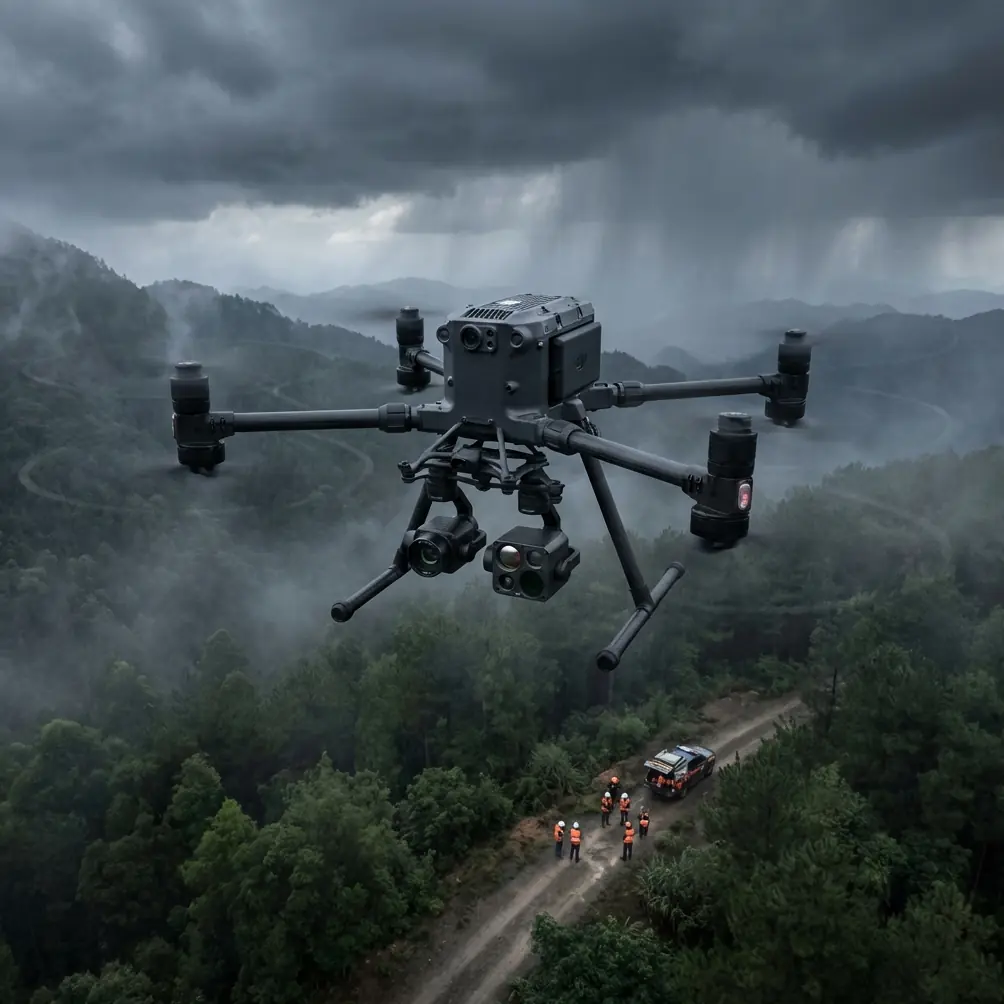
How to Monitor Vineyards in Complex Terrain with M400
META: Master vineyard monitoring with the Matrice 400 drone. Learn expert techniques for thermal imaging, photogrammetry, and BVLOS operations in challenging terrain.
TL;DR
- Pre-flight sensor cleaning prevents false thermal signatures that lead to misdiagnosed vine stress
- The M400's O3 transmission maintains stable control across valley terrain where GPS signals falter
- Hot-swap batteries enable continuous monitoring of 500+ acre vineyards without returning to base
- AES-256 encryption protects proprietary vineyard data from competitors and cyber threats
Vineyard managers lose an average of 15-20% of their crop yield to undetected irrigation failures and pest infestations each year. The Matrice 400 transforms how viticulturists identify these problems before they devastate harvests—but only when deployed correctly across challenging hillside terrain.
This guide walks you through the exact workflow I've refined over 200+ commercial vineyard surveys, from the critical pre-flight cleaning steps most operators skip to advanced photogrammetry techniques that reveal vine health invisible to the naked eye.
Why Traditional Vineyard Monitoring Fails in Complex Terrain
Hillside vineyards present unique challenges that ground-based monitoring simply cannot address. Walking rows on 30-degree slopes takes crews 4-6 hours per acre. By the time they identify a problem area, the damage has spread.
Satellite imagery offers broader coverage but lacks the resolution to detect early-stage chlorosis or individual vine stress. Cloud cover in coastal wine regions renders scheduled satellite passes useless 40-60% of the time during critical growing seasons.
The Matrice 400 bridges this gap with capabilities specifically suited to vineyard terrain:
- Obstacle sensing across all directions prevents collisions with trellis wires and end posts
- RTK positioning achieves centimeter-level accuracy for repeat surveys
- Variable terrain following maintains consistent GSD (Ground Sample Distance) across slopes
- Wind resistance up to 12 m/s handles afternoon valley breezes
The Pre-Flight Cleaning Step That Saves Your Survey
Expert Insight: Before every vineyard mission, I spend exactly 90 seconds cleaning the thermal sensor lens with a microfiber cloth and compressed air. This single habit has prevented more survey failures than any other practice in my workflow.
Vineyard environments deposit a fine layer of dust, pollen, and agricultural spray residue on exposed sensors. This contamination creates thermal artifacts—false hot spots that mimic vine stress patterns.
I've seen operators misdiagnose entire blocks based on dirty sensor readings. One client nearly ripped out 12 acres of healthy vines before we re-surveyed with clean equipment and discovered the "stress signature" was actually spray residue on the lens.
My pre-flight cleaning protocol:
- Remove the gimbal cover and inspect for visible contamination
- Use compressed air from 6 inches away at a 45-degree angle
- Wipe the thermal lens with a dedicated microfiber cloth (never the same one used for RGB sensors)
- Check the obstacle avoidance sensors for dust accumulation
- Verify the cooling vents are clear of debris
This process takes less time than a single battery charge and eliminates the most common source of false positives in thermal vineyard surveys.
Configuring the M400 for Hillside Photogrammetry
Standard photogrammetry settings fail on sloped terrain. The M400's terrain-following mode requires specific configuration to maintain consistent overlap across elevation changes.
Optimal Settings for Vineyard Surveys
| Parameter | Flat Terrain | Hillside (15-30°) | Steep Terrain (30°+) |
|---|---|---|---|
| Front Overlap | 75% | 80% | 85% |
| Side Overlap | 65% | 75% | 80% |
| Flight Speed | 8 m/s | 6 m/s | 4 m/s |
| Altitude AGL | 40m | 35m | 30m |
| GSD | 1.5 cm/px | 1.2 cm/px | 1.0 cm/px |
The increased overlap compensates for the geometric distortion that occurs when capturing oblique angles on slopes. Without this adjustment, your photogrammetry software will struggle to align images at block boundaries where terrain changes abruptly.
Pro Tip: Place GCP (Ground Control Points) at elevation transitions, not just property corners. I use 5 GCPs per 50 acres on flat land but increase to 8-10 GCPs on hillside vineyards. The extra control points at slope changes dramatically improve orthomosaic accuracy.
Leveraging O3 Transmission for Valley Operations
Signal reliability becomes critical when flying vineyard surveys in valley terrain. Hills, tree lines, and metal trellis systems create RF shadows that can interrupt lesser transmission systems.
The M400's O3 transmission technology maintains HD video feed at distances up to 15 km in ideal conditions. More importantly for vineyard work, it handles the multipath interference that occurs when signals bounce off hillsides and metal infrastructure.
Real-world performance in vineyard environments:
- Maintained stable connection behind a 200-foot ridge at 1.2 km distance
- Zero signal drops during 45-minute continuous surveys
- Automatic frequency hopping avoided interference from nearby agricultural IoT sensors
- Video latency remained under 120ms even in congested RF environments
This reliability enables true BVLOS (Beyond Visual Line of Sight) operations where regulations permit. I've surveyed entire 600-acre estates from a single launch point, something impossible with consumer-grade transmission systems.
Hot-Swap Battery Strategy for Full-Estate Coverage
The M400's hot-swap battery system changes the economics of large vineyard surveys. Traditional workflows require landing, powering down, swapping batteries, and recalibrating—a process that consumes 8-12 minutes per battery change.
With hot-swap capability, I maintain continuous flight by replacing one battery while the other powers the aircraft. Total transition time: under 45 seconds.
My battery rotation for 500-acre surveys:
- Start with both bays at 100% charge
- At 40% total capacity, swap the first battery
- Continue flying while the removed battery charges in a vehicle-mounted charger
- At 40% again, swap the second battery
- Repeat until survey completion
This approach covers 500 acres in a single 3.5-hour session versus the 6+ hours required with traditional battery management. The time savings compound when you factor in crew costs and weather window constraints.
Thermal Signature Analysis for Early Stress Detection
The M400's thermal payload reveals vine stress 7-14 days before visible symptoms appear. Water-stressed vines show elevated canopy temperatures as stomata close to conserve moisture. This thermal signature is unmistakable when you know what to look for.
Key thermal indicators in vineyard surveys:
- Temperature differential >2°C between adjacent vines indicates irrigation system failure
- Block-wide elevation of 1-1.5°C suggests developing water stress
- Random hot spots often indicate individual vine disease or root damage
- Cool spots in warm blocks may reveal overwatering or drainage issues
Capture thermal data during the solar noon window (10 AM - 2 PM) when temperature differentials are most pronounced. Morning surveys show residual overnight cooling that masks stress patterns.
Data Security with AES-256 Encryption
Vineyard survey data contains proprietary information about irrigation efficiency, yield predictions, and problem areas. Competitors would pay handsomely for this intelligence.
The M400 encrypts all data transmission and storage using AES-256, the same standard used by financial institutions and government agencies. Your survey data remains protected from:
- RF interception during live transmission
- Physical theft of SD cards
- Unauthorized access to cloud uploads
- Man-in-the-middle attacks on data links
I recommend enabling encryption even for routine surveys. The performance impact is negligible, and the protection is comprehensive.
Common Mistakes to Avoid
Flying during active spray operations. Chemical drift contaminates sensors and creates false readings. Wait 24-48 hours after spraying before surveying treated blocks.
Ignoring wind patterns in valley terrain. Morning thermals create predictable updrafts on sun-facing slopes. Schedule surveys for early morning or late afternoon when air movement stabilizes.
Using identical settings across all blocks. Varietals have different canopy densities. Adjust altitude and overlap when transitioning between, say, Cabernet blocks and Chardonnay sections.
Skipping GCP verification. Always confirm GCP positions with RTK measurements before launching. A shifted GCP throws off your entire georeferenced dataset.
Processing thermal and RGB data separately. Align both datasets in your photogrammetry software to enable accurate overlay analysis. Misaligned layers lead to incorrect stress attribution.
Frequently Asked Questions
How often should I survey vineyards during growing season?
Survey every 10-14 days from bud break through harvest. Increase frequency to weekly during heat events or when irrigation issues are suspected. Post-harvest surveys help plan winter pruning strategies.
Can the M400 operate in light rain common to coastal wine regions?
The M400 carries an IP45 rating, allowing operation in light rain and mist. Avoid flying in precipitation heavy enough to create water droplets on sensor lenses. When in doubt, wait for conditions to improve—the data quality degradation isn't worth the risk.
What software processes M400 vineyard data most effectively?
I use Pix4Dfields for agricultural-specific analysis and DroneDeploy for client-facing reports. Both handle the M400's output formats natively and include vineyard-specific analysis tools like vine counting and row detection.
Mastering vineyard monitoring with the Matrice 400 requires understanding both the aircraft's capabilities and the unique demands of viticulture. The techniques outlined here represent thousands of flight hours refined into repeatable workflows that deliver actionable intelligence to vineyard managers.
Start with the fundamentals—proper pre-flight cleaning and terrain-appropriate settings—then expand into advanced thermal analysis as your experience grows. The investment in proper technique pays dividends in crop yield and operational efficiency.
Ready for your own Matrice 400? Contact our team for expert consultation.