
Matrice 400 for Urban Vineyard Monitoring
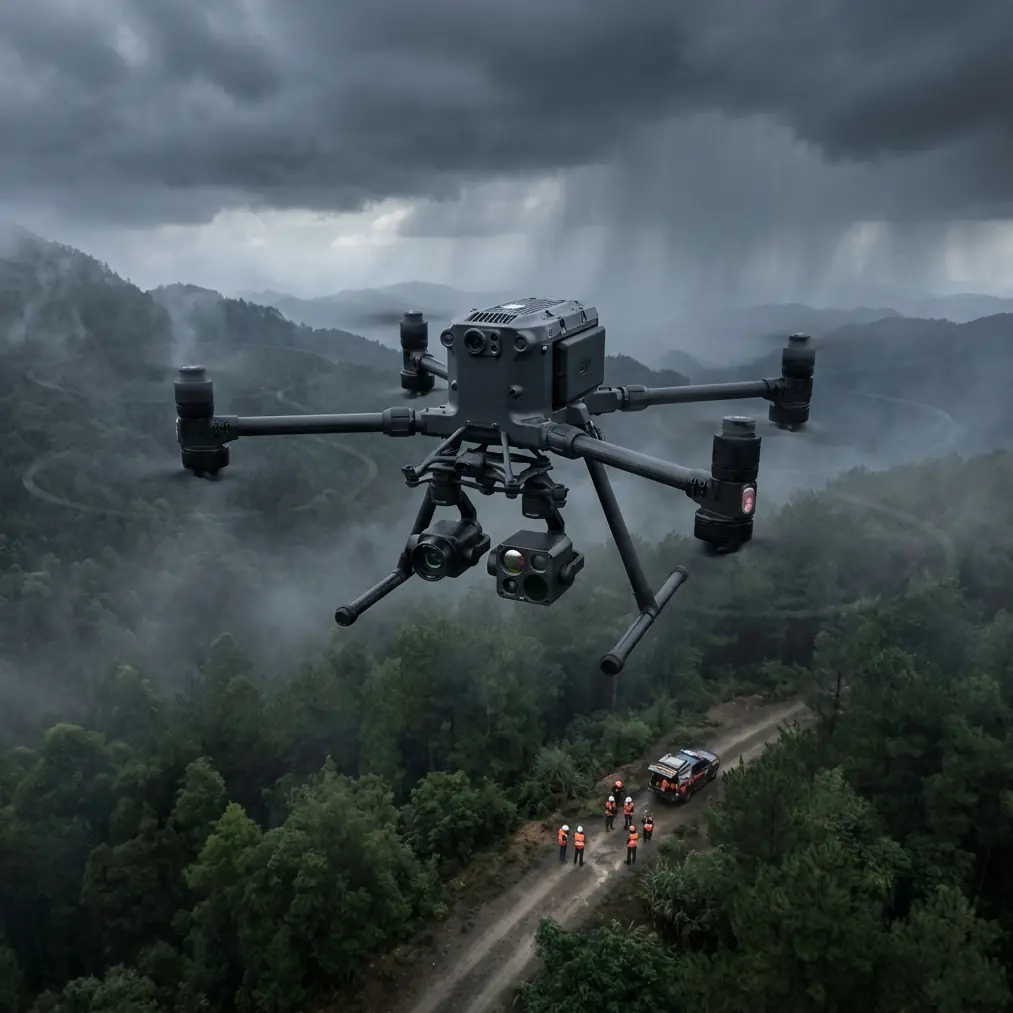
Matrice 400 for Urban Vineyard Monitoring: A Practical Field Guide
META: Learn how to use the Matrice 400 for urban vineyard monitoring with thermal inspection, photogrammetry, secure data workflows, and mission planning tips for dense environments.
Urban vineyards ask more from a drone program than most agricultural sites. The rows are tighter, the airspace is often less forgiving, surrounding buildings distort signal paths, and the operational window can be short. Add the need to detect irrigation stress early, document canopy vigor, and protect data gathered near populated areas, and the platform choice starts to matter a lot.
That is where the Matrice 400 becomes interesting.
This is not because it is simply “more powerful” than smaller enterprise aircraft. The real advantage is that its feature set aligns unusually well with the realities of vineyard monitoring in urban conditions: secure transmission, stable long-range control, hot-swappable power, and support for advanced imaging workflows that combine thermal signature analysis with photogrammetry. Those details change how work gets done in the field. They affect sortie planning, data quality, and whether a team can finish a mission before weather, traffic, or local operational restrictions get in the way.
I approach this as a field problem first and a hardware question second. If your goal is to monitor vine health consistently across a compact but operationally complex site, the Matrice 400 can be a very strong fit when used with discipline.
Why urban vineyards are harder than standard ag sites
A vineyard near roads, residences, industrial buildings, hospitality venues, or mixed-use districts creates a very different mission profile than a broad rural field. You are not just mapping plants. You are managing interference, line-of-sight limitations, privacy-sensitive data capture, and repeated flights over a site that may have little tolerance for disruption.
Three practical issues usually dominate:
- signal stability near structures and RF clutter
- the need for repeatable mapping outputs for row-by-row comparison
- secure handling of image and thermal data gathered in a populated environment
This is why the Matrice 400’s O3 transmission and AES-256 security are not just spec-sheet talking points. They are operational controls.
O3 transmission matters because urban vineyard flights often force the aircraft to work near reflective surfaces, tree lines, utility corridors, and buildings that can degrade link quality or obscure the pilot’s perspective. A stronger and more resilient transmission system helps maintain control confidence and cleaner live video during inspections. That is especially valuable when you are trying to confirm whether a suspected irrigation fault is real or just a misleading patch of light and shadow.
AES-256 matters because vineyard operators in urban areas may be documenting more than crops. Adjacent properties, access roads, workers, and neighboring infrastructure can all end up within the frame. Strong encryption is significant when flight data and imagery move between aircraft, controller, and downstream analysis teams. For operators working under internal compliance rules or handling sensitive client land records, that is not optional.
Where the Matrice 400 stands out against smaller competitors
Many crews start with smaller enterprise drones because they are easier to transport and quicker to launch. For basic visual checks, that can work. But urban vineyard monitoring often punishes lightweight platforms in subtle ways.
The first problem is endurance under a real inspection load. Once you add thermal work, repeated row passes, oblique imagery for photogrammetry, and occasional station-keeping to inspect trellis damage or pooling water, smaller aircraft tend to force more interruptions. The Matrice 400’s hot-swap batteries address this in a way that directly improves mission continuity. Instead of fully shutting down and resetting workflow momentum between battery changes, crews can keep operations moving with less downtime.
That sounds minor until you are midway through a time-sensitive thermal run. Thermal signature work is highly sensitive to timing. If you are trying to compare vine rows before solar heating changes the scene, a slow battery turnaround can reduce the value of the dataset. Hot-swapping helps preserve consistency across the survey window.
The second problem is data reliability for mapping. Vineyard managers rarely need a pretty orthomosaic just for presentation. They need repeatable, measurable outputs that support decisions about irrigation, disease scouting, canopy management, replant planning, and labor deployment. The Matrice 400’s heavier-duty enterprise orientation makes it better suited to structured photogrammetry missions than many compact rivals that perform well for quick inspection but feel stretched during repeated, high-accuracy survey cycles.
That does not mean bigger is always better. It means this model excels when the vineyard operation requires one aircraft to cover inspection, thermal review, and structured geospatial capture without becoming a compromise machine.
A practical mission workflow for vineyard monitoring
If I were building a repeatable urban vineyard monitoring program around the Matrice 400, I would separate the work into three layers.
1. Thermal scouting pass
Start early, ideally when temperature contrast can still reveal irrigation irregularities, blocked emitters, stressed vines, or drainage anomalies. Thermal data does not diagnose every agronomic issue on its own, but it is excellent for narrowing the search area.
What you are looking for is not simply “hot equals bad.” Instead, compare rows, sections, and edge conditions. In urban vineyards, edge rows often behave differently because of reflected heat from masonry, roads, walls, or nearby structures. Those microclimate distortions can create false impressions if you do not compare them carefully against interior rows.
With the Matrice 400, the key advantage here is stable hover and dependable transmission during low-speed inspection. If the aircraft can hold position cleanly while you examine suspicious sections, you spend less time correcting drift and more time interpreting plant behavior.
2. Photogrammetry mapping pass
After the thermal review, run a photogrammetry mission for measurable spatial context. This is where you create a consistent record of canopy geometry, row spacing conditions, bare patches, access constraints, and erosion or pooling indicators.
For useful outputs, set up the job with disciplined overlap and maintain consistent altitude. If your vineyard team intends to compare maps over time, establish GCP points whenever feasible. Ground control points are still one of the best ways to improve repeatability and confidence in spatial products, particularly when the site includes irregular terrain, narrow corridors, or nearby structures that complicate the visual environment.
The operational significance of GCP use is simple: without consistent spatial control, your map may still look good while becoming less trustworthy for measuring subtle changes from one survey to the next. In vineyard management, those subtle changes are often the whole point.
The Matrice 400 is especially useful here because urban sites rarely allow sloppy flying. You need a platform that can run planned routes reliably, maintain a robust link, and handle a professional sensor payload without turning every mission into a battery-management exercise.
3. Close inspection and exception handling
After reviewing thermal and mapping outputs, revisit problem areas for close visual inspection. Focus on:
- inconsistent canopy density
- unusual thermal clusters
- damaged trellis sections
- standing water near roots
- access lane deterioration
- signs of stress spreading across row segments
This is the phase where operational flexibility matters more than raw coverage. You are no longer surveying for broad pattern recognition. You are validating decisions. A reliable transmission link and efficient battery workflow give the pilot more freedom to stay focused on inspection quality instead of constantly thinking about whether the aircraft is about to need a full reset.
Best practices for urban operations
The Matrice 400 can do a lot, but urban vineyard work still demands procedure.
First, treat signal planning as part of mission design. Walk the site. Note reflective surfaces, utility poles, metal roofing, tree breaks, and any blind corners created by buildings or elevated terrain. O3 transmission is a strength, not a substitute for a thoughtful launch position.
Second, define privacy boundaries before takeoff. In an urban setting, your camera may incidentally capture neighboring properties or public movement. Build flight lines that prioritize the vineyard itself and reduce unnecessary off-site imaging. This is also where encrypted workflows matter. AES-256 supports better data handling discipline, but teams still need clear storage, transfer, and retention rules.
Third, separate thermal collection from visual mapping when the mission objective requires high confidence. Trying to rush both into a loosely planned single pass often creates mediocre outputs in each dataset. The Matrice 400 is capable enough to support layered missions, so use that capability intentionally.
Fourth, standardize your timing. If you want vineyard trend data that actually means something, fly under comparable light, temperature, and seasonal conditions whenever possible. Consistency turns drone imagery into management intelligence.
What BVLOS changes for larger or fragmented vineyard estates
Some vineyard operators are beginning to think beyond direct visual-range workflows, especially when estates are fragmented across multiple adjacent parcels or obstructed by urban development. That is where BVLOS planning enters the conversation.
This does not mean every urban vineyard should jump into beyond visual line of sight operations. Regulatory approval, risk assessment, and local airspace constraints remain decisive. But from a capability standpoint, the Matrice 400 is much more aligned with serious BVLOS thinking than entry-level enterprise drones.
Why does that matter even if you are not flying BVLOS today?
Because the same characteristics that make an aircraft suitable for advanced operational frameworks also improve normal missions: stronger link reliability, professional-grade data security, more resilient power management, and better support for structured workflows. In other words, a platform designed with higher-end operational discipline in mind tends to feel less fragile during ordinary work.
For a vineyard manager or service provider planning a program that may expand over time, that gives the Matrice 400 a strategic edge over competitors that are excellent for ad hoc visual checks but less convincing as the backbone of a mature monitoring operation.
Common mistakes crews make with this platform
One is overflying too much area at too low a decision value. The Matrice 400 can cover serious ground, which sometimes tempts teams to collect more data than they can interpret. Focus on decision-oriented objectives. Are you identifying stressed rows, validating irrigation performance, documenting canopy change, or preparing a spatial baseline for the season? Fly to answer a question.
Another is skipping control discipline in photogrammetry. If your outputs need to support repeated vineyard comparisons, invest the extra effort in GCP placement and consistent mission parameters. The cleanest map is not always the most useful one.
A third is treating thermal data as self-explanatory. Thermal signature anomalies need context from vine age, soil moisture, recent weather, irrigation schedules, and nearby built surfaces. Urban vineyards are especially prone to thermal confusion because structures store and reradiate heat unevenly.
Finally, some teams underuse secure workflows. If you are flying in or near populated areas, secure transmission and data protection should be part of the mission standard, not an afterthought. The Matrice 400 gives you tools like AES-256; the operator still has to build the process around them.
When the Matrice 400 is the right fit
This aircraft makes the most sense when your vineyard monitoring program needs to be repeatable, defensible, and scalable. Not just convenient.
Choose it when:
- thermal and visual data both matter
- mapping accuracy matters enough to justify
GCPuse - urban interference makes link quality a real operational issue
- efficient power turnover matters in short field windows
- secure handling of imagery is part of the job
- your operation may eventually grow toward more advanced
BVLOSstructures
If your needs are limited to occasional visual overviews of a small site, a smaller platform may be sufficient. But if the mission is to monitor vine health in a constrained urban environment with consistency and professional rigor, the Matrice 400 has a stronger case than many of its lighter competitors.
For teams designing that workflow from scratch, it helps to discuss mission architecture before buying sensors or setting flight templates. You can start that conversation here with a field-planning note via our UAV operations chat.
The core point is simple. Urban vineyard monitoring is not a generic agriculture use case. It is a layered operational problem involving crop insight, signal reliability, spatial accuracy, and secure data handling. The Matrice 400 stands out because it addresses all four in one platform, and features like O3 transmission, AES-256, hot-swap batteries, and structured support for thermal and photogrammetry workflows are not abstract advantages. They affect whether your sorties produce clear decisions or just more files.
That is why this aircraft deserves serious attention from vineyard teams working in dense environments. Not because it carries an enterprise label, but because the details line up with the real work.
Ready for your own Matrice 400? Contact our team for expert consultation.