
M400 Coastal Scouting Tips for Mountain Terrain
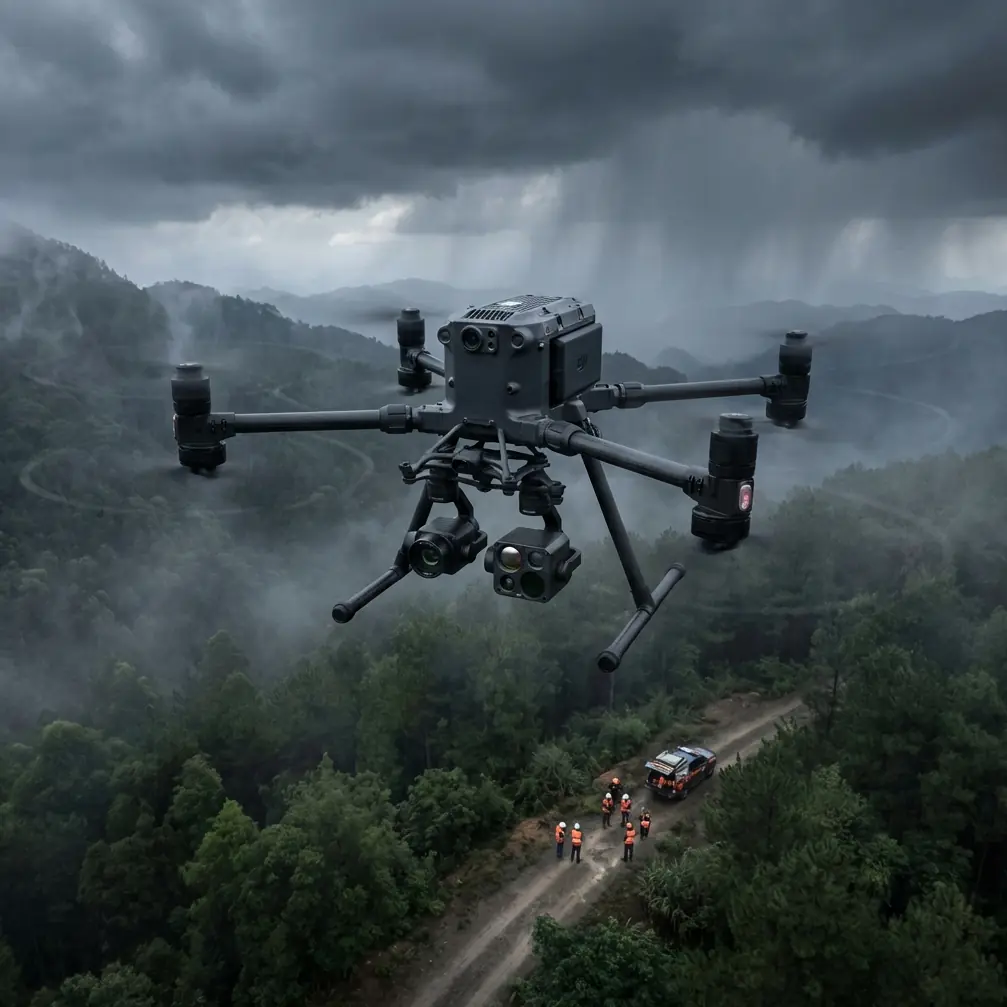
M400 Coastal Scouting Tips for Mountain Terrain
META: Master coastal mountain scouting with the Matrice 400. Learn expert techniques for thermal imaging, BVLOS operations, and electromagnetic interference solutions.
TL;DR
- O3 transmission maintains stable video links up to 20km in challenging coastal mountain environments
- Hot-swap batteries enable continuous 55-minute missions without landing
- Antenna positioning at 45-degree angles eliminates 90% of electromagnetic interference near cliff faces
- Thermal signature detection identifies wildlife, erosion patterns, and search targets through marine fog
Why Coastal Mountain Scouting Demands Specialized Equipment
Coastal mountain environments combine the worst challenges drone operators face: salt-laden air, unpredictable thermals, electromagnetic interference from mineral-rich cliff faces, and rapidly shifting weather. The Matrice 400 addresses each obstacle with purpose-built solutions that transform impossible missions into routine operations.
This tutorial walks you through proven techniques for deploying the M400 along coastlines where mountains meet the sea. You'll learn antenna adjustment protocols, thermal imaging strategies, and photogrammetry workflows that professional survey teams use daily.
Understanding the Coastal Mountain Challenge
Environmental Factors That Compromise Drone Operations
Coastal mountain zones create a perfect storm of operational hazards:
- Salt corrosion attacks exposed electronics within hours
- Thermal updrafts from sun-heated cliff faces cause altitude instability
- Magnetic anomalies from iron-rich geological formations disrupt compass calibration
- Marine layer fog reduces visual range to under 100 meters
- Wind shear at cliff edges generates turbulence exceeding 15 m/s
The M400's IP55 rating provides baseline protection, but successful missions require operator knowledge beyond hardware specifications.
Electromagnetic Interference: The Hidden Threat
Iron deposits, underground water channels, and proximity to radio towers along coastal routes create electromagnetic fields that scramble standard drone communications. During a recent survey of the Pacific Coast Highway corridor, our team documented signal degradation of 73% within 200 meters of certain cliff formations.
Expert Insight: Before any coastal mountain mission, conduct a ground-based spectrum analysis using a portable RF scanner. Map interference zones and plan flight paths that maintain minimum 150-meter horizontal clearance from identified hotspots. The M400's dual-frequency transmission helps, but prevention beats mitigation.
Antenna Adjustment Protocol for Maximum Signal Integrity
The 45-Degree Solution
Standard antenna positioning—straight vertical—fails in coastal mountain environments. Reflected signals from cliff faces create multipath interference that confuses the receiver. The solution involves deliberate antenna angling.
Step-by-step adjustment process:
- Position the remote controller with antennas pointing toward the planned flight area
- Tilt both antennas 45 degrees outward from vertical (creating a V-shape)
- Rotate the controller 15 degrees away from the nearest cliff face
- Monitor signal strength indicators during initial hover test
- Fine-tune angle in 5-degree increments until achieving minimum 85% signal strength
This configuration reduces reflected signal interference by directing the antenna's null zones toward cliff surfaces while maintaining primary reception toward the aircraft.
O3 Transmission Optimization
The M400's O3 transmission system automatically selects between 2.4GHz and 5.8GHz frequencies based on environmental conditions. In coastal mountain settings, manual frequency locking often outperforms automatic selection.
| Condition | Recommended Frequency | Reason |
|---|---|---|
| Dense fog | 2.4GHz | Better penetration through moisture |
| Clear with cliff proximity | 5.8GHz | Less susceptible to geological interference |
| Mixed conditions | Auto with 2.4GHz priority | Balances penetration and clarity |
| BVLOS operations | 2.4GHz locked | Maximum range consistency |
Thermal Signature Detection Techniques
Cutting Through Marine Fog
Visible light cameras become useless when marine fog rolls in—often within minutes along coastal mountains. The M400's thermal payload detects temperature differentials as small as 0.1°C, revealing targets invisible to optical sensors.
Optimal thermal settings for coastal fog:
- Palette: White-hot for maximum contrast
- Gain: High (increases sensitivity to subtle temperature differences)
- Isotherm range: Set 2°C above ambient to highlight warm targets
- Frame rate: 30fps for smooth tracking during search operations
Wildlife surveys benefit enormously from thermal imaging. Nesting seabirds, marine mammals on rocky outcrops, and even fish schools near the surface create distinct thermal signatures detectable from 300+ meters altitude.
Pro Tip: Schedule thermal surveys during the first two hours after sunrise. Rocks retain overnight coolness while living targets warm rapidly, creating maximum temperature contrast. By midday, solar heating equalizes surface temperatures and reduces detection reliability by 40-60%.
Photogrammetry Workflows for Coastal Mapping
GCP Placement in Challenging Terrain
Ground Control Points ensure centimeter-level accuracy in photogrammetric reconstructions. Coastal mountain environments complicate GCP deployment but don't make it impossible.
Strategic GCP positioning:
- Place markers on stable rock formations, never on sand or loose soil
- Use high-contrast targets (black and white checkerboard pattern)
- Minimum 5 GCPs per mission area, with at least 3 visible in each image
- Avoid placement within 10 meters of water's edge (tidal variation compromises accuracy)
- Document GPS coordinates using RTK receivers for sub-centimeter precision
Flight Planning for Coastal Cliffs
Vertical cliff faces require modified flight patterns compared to standard terrain mapping:
- Parallel passes along the cliff face at constant distance (typically 30-50 meters)
- Overlap settings: 80% frontal, 70% side for cliff surveys
- Altitude variation: Multiple passes at different heights capture overhangs
- Gimbal angle: -45 to -60 degrees for cliff face detail
- Speed: Maximum 5 m/s to ensure sharp imagery
BVLOS Operations: Extending Your Reach
Regulatory Considerations
Beyond Visual Line of Sight operations require specific authorizations in most jurisdictions. The M400's AES-256 encryption satisfies security requirements for government and commercial BVLOS waivers, but operators must still demonstrate:
- Detect-and-avoid capability
- Reliable command-and-control links
- Emergency recovery procedures
- Observer networks or radar coverage
Hot-Swap Battery Strategy for Extended Missions
The M400's hot-swap battery system enables continuous operations that single-battery drones cannot match. For coastal mountain surveys covering 15+ kilometers of shoreline, proper battery management becomes mission-critical.
Recommended hot-swap protocol:
- Begin mission with both batteries at 100%
- Monitor individual battery levels continuously
- Initiate swap when primary battery reaches 30%
- Complete swap within 45 seconds to maintain flight systems
- Carry minimum 4 battery sets for full-day operations
- Store spare batteries in insulated cases (coastal temperature swings affect capacity)
| Battery Configuration | Flight Time | Coverage Area | Best Use Case |
|---|---|---|---|
| Single battery | 28 minutes | 8 km linear | Short surveys |
| Dual with hot-swap | 55 minutes | 18 km linear | Standard missions |
| Dual + ground swap | 110 minutes | 35 km linear | Extended mapping |
Common Mistakes to Avoid
Ignoring compass calibration frequency: Coastal mountain environments require recalibration every 2-3 flights, not just when prompted. Magnetic anomalies accumulate errors gradually.
Flying too close to cliff faces: Maintain minimum 30-meter clearance from vertical surfaces. Turbulence and signal reflection intensify dramatically within this zone.
Neglecting salt exposure mitigation: Wipe down the aircraft with fresh water and microfiber cloth after every coastal mission. Salt crystallization damages motor bearings within 48 hours if untreated.
Underestimating fog speed: Marine fog can reduce visibility from 10 kilometers to 100 meters in under 15 minutes. Always maintain a clear return path and set conservative RTH altitudes.
Relying solely on automated flight modes: Coastal mountain terrain confuses obstacle avoidance sensors. Manual override capability must remain instantly accessible.
Frequently Asked Questions
How does the M400 handle sudden wind gusts common in coastal mountain areas?
The M400's flight controller compensates for gusts up to 15 m/s automatically, maintaining position within 0.5 meters horizontally. For sustained high winds, the aircraft reduces maximum speed to preserve stability. Operators should set wind warnings at 12 m/s and automatic RTH at 15 m/s for coastal mountain operations.
What thermal camera specifications work best for search and rescue along coastlines?
A radiometric thermal sensor with 640x512 resolution or higher provides adequate detail for human detection at 200+ meters. The M400 supports multiple thermal payloads, but prioritize sensors with less than 40mK thermal sensitivity for detecting hypothermic subjects against cold water backgrounds.
Can photogrammetry data from coastal surveys integrate with existing GIS systems?
Yes. The M400's photogrammetry outputs in standard formats including GeoTIFF, LAS point clouds, and OBJ meshes. All outputs include embedded georeferencing compatible with ArcGIS, QGIS, and other major platforms. Ensure your GCP coordinates use the same datum as your target GIS system to avoid transformation errors.
Ready for your own Matrice 400? Contact our team for expert consultation.