
Matrice 400 in the Field: What Actually Matters When
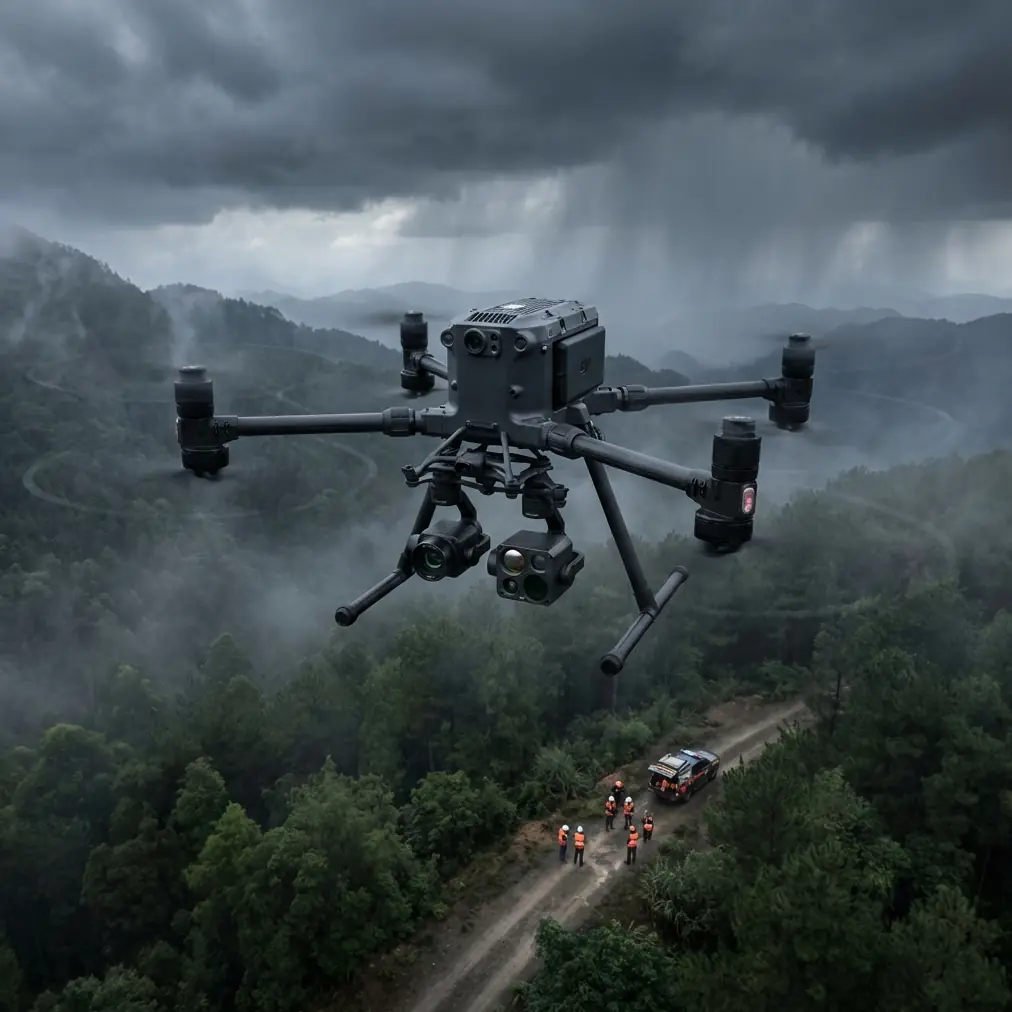
Matrice 400 in the Field: What Actually Matters When Scouting Remote Power Lines
META: A field-tested expert perspective on using Matrice 400 for remote power line scouting, with practical insight on payload behavior, control logic, mission structure, thermal work, BVLOS planning, and why it stands out in long linear inspections.
Remote power line scouting punishes weak aircraft planning long before it exposes weak aircraft hardware.
That is the part many buyers miss.
When crews talk about a drone for transmission corridor work, the conversation usually starts with camera quality, zoom range, or flight time. Those matter. But on a remote line survey, especially where access roads are poor and the nearest safe landing area may be far behind you, the real separator is whether the aircraft, payload, and mission structure stay predictable over many repeated flights.
That is where the Matrice 400 story gets interesting.
This article is not a generic overview. It is a field-style look at how the platform fits the realities of remote power line scouting, and why some older principles from aircraft load analysis and control architecture still explain what makes a modern enterprise UAV succeed or fail in this role.
Power line scouting is repetitive work, but not simple work
Linear utility inspection looks routine on paper. Launch, follow the corridor, collect visible and thermal data, note vegetation encroachment, insulator faults, conductor issues, and pole or tower anomalies. Repeat.
In practice, every sortie is a blend of steady cruise, offset observation, hover confirmation, crosswind correction, small heading changes, and occasional aggressive roll inputs to reposition around structures or terrain. That mix matters because inspection aircraft do not live through one dramatic flight. They live through hundreds of ordinary ones.
A useful way to think about this comes from traditional aircraft durability analysis. One of the reference documents highlights the idea of breaking a service life mission profile into 10 to 20 sub-blocks to simplify analysis of recurring load cycles. That principle translates surprisingly well to drone operations in utility work.
For a Matrice 400 power line mission, those sub-blocks are easy to recognize:
- transit from launch point to corridor,
- stabilized tracking along the line,
- lateral offset for visual angle correction,
- hover inspection at towers or joints,
- thermal confirmation pass,
- return leg,
- landing and turnaround.
Why does this matter operationally? Because a drone selected for remote line scouting must remain stable and efficient across all of those repeated mission blocks, not just in one clean hover demonstration. The Matrice 400’s advantage is not only that it can carry sophisticated payloads, but that it is built for repeatable enterprise cycles where reliability under changing load states matters as much as headline specs.
That is one reason experienced operators tend to trust larger professional airframes over lighter prosumer competitors for long infrastructure runs. The mission profile is simply more demanding than it looks.
Load states and maneuver types still explain real inspection performance
Another useful reference detail comes from the aircraft design material describing how subsonic flight includes both symmetric and asymmetric maneuvers, and how roll behavior can be used to distinguish them. While that language comes from manned aircraft analysis, the concept maps neatly onto utility drone work.
When your Matrice 400 is tracking a line in still air with a steady camera angle, that is close to a symmetric load condition in practical terms. Once you start making lateral corrections in gusts, offsetting around structures, or holding a precise side-on view while the aircraft counters wind, you move into more asymmetrical control behavior.
This is exactly where lower-tier platforms start to look nervous. Not always unsafe. Just busy.
You see it in the footage. Small oscillations. More braking than you want. Tiny heading corrections that force the gimbal to work harder. Thermal imagery that is usable but not clean enough for fast diagnosis. Photogrammetry outputs that need more cleanup because the aircraft did not hold geometry as well as planned.
The Matrice 400’s appeal for remote power line scouting is that it is designed for professional stability under those mixed conditions. That matters for three reasons.
1. Better thermal interpretation
A thermal signature is only as trustworthy as the collection conditions around it. If the aircraft is constantly correcting in roll or yaw during an inspection pass, the thermal image becomes harder to interpret consistently, especially on smaller components or at longer stand-off distances.
Power line inspections often hinge on subtle differences: a connector running warmer than adjacent hardware, a suspect insulator string, or an emerging hotspot that is not yet obvious in visible imagery. Stable positioning helps preserve comparability from tower to tower and from one inspection date to the next.
2. Cleaner image sets for mapping and reconstruction
Not every line scouting mission is pure visual patrol. Some teams also want corridor mapping, terrain context, access planning, or structure reconstruction. In those cases, photogrammetry quality becomes part of the value equation.
A stable aircraft with disciplined route execution makes life easier when building structured image sets tied to GCP workflows. Ground control points are still the fastest way to keep outputs defensible when the client wants measurable corridor information rather than just anecdotal observations. If the aircraft holds position and angle predictably, your reconstruction pipeline gets less chaotic.
3. Lower crew fatigue over repeated sorties
This is rarely mentioned in spec sheets. It should be.
Remote utility work often means running multiple flights in one day under changing light and wind. A platform that remains composed reduces the operator’s mental load. That changes the pace of the whole operation. Instead of fighting the aircraft, the crew can focus on defect recognition, route decisions, and data integrity.
Why the Matrice 400 is a better fit than lighter competitors for remote corridor work
There are plenty of drones that can inspect a tower. Fewer can handle a remote power line program day after day without creating operational drag.
That distinction is where the Matrice 400 should be judged.
A lighter competitor may look attractive for short-range spot checks, but long corridor scouting asks for something different: dependable transmission quality, payload flexibility, battery management that does not slow a field crew down, and the confidence to operate farther from convenient recovery points.
This is where the usual enterprise keywords start to become practical rather than promotional.
O3 transmission is not just a spec-sheet line
On remote line routes, signal resilience shapes the mission envelope. In uneven terrain, along ridgelines, or through vegetated approaches to utility corridors, robust link performance can be the difference between a calm inspection and a mission full of interruptions.
That is why O3 transmission matters. Not because crews enjoy talking about protocol names, but because consistent command and video link quality preserves inspection tempo and confidence. When the aircraft is feeding clear visual and thermal data from farther down the line, the pilot and observer can make better decisions earlier.
For remote utility scouting, that reduces unnecessary repositioning and wasted flights.
AES-256 matters when utility data is sensitive
Power line inspection is civilian infrastructure work, but it still involves sensitive operational information. High-value infrastructure imagery, fault locations, maintenance planning details, and route data should not be treated casually.
That is where AES-256 becomes operationally meaningful. For utility firms, contractors, and grid-support teams, secure handling of flight and image data is not abstract compliance language. It is part of responsible asset management. If a platform is being used to document vulnerable infrastructure in remote regions, secure transmission and storage architecture deserve attention.
Hot-swap batteries change field rhythm
Anyone who has worked remote inspections knows the hidden cost of battery changeovers. It is not just a minute here or there. It is the cumulative disruption to mission rhythm, especially when the aircraft needs to stay in rotation while the crew is managing access, notes, weather shifts, and line-of-sight positioning.
Hot-swap batteries matter because they compress those pauses. In corridor work, that means more continuity between sorties and less dead time between line segments. It also reduces the temptation to stretch a battery plan too far just to avoid setup overhead.
This is one of those features that often sounds minor until you spend a full day in rough terrain. Then it becomes one of the reasons a larger enterprise platform outperforms cheaper alternatives in real productivity.
BVLOS potential changes what “remote” really means
Some power line projects are remote only in the logistical sense: rough roads, long walking approaches, sparse landing options. Others are remote in the operational sense too, where covering useful distance demands a more advanced concept of operations.
That is where BVLOS planning starts to reshape the value of the aircraft.
A Matrice 400 configured for compliant beyond visual line of sight workflows can turn a fragmented inspection model into a corridor-scale one. The aircraft is no longer just a tower spot-check tool. It becomes part of a broader inspection system that can cover more linear infrastructure with fewer relocations.
This is especially valuable when crews need to scout for storm damage, vegetation risk, access obstructions, or thermal anomalies across long segments before dispatching heavier maintenance resources.
BVLOS, of course, is not just about authorization. It is about trust in the platform’s command link, battery logic, navigation behavior, and payload usefulness at operational range. That is another reason the Matrice 400 sits in a different category from lighter aircraft that may be competent close in but less convincing when the mission expands.
Control architecture still matters more than most teams realize
The second reference document, despite being rooted in traditional RC wing mixing, points to a principle that remains relevant: aircraft behavior is deeply influenced by how multiple control surfaces or channels are coordinated. It specifically describes configurations such as 2 ailerons + 1 flap, 2 ailerons + 2 flaps, 2 ailerons + 4 flaps, and even 4 ailerons + 2 flaps, with channel limitations in certain 7-channel modes where an 8th channel port becomes inactive.
That may sound far removed from a Matrice 400. It is not.
The operational lesson is that complex aircraft capability depends on integrated control logic, not isolated hardware features. In enterprise UAVs, that same principle appears in how the flight controller, propulsion system, gimbal stabilization, payload triggers, transmission link, obstacle logic, and battery management all coordinate under load.
For remote power line scouting, this integration is crucial. The aircraft may be simultaneously:
- holding a precise lateral offset,
- maintaining gimbal lock on a conductor attachment,
- streaming thermal and visible data,
- compensating for crosswind,
- managing route continuity,
- and preserving enough energy margin for safe return.
When these systems are well integrated, the mission feels smooth. When they are not, the crew feels every mismatch. Latency creeps in. Framing drifts. Hover quality suffers. Inspection confidence drops.
The Matrice 400 earns its place when that system-level coordination remains solid over long utility sorties.
A realistic field workflow for remote line scouting
Here is how I would frame a Matrice 400 operation for a remote transmission or distribution corridor assessment.
Start with a segmented mission design rather than one giant route. That goes back to the earlier load-spectrum idea of dividing repeated work into manageable blocks. Build the operation around line sections that reflect terrain, tower density, expected anomalies, and recovery options.
Use visible imagery for structural context first. Layer thermal passes where component overheating, connector degradation, or insulator issues are likely to show meaningful contrast. If the client also needs terrain or corridor models, capture a dedicated photogrammetry pattern with enough overlap to support reconstruction and tie it to GCP checkpoints where accuracy needs to be defended.
Do not force one flight plan to do everything. The best inspection crews separate “find defects” from “measure and document” whenever practical.
This is also where the Matrice 400 typically outclasses lighter competitors. It can serve as a true multi-role field platform rather than a narrow imaging device. One aircraft can support scouting, confirmation, mapping support, and repeat-pass documentation without becoming awkward to operate.
If you are building that workflow now and want a practical discussion around payload fit, corridor design, or battery rotation strategy, this is the most direct way to reach a specialist: message a Matrice 400 field advisor.
What the Matrice 400 gets right for this job
The best aircraft for power line scouting is not the one with the most dramatic marketing claim. It is the one that stays composed across repeated mission cycles, preserves data quality in asymmetrical wind corrections, supports secure long-range workflows, and keeps the crew productive in remote conditions.
The reference materials behind this article point to two deeper truths.
First, mission success depends on understanding recurring load and maneuver patterns, not just peak performance. That is why the idea of dividing lifetime operations into 10 to 20 sub-blocks is so relevant to drone inspection planning. It reflects how real utility sorties are built.
Second, aircraft performance is inseparable from control integration. The RC wing-mixing reference, with its multi-aileron and multi-flap channel structures, reminds us that stable behavior comes from well-coordinated systems. In enterprise drone terms, that means the Matrice 400’s value lies in how the whole platform behaves under inspection pressure, not in any single feature.
For remote power line scouting, that distinction is decisive.
A smaller platform may complete the occasional task. The Matrice 400 is better suited to carrying the program.
Ready for your own Matrice 400? Contact our team for expert consultation.