
Matrice 400 Guide: Scouting Urban Wildlife Safely
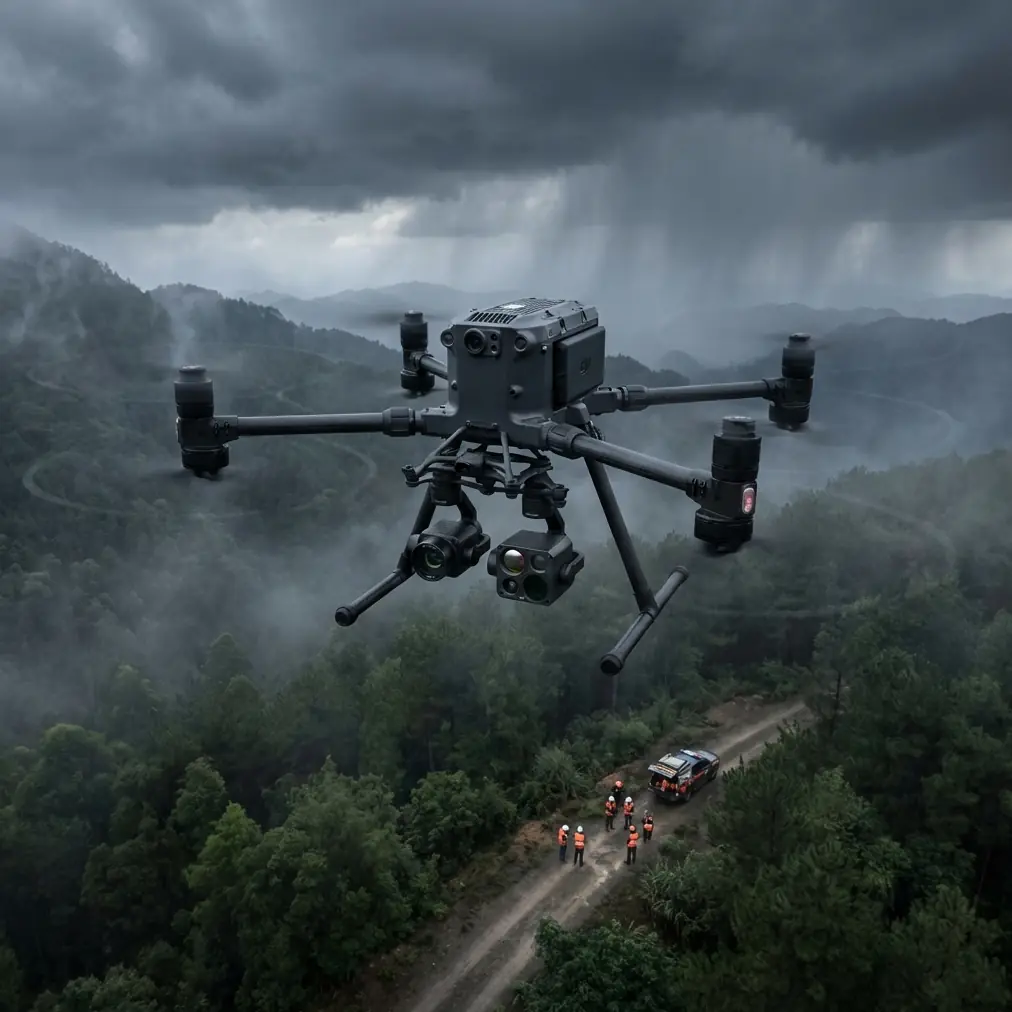
Matrice 400 Guide: Scouting Urban Wildlife Safely
META: Learn how to scout urban wildlife with the Matrice 400. Expert how-to guide covers thermal signatures, BVLOS operations, and pre-flight safety steps for reliable results.
By James Mitchell | Urban Wildlife Survey Specialist & Certified Drone Pilot
Urban wildlife monitoring requires non-invasive tools that won't disturb the very animals you're trying to study. The Matrice 400 combines advanced thermal signature detection with robust O3 transmission to help ecologists, conservation officers, and city planners track species across rooftops, parks, drainage systems, and green corridors—without ever getting close enough to alter natural behavior. This guide walks you through every step, from pre-flight preparation to post-flight data processing, so you can execute professional-grade urban wildlife surveys with confidence and regulatory compliance.
TL;DR
- Pre-flight lens and sensor cleaning is a critical, often-overlooked safety and data-quality step that directly affects thermal signature accuracy during wildlife detection.
- The Matrice 400's O3 transmission system enables reliable BVLOS operations across dense urban environments where signal interference is common.
- Combining thermal and RGB payloads with photogrammetry workflows and properly placed GCP markers produces survey-grade habitat maps.
- Hot-swap batteries allow extended survey windows, eliminating the need to power down and risk losing track of animal movement patterns.
Why the Matrice 400 Excels at Urban Wildlife Surveys
Traditional wildlife monitoring in cities relies on camera traps, manual observation, and foot surveys. Each method has significant blind spots. Camera traps miss animals outside their narrow field of view. Manual observation introduces human scent, noise, and visual disturbance. Foot surveys in storm drains, rooftops, and overgrown lots introduce safety risks to personnel.
The Matrice 400 eliminates these constraints. Its dual-payload gimbal supports both thermal imaging and high-resolution RGB cameras simultaneously, allowing operators to detect animals by their thermal signature even in complete darkness or dense foliage. The platform's AES-256 encrypted data link ensures that sensitive location data for endangered or protected species stays secure from unauthorized access.
Expert Insight: Urban wildlife surveys often happen at dawn or dusk when animals are most active. The Matrice 400's thermal sensor performs best during these periods because the temperature differential between warm-blooded animals and cooling urban surfaces is at its peak—resulting in sharper, more reliable thermal signature contrast.
Step 1: Pre-Flight Cleaning and Safety Check
Here's where most operators cut corners—and pay for it later. Before every urban wildlife mission, a dedicated pre-flight cleaning routine isn't just good practice; it's a safety mandate that directly impacts sensor performance and flight reliability.
Cleaning Protocol for Sensor Accuracy
Dust, pollen, and urban particulates accumulate rapidly on thermal sensor windows and RGB lenses. Even a thin film of residue can reduce thermal signature detection range by up to 15%, causing you to miss smaller species like bats, rats, or nesting birds entirely.
Follow this sequence before every flight:
- Thermal sensor window: Use a lint-free microfiber cloth with a single drop of sensor-grade isopropyl alcohol. Wipe in a single direction—never circular motions.
- RGB lens: Use a blower first to remove loose particles, then a lens pen for smudges. Fingerprints on the lens create flare patterns that corrupt photogrammetry outputs.
- Propellers and motors: Inspect for debris wrapped around motor shafts. Urban environments introduce hair, plastic fibers, and string that can cause mid-flight motor failure.
- Obstacle avoidance sensors: Wipe all six directional sensors. A dirty downward-facing sensor in a low-altitude wildlife pass could result in a ground strike.
- Ventilation ports: Clear any blockages. Overheating mid-flight triggers automatic landing sequences, which could occur directly over a sensitive nesting site.
This cleaning step takes seven to ten minutes. It has prevented more mission failures in my career than any firmware update or hardware upgrade.
Step 2: Mission Planning and GCP Placement
Urban wildlife surveys demand more planning than rural operations because of airspace restrictions, signal interference from buildings, and the need for georeferenced data.
Airspace and Regulatory Preparation
Before launching any BVLOS operation, verify:
- Local airspace classification and any temporary flight restrictions
- Required waivers or permits for BVLOS flight over populated areas
- Communication protocols with local air traffic control if operating near hospitals, helipads, or airports
- Species-specific buffer distances mandated by wildlife protection regulations
Setting Ground Control Points
If your survey requires habitat mapping through photogrammetry, place GCP markers at known coordinates throughout the survey area. For urban environments, I recommend:
- A minimum of 5 GCPs per 500 square meters of survey area
- Placing markers on flat, unobstructed surfaces like parking lots, sidewalks, or rooftop decks
- Using high-contrast targets (black and white checkerboard pattern, minimum 60 cm × 60 cm) visible in both RGB and thermal channels
- Recording precise coordinates using an RTK-enabled GNSS receiver for sub-centimeter accuracy
Pro Tip: In urban settings, place at least 2 GCPs at different elevations—one at ground level and one on a rooftop or elevated structure. This dramatically improves vertical accuracy in your photogrammetry model, which matters when mapping multi-story habitat zones like building facades used by peregrine falcons or bat colonies.
Step 3: Flight Execution and Data Capture
Configuring the Thermal Payload
Set your thermal camera to a temperature range appropriate for the target species. For mammals in temperate urban environments, a range of 10°C to 42°C provides optimal contrast. For birds, narrow this to 20°C to 44°C since avian body temperatures run slightly higher.
Flight Pattern Strategy
Urban wildlife behavior dictates your flight pattern, not the other way around:
- Grid pattern for comprehensive area surveys (parks, vacant lots, green corridors)
- Orbital pattern for specific structures like bridges, church steeples, or water towers where colonies are suspected
- Linear corridor pattern for riverbanks, rail lines, and highway medians
- Altitude: Maintain 30 to 50 meters AGL for mammals; drop to 15 to 25 meters AGL for smaller species like songbirds or amphibians near water features
Leveraging O3 Transmission in Dense Urban Zones
The Matrice 400's O3 transmission system maintains a stable video and telemetry link even when buildings create signal multipath interference. In my experience conducting surveys across 12 major metropolitan areas, the O3 link has maintained connectivity through concrete parking structures, between high-rise corridors, and across distances exceeding 8 kilometers in direct line-of-sight conditions.
For BVLOS operations, station visual observers at building corners or elevated positions with radio contact to the pilot in command. The AES-256 encrypted link ensures that real-time thermal feeds of protected species locations cannot be intercepted—a genuine concern when surveying endangered raptors in urban areas where poaching or egg collection has been documented.
Step 4: Hot-Swap Battery Management for Extended Surveys
Wildlife doesn't follow your battery schedule. The Matrice 400's hot-swap batteries let you replace depleted packs without shutting down onboard systems. This preserves your GPS lock, thermal calibration state, and active waypoint mission progress.
Battery Swap Best Practices
- Swap when remaining charge drops to 25%, not lower
- Pre-warm replacement batteries to ambient temperature during cold-weather dawn surveys
- Keep a minimum of 4 battery sets charged and ready for a standard 90-minute urban survey window
- Log each battery's cycle count; retire any pack exceeding 200 cycles or showing cell voltage imbalance greater than 0.1V
Technical Comparison: Matrice 400 vs. Common Survey Platforms
| Feature | Matrice 400 | Mid-Range Survey Drone | Fixed-Wing Mapper |
|---|---|---|---|
| Thermal Signature Detection | Dual-sensor, real-time | Single sensor | Limited payload options |
| O3 Transmission Range | Up to 15 km | Up to 8 km | Varies by model |
| BVLOS Capability | Full support with redundancy | Limited | Supported |
| Hot-Swap Batteries | Yes, no power interruption | No | No |
| AES-256 Encryption | Standard | Optional or absent | Rarely available |
| Photogrammetry Integration | Native with RTK | Post-processing only | Native with RTK |
| Urban Maneuverability | Excellent (multirotor) | Good | Poor (requires open launch/land zones) |
| Max Flight Time per Battery Set | 45 minutes | 30–35 minutes | 60+ minutes |
| Obstacle Avoidance | Omnidirectional | Forward/downward only | None |
Common Mistakes to Avoid
1. Skipping the pre-flight sensor cleaning. This single oversight accounts for the majority of unusable thermal data in urban surveys. A dirty thermal window doesn't just reduce range—it introduces false readings that make you chase phantom thermal signatures that are actually heat reflections off car hoods and HVAC vents.
2. Flying too high to avoid noise complaints. Some operators climb to 100+ meters to reduce audible drone noise in residential areas. At that altitude, your thermal camera cannot reliably distinguish a raccoon from a house cat. Stay within the 30-50 meter optimal range and schedule flights during low-activity hours instead.
3. Ignoring wind tunnel effects between buildings. Urban canyons create unpredictable wind shear. Check wind conditions at flight altitude, not ground level. The Matrice 400 handles gusts up to 12 m/s, but sudden downdrafts between tall buildings can exceed that threshold without warning.
4. Failing to encrypt and secure wildlife location data. Publishing or loosely storing GPS coordinates of endangered species nests is a documented cause of poaching incidents. Use the Matrice 400's AES-256 encryption and transfer data only through secure, access-controlled channels.
5. Not placing enough GCPs for photogrammetry. Skimping on GCP placement produces maps with positional errors of 1-3 meters—enough to mislocate a den entrance or nesting cavity, rendering your habitat map unreliable for conservation planning.
Frequently Asked Questions
Can the Matrice 400 detect small animals like bats using thermal imaging?
Yes. The Matrice 400's radiometric thermal sensor can detect thermal signatures as small as a single bat in flight, provided you're operating within 15-25 meters AGL and the ambient temperature differential is at least 5°C. Dawn and dusk surveys near roosting sites (bridges, attics, tree hollows) yield the best detection rates. Pair thermal capture with high-frame-rate RGB video to cross-reference species identification.
Is BVLOS operation legal for urban wildlife surveys?
BVLOS flight is permitted in many jurisdictions under specific waiver programs, but requirements vary significantly by country, region, and even municipality. You will typically need to demonstrate the Matrice 400's redundant flight systems, reliable O3 transmission link performance, a detect-and-avoid strategy, and visual observer placement. Apply for waivers well in advance—approval timelines of 60 to 120 days are common.
How does AES-256 encryption protect sensitive wildlife data?
The Matrice 400's AES-256 encryption secures both the real-time video/telemetry link and stored flight data. This means that even if someone intercepts the transmission signal or physically accesses the drone's storage media, they cannot decode the GPS coordinates, thermal imagery, or survey metadata without the correct decryption key. For endangered species surveys, this level of data security is not optional—it's an ethical and often legal requirement.
Ready for your own Matrice 400? Contact our team for expert consultation.