
Matrice 400 Guide for Spraying Fields in Extreme Temperature
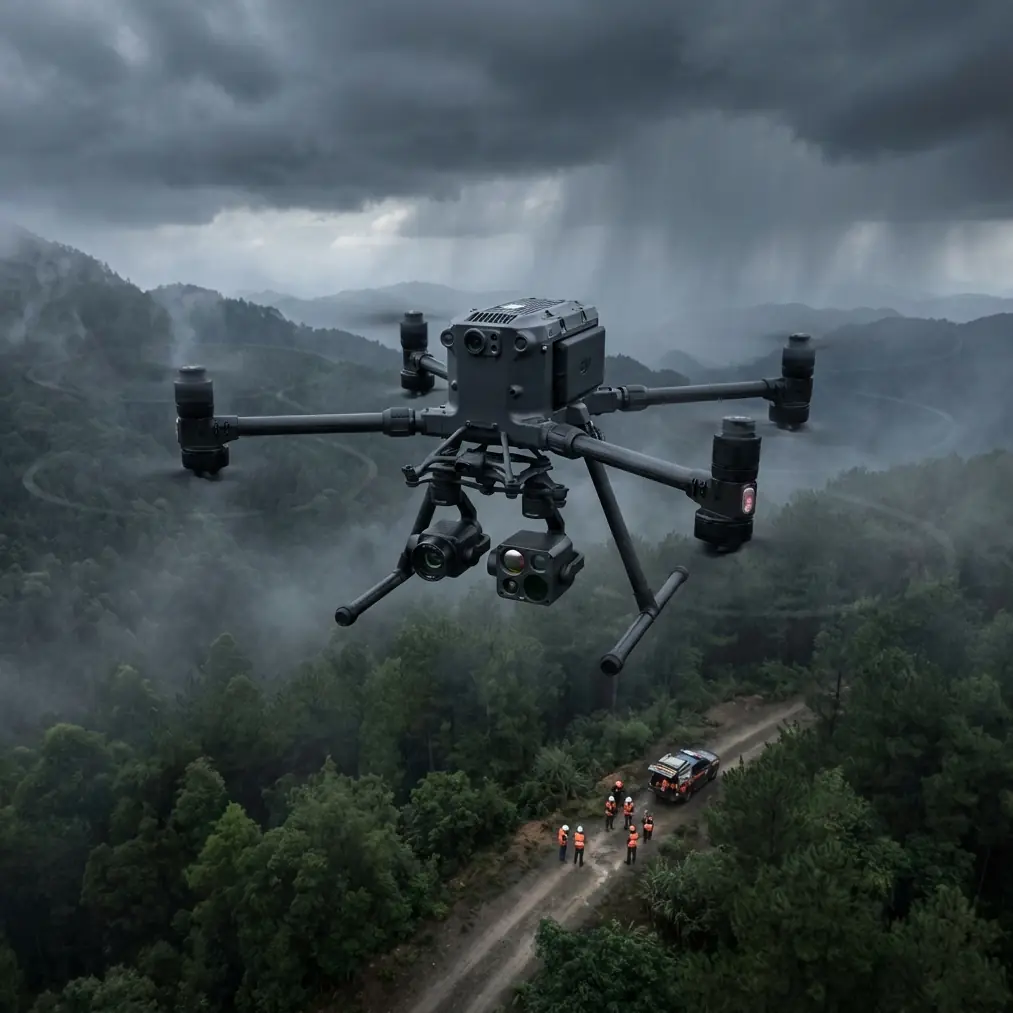
Matrice 400 Guide for Spraying Fields in Extreme Temperatures
META: Practical Matrice 400 spraying guide for hot-weather field work, covering power redundancy, hydraulic logic, startup behavior, EMI antenna adjustment, BVLOS-ready operations, and battery planning.
When growers ask whether a Matrice 400 can handle agricultural spraying during punishing heat, they are usually asking the wrong question. The airframe is only part of the story. The real issue is whether the operator understands what high temperature does to power delivery, system response, startup behavior, and signal stability once the drone leaves the edge of the field and starts doing repetitive work for hours.
That is where good operating discipline matters more than brochure specs.
For this article, I want to frame the Matrice 400 through a systems lens. Not as a generic “big drone” discussion, but as a working platform for field spraying when the day is hot, electrical loads are high, and reliability matters more than raw speed. Two reference points from traditional aircraft design are especially useful here. First, the idea that critical flight-control systems rely on independent power paths with emergency backup, including 28V DC supply architecture and at least 30 minutes of battery-supported emergency power in one classic example. Second, the fact that high ambient temperature can delay engine startup because available starter pressure drops and turbine power falls during the start sequence. Even though the Matrice 400 is not a crewed turbine aircraft, those principles translate surprisingly well to serious UAV operations.
Why heat changes everything in spraying work
Spraying in extreme temperatures is a compound-stress mission. The drone is not just flying. It is lifting liquid, maintaining low-altitude path accuracy, dealing with changing field reflectivity, and often fighting unstable air over irrigated and sun-baked zones in the same sortie.
Heat affects three operational layers at once:
- power system efficiency
- propulsion response during launch and climb
- comms stability near pumps, power lines, and metal farm infrastructure
On paper, these can look like separate concerns. In the field, they stack. A hot battery does not just reduce comfort margin. It narrows your buffer during heavy-load departures. A noisier electromagnetic environment does not just degrade transmission quality. It may force antenna repositioning at exactly the moment the aircraft is farthest from the operator and loaded with spray.
This is why professional operators should think in terms of redundancy and graceful degradation rather than simple pass/fail performance.
What aircraft emergency-power design teaches Matrice 400 operators
One of the most useful technical references in the source material describes a fly-by-wire control system supplied through multiple independent channels. In that example, four dedicated conversion-control units receive 28V DC from DC bus 1 and 2, while a permanent magnet generator also serves as an auxiliary source. The same section notes that a battery emergency source can sustain operation for at least 30 minutes to support safe recovery and landing.
You do not need to copy that architecture directly to take the lesson seriously. The lesson is operational: critical control should never depend on a single vulnerable path.
Applied to Matrice 400 spraying, that means your mission planning should treat these as separate but linked reserves:
Flight reserve Enough energy to stop spraying, climb or reposition safely, and return without forcing aggressive power draw.
Payload reserve Enough system margin to avoid control compromise when the spray system, pumps, sensors, and comms are all drawing current at once.
Communications reserve A stable command-and-control link with enough margin to tolerate temporary interference without improvisation.
The reason this matters is simple. In classic aircraft hydraulic design, an emergency electric pump converts electrical energy into hydraulic power when the primary hydraulic source fails. The source text explicitly points out the advantage of this design: it avoids the drawbacks associated with an emergency ram-air-driven pump, but it also comes at the cost of substantial electrical power consumption. Operationally, that tradeoff should sound familiar to any drone team running a heavily equipped platform. Backup capability is good. Backup capability under high electrical load must be budgeted, not assumed.
For Matrice 400 field spraying, that means you should not launch as if the displayed battery percentage is the whole story. If your mission profile includes long rows, obstacle-avoidance processing, mapping overlays, thermal checks, or relay-style comms management for BVLOS workflows, then your practical power picture is more complex than a single battery number suggests.
Hot-weather launches: the startup lesson most drone crews ignore
The second source item comes from engine start-system design and highlights a point that carries over cleanly into UAV practice: as ambient air temperature rises, starter pressure falls, and turbine power available during startup also declines, delaying the engine’s transition to a stable idle state.
Again, the Matrice 400 is not using the same propulsion architecture. But the principle is dead-on for field operations. High temperature makes startup and initial power acceptance less forgiving.
In drone terms, here is what that means:
- batteries may already be warm before installation
- motors and ESCs may be entering the mission with less thermal headroom
- payload pumps or auxiliary systems can create an avoidable power spike if activated too early
- an apparently normal takeoff can become a marginal one when the tank is full and the air is dense with heat shimmer
The practical fix is not complicated, but it does require discipline.
A better launch sequence for extreme-heat spraying
1. Stage the aircraft out of direct heat soak whenever possible.
If the Matrice 400 sits on bare ground or on a truck bed under full sun, you are starting behind the curve. Shade, airflow, and short dwell time before takeoff are not luxuries.
2. Power up in sequence, not all at once.
Bring up the aircraft, confirm control link health, confirm navigation health, then bring mission systems online. Avoid unnecessary simultaneous load events.
3. Confirm stable response before committing to the first loaded pass.
Use a short hover or controlled translation segment to watch for anomalies in power response, drift, or link quality.
4. Delay full spraying until the aircraft is behaving predictably.
That extra minute is cheaper than recovering from a heat-amplified instability later in the run.
This is where experienced crews separate themselves. They do not treat startup as a formality. They treat it as the first systems check under actual environmental stress.
Antenna adjustment and electromagnetic interference in farm environments
The user scenario also calls for one specific real-world challenge: handling electromagnetic interference with antenna adjustment.
This deserves more attention than it usually gets. Large agricultural sites often look RF-friendly because they are open. In practice, they can be ugly signal environments. Irrigation controllers, pump motors, metal sheds, overhead distribution lines, booster stations, and vehicles can create inconsistent interference patterns. Add heat shimmer and distance, and a good link can degrade at the worst time.
If you are flying the Matrice 400 with O3 transmission and encrypted workflows using AES-256, the link architecture may be robust, but robust does not mean careless. Good transmission systems still depend on clean geometry and correct antenna orientation.
What to do when EMI starts affecting the link
The first mistake operators make is chasing the aircraft with the controller pointed vaguely skyward. The second is assuming every signal drop is distance-related.
Instead:
- stop moving for a moment and assess whether the problem began near a fixed interference source
- rotate or tilt the ground antennas to restore the intended polarization alignment with the aircraft
- step laterally away from obvious emitters such as pump houses, generators, metal walls, and parked equipment
- if available, elevate the operator position slightly to improve line of sight across crop canopy and infrastructure
- avoid placing the control station directly beside a support vehicle loaded with electronics
The key is that antenna adjustment is not a superstition. It is geometry. A small change in orientation can materially improve usable signal margin when the field contains localized EMI.
On longer routes, especially in BVLOS-style planning where permitted and properly authorized, I recommend defining “RF trouble spots” the same way you define obstacle zones. Mark the north pump cluster. Mark the transmission corridor. Mark the machinery yard. Your route planning then becomes smarter because you know where a stable O3 link might need cleaner operator positioning or a handoff in field crew placement.
Spraying accuracy is not just about spray
Many Matrice 400 buyers start with spraying and then quickly realize the platform can support adjacent workflows that sharpen the economics of the operation. Photogrammetry is one of them.
Here is the operational significance: if you can map a field accurately before and after application, and if you tie that data to properly managed GCP workflows when needed, you create a repeatable feedback loop. You stop guessing where overlap was poor, where crop vigor changed, or where terrain forced uneven height control. That can directly improve subsequent spray missions.
Thermal signature work also becomes relevant in extreme heat. Not because it replaces agronomy, but because it helps identify irrigation irregularities, stress bands, and equipment-related heat anomalies around pumps and lines. If the field shows a strange thermal pattern near a section you plan to spray, that may be a clue that airflow, moisture, or infrastructure will affect mission behavior.
The point is this: the Matrice 400 should not be viewed only as a field applicator. In high-temperature operations, its value increases when it is part of a data-informed cycle—survey, identify stress, spray, verify.
Battery strategy: think recovery window, not just sortie time
The source material’s mention of at least 30 minutes of emergency battery power in a crewed-aircraft control context is not something to mimic literally in a drone checklist. But it is a useful mental benchmark because it forces the operator to ask the right question: if something goes wrong now, how much usable recovery window do I really have?
For Matrice 400 spraying, that translates into a few disciplined rules:
- do not plan missions around nominal endurance
- keep a hard reserve for a non-ideal return, not an ideal one
- assume heat will reduce practical margin before it causes an obvious warning
- build hot-swap battery workflow around cooling discipline, not turnaround vanity
Hot-swap batteries are valuable because they reduce downtime and keep crews productive. But if packs are rotated carelessly—especially when removed hot, staged badly, and reintroduced too quickly—you can create inconsistency from sortie to sortie. Consistency matters in agriculture because repetitive work magnifies small process errors.
A good crew logs more than cycle count. They log field temperature bands, turnaround practices, and any mission abnormalities tied to specific packs or time windows.
A field-ready Matrice 400 tutorial mindset
If I were briefing a new professional crew on using the Matrice 400 for extreme-temperature spraying, I would reduce it to six priorities:
1. Build redundancy into the mission plan
Do not assume one clean path from launch to landing. Separate your power, payload, and link reserves mentally and operationally.
2. Respect startup in hot conditions
The aviation reference on delayed engine start in high ambient temperature is a reminder that heat steals margin early, not just late. Your launch sequence should reflect that.
3. Watch electrical loading
The emergency electric pump example from aircraft design matters because it shows how backup capability can consume substantial electrical power. The drone equivalent is stacking too many concurrent loads and then acting surprised when endurance or responsiveness suffers.
4. Treat EMI as a mapped field hazard
Antenna adjustment is a skill. Practice it. Document where interference occurs. Use operator placement intentionally.
5. Use mapping and thermal tools to improve spraying decisions
Photogrammetry, thermal signature review, and GCP-backed data collection can make each spray cycle more precise and easier to audit.
6. Train for recovery, not just production
Any crew can run clean rows on a mild day. The professional test is whether the team can detect degrading conditions early and recover without drama.
If your team is building SOPs for this kind of operation and wants to compare notes on control-link setup, hot-weather battery rotation, or antenna positioning around pump-heavy sites, send a field message here: talk with a UAV specialist on WhatsApp
The bigger takeaway
The Matrice 400 is best understood not as a single machine with a headline capability, but as a platform that rewards systems thinking. The source materials behind this article come from larger-aircraft design, yet the underlying lessons are highly relevant: independent power paths matter, emergency support consumes resources, and high temperatures can weaken startup performance before the mission even settles into rhythm.
That is exactly the mindset required for extreme-heat agricultural spraying.
Operators who do this well are not the ones who simply trust the aircraft to “handle it.” They are the ones who understand what heat does to energy, what interference does to links, and what disciplined sequencing does to mission success. Once that becomes standard practice, the Matrice 400 stops being just another drone on the edge of a field. It becomes a reliable part of a repeatable agricultural system.
Ready for your own Matrice 400? Contact our team for expert consultation.