
Matrice 400 Case Study: Spraying Coastal Vineyards When
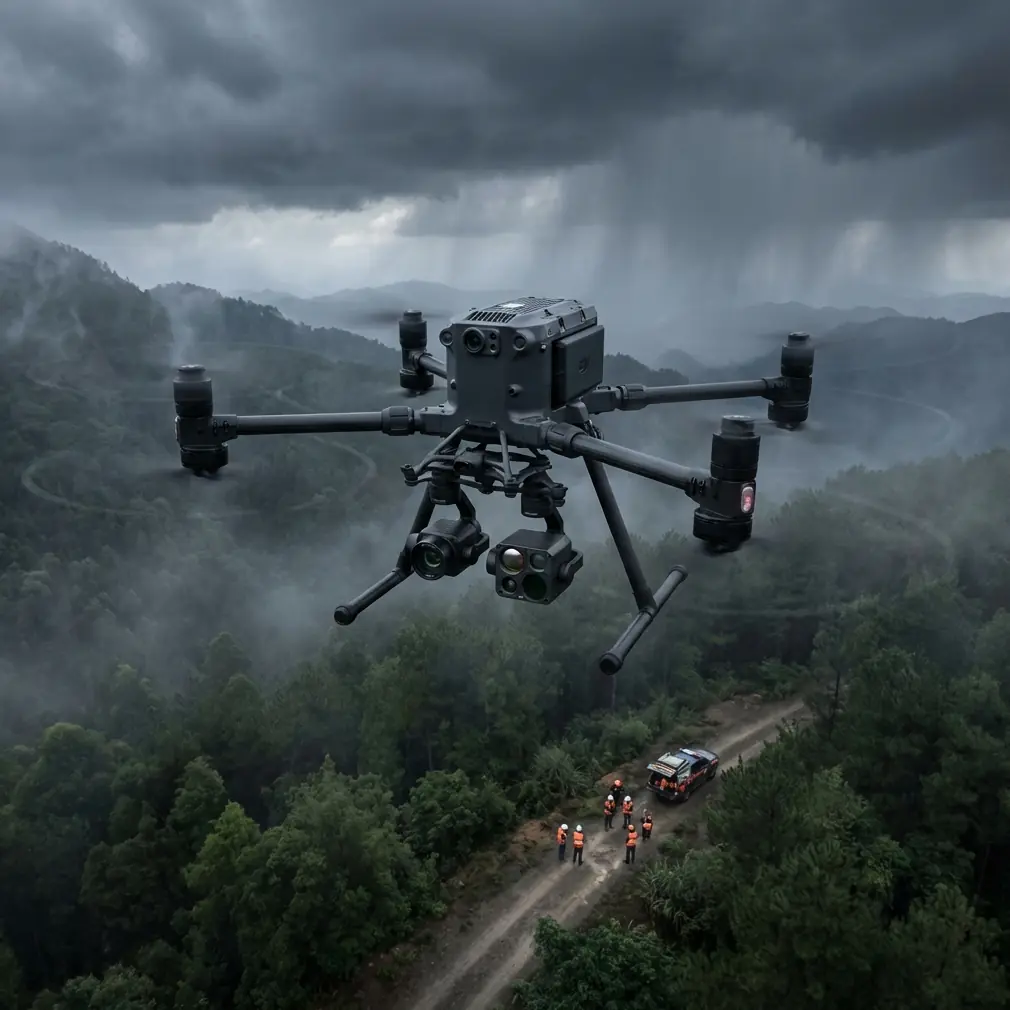
Matrice 400 Case Study: Spraying Coastal Vineyards When the Weather Turns
META: Expert case study on using the Matrice 400 for coastal vineyard spraying, covering wind shifts, thermal awareness, transmission stability, battery strategy, and mapping workflow.
Coastal vineyards are beautiful right up until they make flight planning difficult.
Rows run along uneven terrain. Salt air creeps into equipment decisions. Wind behaves like it has its own schedule. A calm morning can become a crosswind problem before the second block is finished. For growers trying to maintain consistent spray coverage without overrunning labor, weather windows are narrow and expensive.
That is exactly where the Matrice 400 becomes interesting.
This is not a generic “big drone for agriculture” story. The value of the Matrice 400 in a coastal spraying scenario comes from how several technical features work together under pressure: stable transmission, secure data handling, battery continuity, and the ability to support a workflow that starts before the first droplet leaves the aircraft. In practice, those details matter more than headline specs.
I’ll walk through a realistic field case from the perspective of a commercial UAV operator managing a vineyard block near the coast, where weather shifted mid-flight and the aircraft had to keep the mission controlled, predictable, and worth completing.
The job: variable coastal vines, narrow timing, no room for wasted passes
The assignment was straightforward on paper: spray a vineyard section exposed to marine air, with uneven canopy vigor across multiple rows and a weather forecast that looked acceptable for the first part of the day. The grower’s concern was not simply coverage. It was consistency.
In coastal vineyards, consistency is fragile. Wind channels through row gaps. Humidity changes deposition behavior. Temperature swings can alter plant stress patterns and make some sections of the block react differently than others. If the operator treats the whole parcel as uniform, the result is rarely efficient.
The Matrice 400 was selected because this type of mission benefits from more than lift and endurance. It benefits from an aircraft that can be part of a repeatable operational system.
That system started with mapping.
Before spraying, the block was mapped like an operational asset, not just photographed
A vineyard spray mission becomes more precise when the operator first builds a usable site model. In this case, photogrammetry was used to create a current map of the blocks, access lanes, slope transitions, and edge conditions. Ground control points, or GCPs, were added to tighten positional confidence where terrain and row structure could otherwise distort the planning model.
That step is easy to skip when a team is in a hurry. It is also where many avoidable inefficiencies begin.
For vineyards, good photogrammetry does more than create a pretty orthomosaic. It reveals turn constraints, identifies sections where row spacing tightens visually, and supports cleaner route planning around trellis geometry and elevation changes. With GCP-backed mapping, the spray plan can be tied to something defensible instead of rough visual judgment.
Operationally, that matters for two reasons.
First, it reduces overlap and missed sections. In vineyards, over-application and under-application can occur row by row if the route plan is built on weak spatial assumptions. Second, it gives the pilot a much clearer basis for responding when weather changes. When the environment shifts, having an accurate map allows fast replanning rather than guesswork.
Why the Matrice 400 fit the mission profile
The Matrice 400 earns its place in this kind of work because it supports the pilot through changing conditions instead of forcing compromises at every stage.
One of the most useful capabilities in the field is O3 transmission. In a coastal vineyard, signal reliability is not just a convenience issue. It affects how confidently a team can operate around topography, vegetation, and intermittent obstructions. Stable downlink and control response help the pilot assess the aircraft’s position and condition without introducing delay or uncertainty at the exact moment conditions become less predictable.
Then there is AES-256 encryption. People often treat encrypted transmission as a back-office feature, but commercial operators should not. Vineyard operations generate sensitive spatial data: block layouts, treatment timing, crop condition observations, and site imagery. AES-256 matters because it helps keep operational data secure when workflows include mapping, inspection records, and treatment documentation. For larger growers, cooperatives, and contract operators, that is not a technical footnote. It is part of professional risk management.
The battery strategy also matters more than many buyers realize. Hot-swap batteries sound like a convenience feature until you’re trying to hold a narrow weather window. In practice, hot-swapping reduces the dead time between sorties. On a coastal site where the safe operating period may tighten quickly, those saved minutes can determine whether the last rows get treated under acceptable conditions or get pushed into a later, less favorable slot.
And while spraying was the day’s core task, thermal signature awareness added another layer of value.
Thermal signature was not used as a gimmick
Thermal data is often discussed in broad terms, but in vineyards it becomes useful when interpreted with restraint. The point is not to replace agronomy with a heat map. The point is to understand plant variability and environmental stress in a way that informs field decisions.
Before the spray run, the operator reviewed thermal signature differences across the block. A few zones near the exposed edge showed warmer patterns than interior rows. That did not automatically mean those vines needed a separate treatment, but it did flag them as environmentally distinct. On the coast, edge rows can dry differently, absorb wind differently, and respond differently to salt-laden air.
That insight shaped the spray approach. Instead of assuming uniform behavior across the parcel, the team planned for closer observation and tighter operational discipline on those edge sections. It is a small example, but it reflects the larger advantage of using a platform like the Matrice 400 within an integrated workflow rather than as a one-off application aircraft.
Mid-flight, the weather changed exactly the way coastal weather tends to
The first part of the mission was clean. Winds were manageable. Row tracking stayed efficient. Coverage rates were on target.
Then the weather turned.
Not dramatically, and not in a way that would make headlines. That is how most real flight problems begin. A wind shift came off the water, and the aircraft started dealing with more variable lateral pressure than during the first passes. Gusts were not constant. They arrived in pulses, enough to matter for drift management and enough to test whether the mission should continue as planned.
This is where the Matrice 400’s practical strengths surfaced.
The aircraft maintained dependable link quality through O3 transmission even as the operating environment became less comfortable. That gave the pilot steady situational awareness at the moment when decisions needed to be made quickly and without drama. Instead of reacting to poor visibility into the aircraft’s status, the operator could focus on the actual variables that mattered: drift risk, route adjustment, and whether the exposed rows should be completed now or deferred.
At the same time, the mapped block and GCP-supported planning data made replanning straightforward. The team adjusted the sequence, prioritizing rows with the best remaining environmental margin and postponing the most exposed edge where crosswind effects were becoming less acceptable. That sounds simple, but it is only simple when the planning foundation is solid.
A less disciplined workflow often forces a false choice in moments like this: either push on too long or stop with the job in disarray. Here, there was a third option. Continue selectively, preserve treatment quality, and keep the mission organized enough to resume later if needed.
Hot-swap batteries preserved the weather window
As conditions shifted, battery handling became part of the strategy.
Hot-swap battery capability allowed the crew to keep turnaround time low without letting the aircraft sit idle while the weather margin narrowed. On a calm inland site, a few extra minutes between flights may be irrelevant. On a coastal vineyard, those minutes can be the difference between completing an additional block under controlled conditions and losing the day’s best operating period.
The significance is not just speed. It is continuity.
A mission interrupted by long reset periods creates more opportunities for environmental conditions to move against you. With hot-swapping, the aircraft returned to work quickly enough that the revised mission plan remained usable. The operator could finish priority rows while the weather was still inside acceptable limits.
That operational continuity is one of the strongest reasons larger commercial teams look beyond simple endurance numbers. The total workflow matters more than isolated flight time.
BVLOS keeps coming up, but the real issue is operational discipline
BVLOS is part of the larger conversation around commercial drone productivity, and many operators naturally think about it when discussing larger platforms like the Matrice 400. For vineyard work, especially across fragmented or elongated parcels, beyond visual line of sight potential can influence how businesses think about future scalability.
But in this case, the more immediate lesson was not about stretching operational reach. It was about discipline within the rules and conditions of the day.
The Matrice 400 supports serious enterprise-style operations because it fits into frameworks that require planning rigor, secure communications, and predictable field execution. If a team later moves toward more advanced operational approvals, tools such as robust transmission and encrypted links become even more relevant. In everyday vineyard work, those same capabilities already help the crew run a cleaner mission.
So while BVLOS is a meaningful term in the industry, what matters on the ground is whether the aircraft supports safe, documented, repeatable work. Here, it did.
What the grower actually noticed
Growers rarely care about transmission protocols by name. They care about outcomes.
What stood out to the vineyard manager was that the operation did not become chaotic when the weather changed. There was no scramble, no improvised wandering across the block, no vague explanation about why some rows were done and others were not. The mission stayed structured.
The treatment plan remained traceable to the map. Sensitive site data remained protected through AES-256-secured communications. Battery changes did not drag the operation into a lost weather window. Thermal observations gave context to block variability instead of being treated like a novelty layer.
That combination builds confidence, especially for agricultural clients who need drone work to fit into broader crop management decisions rather than exist as a flashy one-off.
A practical takeaway for coastal vineyard operators
If you are evaluating the Matrice 400 for spraying vineyards near the coast, don’t reduce the decision to airframe size or raw payload assumptions.
Look at how the aircraft behaves as part of a working chain:
- Photogrammetry establishes a trustworthy model of the site.
- GCPs improve planning accuracy where terrain and row structure can mislead.
- Thermal signature review helps identify environmentally distinct zones before treatment.
- O3 transmission supports stable command and visibility when terrain and wind complicate the mission.
- AES-256 helps protect commercially sensitive operational data.
- Hot-swap batteries preserve tempo when weather windows are short.
- A platform built for advanced operations gives your team room to scale responsibly, including in discussions around BVLOS-readiness where regulations permit.
That is the real story.
The Matrice 400 is valuable in coastal vineyard work not because it eliminates weather, but because it helps the operator absorb change without losing control of the mission. When the wind shifted in this case, the aircraft did not magically erase the risk. It gave the team enough stability, continuity, and planning confidence to adapt intelligently.
That is a much more useful standard.
If you’re working through a similar vineyard setup and want to compare workflow options, mission planning logic, or payload fit, you can start the conversation here: message James Mitchell directly on WhatsApp.
For commercial agriculture teams, that is the difference between owning a capable drone and running a capable operation.
Ready for your own Matrice 400? Contact our team for expert consultation.