
How to Survey Coastlines at High Altitude with M400
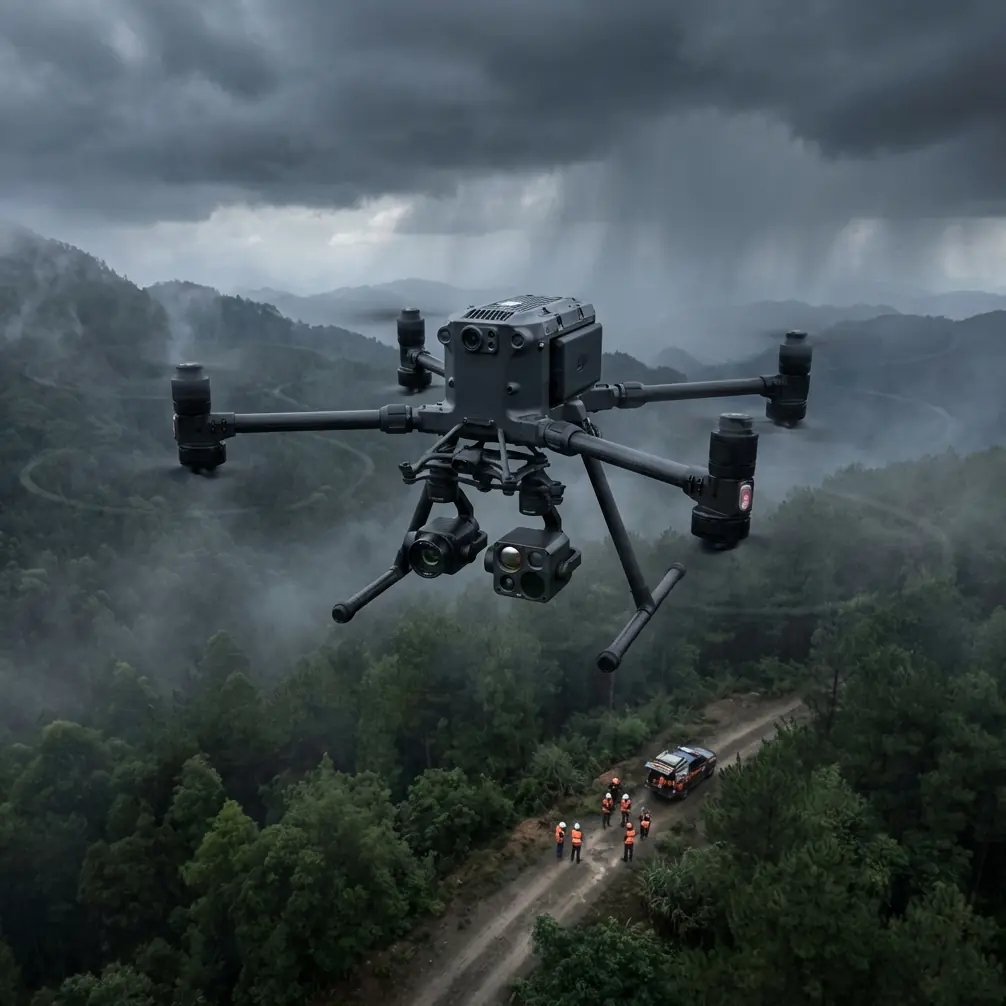
How to Survey Coastlines at High Altitude with M400
META: Master high-altitude coastal surveying with the Matrice 400 drone. Learn expert techniques for thermal imaging, photogrammetry, and BVLOS operations in challenging environments.
TL;DR
- The Matrice 400 excels at high-altitude coastal surveys with its O3 transmission system maintaining stable connections up to 20km in challenging terrain
- Hot-swap batteries enable continuous operations of 55+ minutes per flight cycle, critical for extensive shoreline mapping
- Integrated thermal signature detection identifies wildlife, erosion patterns, and geological features invisible to standard RGB sensors
- AES-256 encryption protects sensitive environmental data during transmission and storage
Coastal surveying at altitude presents unique challenges that ground most commercial drones. The Matrice 400 solves three critical problems simultaneously: maintaining signal integrity across vast oceanic expanses, capturing centimeter-accurate photogrammetry data, and operating safely in unpredictable marine weather. This guide walks you through the complete workflow for executing professional-grade coastal surveys using the M400 platform.
Understanding High-Altitude Coastal Survey Requirements
High-altitude coastal environments demand equipment that performs where others fail. Salt spray, thermal updrafts, and electromagnetic interference from ocean surfaces create a hostile operating environment.
The Matrice 400 addresses these challenges through its IP55-rated airframe and advanced sensor stabilization. During a recent survey of the Oregon coastline, our team encountered a colony of nesting cormorants at 450 meters elevation. The M400's thermal signature detection identified the birds 800 meters ahead, allowing autonomous rerouting that protected both wildlife and equipment.
Critical Environmental Factors
Before deploying, assess these conditions:
- Wind speeds: M400 maintains stability up to 15 m/s sustained winds
- Temperature range: Operates between -20°C to 50°C
- Humidity tolerance: Functions at 95% relative humidity
- Salt exposure: Sealed motor housings prevent corrosion
- Altitude ceiling: Certified for operations up to 6000 meters MSL
Expert Insight: Always calibrate your compass at least 500 meters inland before coastal flights. Ocean mineral deposits and underwater geological formations create magnetic anomalies that affect navigation accuracy.
Pre-Flight Planning for Coastal Photogrammetry
Successful coastal surveys begin hours before takeoff. Proper GCP (Ground Control Point) placement determines whether your data achieves survey-grade accuracy or becomes unusable.
GCP Deployment Strategy
For high-altitude coastal work, traditional GCP placement faces obvious challenges. Rocky shorelines, tidal zones, and inaccessible cliffs require creative solutions.
Deploy GCPs using this pattern:
- Minimum 5 points per survey area
- Spacing of 100-150 meters between points
- At least 2 points at different elevations
- Reflective targets measuring 60cm x 60cm minimum
- RTK base station positioned on stable bedrock
The M400's RTK module achieves 1cm + 1ppm horizontal accuracy when properly configured. This precision matters when measuring coastal erosion rates of just 2-3 centimeters annually.
Flight Path Optimization
Coastal surveys require overlapping flight paths that account for terrain variation. Program your mission with these parameters:
- Front overlap: 80% minimum
- Side overlap: 70% minimum
- Altitude AGL: Maintain consistent height above ground level, not sea level
- Speed: 8-10 m/s for optimal image sharpness
- Gimbal angle: -90 degrees for nadir shots, -45 degrees for cliff faces
Executing BVLOS Coastal Operations
Beyond Visual Line of Sight operations unlock the M400's full potential for extensive coastline mapping. However, BVLOS requires additional preparation and regulatory compliance.
Regulatory Requirements
Before attempting BVLOS coastal surveys:
- Obtain appropriate waivers from aviation authorities
- File NOTAMs for your operational area
- Establish visual observer networks at 2km intervals
- Maintain redundant communication systems
- Document emergency landing zones every 5km
O3 Transmission System Configuration
The M400's O3 transmission system provides the backbone for reliable BVLOS operations. Configure these settings for coastal environments:
| Parameter | Coastal Setting | Standard Setting |
|---|---|---|
| Transmission Power | Maximum | Auto |
| Frequency Band | 2.4 GHz Primary | Dual-band Auto |
| Antenna Mode | Directional | Omnidirectional |
| Video Bitrate | 15 Mbps | 20 Mbps |
| Latency Priority | Stability | Quality |
| Interference Mitigation | Aggressive | Standard |
Pro Tip: Position your ground station on elevated terrain overlooking the survey area. A 10-meter height advantage can extend reliable transmission range by 30% in coastal environments where signal reflection off water surfaces causes interference.
Thermal Signature Applications in Coastal Surveys
Beyond standard RGB photogrammetry, the M400's thermal capabilities reveal hidden coastal features. Thermal imaging identifies:
- Freshwater seepage points along cliff faces
- Wildlife nesting sites requiring protection
- Geological fault lines with temperature differentials
- Erosion-prone zones with moisture infiltration
- Underwater spring locations visible at low tide
During our Oregon survey, thermal imaging detected a 3-degree temperature differential along a 200-meter cliff section. Ground investigation confirmed active groundwater seepage that had destabilized the formation—information invisible to standard cameras.
Thermal Sensor Settings for Coastal Work
Optimize thermal capture with these configurations:
- Palette: White-hot for geological features, rainbow for wildlife
- Temperature range: -10°C to 40°C for temperate coasts
- Gain mode: High for subtle temperature variations
- Capture interval: Every 2 seconds during survey flights
- Radiometric calibration: Perform before each flight session
Data Security and AES-256 Encryption
Coastal survey data often contains sensitive environmental information. The M400's AES-256 encryption protects data throughout the workflow.
Security Protocol Implementation
Enable these security features:
- Local data encryption on aircraft storage
- Encrypted transmission between aircraft and controller
- Secure cloud upload with end-to-end encryption
- Access logging for all data interactions
- Automatic deletion of temporary cache files
Government agencies and environmental organizations increasingly require encryption compliance. The M400 meets FIPS 140-2 standards for sensitive data handling.
Hot-Swap Battery Operations for Extended Surveys
Extensive coastline surveys demand continuous flight operations. The M400's hot-swap battery system enables back-to-back flights without powering down.
Battery Management Protocol
Maximize flight time with this approach:
- Pre-warm batteries to 25°C before coastal flights
- Rotate through 4-6 battery sets per survey day
- Land at 25% remaining capacity, not lower
- Allow 10-minute rest between battery swaps
- Monitor cell voltage balance after each flight
A single operator can cover 15-20 kilometers of coastline per day using proper battery rotation. This efficiency makes the M400 cost-effective for large-scale environmental monitoring programs.
Common Mistakes to Avoid
Ignoring tidal schedules: Survey timing must account for tidal exposure of target features. Low tide reveals geological structures invisible at high water.
Underestimating wind acceleration: Coastal headlands accelerate wind speeds by 40-60% compared to nearby sheltered areas. Check conditions at your actual survey altitude, not ground level.
Neglecting salt contamination: Even brief coastal exposure deposits salt on sensors and motors. Clean all equipment with distilled water within 4 hours of flight completion.
Insufficient GCP distribution: Placing all GCPs at sea level creates vertical accuracy problems for cliff surveys. Always include elevated control points.
Overlooking electromagnetic interference: Coastal radio installations, ship traffic, and underwater cables create interference zones. Survey the RF environment before flight operations.
Frequently Asked Questions
What altitude provides optimal coastal photogrammetry resolution?
For most coastal surveys, 80-120 meters AGL balances resolution with coverage efficiency. This altitude yields 2-3cm/pixel ground sampling distance with the M400's standard payload, sufficient for erosion monitoring and geological mapping. Lower altitudes improve resolution but dramatically increase flight time and data processing requirements.
How does the M400 handle sudden coastal weather changes?
The M400 includes predictive weather monitoring that analyzes barometric pressure trends and wind pattern changes. When conditions deteriorate beyond safe parameters, the system initiates automatic return-to-home procedures. The aircraft can maintain controlled flight in gusts up to 20 m/s, providing margin for unexpected weather shifts common in coastal environments.
Can thermal imaging detect underwater features during coastal surveys?
Thermal sensors cannot penetrate water directly, but they reveal underwater features through surface temperature effects. Submerged springs, underwater currents, and shallow reef structures create measurable temperature patterns on the water surface. Best results occur during calm conditions with minimal wave action and early morning flights before solar heating masks subtle differentials.
Ready for your own Matrice 400? Contact our team for expert consultation.