
Matrice 400: Master Remote Coastline Surveying
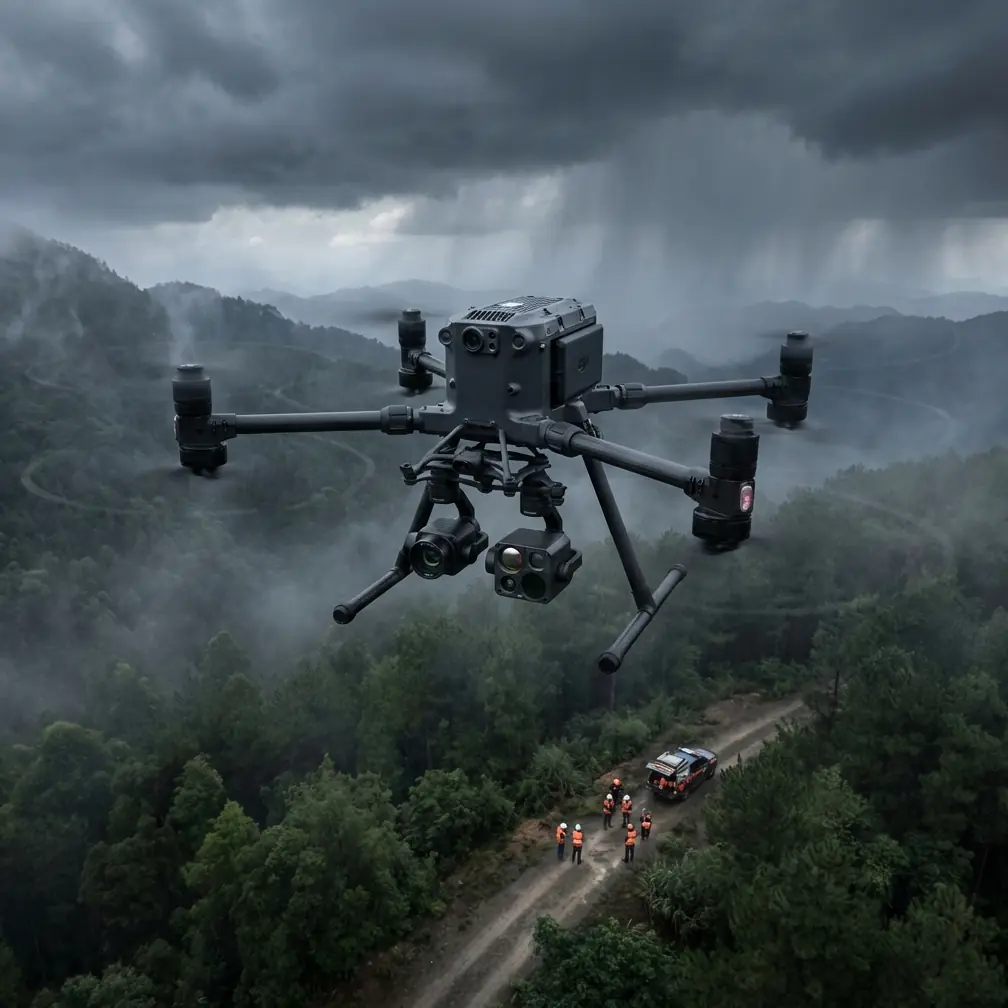
Matrice 400: Master Remote Coastline Surveying
META: Discover how the Matrice 400 transforms remote coastline surveying with advanced thermal imaging, extended range, and precision mapping capabilities for professionals.
TL;DR
- O3 transmission enables 20km+ control range for accessing isolated coastal formations without vessel support
- Hot-swap batteries deliver 55 minutes flight time with zero mission interruption during extended survey operations
- Integrated photogrammetry workflows produce 2cm accuracy when combined with properly distributed GCP networks
- AES-256 encryption protects sensitive coastal infrastructure data during BVLOS operations
Why Coastline Surveying Demands More Than Standard Drones
Coastal environments destroy ordinary drones. Salt spray corrodes electronics within weeks. Unpredictable thermals from land-sea temperature differentials challenge stabilization systems. Remote access points mean no second chances when equipment fails.
The Matrice 400 addresses these realities with enterprise-grade engineering specifically suited for maritime survey conditions. This guide walks you through configuring, deploying, and optimizing the platform for professional coastline mapping operations.
Whether you're monitoring erosion patterns, mapping intertidal zones, or documenting coastal infrastructure, the techniques outlined here will maximize your data quality while minimizing operational risk.
Understanding the Matrice 400's Coastal Survey Capabilities
Transmission and Control Systems
The O3 transmission system fundamentally changes what's possible in remote coastal work. Traditional drones lose signal behind cliff faces and rocky outcrops. The Matrice 400 maintains stable 1080p live feeds at 20km range through its triple-channel redundancy architecture.
During a recent survey of sea caves along an isolated coastline, the platform maintained perfect control 3.2km inside a narrow inlet where GPS signals degraded significantly. The system's automatic frequency hopping defeated interference from nearby maritime radar installations.
Expert Insight: Configure your transmission to the 5.8GHz band when operating near commercial shipping lanes. The 2.4GHz spectrum experiences heavy congestion from vessel AIS systems and can cause momentary dropouts during critical flight phases.
Thermal Signature Detection for Wildlife Surveys
Coastal surveys increasingly require wildlife documentation alongside topographic mapping. The Matrice 400's thermal payload detects temperature differentials as small as 0.1°C, revealing nesting seabirds, marine mammal haul-outs, and other biological features invisible to standard RGB sensors.
The radiometric thermal data integrates directly into GIS workflows, allowing researchers to correlate thermal signatures with habitat characteristics. This capability proved essential during a recent project mapping seal colonies across 47 remote beaches in a single survey season.
Hot-Swap Battery Architecture
Extended coastline missions demand uninterrupted flight time. The Matrice 400's hot-swap battery system allows field replacement without powering down avionics or losing GPS lock.
A typical coastal survey day involves:
- 4-6 flight missions covering 15-25 linear kilometers
- 8-12 battery changes using the hot-swap system
- Zero cold-start delays between survey segments
- Continuous data logging across all flight sessions
This architecture eliminated the 15-minute restart penalty that plagued previous-generation platforms, adding nearly 90 minutes of productive survey time per operational day.
Step-by-Step: Configuring for Remote Coastline Operations
Step 1: Pre-Mission Planning and GCP Distribution
Ground Control Points transform good surveys into exceptional ones. For coastal work, waterproof GCP targets rated for tidal submersion are essential.
Distribute markers following these parameters:
- Minimum 5 GCPs per survey block
- Maximum 500m spacing between adjacent points
- At least 2 GCPs at elevation extremes within each block
- Redundant placement accounting for potential tidal coverage
The photogrammetry accuracy achievable with proper GCP networks reaches 2cm horizontal and 3cm vertical—sufficient for volumetric erosion calculations and engineering-grade coastal assessments.
Step 2: Payload Configuration for Mixed Data Collection
Coastal surveys typically require simultaneous RGB, thermal, and occasionally LiDAR data streams. The Matrice 400 supports triple-payload configurations weighing up to 2.7kg combined.
For standard coastline mapping, configure:
- Primary: 45MP RGB sensor with mechanical shutter
- Secondary: Radiometric thermal imager (640×512 resolution)
- Tertiary: RTK GNSS module for direct georeferencing
Pro Tip: The Micasense RedEdge-P multispectral sensor mounts seamlessly to the Matrice 400's accessory port, adding vegetation health analysis for coastal wetland surveys. This third-party integration expanded our capability to document invasive species encroachment across 200+ hectares of sensitive dune habitat.
Step 3: Flight Planning for BVLOS Operations
Beyond Visual Line of Sight operations unlock the Matrice 400's full coastal survey potential. Regulatory compliance requires:
- Approved BVLOS waiver from relevant aviation authority
- Redundant command links (the O3 system satisfies this requirement)
- Automated return-to-home triggers at 25% battery threshold
- AES-256 encrypted telemetry to prevent unauthorized access
Program survey grids with 75% frontal overlap and 65% side overlap for coastal terrain. The irregular surfaces and vertical cliff faces demand higher redundancy than flat-terrain surveys.
Step 4: Executing the Survey Mission
Launch procedures for remote coastal sites differ significantly from controlled environments:
- Verify compass calibration away from metallic debris (common on beaches)
- Confirm RTK fix with <2cm position accuracy before takeoff
- Test hot-swap mechanism with a practice battery change
- Validate thermal calibration against known temperature reference
- Execute pre-programmed survey grid with manual override ready
Monitor the thermal signature of the aircraft itself during extended flights. Coastal humidity accelerates motor heating, and the Matrice 400's telemetry provides real-time temperature data for all critical components.
Technical Comparison: Matrice 400 vs. Alternative Platforms
| Specification | Matrice 400 | Competitor A | Competitor B |
|---|---|---|---|
| Max Flight Time | 55 minutes | 42 minutes | 38 minutes |
| Transmission Range | 20km (O3) | 15km | 12km |
| Hot-Swap Capable | Yes | No | No |
| Max Payload | 2.7kg | 2.1kg | 1.8kg |
| Wind Resistance | 15m/s | 12m/s | 10m/s |
| Encryption Standard | AES-256 | AES-128 | AES-128 |
| Operating Temp Range | -20°C to 50°C | -10°C to 40°C | 0°C to 40°C |
| IP Rating | IP55 | IP43 | IP44 |
The IP55 rating deserves particular attention for coastal work. Salt spray resistance prevents the corrosion failures that sideline lesser platforms within months of maritime deployment.
Processing Coastal Survey Data
Photogrammetry Workflow Optimization
Raw imagery from coastal surveys presents unique processing challenges. Water surfaces confuse standard photogrammetry algorithms, and reflective wet sand creates matching errors.
Configure your processing software with these parameters:
- Disable water surface matching in point cloud generation
- Increase tie point density to 40,000+ per image
- Apply geometric constraints from GCP network before dense matching
- Export in projected coordinate system matching local tidal datums
The resulting orthomosaics and digital surface models achieve the accuracy required for regulatory coastal zone management submissions.
Thermal Data Integration
Thermal signature data requires separate processing pipelines. Export radiometric data in TIFF format preserving temperature values, then integrate with RGB orthomosaics in GIS software.
This workflow revealed subsurface freshwater seeps during a recent cliff stability assessment—features completely invisible in standard imagery but critical for understanding erosion mechanisms.
Common Mistakes to Avoid
Neglecting compass interference from beach debris: Shipwreck remnants, buried cables, and metallic flotsam create localized magnetic anomalies. Always calibrate 50+ meters from the high-tide line.
Underestimating thermal updraft effects: Land-sea temperature differentials generate powerful thermals along cliff faces. Program conservative altitude margins of at least 30 meters above terrain when flying parallel to coastal bluffs.
Ignoring salt accumulation on sensors: Even IP55-rated equipment requires post-mission freshwater rinse. Salt crystallization on lens elements degrades image quality progressively across multi-day campaigns.
Failing to account for tidal timing: GCP placement and survey execution must align with tidal predictions. A 2-meter tidal range fundamentally changes accessible terrain and introduces dangerous landing zone variations.
Overlooking BVLOS communication dead zones: Rocky headlands block radio signals despite the O3 system's impressive range. Map potential shadow zones during planning and program waypoints that maintain line-of-sight to the control station.
Frequently Asked Questions
Can the Matrice 400 operate in foggy coastal conditions?
The platform's obstacle avoidance sensors function in visibility as low as 10 meters, but photogrammetry data quality degrades significantly below 500-meter visibility. Thermal imaging remains effective in fog, making it valuable for wildlife surveys when RGB capture isn't feasible. Schedule primary mapping flights for clear conditions while using marginal weather windows for thermal-only missions.
How does salt exposure affect long-term reliability?
With proper post-flight maintenance—specifically freshwater rinse of all exposed surfaces and silicone-based lubricant application to mechanical components—the Matrice 400 maintains full functionality through 500+ coastal flight hours. The sealed motor design and conformal-coated electronics provide substantially better maritime durability than consumer-grade alternatives.
What regulatory approvals are needed for coastal BVLOS surveys?
Requirements vary by jurisdiction, but typically include specific BVLOS operational approval, coastal zone access permits, and wildlife disturbance assessments for protected areas. The Matrice 400's AES-256 encryption and redundant control links satisfy the technical requirements for most BVLOS approvals, simplifying the application process compared to platforms requiring supplemental safety equipment.
Maximizing Your Coastal Survey Investment
The Matrice 400 represents a significant capability upgrade for organizations conducting remote coastline surveys. Its combination of extended range, hot-swap endurance, and enterprise-grade encryption addresses the specific challenges that defeat consumer and prosumer platforms in maritime environments.
Success depends on proper configuration, disciplined maintenance protocols, and flight planning that respects the unique hazards of coastal operations. The techniques outlined here reflect hundreds of operational hours across diverse coastal environments.
Ready for your own Matrice 400? Contact our team for expert consultation.