
Matrice 400 on a Windy Construction Site
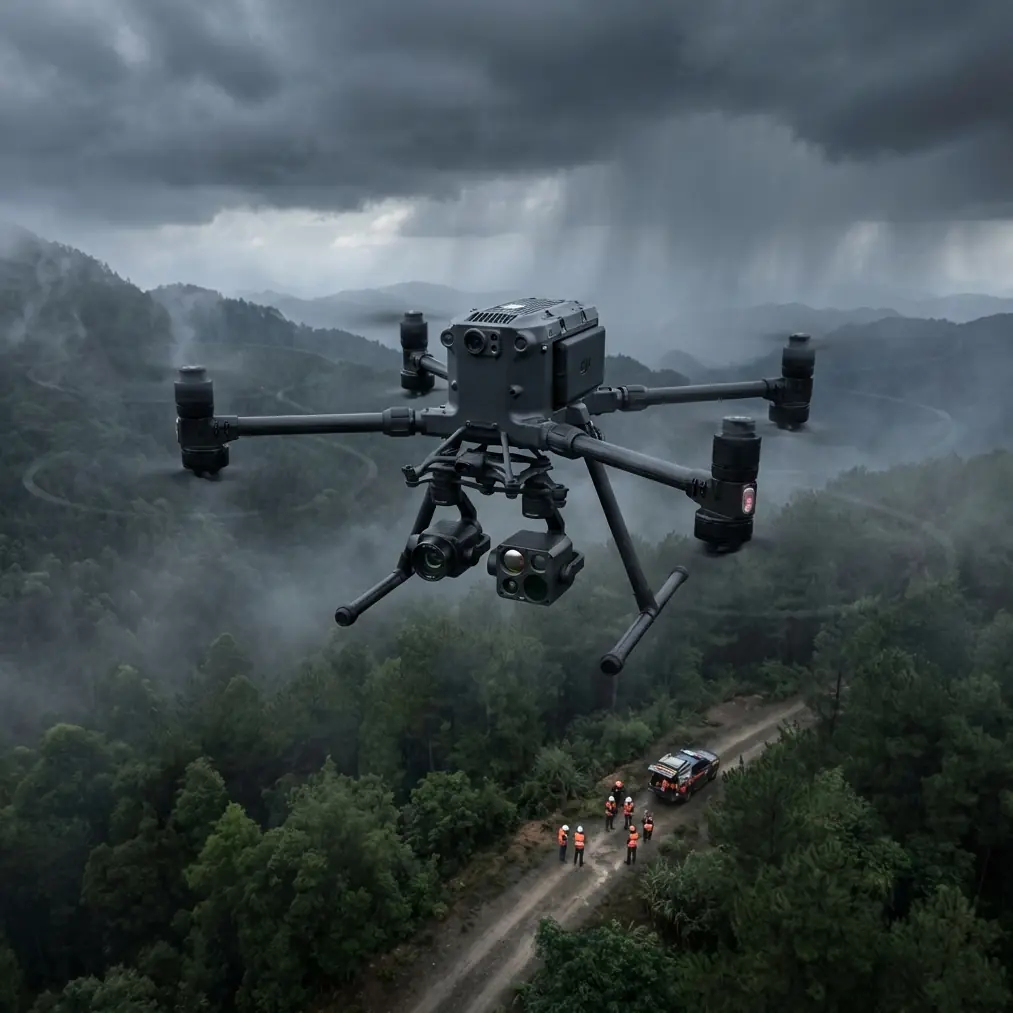
Matrice 400 on a Windy Construction Site: What Actually Matters in the Air
META: A field-based Matrice 400 case study for windy construction site surveying, linking payload reliability, thermal workflows, pipe-routing realities, and material-level design details that affect uptime.
By James Mitchell
Most construction-drone articles stay at 30,000 feet. Specs, feature lists, polished claims. That’s not how hard jobs are won.
A windy construction survey is usually decided by smaller things: whether the aircraft can keep a stable mapping line after the weather shifts, whether the payload feed stays trustworthy long enough to finish the grid, whether your pipe corridor thermal pass is interpretable, and whether the airframe and attached systems behave like industrial tools rather than delicate electronics.
That is where the Matrice 400 becomes interesting.
I spent a recent site operation thinking less about headline features and more about the hidden engineering logic behind a heavy-duty drone working over a live construction environment. The mission was straightforward on paper: photogrammetry over a multi-phase build, thermal signature checks around utility runs and drainage sections, and visual documentation of exposed conduit and service installation. The complication was wind. By mid-flight, the site had changed character entirely.
The Matrice 400 handled it well, but the lesson wasn’t simply “it flies in wind.” The lesson was why that matters when your outputs need to be usable, not merely captured.
The job: mapping, thermal checks, and utility visibility on an active build
The site team needed three deliverables from one deployment.
First, a photogrammetry dataset for progress tracking. That meant repeatable overlaps, clean image geometry, and enough positional consistency to tie against GCPs already established around the perimeter.
Second, they wanted thermal signature review in specific areas where subsurface service work had recently been completed. This wasn’t about dramatic heat maps for presentation. It was about spotting uneven patterns that might help flag moisture migration, insulation gaps, or unusual heat behavior near newly installed infrastructure.
Third, they needed visual documentation of routing conditions around exposed and partially enclosed linework. On a construction site, those details often get buried fast. A good aerial record can settle arguments later.
The Matrice 400 fit the mission profile because it could support a serious multi-sensor workflow without turning the day into a sequence of compromises. That matters more than people admit. When a platform can collect photogrammetry and thermal data in one coordinated operation, the real benefit is not convenience. It is consistency. Same weather window, same site condition, same reference frame.
What changed mid-flight
The first leg was almost calm. Not still, but manageable enough that the mapping pattern looked routine. Then the site wind picked up the way it often does around partially completed structures: turbulence off the edges, uneven gusts across open pads, strange behavior near material stacks and temporary barriers.
That shift is exactly where weaker workflows start to unravel.
On paper, you can always say you’ll “just refly” a line. In practice, rework costs time, battery cycles, crew attention, and often daylight. It also creates mismatched datasets. Clouds move. Shadows shift. Ground teams enter areas that were clear earlier. Equipment relocates. A second pass is rarely the same pass.
What I appreciated during this operation was that the Matrice 400 stayed task-oriented. The aircraft wasn’t simply resisting wind; it was protecting the survey logic of the mission. For photogrammetry, that means preserving the kind of stable image acquisition needed to maintain usable overlap and reduce downstream headaches in reconstruction. For thermal work, it means keeping enough steadiness that anomalous patterns are easier to interpret rather than blurred by erratic platform movement.
There’s also a human factor here. When a pilot trusts the aircraft, they make better decisions. They spend less time babysitting basic stability and more time evaluating whether the data being gathered will actually answer the client’s question.
Why construction surveys depend on more than flight performance
The best way to understand an aircraft like the Matrice 400 is to stop treating the drone as a separate object. On a construction mission, it is part of a system that includes sensors, power architecture, mounts, vibration control, cable paths, transmission security, and operational timing.
That’s where the reference material behind aircraft design becomes unexpectedly relevant.
One of the source documents is a section from an aircraft materials handbook covering brazing filler metals used in aviation components. At first glance, that seems remote from a drone case study. It isn’t. The handbook lists a range of brazing materials for aviation parts, including silver-based and copper-based formulations such as BAg25CuZn, BAg34CuZnSn, and HBCu58ZnFe, and it distinguishes process compatibility across methods like flame brazing, induction brazing, and vacuum brazing. That level of joining detail tells you something fundamental: in aircraft-grade assemblies, reliability is built at the connection level, not at the marketing level.
Why does that matter to a Matrice 400 user surveying a windy construction site?
Because heavy-duty UAV work punishes every mechanical and electrical junction. Payload interfaces, heat-affected areas, conductive paths, vibration-exposed joints, and structural subassemblies all live or die by material decisions most operators never see. A handbook that notes, for example, tin-lead solder ranges like HLSn95Pb with a melting span of 183 to 224°C, while HLSn63Pb is listed at 183 to 183°C, is highlighting something operationally significant: different joining materials behave differently under thermal load and manufacturing requirements. In industrial drone terms, that translates into long-term reliability under repeated field cycles, temperature changes, and transport stress.
No pilot in the field needs to memorize brazing chemistry. But every serious operator benefits when the aircraft ecosystem they rely on is built with aerospace-style discipline.
The other hidden issue: line routing and clamp geometry
The second source document looks even less glamorous. It covers tubing connections and sealing, including maximum external dimensions for P-shaped circular clamps used to secure conduits. It also makes a practical point that certain fluid-system tube diameters — 14, 18, 22, 28, 36, 45, and 56 mm — are not preferred sizes.
Again, this sounds like handbook trivia until you spend time around industrial UAVs.
Cable routing, conduit management, strain control, and clamp spacing are not side issues on a large mission platform. They affect serviceability, vibration behavior, snag risk during maintenance, and long-term durability under transport and deployment. The handbook extract specifically states that the dimensions apply to conduits assembled in already-fastened clamps, and that full dimensions include metal width, liner, or outer covering. That’s a small sentence with big practical meaning. Real installed dimensions are not the same as nominal dimensions.
For a field aircraft like the Matrice 400, this design mindset matters because large platforms are constantly asked to do more: bigger payloads, more sensors, more data channels, more endurance, faster turnaround. If internal and external routing is not managed with disciplined clamp geometry and allowance for coverings and liners, reliability suffers in exactly the kind of windy, high-vibration, stop-start construction environment we were flying in.
This is one reason I tend to trust platforms more when they feel like aircraft systems rather than enlarged consumer drones. The difference shows up later, after dozens of site deployments, not just in the first demo.
Wind, thermal work, and why timing still beats bravado
Back to the flight.
Once the wind increased, we had to make a quick call on mission sequencing. Many teams instinctively push the thermal segment first because it feels more delicate. I usually decide based on what the wind is doing to the surfaces and whether the site’s thermal contrasts are likely to remain interpretable. In this case, the photogrammetry block stayed viable, so we finished the mapping route while the overlap quality still looked strong and kept the thermal pass tightly focused on the target zones rather than stretching into a broad site-wide collection.
That is a practical Matrice 400 lesson. A capable platform does not remove the need for judgment. It gives you the margin to apply judgment well.
The resulting photogrammetry model aligned cleanly enough with the existing GCP framework to support progress measurement without painful cleanup. The thermal signature review also produced useful contrasts around several utility-adjacent areas, especially where material differences and moisture behavior were beginning to express themselves. Those are the kinds of findings that matter to site managers: not flashy imagery, but clues.
Transmission confidence and data sensitivity
Construction surveys increasingly sit inside larger digital workflows. Orthomosaics, thermal layers, issue tagging, contractor disputes, schedule validation — all of it becomes sensitive quickly.
That’s why I pay attention to transmission resilience and security language such as O3 transmission and AES-256 in the broader discussion around enterprise-grade drone operations. The value isn’t abstract. On a busy site with interference sources, moving machinery, steel structures, and multiple teams sharing radios and networks, confidence in the control and data link affects how calmly and efficiently a mission runs. Secure handling matters too, especially when survey outputs may reveal commercial timelines, structural layouts, or proprietary installation details.
A Matrice 400 deployment should be treated less like “flying a camera” and more like operating an airborne data node. That perspective changes how you plan everything from staging area setup to post-flight file handling.
If you’re sorting out site workflows or payload combinations for this kind of job, a quick field-oriented conversation can save a lot of trial and error: message the team here.
Hot-swap batteries and the reality of construction timing
Battery talk is usually boring until a site superintendent is waiting.
On paper, endurance is always discussed as a maximum. In the field, what matters is continuity. Hot-swap batteries are valuable not because they sound advanced, but because they reduce friction between mission phases. On a windy construction site, you may need to adjust your plan on the fly, preserve the aircraft state between sorties, and relaunch quickly before conditions deteriorate further.
That kind of workflow continuity pairs well with a large platform like the Matrice 400. It helps maintain the logic of the overall dataset instead of fragmenting the day into disconnected flights.
For teams thinking ahead to BVLOS-style operational maturity, this matters even more. Not because every construction survey will become BVLOS tomorrow, but because the disciplines required for scalable operations — repeatability, system reliability, controlled turnaround, secure links, traceable maintenance — are already relevant on ordinary visual-line-of-sight jobs.
What this flight said about the Matrice 400
The strongest takeaway from this operation wasn’t that the Matrice 400 survived rougher air than expected. Plenty of aircraft can survive a gusty day.
The real point is that it kept the mission useful after conditions changed.
Useful means the photogrammetry remained coherent enough for construction progress work. Useful means the thermal pass still produced interpretable signatures instead of noisy artifacts. Useful means the pilot and visual observer were managing the site, not wrestling the aircraft. Useful means the platform felt like it was designed with the kinds of connection methods, routing tolerances, and assembly discipline that serious aviation systems depend on.
That is where the handbook details become more than background noise. A reference that distinguishes filler alloys for aviation brazing and notes process-specific suitability is speaking to durability at the bond level. A reference that specifies clamp-envelope dimensions down to values like 12.7 mm and reminds engineers that liners and coverings change installed size is speaking to reliability at the routing level. Both ideas show up in the field as fewer weak points, fewer surprises, and more confidence when the weather shifts halfway through a live survey.
The Matrice 400 belongs in that conversation because advanced construction drone work is no longer about whether a drone can capture images. Nearly anything can do that. The question is whether the aircraft can preserve data quality, operational rhythm, and system trust when the site stops behaving politely.
That’s the standard that matters.
Ready for your own Matrice 400? Contact our team for expert consultation.