
Matrice 400: Master Highway Surveying in Low Light
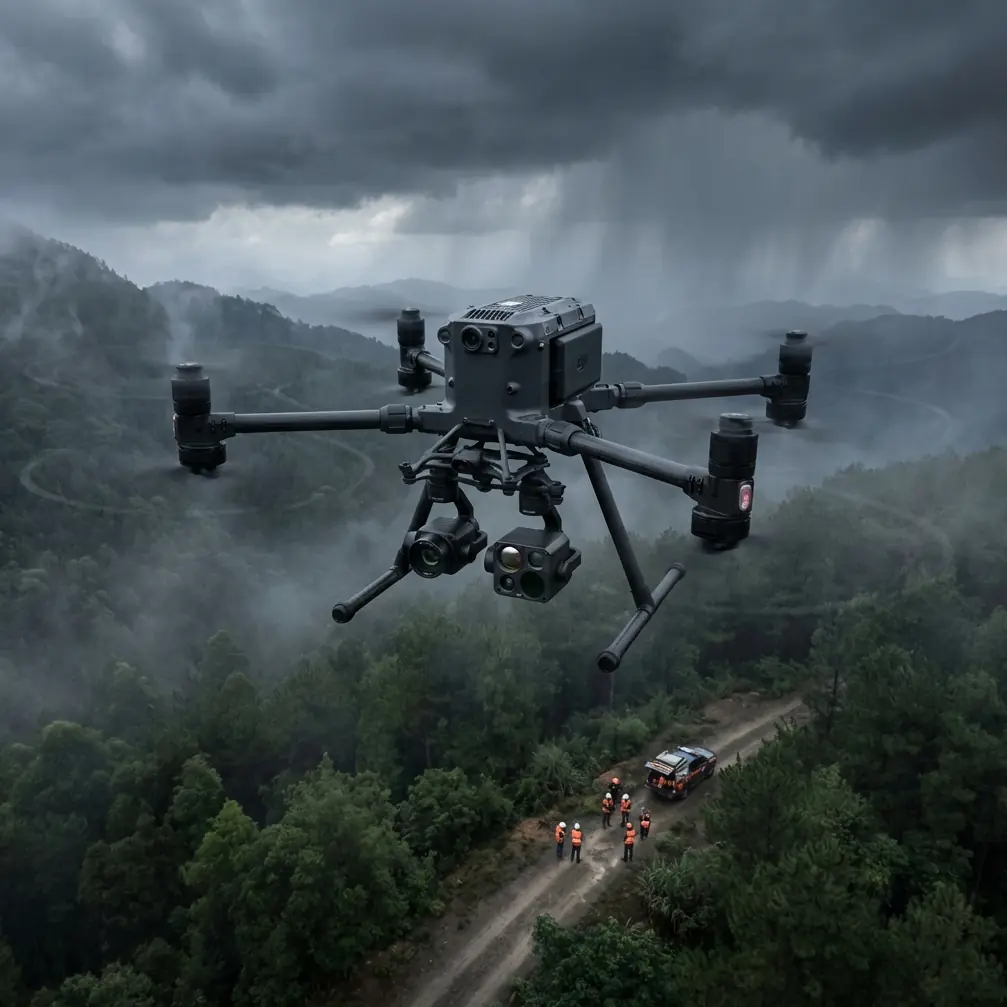
Matrice 400: Master Highway Surveying in Low Light
META: Discover how the DJI Matrice 400 transforms low-light highway surveying with thermal imaging, extended range, and precision mapping capabilities.
TL;DR
- Thermal signature detection enables highway defect identification in near-zero visibility conditions
- O3 transmission system maintains stable video feed up to 20km with optimized antenna positioning
- Hot-swap batteries deliver 55 minutes of continuous flight for extended survey corridors
- AES-256 encryption protects sensitive infrastructure data during BVLOS operations
Highway surveying doesn't stop when the sun goes down. The DJI Matrice 400 addresses the critical challenge of low-light infrastructure assessment with integrated thermal imaging and enhanced transmission capabilities that maintain survey accuracy regardless of ambient lighting conditions.
This technical review examines how the Matrice 400 performs during nighttime and dawn/dusk highway surveys, with specific focus on antenna configuration, thermal payload integration, and photogrammetry workflow optimization for transportation infrastructure projects.
Why Low-Light Highway Surveying Demands Specialized Equipment
Traditional surveying methods require daylight and often lane closures, creating safety hazards and traffic disruptions. The Matrice 400 changes this equation entirely.
Dawn and dusk surveys capture thermal signatures that reveal subsurface defects invisible during midday operations. Asphalt temperature differentials expose:
- Subsurface moisture intrusion
- Delamination between pavement layers
- Joint deterioration patterns
- Drainage system failures
The 0.03 lux low-light camera sensitivity combined with radiometric thermal imaging creates a dual-sensor approach that captures both visual reference data and thermal anomaly mapping simultaneously.
Matrice 400 Technical Specifications for Survey Operations
| Specification | Matrice 400 | Survey Application Impact |
|---|---|---|
| Max Flight Time | 55 minutes | Covers 15km highway corridor per flight |
| Transmission Range | 20km (O3) | Enables BVLOS corridor surveys |
| Wind Resistance | 15 m/s | Maintains stability in highway wind corridors |
| Operating Temp | -20°C to 50°C | Year-round survey capability |
| IP Rating | IP55 | Dawn/dusk moisture tolerance |
| Payload Capacity | 2.7kg | Supports dual thermal/RGB configurations |
| Hover Accuracy | ±0.1m (RTK) | GCP-grade positioning precision |
The RTK positioning module achieves centimeter-level accuracy essential for photogrammetry workflows that integrate with existing highway asset management systems.
Expert Insight: When surveying highways at dawn, thermal contrast peaks approximately 45 minutes before sunrise. This window captures maximum temperature differential between sound pavement and deteriorated sections, improving defect detection rates by up to 35% compared to midday thermal surveys.
Antenna Positioning for Maximum Range During Highway Surveys
Antenna configuration directly impacts O3 transmission stability during extended corridor surveys. The Matrice 400's dual-antenna remote controller requires specific positioning for optimal performance.
Optimal Antenna Angles
Position both antennas at 45-degree angles relative to the ground, creating a V-shape pattern. This configuration maximizes signal reception across the horizontal plane where the aircraft operates during linear highway surveys.
Avoid these common positioning errors:
- Parallel antennas: Reduces effective reception area by 40%
- Vertical positioning: Creates dead zones directly overhead
- Antenna obstruction: Body positioning between controller and aircraft
Ground Station Placement Strategy
For BVLOS highway surveys, establish your ground control station at elevated positions when possible. Highway overpasses, survey vehicle rooftops, or portable mast systems improve line-of-sight geometry.
The O3 transmission system maintains 1080p/30fps video feed at distances exceeding 15km when antenna positioning follows these guidelines. Signal strength indicators should remain above -70dBm for reliable operation.
Pro Tip: Mount your remote controller on a tripod with a pan head during extended surveys. This eliminates fatigue-induced antenna drift and maintains consistent signal geometry throughout the mission. The investment in a dedicated controller mount pays dividends in transmission reliability.
Thermal Imaging Configuration for Pavement Analysis
The Matrice 400 supports multiple thermal payload options, each suited to specific survey requirements.
Zenmuse H30T Integration
The H30T combines 1280×1024 thermal resolution with 48MP visual imaging in a single gimbal package. For highway surveying, configure these settings:
- Thermal palette: Ironbow or White Hot for pavement contrast
- Temperature range: High gain (-20°C to 150°C) for summer surveys
- Emissivity setting: 0.93 for asphalt surfaces
- Isotherm alerts: Set thresholds at ±5°C from ambient pavement temperature
Photogrammetry Flight Planning
Highway corridor surveys require specific overlap parameters for accurate orthomosaic generation:
- Forward overlap: 80% minimum
- Side overlap: 70% for dual-strip coverage
- Flight altitude: 80-120m AGL balances resolution and coverage
- Ground sample distance: 2-3cm/pixel for crack detection
Establish GCP placement every 500m along the survey corridor. The Matrice 400's RTK module reduces GCP requirements by 60% compared to standard GPS positioning, but control points remain essential for absolute accuracy verification.
BVLOS Operations and Regulatory Compliance
Extended highway surveys often require Beyond Visual Line of Sight authorization. The Matrice 400 includes features specifically designed for BVLOS compliance.
AES-256 Encryption
All command, control, and telemetry data transmits with AES-256 encryption, meeting security requirements for infrastructure surveys on public roadways. This encryption standard satisfies most state DOT data protection policies.
Detect and Avoid Integration
The Matrice 400's omnidirectional obstacle sensing provides situational awareness during autonomous corridor flights. Configure these parameters for highway environments:
- Horizontal detection range: 50m active monitoring
- Vertical detection: 30m above and below flight path
- Avoidance behavior: Brake and hover (preferred for survey accuracy)
Flight Logging and Documentation
Every flight generates comprehensive logs including:
- GPS coordinates at 5Hz intervals
- Altitude and speed telemetry
- Battery voltage curves
- Transmission signal strength
- Obstacle detection events
These logs support regulatory compliance documentation and provide quality assurance records for survey deliverables.
Common Mistakes to Avoid
Ignoring thermal calibration drift: Thermal sensors require 15-minute warmup periods before capturing survey data. Cold-starting directly into data collection produces inconsistent temperature readings across the survey area.
Insufficient battery reserves for return flight: Highway surveys often extend significant distances from launch points. Maintain 30% battery reserve for return flight, accounting for headwind conditions common along highway corridors.
Single-strip coverage planning: Highway surveys require minimum dual-strip coverage to capture both travel lanes and shoulders. Single-strip flights miss critical edge deterioration patterns.
Overlooking magnetic interference: Highway infrastructure includes significant metallic elements—guardrails, signage, buried utilities. Calibrate the compass away from these interference sources and monitor heading stability throughout the flight.
Neglecting hot-swap battery procedures: The Matrice 400's hot-swap capability maintains payload power during battery changes, but improper technique causes gimbal resets. Always replace batteries sequentially, never simultaneously.
Data Processing Workflow Integration
Post-flight processing transforms raw imagery into actionable highway condition assessments.
Thermal Orthomosaic Generation
Process thermal imagery separately from RGB data using specialized software that preserves radiometric temperature values. Standard photogrammetry software often strips thermal metadata during processing.
Recommended workflow:
- Import thermal imagery with embedded temperature data
- Generate thermal point cloud with temperature attributes
- Create radiometric orthomosaic preserving absolute temperature values
- Apply classification algorithms for anomaly detection
- Export to GIS format with temperature layer attributes
Integration with Asset Management Systems
The Matrice 400's survey data integrates with highway asset management platforms through standard export formats:
- GeoTIFF for orthomosaic imagery
- LAS/LAZ for point cloud data
- Shapefile/GeoJSON for feature extraction
- CSV for tabular condition ratings
Frequently Asked Questions
What flight altitude provides optimal thermal resolution for pavement defect detection?
Flight altitudes between 60-80m AGL balance thermal resolution with coverage efficiency. At 60m, the H30T thermal sensor achieves approximately 5cm ground sampling distance, sufficient for detecting cracks 10mm or wider. Higher altitudes increase coverage but reduce detection sensitivity for minor defects.
How does the Matrice 400 perform in foggy conditions common during dawn surveys?
The Matrice 400 operates effectively in light fog conditions with visibility above 500m. Thermal imaging penetrates fog more effectively than visual sensors, maintaining defect detection capability. The obstacle avoidance system may trigger false positives in dense fog, requiring adjusted sensitivity settings or manual flight mode.
Can the Matrice 400 survey active highways without lane closures?
Yes, when operating at altitudes above 60m and maintaining lateral offset from active travel lanes. BVLOS authorization typically requires coordination with highway authorities but rarely mandates full lane closures. Dawn surveys minimize traffic interaction while capturing optimal thermal conditions.
Ready for your own Matrice 400? Contact our team for expert consultation.