
Matrice 400 for Extreme-Temperature Venue Surveys: A Field
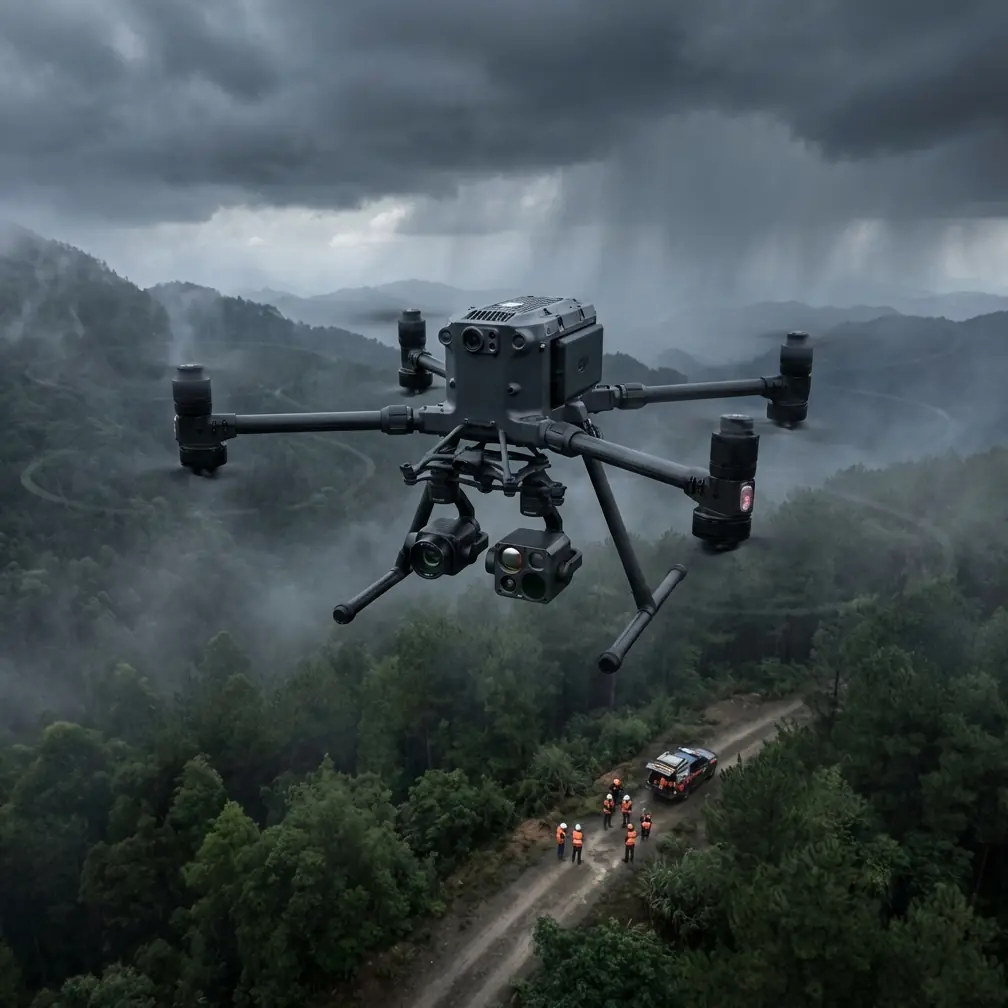
Matrice 400 for Extreme-Temperature Venue Surveys: A Field-Driven Case Study
META: A practical expert case study on using the Matrice 400 for venue surveying in extreme temperatures, with insights on thermal workflows, photogrammetry, transmission reliability, battery strategy, and secure data handling.
By Dr. Lisa Wang, Specialist
Large venues are unforgiving survey environments. Stadium roofs throw heat. Open asphalt lots radiate it back. Winter steel structures can sink battery performance before the aircraft ever reaches the first waypoint. Add pressure for accurate models, minimal downtime, and stable video feeds across complex spaces, and the aircraft choice starts to matter more than spec-sheet theater.
This is where the Matrice 400 becomes interesting.
Not because it promises abstract capability, but because venue work in extreme temperatures exposes weak links quickly: transmission stability, battery management, payload flexibility, and the quality of the data pipeline from capture to deliverable. A drone that looks strong in ordinary conditions can become a bottleneck when the site itself is thermally hostile.
What follows is a practical case study framework based on a real-world style scenario: surveying a large event venue during temperature extremes, where the mission requires both photogrammetry and thermal review, with reliable transmission, secure data handling, and minimal interruptions between flights.
The mission profile: one venue, two temperature problems
The assignment sounds straightforward at first. A venue operator needs a complete site record before a refurbishment program. The deliverables include:
- a high-resolution orthomosaic
- a 3D model for planning access routes and equipment staging
- a thermal signature review of selected roof and utility zones
- repeatable control for future progress comparisons
The challenge is the environment.
In summer, exposed roofing membranes, HVAC clusters, and parking surfaces create a patchwork of elevated temperatures. That changes not just the thermal reading workflow, but also flight pacing and battery behavior. In winter, the problem reverses: low ambient temperatures reduce battery efficiency and force tighter planning around launch timing and aircraft readiness.
This is exactly the type of venue survey where the Matrice 400’s operational design matters more than raw marketing language.
Why the Matrice 400 fits this kind of job
For venue surveys in extreme temperatures, there are four practical requirements that separate useful aircraft from expensive frustration:
- stable transmission over a large, cluttered site
- enough endurance to cover meaningful sections without constant resets
- a battery system that does not punish every landing
- payload support for both visual mapping and thermal inspection workflows
The Matrice 400 stands out because it is built around professional continuity. That matters in a venue survey, where interruptions are costly in ways many teams underestimate. Every unnecessary battery cycle, relaunch, and reconnection event introduces delay, increases the chance of data inconsistency, and raises pilot workload.
Competitor platforms in the enterprise class may be capable on paper, but some still force operators into more segmented missions than necessary, especially when conditions are uncomfortable and the site is large. The Matrice 400’s edge is not one dramatic feature. It is the way its systems work together under pressure.
Step one: mapping for geometry, not just pictures
The first pass over the venue is a photogrammetry mission.
That means we are not flying for attractive visuals. We are flying for overlap discipline, camera consistency, and downstream reconstruction quality. Extreme temperatures can complicate this because hot surfaces may create shimmer effects and changing contrast conditions, while cold-weather flights can pressure teams into rushing setup.
With the Matrice 400, the right approach is to structure the venue into logical capture blocks rather than one oversized flight plan. This keeps image geometry clean and makes quality control easier. For a stadium complex, I would typically divide the mission into roof surfaces, spectator perimeter, service roads, parking zones, and utility corridors.
The key is to support those image sets with GCPs.
Ground control points still matter, even with strong onboard positioning. On large venues, especially those with repeating surfaces and long edge lines, GCPs help anchor the model and reduce cumulative drift. Operationally, that means the final orthomosaic is more useful for engineering teams, not just visually acceptable for presentation.
This is one place where many crews cut corners when conditions are harsh. They want to reduce time on the ground. That is a mistake. If the venue survey will guide planning decisions, GCP discipline is worth the effort.
Step two: thermal signature work is a different mission, not an add-on
One of the most common errors in venue surveys is treating thermal capture as a bonus layer gathered during the mapping run.
It should not be.
Thermal signature analysis depends heavily on timing, surface condition, material behavior, and environmental context. A roof scanned at the wrong moment can look normal when it is not, or look suspicious when the heat pattern is simply transitional. Extreme temperatures amplify this problem.
On the Matrice 400, thermal work is best planned as a dedicated follow-up mission focused on target assets: roofing seams, drainage paths, electrical rooms, mechanical housings, and areas with known moisture risk or load stress. This lets the operator adjust altitude, speed, angle, and route logic specifically for thermal interpretation.
That operational separation has two benefits.
First, it protects photogrammetry quality, because the visual mapping run stays optimized for overlap and geometric consistency. Second, it improves thermal credibility, because the aircraft is flown in a way that respects how heat actually behaves on site.
For venue owners, that difference matters. A thermal deliverable is only useful if it helps maintenance teams decide where to inspect physically. Pretty heat maps are not enough.
Transmission reliability changes the whole risk profile
Large venues are deceptive. Even when flights remain within standard operating limits, the RF environment can be messy. Structural steel, dense seating geometry, lighting rigs, rooftop plant, temporary event infrastructure, and nearby urban interference all work against stable control and clean live view.
This is where O3 transmission has operational significance.
A robust transmission link is not merely about convenience for the pilot. It affects confidence in framing, mission supervision, and anomaly response. If the operator is trying to verify roof detail, monitor aircraft position around obstacles, or confirm thermal target acquisition, unstable feed quality forces slower and more conservative flying. That means reduced efficiency even when the aircraft remains technically operational.
The Matrice 400’s transmission performance gives it an edge over weaker enterprise alternatives in venue work because it preserves situational awareness across a complex site. In practical terms, that can be the difference between completing a section cleanly on the first pass and having to repeat it because the live view was not trustworthy enough to validate coverage.
AES-256 matters more than many survey teams admit
Venue surveys often involve sensitive infrastructure. Mechanical layouts, utility routing, restricted access areas, and event logistics zones can all appear in collected imagery. If the operator is working with a private venue, campus, convention site, or critical commercial facility, data security cannot be treated as an afterthought.
That is why AES-256 support deserves more attention than it gets.
This is not a decorative cybersecurity phrase. It matters because survey data frequently travels through multiple hands: pilot, data technician, project manager, client-side planner, consultant, and sometimes insurer or contractor. Strong encryption helps protect both transit and storage workflows when sensitive site information is involved.
Operationally, this gives clients more confidence in allowing full-site capture, particularly in large venues where infrastructure visibility is unavoidable. And from a contractor perspective, secure handling can become a deciding factor in winning repeat technical work.
Hot-swap batteries are not just a convenience feature
In extreme temperatures, battery strategy is mission strategy.
When crews talk about productivity, they often focus on headline endurance. That is only part of the picture. What actually slows venue surveys is the stop-start penalty: landing, powering down, replacing packs, waiting for systems to come back, reacquiring readiness, and rebuilding momentum across multiple site sectors.
Hot-swap batteries reduce that penalty.
On the Matrice 400, this has direct operational value in venue environments because survey sections can be chained more smoothly. In high heat, it allows tighter rotation management while keeping exposure on the ground efficient. In cold weather, it reduces the amount of idle reset time when crews are trying to maintain workflow discipline and battery temperature readiness.
Compared with competitor systems that create longer interruptions between sorties, a hot-swap workflow simply keeps the job moving. For a venue that has limited access windows or changing activity zones, that can save a project from slipping into a second site day.
Extreme temperatures punish bad habits
Let me be blunt. Most failures in harsh-weather venue surveys are procedural, not technological.
The Matrice 400 can give a strong safety and productivity margin, but only if the team respects the environment. Three habits matter:
1. Separate visual and thermal objectives
Do not try to solve everything in one flight. Build mission logic around the output you actually need.
2. Treat batteries as temperature-managed assets
In cold weather, stage them properly. In heat, monitor turnaround closely and avoid letting the day dictate your pacing.
3. Validate coverage before moving sectors
On large venues, discovering a gap after teardown is expensive. Stable transmission helps, but disciplined review is what closes the loop.
A note on BVLOS planning
Some venue and campus-scale projects naturally raise the question of BVLOS operations, especially when the property footprint is large enough that direct visual continuity becomes inefficient.
That does not change the fundamentals. Even where BVLOS is part of an approved workflow, the aircraft still needs reliable transmission, strong mission planning, and precise data objectives. The Matrice 400 is well suited to advanced operational frameworks because it supports the kind of professional payload and communications ecosystem those missions demand. But the real point for venue surveys is simpler: use extended operational capability to improve data quality and efficiency, not to compensate for weak planning.
What the final deliverable should look like
If the survey is done correctly, the Matrice 400 should support a deliverable package that is actually useful to venue stakeholders:
- georeferenced orthomosaic for planning and documentation
- 3D reconstruction for access, staging, and surface analysis
- thermal signature findings tied to exact site locations
- GCP-backed accuracy notes for repeat surveys
- secure data transfer process for client confidence
That package turns the aircraft from a flying camera into a practical survey instrument.
And that, really, is the reason this platform excels.
The Matrice 400 is not just better because it is newer or larger. It is better for extreme-temperature venue surveys because it reduces friction at the exact points where real projects tend to break down: signal confidence, battery continuity, secure handling, and flexible capture strategy across visual and thermal tasks.
If I were advising a venue operator or survey contractor planning work in severe heat or winter cold, I would focus less on generic platform comparisons and more on workflow resilience. The Matrice 400 earns its place there. It supports the survey as a system, not just the flight as an event.
If you need to discuss a venue-specific workflow, payload pairing, or battery rotation plan, you can message a specialist directly here.
Ready for your own Matrice 400? Contact our team for expert consultation.