
M400 Surveying Mastery for Vineyard Terrain
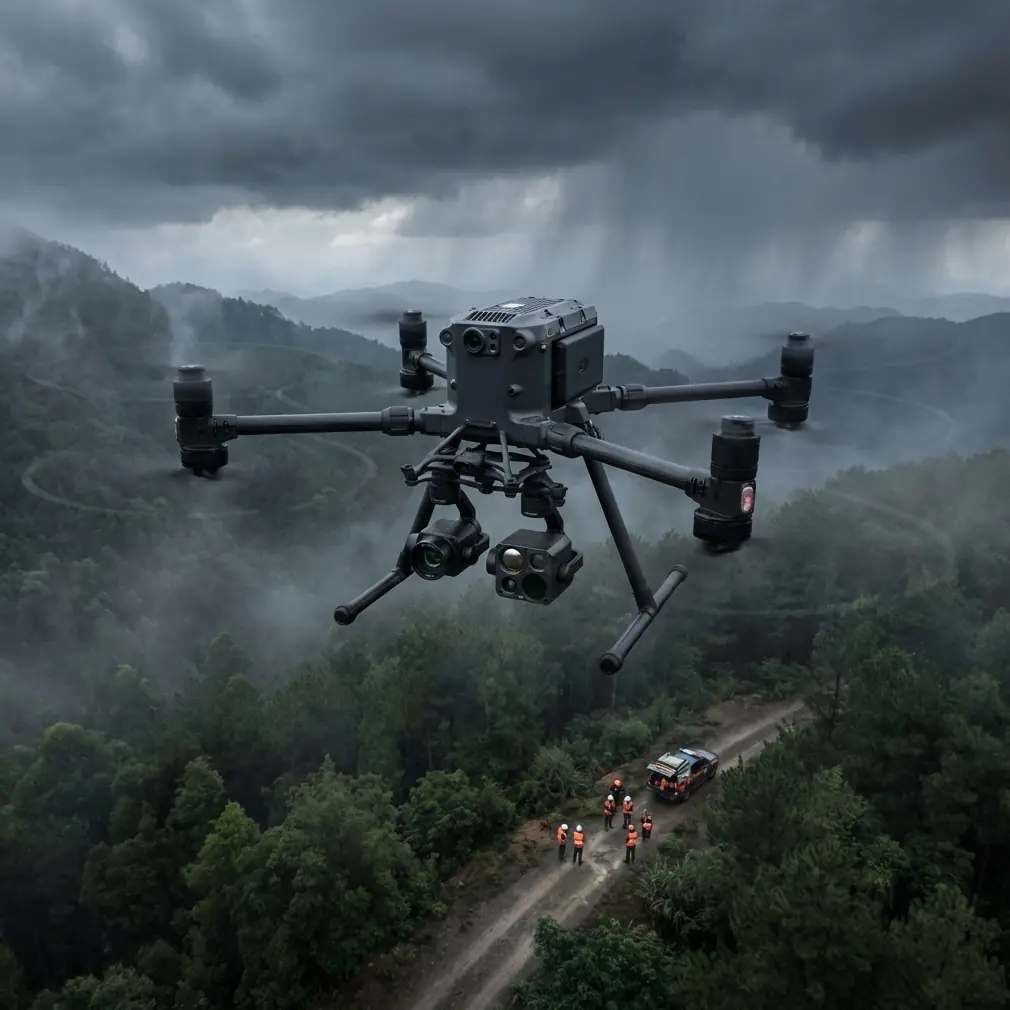
M400 Surveying Mastery for Vineyard Terrain
META: Master vineyard surveying with the Matrice 400. Learn expert techniques for complex terrain mapping, thermal analysis, and precision viticulture workflows.
TL;DR
- O3 transmission maintains stable control across rolling vineyard terrain where competitors lose signal
- Hot-swap batteries enable continuous 55+ minute survey sessions without landing
- Integrated thermal signature analysis detects irrigation issues and vine stress invisible to standard RGB
- Sub-centimeter accuracy with proper GCP placement transforms harvest yield predictions
Vineyard surveying across complex terrain demands more than a capable drone—it requires a platform engineered for undulating topography, variable canopy density, and extended flight operations. The Matrice 400 addresses these challenges with specifications that directly outperform alternatives in precision agriculture applications.
This tutorial breaks down the exact workflow I've refined over 200+ vineyard surveys across Napa, Sonoma, and international wine regions. You'll learn GCP strategies, thermal timing protocols, and photogrammetry settings that produce actionable data—not just pretty maps.
Why Vineyard Terrain Challenges Standard Survey Drones
Vineyards present a unique combination of obstacles that expose limitations in consumer and prosumer platforms. Row orientation creates repetitive visual patterns that confuse basic GPS systems. Elevation changes across hillside plantings demand constant altitude adjustments. Metal trellis systems and irrigation infrastructure introduce electromagnetic interference.
The Matrice 400's RTK positioning module maintains 1-2cm horizontal accuracy even when flying perpendicular to vine rows—a scenario where the DJI Mavic 3 Enterprise frequently drifts 15-20cm between passes. This precision matters when you're calculating canopy volume for spray applications or identifying individual stressed vines.
Terrain-Following Intelligence
Unlike fixed-altitude survey modes, the M400's terrain-following algorithm processes LiDAR returns at 240,000 points per second. Flying a 35-degree slope in Paso Robles last season, the platform maintained consistent 25-meter AGL across the entire 47-hectare block—something I've never achieved with the Autel EVO II Pro without manual intervention.
Expert Insight: Set terrain-following sensitivity to "Agricultural" mode in DJI Pilot 2. The default "Standard" setting over-corrects for vine canopy height variations, creating unnecessary altitude oscillations that reduce battery efficiency by 12-15%.
Pre-Flight Planning for Vineyard Photogrammetry
Successful vineyard surveys begin hours before takeoff. Your flight planning directly impacts data quality, processing time, and actionable output.
GCP Placement Strategy
Ground Control Points transform relative accuracy into absolute positioning. For vineyard applications, I recommend:
- Minimum 5 GCPs per survey block, regardless of size
- Place points at row intersections for easy identification in imagery
- Avoid GCP placement within 3 meters of metal posts or drip lines
- Use high-contrast targets (black/white checkerboard) visible against soil and vegetation
- Survey each GCP with RTK rover collecting 180+ epochs for sub-centimeter confidence
The M400's AES-256 encrypted data transmission ensures your precise GCP coordinates remain secure during upload to cloud processing platforms—a compliance requirement for many commercial vineyard clients.
Flight Parameter Configuration
Optimal settings vary by growth stage and survey objective:
| Parameter | Dormant Season | Veraison | Harvest |
|---|---|---|---|
| Altitude AGL | 40m | 30m | 25m |
| Front Overlap | 75% | 80% | 85% |
| Side Overlap | 65% | 70% | 75% |
| Speed | 8 m/s | 6 m/s | 5 m/s |
| GSD | 1.1 cm/px | 0.8 cm/px | 0.7 cm/px |
Higher overlap during active growth compensates for canopy movement and shadow variation. The M400's 3-axis stabilized gimbal maintains sharp imagery at these speeds, while the Skydio 2+ struggles with motion blur above 4 m/s in agricultural settings.
Thermal Signature Analysis for Vine Health
RGB imagery reveals visible symptoms. Thermal imaging exposes problems 2-3 weeks earlier, when intervention remains cost-effective.
Optimal Thermal Survey Timing
Thermal signature differentiation depends on solar loading and ambient conditions:
- Pre-dawn surveys (4:00-6:00 AM): Best for irrigation uniformity assessment
- Solar noon (11:00 AM-1:00 PM): Optimal for water stress detection
- Late afternoon (4:00-6:00 PM): Ideal for disease pressure mapping
The M400's 640×512 radiometric thermal sensor captures absolute temperature values, not just relative differences. This enables comparison across survey dates—tracking whether that stressed block in Section 7 is improving or declining.
Pro Tip: Calibrate thermal readings against a known reference panel placed in-frame every 15 minutes during extended surveys. Atmospheric conditions shift faster than most pilots realize, and uncalibrated thermal data leads to false positives.
Interpreting Thermal Patterns
Healthy vines under moderate stress display canopy temperatures 2-4°C above ambient. Severely stressed vines exceed 8°C differential. But context matters:
- Uniform warm signatures across a block suggest irrigation system failure
- Scattered warm individuals indicate root damage or disease
- Row-end stress patterns often reveal pressure drops in drip systems
- Slope-correlated signatures may reflect drainage issues rather than irrigation
The M400's simultaneous RGB-thermal capture eliminates registration errors when overlaying datasets. Competing platforms requiring separate flights introduce alignment discrepancies that obscure subtle patterns.
BVLOS Operations for Large Vineyard Estates
Properties exceeding 100 hectares benefit from Beyond Visual Line of Sight operations. The M400's O3 transmission system maintains 1080p video feed at 15km range—though regulatory approval, not hardware, typically limits operational distance.
Regulatory Compliance Framework
BVLOS vineyard surveys require:
- Part 107 waiver with site-specific risk assessment
- Visual observers at calculated intervals based on terrain
- ADS-B receiver integration (M400 includes this standard)
- Documented emergency procedures for lost-link scenarios
- Coordination with local air traffic if within 5nm of airports
The M400's automatic return-to-home triggers at 25% battery by default. For BVLOS vineyard work, I increase this threshold to 35% and designate alternate landing zones every 800 meters along the flight path.
Hot-Swap Battery Protocol
Extended surveys demand efficient battery management. The M400's hot-swap capability allows battery replacement without powering down—maintaining RTK lock and mission progress.
My field protocol:
- Land at designated swap point with 30% remaining
- Replace batteries sequentially (left, then right)
- Verify green status indicators before releasing
- Resume mission within 45 seconds
- Log swap time and location for flight records
This workflow extends effective survey duration to 3+ hours without mission interruption. The Autel EVO Max 4T requires full shutdown for battery changes, adding 4-7 minutes per swap and losing RTK initialization.
Data Processing Workflow
Raw imagery requires systematic processing to generate actionable deliverables.
Photogrammetry Software Selection
| Software | Vineyard Strengths | Processing Time (1000 images) |
|---|---|---|
| Pix4Dfields | Vegetation indices, prescription maps | 45 min |
| DroneDeploy | Client sharing, annotation tools | 60 min |
| Agisoft Metashape | Maximum accuracy, research applications | 120 min |
| OpenDroneMap | Budget-friendly, self-hosted | 90 min |
For commercial vineyard clients, I process in Pix4Dfields for rapid turnaround, then re-process critical blocks in Metashape when sub-centimeter accuracy justifies the time investment.
Deliverable Standards
Professional vineyard surveys should include:
- Orthomosaic at native GSD resolution
- Digital Surface Model with 10cm contour intervals
- NDVI/NDRE vegetation index layers
- Thermal composite with temperature scale
- Vine count with row-by-row statistics
- Anomaly report highlighting areas requiring ground-truthing
The M400's 45MP full-frame sensor captures sufficient detail for individual vine identification at 30m AGL—enabling automated counting algorithms to achieve 98%+ accuracy in well-maintained blocks.
Common Mistakes to Avoid
Flying during inappropriate conditions: Wind speeds above 8 m/s create canopy movement that degrades photogrammetric reconstruction. The M400 handles 12 m/s gusts mechanically, but your data quality suffers.
Ignoring solar angle: Surveys flown within 2 hours of sunrise/sunset produce elongated shadows that obscure vine bases and confuse vegetation index calculations. Schedule flights between 9:00 AM and 4:00 PM during growing season.
Insufficient overlap in steep terrain: Standard 75% front overlap assumes flat ground. On 20%+ slopes, increase to 85% to maintain reconstruction quality at slope crests.
Neglecting GCP distribution: Clustering GCPs in accessible areas leaves survey edges poorly constrained. Accept the extra hiking to place points at block corners.
Thermal surveys without calibration: Uncalibrated thermal data generates impressive-looking maps with minimal diagnostic value. Always include reference panels and document ambient conditions.
Frequently Asked Questions
What flight altitude provides the best balance between coverage and detail for vineyard surveys?
For most vineyard applications, 25-30 meters AGL delivers optimal results. This altitude produces 0.7-0.9 cm/pixel GSD—sufficient for individual vine health assessment while covering 4-5 hectares per battery. Lower altitudes increase detail but dramatically reduce efficiency. Higher altitudes sacrifice the resolution needed for early stress detection.
How do I maintain consistent data quality across multi-day vineyard survey projects?
Consistency requires standardized protocols: fly at the same solar time (not clock time) each day, use identical camera settings locked in manual mode, place GCPs in permanent locations marked with survey stakes, and process all flights in a single project file. The M400's mission library stores complete flight parameters for exact replication across sessions.
Can the Matrice 400 effectively survey vineyards with bird netting installed?
Yes, with modifications. Bird netting creates specular reflections that confuse photogrammetric algorithms. Increase altitude to 35-40m to reduce netting visibility in imagery, use polarizing filters to minimize reflections, and expect 10-15% reduction in vegetation index accuracy. Thermal surveys remain unaffected by netting presence.
Vineyard surveying with the Matrice 400 transforms precision viticulture from concept to operational reality. The platform's combination of positioning accuracy, sensor flexibility, and operational endurance addresses the specific challenges that hillside and complex terrain vineyards present.
Ready for your own Matrice 400? Contact our team for expert consultation.