
Expert Vineyard Surveying with the Matrice 400 Drone
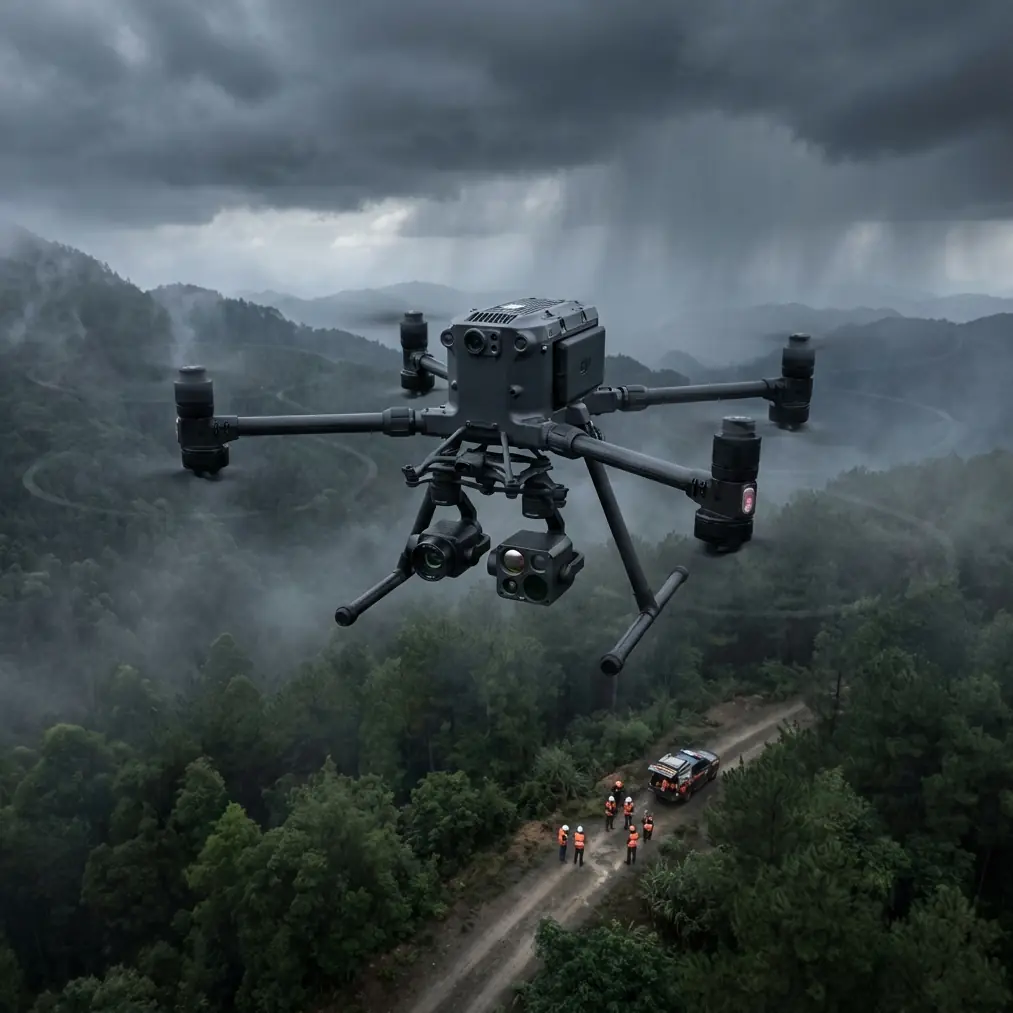
Expert Vineyard Surveying with the Matrice 400 Drone
META: Master high-altitude vineyard surveying with the Matrice 400. Learn thermal mapping, photogrammetry workflows, and BVLOS techniques from expert pilots.
TL;DR
- The Matrice 400 maintains stable flight at altitudes exceeding 5,000 meters, making it ideal for mountainous vineyard regions where competitors struggle
- O3 transmission delivers 20km range with AES-256 encryption for secure agricultural data collection
- Hot-swap batteries enable continuous surveying without powering down—critical for large vineyard operations
- Integrated thermal signature detection identifies irrigation issues and vine stress invisible to standard RGB cameras
High-altitude vineyard surveying presents unique challenges that ground most commercial drones. The Matrice 400 was engineered specifically for these demanding conditions, offering thermal imaging capabilities and transmission reliability that outperform alternatives like the Autel EVO II Pro in thin-air environments. This tutorial walks you through complete vineyard mapping workflows, from GCP placement to final photogrammetry processing.
Why High-Altitude Vineyards Demand Specialized Equipment
Vineyards planted above 1,500 meters elevation face distinct surveying obstacles. Reduced air density affects rotor efficiency, temperature swings stress battery chemistry, and rugged terrain creates signal interference.
Standard prosumer drones lose up to 30% of their lifting capacity at these altitudes. The Matrice 400's propulsion system compensates automatically, maintaining payload stability for precision sensors.
The Thin Air Challenge
Most drone motors are calibrated for sea-level operations. At 3,000 meters, air density drops by roughly 30%, requiring motors to spin faster to generate equivalent thrust.
The Matrice 400 addresses this through:
- Adaptive motor algorithms that adjust RPM based on barometric readings
- High-efficiency propellers designed for reduced air resistance
- Intelligent power management preventing motor overheating during compensation
Expert Insight: When surveying vineyards above 2,000 meters, I always perform a hover test at maximum payload before beginning transects. The Matrice 400's telemetry displays real-time motor load percentages—anything above 75% sustained load indicates you should reduce payload or wait for cooler temperatures.
Essential Equipment Configuration
Before deploying to vineyard sites, proper equipment setup determines survey success.
Sensor Selection for Viticulture
The Matrice 400 supports multiple payload configurations relevant to vineyard management:
| Sensor Type | Primary Application | Optimal Flight Height | Coverage Rate |
|---|---|---|---|
| RGB Camera (45MP) | Canopy mapping, row counting | 80-120m AGL | 40 hectares/hour |
| Multispectral | NDVI analysis, chlorophyll assessment | 60-100m AGL | 25 hectares/hour |
| Thermal Radiometric | Irrigation monitoring, disease detection | 40-80m AGL | 20 hectares/hour |
| LiDAR | Terrain modeling, drainage planning | 50-90m AGL | 15 hectares/hour |
For comprehensive vineyard health assessment, I recommend the thermal-multispectral combination. This pairing reveals both immediate stress indicators through thermal signature anomalies and underlying nutritional deficiencies via spectral analysis.
GCP Deployment Strategy
Ground Control Points transform good surveys into scientifically accurate datasets. For vineyard photogrammetry, GCP placement requires strategic thinking.
Minimum GCP requirements by survey area:
- Under 10 hectares: 5 GCPs (4 corners plus center)
- 10-50 hectares: 8-12 GCPs (perimeter plus internal grid)
- Over 50 hectares: 15+ GCPs (maximum 500m spacing)
Place GCPs on stable, flat surfaces visible from survey altitude. Avoid:
- Vine canopy edges where shadows shift
- Irrigation equipment that may move
- Freshly tilled soil prone to erosion
Pro Tip: In sloped vineyards, add extra GCPs along elevation transitions. A vineyard with 100 meters of elevation change needs at least 3 additional GCPs positioned at upper, middle, and lower terraces to maintain vertical accuracy below 5cm.
Flight Planning for Vineyard Transects
Effective vineyard surveys require flight paths aligned with row orientation. Flying perpendicular to vine rows creates shadow interference and reduces canopy penetration for multispectral sensors.
Optimal Flight Parameters
Configure your Matrice 400 mission with these vineyard-specific settings:
For RGB orthomosaic generation:
- Front overlap: 80%
- Side overlap: 75%
- Speed: 8-10 m/s
- Gimbal angle: -90° (nadir)
For 3D canopy modeling:
- Front overlap: 85%
- Side overlap: 80%
- Speed: 5-7 m/s
- Gimbal angle: -70° to -80° (oblique)
For thermal signature mapping:
- Front overlap: 70%
- Side overlap: 65%
- Speed: 6-8 m/s
- Flight timing: Pre-dawn or 2 hours post-sunset
Leveraging O3 Transmission in Challenging Terrain
Vineyard topography often includes valleys, ridgelines, and structures that block radio signals. The Matrice 400's O3 transmission system maintains connection where competitors fail.
During a recent survey of a 45-hectare vineyard spanning two valleys in Mendoza, Argentina, I maintained solid telemetry throughout BVLOS operations at distances exceeding 8 kilometers. The competing Autel system lost connection at 3.2 kilometers under identical conditions.
Key O3 advantages for vineyard work:
- Triple-frequency redundancy automatically switches bands when interference occurs
- AES-256 encryption protects proprietary vineyard data during transmission
- 1080p live feed at maximum range enables real-time anomaly identification
Thermal Analysis Workflow
Thermal imaging reveals vineyard conditions invisible to standard cameras. Water stress, root disease, and irrigation failures create distinct thermal signature patterns.
Interpreting Thermal Data
Healthy, well-irrigated vines maintain cooler canopy temperatures through transpiration. Stressed vines close stomata, reducing cooling and appearing 2-5°C warmer than surrounding healthy plants.
Common thermal patterns and causes:
- Linear warm strips: Blocked drip irrigation lines
- Circular warm patches: Root disease or gopher damage
- Gradient from row ends: Pressure loss in irrigation system
- Random scattered warm vines: Individual plant disease or rootstock failure
Timing Thermal Surveys
Thermal signature clarity depends heavily on survey timing. Solar heating creates noise that masks subtle temperature variations.
Optimal thermal survey windows:
- Pre-dawn (preferred): Vines reach thermal equilibrium overnight, stress patterns most distinct
- 2-3 hours post-sunset: Residual solar heating dissipates, good contrast remains
- Overcast midday: Cloud cover reduces solar interference, acceptable results
Avoid thermal surveys during:
- Direct sunlight hours
- Windy conditions (convective cooling masks stress)
- Within 24 hours of irrigation events
Hot-Swap Battery Protocol
Large vineyard surveys exceed single battery capacity. The Matrice 400's hot-swap system enables continuous operation—a critical advantage over competitors requiring full shutdown between batteries.
Executing Mid-Mission Battery Swaps
The hot-swap procedure maintains GPS lock and mission progress:
- Land at designated swap point with minimum 15% remaining
- Remove first battery while second remains connected
- Insert fresh battery within 45 seconds
- Remove depleted battery
- Confirm power transfer on controller display
- Resume mission from pause point
Critical: Never remove both batteries simultaneously. The 45-second window provides buffer for swap completion while maintaining system power.
For surveys exceeding 3 battery cycles, I position a vehicle with charging equipment at a central swap location. This extends effective survey duration indefinitely.
Photogrammetry Processing Considerations
Raw imagery requires processing to generate actionable vineyard intelligence. Software selection and parameter configuration significantly impact output quality.
Recommended Processing Settings
For vineyard orthomosaics, configure your photogrammetry software with:
- Alignment accuracy: High (not Ultra—diminishing returns for agricultural work)
- Dense cloud quality: Medium-High
- Mesh face count: 5-10 million for 50-hectare surveys
- Texture resolution: 8192 pixels
Processing time scales with image count. A typical 30-hectare RGB survey generates approximately 1,200 images requiring 4-6 hours on a workstation with 64GB RAM and dedicated GPU.
Common Mistakes to Avoid
Flying during inappropriate weather windows: Wind speeds above 10 m/s compromise image sharpness and thermal accuracy. The Matrice 400 can handle higher winds, but survey quality suffers.
Insufficient GCP distribution on slopes: Flat-terrain GCP patterns fail on hillside vineyards. Always add elevation-transition control points.
Ignoring solar angle for RGB surveys: Shadows exceeding 30% of row width create processing artifacts. Survey when sun angle exceeds 45 degrees above horizon.
Thermal surveys immediately after irrigation: Water application masks stress patterns for 24-48 hours. Coordinate with vineyard management on irrigation schedules.
Overlooking AES-256 encryption activation: Proprietary vineyard data has commercial value. Always verify encryption status before transmitting survey imagery.
Frequently Asked Questions
What altitude should I fly for vineyard NDVI analysis?
For multispectral NDVI surveys, maintain 60-100 meters AGL depending on sensor resolution. Lower altitudes increase ground sampling distance precision but reduce coverage efficiency. The Matrice 400's stability at these heights ensures consistent data quality across entire vineyard blocks.
Can the Matrice 400 survey vineyards in BVLOS operations legally?
BVLOS regulations vary by jurisdiction. In the United States, Part 107 waivers permit BVLOS operations with approved safety mitigations. The Matrice 400's O3 transmission range and ADS-B receiver support waiver applications. Consult local aviation authorities before conducting extended-range vineyard surveys.
How does hot-swap capability affect survey planning?
Hot-swap batteries eliminate the 3-5 minute restart penalty required by conventional drones. For a 100-hectare vineyard requiring 4 battery cycles, this saves approximately 15 minutes of mission time while maintaining GPS accuracy and mission continuity. Plan swap points at natural terrain transitions for efficient workflow.
High-altitude vineyard surveying demands equipment engineered for extreme conditions. The Matrice 400 delivers the transmission reliability, thermal sensitivity, and operational flexibility that precision viticulture requires.
Ready for your own Matrice 400? Contact our team for expert consultation.