
Matrice 400 Guide: Vineyard Surveying in Complex Terrain
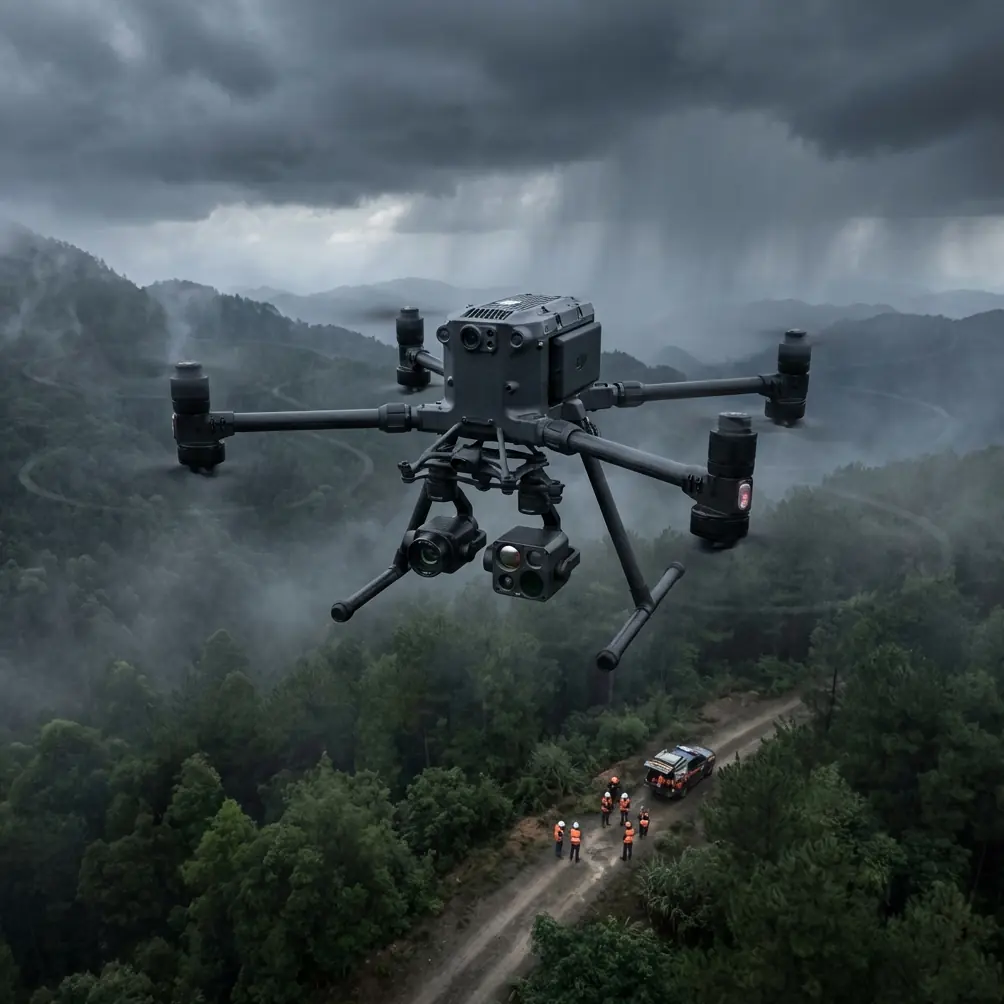
Matrice 400 Guide: Vineyard Surveying in Complex Terrain
META: Master vineyard surveying with the Matrice 400 drone. Expert guide covering antenna positioning, thermal imaging, and photogrammetry for precision viticulture.
TL;DR
- Antenna positioning at 45-degree angles maximizes O3 transmission range across undulating vineyard topography
- Thermal signature analysis detects irrigation inefficiencies and vine stress 3-4 weeks before visual symptoms appear
- Hot-swap batteries enable continuous 55+ minute mapping sessions across large vineyard blocks
- AES-256 encryption protects proprietary vineyard data during BVLOS operations
Vineyard managers lose thousands annually to undetected vine stress and irrigation failures. The Matrice 400 combines thermal imaging with precision photogrammetry to identify these problems weeks before they become visible—transforming reactive vineyard management into predictive agriculture.
This tutorial walks you through deploying the Matrice 400 for comprehensive vineyard surveys, from optimal antenna configuration to processing actionable thermal and multispectral data.
Why the Matrice 400 Excels in Vineyard Environments
Vineyards present unique surveying challenges. Steep hillsides, narrow row spacing, and variable canopy heights demand a drone platform that adapts to complex terrain while maintaining survey-grade accuracy.
The Matrice 400's omnidirectional obstacle sensing navigates between trellis systems without manual intervention. Its RTK positioning achieves 1 cm horizontal accuracy, essential for creating photogrammetry outputs that align perfectly with existing vineyard management software.
Key Specifications for Viticulture Applications
| Feature | Matrice 400 Specification | Vineyard Benefit |
|---|---|---|
| Flight Time | 55 minutes (max) | Survey 40+ hectares per battery set |
| Wind Resistance | 15 m/s | Reliable operation in exposed hillside vineyards |
| Operating Temp | -20°C to 50°C | Year-round surveying capability |
| Max Transmission | 20 km (O3 Enterprise) | Full estate coverage from single launch point |
| Payload Capacity | 2.7 kg | Supports thermal + multispectral sensor combinations |
| IP Rating | IP55 | Dust and moisture protection during harvest season |
Antenna Positioning for Maximum Range in Terrain
Expert Insight: The single biggest factor affecting your survey range isn't the drone—it's your controller antenna orientation. I've seen operators lose connection at 800 meters simply because their antennas pointed directly at the aircraft instead of perpendicular to it.
The Matrice 400's O3 transmission system uses phased-array antennas that broadcast in a disc-shaped pattern. Here's how to optimize positioning for vineyard terrain:
Step 1: Assess Your Survey Area Topology
Before launching, identify the lowest and highest points your drone will traverse. In vineyard environments, elevation changes of 50-100 meters across a single block are common.
Position yourself at mid-elevation when possible. This reduces the maximum vertical angle between controller and aircraft, keeping the drone within optimal antenna coverage.
Step 2: Orient Antennas Perpendicular to Flight Path
- Keep antennas vertical when the drone operates at similar elevation to your position
- Tilt antennas forward 15-20 degrees when surveying downslope sections
- Adjust to backward 15-20 degrees for upslope coverage
- Never point antenna tips directly at the aircraft
Step 3: Establish a Relay Point for BVLOS Operations
For estates exceeding 3 km in any dimension, position a secondary operator with a DJI Relay at the survey area's far boundary. The Matrice 400's AES-256 encrypted transmission maintains security across this extended network.
Thermal Signature Analysis for Vine Health Assessment
Thermal imaging reveals what visible light cannot: subsurface irrigation failures, early-stage disease, and root zone stress patterns.
Optimal Thermal Survey Timing
Conduct thermal flights during the pre-dawn window (30 minutes before sunrise to 15 minutes after) when:
- Soil and plant temperatures haven't equalized with ambient air
- Thermal contrast between healthy and stressed vines peaks at 2-4°C differential
- Wind speeds typically remain below 3 m/s, reducing thermal noise
Interpreting Thermal Signatures
| Thermal Pattern | Typical Cause | Action Required |
|---|---|---|
| Cool linear streaks | Irrigation line leaks | Ground inspection within 48 hours |
| Warm individual vines | Root damage or disease | Soil sampling and pathology testing |
| Cool vine clusters | Over-irrigation zones | Adjust drip emitter timing |
| Uniform warm blocks | Water stress across block | Increase irrigation immediately |
| Random warm spots | Canopy gaps (missing vines) | Replanting schedule update |
Pro Tip: Calibrate your thermal sensor against a black body reference at the start of each survey day. Temperature drift of even 0.5°C compounds across large datasets and corrupts your stress threshold analysis.
Photogrammetry Workflow for Vineyard Mapping
Creating accurate orthomosaics and elevation models requires proper GCP placement and flight planning specific to vineyard geometry.
GCP Placement Strategy
Ground Control Points establish absolute positioning accuracy. For vineyard photogrammetry:
- Place minimum 5 GCPs per survey block (one at each corner plus center)
- Position GCPs in row middles, not under canopy
- Use high-contrast targets (black and white checkerboard, minimum 30 cm diameter)
- Survey GCP coordinates with RTK receiver achieving < 2 cm accuracy
- Add 1 additional GCP per 10 hectares for large estates
Flight Planning Parameters
The Matrice 400's flight planning software accepts custom parameters optimized for row crops:
- Altitude: 80-100 meters AGL for 2.5 cm/pixel resolution
- Overlap: 80% frontal, 70% side overlap compensates for canopy parallax
- Flight direction: Perpendicular to row orientation reduces shadow interference
- Speed: 8-10 m/s balances image sharpness with survey efficiency
- Gimbal angle: Nadir (-90°) for orthomosaics; -75° for 3D reconstruction
Processing Considerations
Vineyard photogrammetry challenges standard processing algorithms. Repetitive row patterns can confuse feature-matching software.
Mitigate this by:
- Including vineyard edges and access roads in survey boundaries
- Processing blocks smaller than 50 hectares individually
- Using "high" keypoint density settings despite longer processing times
- Enabling rolling shutter compensation for thermal sensor data
Leveraging Hot-Swap Batteries for Extended Operations
The Matrice 400's hot-swap battery system eliminates the need for landing between battery changes—a significant advantage when surveying remote hillside blocks.
Hot-Swap Procedure
- Fly to a stable hover at 30 meters AGL over safe terrain
- First operator maintains manual control
- Second operator removes depleted battery from port A
- Insert fresh battery within 45 seconds (battery B maintains power)
- Repeat for battery B after port A indicates full charge acceptance
- Resume survey mission from pause point
This technique extends effective flight time to continuous 4+ hour operations with sufficient battery inventory.
Common Mistakes to Avoid
Surveying during midday thermal equilibrium: Thermal data collected between 11 AM and 3 PM shows minimal contrast between stressed and healthy vines. Schedule thermal flights for early morning or late afternoon.
Ignoring wind effects on data quality: Wind speeds above 8 m/s cause canopy movement that blurs multispectral imagery and distorts thermal readings. Monitor conditions continuously.
Insufficient GCP density on slopes: Flat-ground GCP formulas underestimate requirements for terrain. Add 30% more GCPs when elevation change exceeds 5% across your survey area.
Flying below optimal altitude: Lower isn't always better. At 50 meters AGL, canopy texture dominates imagery and obscures soil-level data. Maintain 80+ meter altitude for vineyard surveys.
Neglecting BVLOS regulations: Even on private property, operations beyond visual line of sight require specific authorization. Verify your regulatory compliance before executing extended-range missions.
Frequently Asked Questions
What payload configuration works best for vineyard health monitoring?
Combine the Zenmuse H30 thermal camera with a multispectral sensor for comprehensive vine analysis. Thermal data identifies irrigation issues and acute stress, while multispectral bands (particularly red-edge at 730 nm) detect chlorophyll variations indicating nutrient deficiencies. The Matrice 400 supports dual payload mounting without compromising flight stability.
How often should vineyards be surveyed during growing season?
Survey frequency depends on management intensity. Minimum recommended schedule: bi-weekly from bud break through veraison, weekly during ripening, and monthly during dormancy for infrastructure monitoring. High-value blocks under precision management benefit from weekly thermal surveys throughout the growing season.
Can the Matrice 400 operate in vineyard microclimates with fog?
The IP55 rating protects against moisture, but fog degrades both visual and transmission performance. Avoid operations when visibility drops below 3 km. Morning fog typically clears by mid-morning—schedule your pre-dawn thermal flights before fog formation or wait for burn-off. The O3 transmission system tolerates light moisture but loses range in heavy fog conditions.
Ready for your own Matrice 400? Contact our team for expert consultation.