
Matrice 400 Coastline Tracking: A Field Case Study
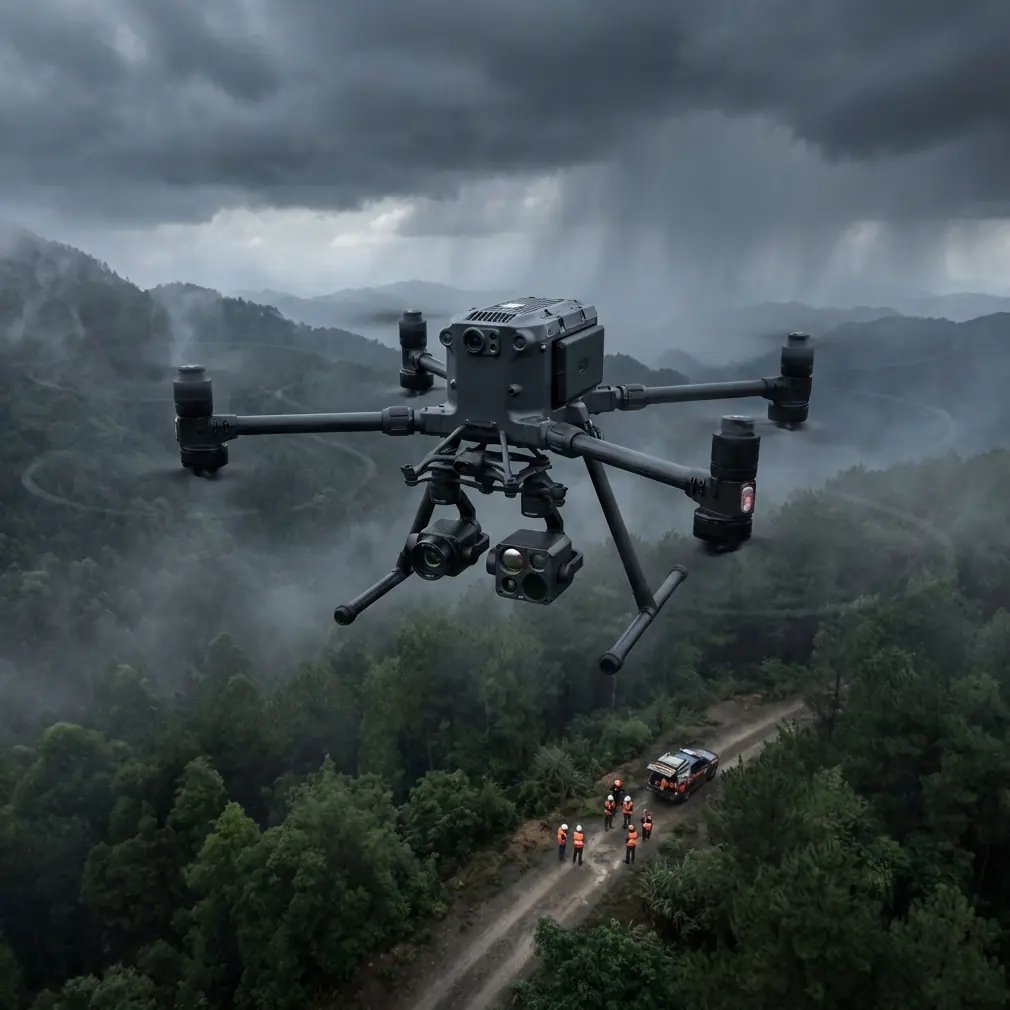
Matrice 400 Coastline Tracking: A Field Case Study From Remote Survey Operations
META: Expert Matrice 400 coastline tracking case study covering thermal signature work, photogrammetry, O3 transmission, AES-256 security, hot-swap battery planning, and BVLOS-ready field workflow.
Remote coastline work exposes every weak point in an aircraft program. Salt haze cuts contrast. Wind shifts faster than inland crews expect. Landing zones are uneven, wet, and often far from the target area. If the mission involves tracking shoreline change, spotting thermal anomalies near outfalls, or building repeatable photogrammetry datasets for erosion analysis, the aircraft matters—but the workflow matters more.
That is where the Matrice 400 conversation gets interesting.
Rather than treating the platform as a spec sheet, it makes more sense to look at how it performs in a demanding use case: remote coastline tracking. This is the kind of mission profile where endurance, payload flexibility, transmission stability, and battery discipline stop being abstract features and start determining whether the team comes home with usable data.
I’ve worked enough shoreline jobs to know that coastal missions fail for very ordinary reasons. A crew burns time relocating to regain signal behind a dune line. A battery swap resets the tempo and creates gaps in a tidal-change sequence. A thermal run starts too late in the morning, after the sand and rocks begin radiating enough heat to flatten the contrast you were trying to isolate. None of those problems are fixed by marketing language. They are fixed by operational design.
Why the Matrice 400 Fits Remote Coastline Tracking
The Matrice 400 is compelling for coastal work because these missions usually combine several tasks in one deployment.
You may need a high-overlap photogrammetry run to document erosion, then a lower, slower pass to inspect sea walls or revetments, then a thermal sweep to look for water intrusion, stranded debris, or heat signatures that should not be there. If the shoreline is long and access points are sparse, the aircraft also has to maintain stable links over irregular terrain and hold up under long duty cycles.
That is why details such as O3 transmission and AES-256 are operationally relevant, not decorative. A strong long-range transmission architecture matters on coastlines because terrain near water is deceptive. You may have clean line-of-sight over a beach, then lose link quality once the aircraft moves past bluffs, vegetation, harbor structures, or bends in the shore. A robust O3 link reduces the number of repositioning moves your crew has to make, which preserves mission continuity and limits unnecessary battery consumption.
AES-256 matters for a different reason. A lot of coastline work is not just environmental monitoring. It can involve critical infrastructure, protected habitats, utilities, ports, or incident response. If you are collecting sensitive imagery around shoreline assets, transmission security is part of the mission design, not an afterthought. Teams that operate near pipelines, treatment sites, substations, or restricted waters need confidence that their data path is protected. On paper, encryption sounds like an IT detail. In practice, it can determine whether a flight program is approved at all.
The Mission Profile: Tracking a Remote Coastal Segment
Let’s build this around a realistic deployment.
A survey team is tasked with documenting a remote coastal stretch that includes soft sediment shoreline, a rock revetment, and a marsh edge feeding into a tidal inlet. The objective is twofold: produce a consistent photogrammetry model for change detection and identify possible thermal irregularities near a drainage outfall at dawn before solar heating contaminates the scene.
This is exactly the kind of mixed mission where the Matrice 400 earns its keep.
The crew stages from a rough access point several kilometers from the area of interest. Vehicle support is limited. Walking batteries and payloads back and forth costs time and energy. The team needs to capture overlapping nadir imagery for mapping, oblique angles around the hardened shoreline section, and a thermal sequence during a narrow environmental window.
Under those conditions, hot-swap batteries stop being a convenience and become a continuity tool.
If you have ever tried to monitor subtle tide-driven changes or maintain identical acquisition conditions across repeated flights, you know the problem: every full shutdown introduces delay, temperature drift, and crew friction. With hot-swap capability, the operator can keep the platform active through battery changes instead of treating each replacement like a complete reset. That preserves the workflow, especially when your shoreline target is changing minute by minute.
The practical value is bigger than the phrase suggests. On a remote coast, a hot-swap-ready routine can be the difference between capturing one continuous morning dataset and ending up with mismatched image blocks collected under different light, tide, and wind conditions.
A Battery Management Tip That Actually Saves Missions
Here is the field tip I give crews after enough coastal deployments have gone sideways: do not wait for your battery warning logic to dictate the swap point when flying long shoreline legs.
That sounds obvious. It is not. Many teams get comfortable with nominal battery behavior from inland flights, then bring the same habits to the coast. Over water and along exposed shorelines, headwinds and temperature shifts can punish that assumption fast.
My rule is simple. Build your swap decision around the return segment under worst-case wind, not around the outbound performance you are seeing in calm moments. If the aircraft is moving efficiently down-coast with a tailwind, that does not mean the battery is healthy for the trip back. It means the wind has hidden the true cost of the mission.
With the Matrice 400, hot-swap batteries help you maintain tempo, but they do not remove the need for disciplined reserve planning. For shoreline work, I like crews to identify a “hard turn point” before takeoff. Once the aircraft reaches that geographic trigger—or once battery reserve hits the predefined margin, whichever comes first—the outbound leg ends. No debate in the field. No “one more pass.” That single rule prevents a surprising number of rushed recoveries.
Another coastal wrinkle: battery temperature management. Packs that sit in open wind on a cold dawn launch or bake in direct sun between sorties can produce inconsistent performance. Keep them sheltered, monitor pack temperature before launch, and rotate them deliberately rather than grabbing the nearest set. The aircraft can only be as predictable as the energy system feeding it.
Photogrammetry on the Shoreline: Where Consistency Beats Speed
A lot of operators underestimate how difficult coastal photogrammetry really is. Water surfaces produce weak reconstruction cues. Wet sand changes reflectance quickly. Small wave patterns create visual noise. Vegetation at the marsh edge moves between passes. Add low-angle sun, and your overlap plan can fall apart even if the aircraft itself performs perfectly.
For the Matrice 400, the real advantage is not simply that it can carry capable imaging payloads. It is that the platform supports a stable acquisition workflow when conditions are marginal.
If your goal is change detection, consistency is the asset. Fly repeatable lines. Maintain conservative overlap. Use GCP placement where the site allows it, especially on stable inland-adjacent points that remain visible across survey intervals. In remote shoreline environments, crews sometimes skip ground control because access is difficult. That is understandable, but it usually shows up later as weaker registration confidence when comparing models over time.
GCP strategy matters even more when you are trying to quantify shoreline retreat or monitor built coastal defenses. A beautiful map is not enough. You need positional repeatability that supports decisions. If one monthly dataset drifts because your control plan was too loose, the project loses more than polish—it loses trust.
The Matrice 400’s role here is to make those disciplined capture standards easier to execute over a long day, not to replace them.
Thermal Signature Work: Timing Is Everything
The phrase thermal signature gets thrown around too loosely in drone operations. On the coast, the difference between useful thermal data and noisy thermal imagery is usually timing, not sensor brand.
If the mission includes checking an outfall, drainage path, or suspected seepage zone, early morning is often the best window because the temperature contrast is still meaningful. Once sun exposure starts heating rocks, sand, and manmade surfaces unevenly, the scene becomes crowded with false visual interest. Your target may still be there, but it gets buried in background thermal clutter.
This is where the Matrice 400’s endurance and workflow continuity help the crew exploit a narrow window instead of wasting it. You can prioritize the thermal pass first, while the site is still quiet thermally, then transition to photogrammetry after the sun lifts enough to improve visible-light texture and contrast.
That sequence matters operationally. I have seen teams reverse it, spend the best thermal window on mapping, and then wonder why the later thermal imagery looks indecisive. The issue was never the sensor. It was the mission order.
On remote coastline jobs, thermal also benefits from slower, more intentional passes. You are not just searching for obvious hotspots. Sometimes you are looking for subtle temperature deviations where freshwater mixing, infrastructure leaks, trapped moisture, or biological activity shifts the pattern. That requires stable aircraft behavior, careful angle selection, and an operator who understands what the shoreline should look like before deciding something is abnormal.
BVLOS Thinking Starts Before Takeoff
Even when a specific mission is not flown under BVLOS authority, the planning mindset is useful. Remote coastlines force crews to think in extended corridors, sparse access points, and constrained recovery options. Those are BVLOS-style operational problems even under visual line-of-sight execution.
The Matrice 400 is well suited to that type of planning because it supports long linear inspections and broad-area survey logic. But the real gain comes from how you build the operation around it.
That means defining contingency landing zones before launch. It means validating communications coverage for the crew vehicle. It means documenting shoreline hazards, local bird activity, and interference sources near marine infrastructure. It also means knowing when not to chase the last segment of coastline on the same sortie.
Many professional teams focus heavily on aircraft capability and not enough on corridor management. For remote shoreline work, corridor management is the mission.
What Makes This Platform Useful, Not Just Impressive
The most valuable thing about the Matrice 400 in this context is not any single line item. It is the way several capabilities reinforce each other.
- O3 transmission supports stable control and video awareness over awkward shoreline geometry.
- AES-256 helps meet the security expectations that often surround coastal infrastructure and regulated sites.
- Hot-swap batteries reduce operational dead time during narrow acquisition windows.
- Payload flexibility allows one platform to support mapping and thermal tasks in the same field day.
- BVLOS-ready planning logic aligns naturally with long, remote coastal corridors.
That combination makes the aircraft especially practical for teams doing repeat environmental monitoring, shoreline asset inspection, habitat documentation, or incident support in places where access is difficult and timing is unforgiving.
If you are building a coastline workflow around the Matrice 400, my advice is simple: do not obsess over theoretical maximums. Focus on repeatability. Set hard battery turn points. Protect your thermal window. Treat GCP planning as part of the survey, not an optional add-on. Use transmission strength to preserve mission flow rather than merely extending distance. And if your work touches sensitive shoreline assets, take the security stack seriously.
Those are the habits that turn a capable aircraft into a reliable coastal operations tool.
If you are comparing notes with other operators running remote shoreline missions, this quick field chat link is a practical place to continue the conversation.
Ready for your own Matrice 400? Contact our team for expert consultation.