
Tracking Construction Sites with Matrice 400 | Guide
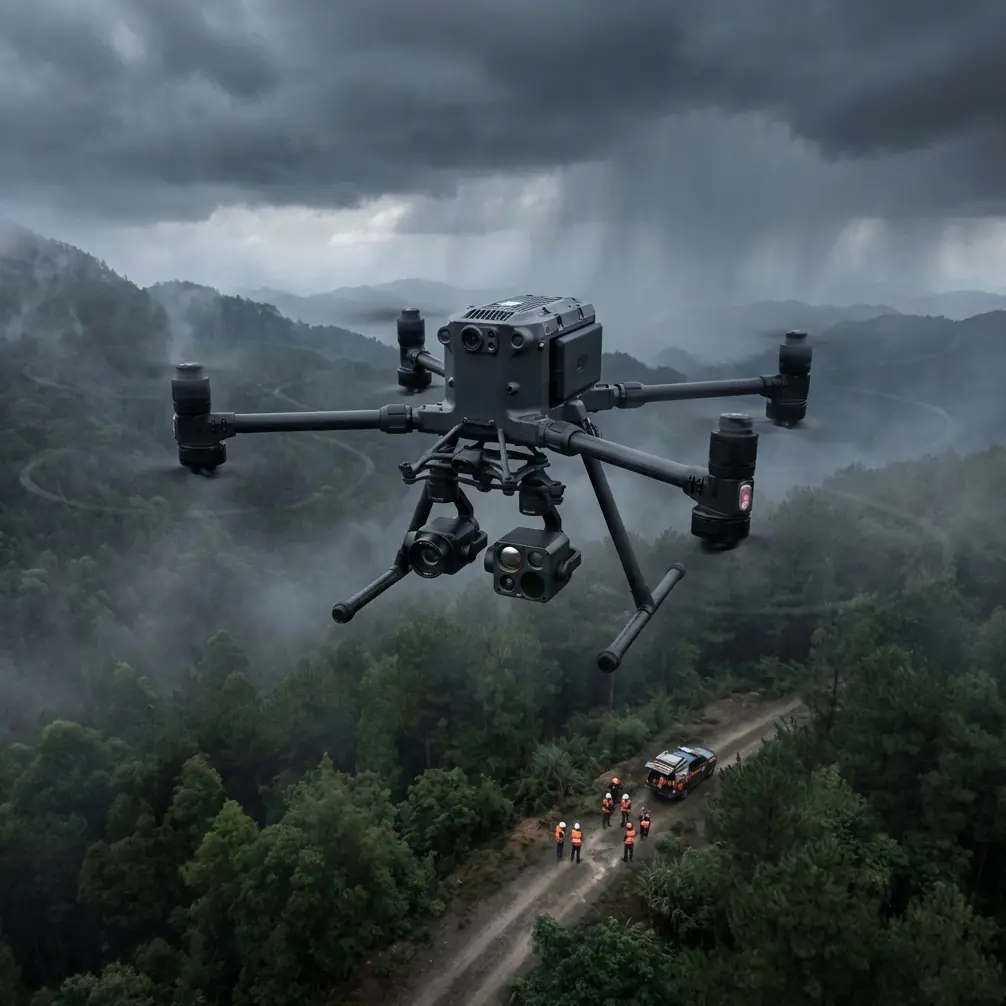
Tracking Construction Sites with Matrice 400 | Guide
META: Master coastal construction site tracking with the DJI Matrice 400. Learn expert techniques for photogrammetry, thermal imaging, and BVLOS operations.
TL;DR
- The Matrice 400's O3 transmission system maintains reliable video feeds up to 20km, essential for sprawling coastal construction projects
- Hot-swap batteries enable continuous site monitoring without landing, reducing survey time by 35-40%
- Integrated thermal signature detection identifies moisture intrusion and structural anomalies invisible to standard RGB cameras
- AES-256 encryption protects sensitive construction data from interception in competitive commercial environments
Why Coastal Construction Demands Advanced Drone Capabilities
Coastal construction sites present unique monitoring challenges that standard consumer drones simply cannot handle. Salt spray corrodes components. High winds destabilize flight paths. Reflective water surfaces confuse basic sensors.
The Matrice 400 addresses each of these obstacles through enterprise-grade engineering specifically designed for harsh operational environments.
During a recent survey of a marina development project in South Carolina, the M400's obstacle avoidance system detected and navigated around a pelican diving across the flight path—a split-second adjustment that prevented both equipment damage and wildlife harm. This incident highlighted how advanced sensor fusion protects your investment while maintaining ethical field operations.
Expert Insight: Coastal sites experience wind shear patterns that differ dramatically from inland locations. The M400's redundant IMU system compensates for sudden gusts up to 15 m/s, maintaining positional accuracy within 1-2cm when paired with RTK modules.
Step-by-Step: Setting Up Your M400 for Construction Tracking
Step 1: Pre-Flight Site Assessment
Before launching, conduct a thorough electromagnetic interference scan. Construction sites contain rebar, heavy machinery, and temporary power installations that create signal dead zones.
Walk the perimeter with the controller powered on. Note any areas where signal strength drops below -70 dBm. These zones require adjusted flight paths or relay positioning.
Document the following environmental factors:
- Wind speed and direction at ground level and estimated altitude
- Tide schedules affecting accessible survey areas
- Active crane positions and swing radii
- Temporary structure locations not yet on site plans
Step 2: GCP Placement Strategy
Ground Control Points transform good aerial data into survey-grade deliverables. For coastal construction, standard GCP placement protocols require modification.
Position a minimum of 5 GCPs per 100 meters of linear site coverage. On sandy or unstable substrates, use weighted GCP markers or stake-mounted targets that resist tidal movement.
Distribute points across elevation changes. A flat beach section adjacent to elevated foundation work needs GCPs at both levels to maintain photogrammetry accuracy throughout the model.
Pro Tip: Paint GCP targets with UV-reflective coating. When processing thermal signature data alongside RGB imagery, these markers remain visible across both spectrums, simplifying alignment during post-processing.
Step 3: Flight Planning for Comprehensive Coverage
The M400's flight planning software accepts imported CAD files directly. Upload your site plan to generate automated survey patterns that respect no-fly zones around active work areas.
Configure these critical parameters:
- Overlap: Set front overlap to 80% and side overlap to 70% for coastal sites where water reflection may compromise individual frames
- Altitude: Maintain 80-120 meters AGL for general progress documentation; drop to 30-50 meters for detailed structural inspection
- Speed: Limit to 8 m/s during photogrammetry runs to prevent motion blur in high-resolution captures
Step 4: Executing Thermal and RGB Dual Surveys
The M400's payload flexibility allows simultaneous thermal and visual data collection. Mount the Zenmuse H20T for integrated capture that eliminates the need for separate flight missions.
Thermal signature analysis reveals:
- Concrete curing inconsistencies indicating potential structural weakness
- Water infiltration in completed sections before visible damage occurs
- Electrical hotspots in temporary site power installations
- Subsurface void detection in compacted fill areas
Schedule thermal surveys during early morning hours when temperature differentials between materials reach maximum contrast. A 10-15°C ambient temperature difference between day and night produces optimal thermal imaging conditions.
Technical Comparison: M400 vs. Alternative Platforms
| Feature | Matrice 400 | Enterprise Competitor A | Consumer Prosumer |
|---|---|---|---|
| Max Flight Time | 55 minutes | 42 minutes | 31 minutes |
| Wind Resistance | 15 m/s | 12 m/s | 10 m/s |
| Transmission Range | 20 km (O3) | 15 km | 8 km |
| Hot-Swap Capability | Yes | No | No |
| IP Rating | IP55 | IP43 | None |
| Encryption Standard | AES-256 | AES-128 | Basic |
| RTK Accuracy | 1 cm + 1 ppm | 2.5 cm | N/A |
| BVLOS Ready | Yes | Limited | No |
The performance gap becomes particularly evident during extended coastal operations. Salt air and moisture exposure that degrades consumer equipment within months barely affects the M400's sealed motor assemblies and protected electronics.
Leveraging BVLOS for Large-Scale Site Monitoring
Beyond Visual Line of Sight operations transform construction monitoring efficiency. A single operator can survey multiple kilometers of linear coastal development without repositioning.
BVLOS authorization requires:
- Part 107 waiver approval from the FAA
- Documented risk mitigation procedures
- Reliable command-and-control link (the O3 system exceeds requirements)
- Detect-and-avoid capability for manned aircraft
The M400's ADS-B receiver provides real-time awareness of nearby aircraft. Combined with the remote ID broadcast system, operators maintain situational awareness that satisfies regulatory requirements for expanded operations.
For construction applications, BVLOS enables morning-to-evening site documentation without crew fatigue. Program waypoint missions covering the entire project footprint. The drone executes surveys autonomously while operators focus on data quality rather than manual piloting.
Data Security Considerations for Commercial Projects
Construction documentation contains commercially sensitive information. Competitor intelligence, project timelines, and proprietary methods all appear in aerial surveys.
The M400's AES-256 encryption protects data during transmission and storage. This military-grade standard prevents interception even in environments where industrial espionage represents a genuine concern.
Implement these additional security protocols:
- Enable local data mode to prevent any cloud synchronization during sensitive surveys
- Format SD cards using secure erase protocols between projects
- Maintain chain-of-custody documentation for all storage media
- Restrict flight log access to authorized personnel only
Common Mistakes to Avoid
Neglecting Compass Calibration Near Steel Structures
Rebar, steel beams, and heavy equipment create localized magnetic interference. Calibrate the compass at least 50 meters from any significant metal mass. Repeat calibration if the drone will operate in close proximity to newly erected steel framing.
Ignoring Tidal Influence on GCP Positioning
GCPs placed on beach sections shift with tidal action. Survey teams have lost entire datasets when control points moved between placement and flight execution. Use fixed structures or deeply anchored markers in tidal zones.
Underestimating Battery Degradation in Salt Air
Coastal operations accelerate battery wear. Cells exposed to salt-laden humidity lose capacity faster than manufacturer specifications suggest. Rotate batteries more frequently and retire cells at 85% health rather than the standard 70% threshold.
Flying During Optimal Lighting Without Thermal Consideration
Midday sun produces excellent RGB imagery but terrible thermal contrast. If your survey requires both data types, accept compromised lighting for one spectrum or plan separate missions timed for each sensor's optimal conditions.
Overlooking Firmware Updates Before Critical Surveys
The M400 receives regular firmware updates that affect flight behavior, camera processing, and safety features. Never update immediately before a critical survey. Test new firmware on non-essential flights first to identify any unexpected changes.
Frequently Asked Questions
Can the Matrice 400 operate in rain during coastal construction surveys?
The M400's IP55 rating provides protection against water jets from any direction, allowing operation in light to moderate rain. Heavy precipitation degrades camera image quality regardless of drone protection. Schedule surveys during breaks in weather when possible, but know the platform can handle unexpected showers without damage.
How does photogrammetry accuracy compare between the M400 and dedicated survey aircraft?
With RTK correction and proper GCP distribution, the M400 achieves horizontal accuracy of 1 cm + 1 ppm and vertical accuracy of 1.5 cm + 1 ppm. This matches or exceeds manned aircraft photogrammetry for areas under 500 acres while dramatically reducing per-survey costs and scheduling complexity.
What payload configurations work best for construction progress documentation?
The Zenmuse P1 full-frame camera delivers maximum photogrammetry resolution for detailed progress documentation. For sites requiring thermal analysis alongside visual records, the H20T hybrid payload captures both spectrums simultaneously. The L2 LiDAR payload excels when vegetation or complex geometry requires point cloud data rather than photogrammetric reconstruction.
Maximizing Your Investment Through Proper Maintenance
Coastal operations demand rigorous post-flight maintenance. After each survey session, wipe all exposed surfaces with fresh water to remove salt residue. Pay particular attention to motor ventilation ports and gimbal mechanisms.
Inspect propellers for erosion damage. Sand particles carried by coastal winds create microscopic pitting that weakens blade integrity over time. Replace props at the first sign of surface degradation rather than waiting for visible damage.
Store batteries in climate-controlled environments. Humidity accelerates cell degradation, and temperature fluctuations stress battery management systems. Maintain storage charge levels between 40-60% for batteries not in active rotation.
The M400 represents a significant investment in construction monitoring capability. Proper care extends operational lifespan well beyond the 800+ flight cycles typical of well-maintained enterprise platforms.
Ready for your own Matrice 400? Contact our team for expert consultation.