
Tracking Solar Farms in Extreme Temperatures With Matrice 40
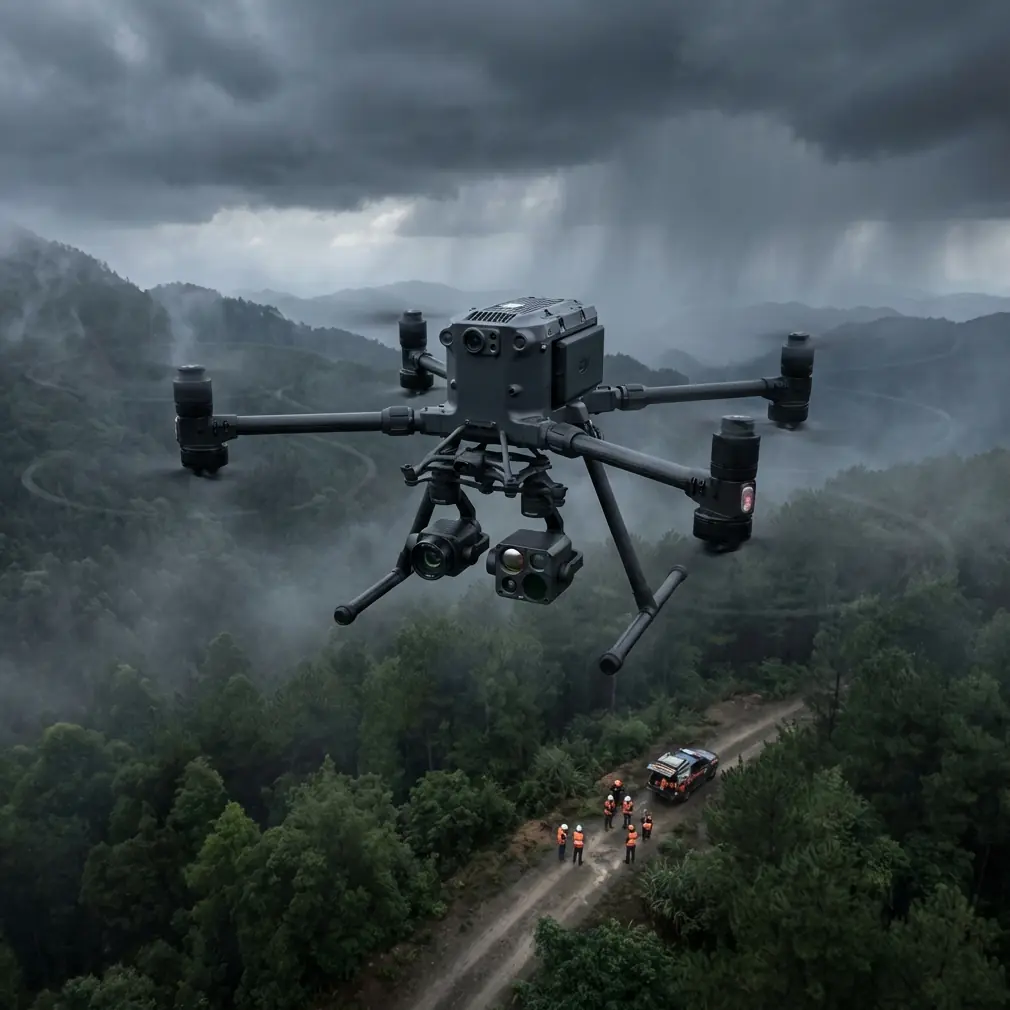
Tracking Solar Farms in Extreme Temperatures With Matrice 400: A Field Case Study
META: A real-world Matrice 400 case study on solar farm inspection in extreme heat and shifting weather, covering thermal signature capture, photogrammetry, GCP workflow, O3 transmission, AES-256 security, hot-swap batteries, and BVLOS planning.
By James Mitchell
A solar farm can look stable from the perimeter. Rows are straight. Inverters hum. Production charts may even look normal. Then you fly it properly and find the truth: one string is running hotter than the rest, a few modules are drifting thermally before failure, and a drainage issue has started to shift ground conditions beneath a section of racking.
That gap between “looks fine” and “is fine” is where the Matrice 400 earns its place.
I recently worked through a solar inspection scenario built around one of the harder versions of the job: a utility-scale site in extreme temperatures, with a weather window that narrowed halfway through the mission. The objective was not just to collect images. We needed decision-grade data. That meant thermal signature consistency, repeatable photogrammetry, reliable command-and-control links across a broad site, and enough endurance to avoid wasting the day in battery-change downtime.
The Matrice 400 is often discussed in broad terms. That misses the point. On a solar farm, what matters is whether the aircraft can maintain data quality when the environment starts working against you.
The operating problem
Solar sites punish weak workflows.
By late morning, panel temperatures can spike far beyond ambient air temperature. Heat shimmer distorts visual data. Ground crews are spread out. Reflective surfaces create exposure challenges. If you are inspecting at scale, you also have distance to manage, often beyond what feels comfortable for a short-range setup. Add wind shifts, rising thermals, and a forecast that turns unstable after lunch, and you no longer have a neat survey problem. You have a timing problem, a consistency problem, and a risk-management problem.
In this case, the site team wanted three outcomes from a single deployment:
- Identify thermal anomalies before they showed up as serious production losses.
- Generate photogrammetric outputs accurate enough to compare drainage and grading changes against prior site records.
- Keep operations moving despite heat stress and changing weather.
That combination is exactly why aircraft choice matters. A drone can be excellent at collecting pretty footage and still be a poor fit for solar diagnostics. The Matrice 400, by contrast, is built for long, structured work where payload performance, signal confidence, and mission continuity all affect the usefulness of the final data.
Why the Matrice 400 fits this kind of inspection
For solar work, the aircraft is only as valuable as the consistency it brings to the entire inspection chain.
The first operational advantage is endurance. Long flight time changes how you plan a solar mission. Instead of dividing the site into too many fragments and accepting overlaps, repeated takeoffs, and uneven thermal timing, you can map larger blocks in a tighter time band. That matters because thermal data loses value when one section was captured under noticeably different surface heating than another.
The second advantage is transmission reliability. On a solar farm, especially one with long rows and dispersed infrastructure, maintaining stable downlink quality is not a luxury. DJI’s O3 transmission system matters here because inspection crews need clean situational awareness and dependable control response over distance. That reduces the need to reposition constantly and helps preserve mission geometry. If you are operating under a BVLOS framework where local rules, approvals, and safety procedures allow it, robust transmission becomes even more central to the job.
The third advantage is operational continuity. Hot-swap batteries are not a brochure detail. On a large energy site, they are the difference between a smooth handoff and a broken workflow. When the aircraft can stay ready while batteries are exchanged efficiently, the crew spends less time rebuilding the mission mentally and more time preserving inspection cadence.
And then there is data security. Utility clients and EPC contractors increasingly ask how mission data is handled, especially when infrastructure imagery and asset condition reports are involved. AES-256 support is significant because it addresses a real concern in enterprise drone work: not just getting the data, but protecting the transmission environment around it.
The mission plan before the weather turned
We launched early to stay ahead of peak thermal noise, but not so early that the panels had not yet developed useful contrast.
The site was divided into thermal blocks first, photogrammetry blocks second. That order was deliberate. When people try to do both without prioritizing environmental timing, thermal analysis often suffers. We used ground control points, or GCPs, around key areas where historical settling and drainage were already under discussion. GCP-backed mapping is one of those steps that some teams skip because the site “already has coordinates.” That is usually a mistake.
For this mission, the GCP workflow mattered for a practical reason: management did not just want defect images. They wanted to compare current conditions against earlier grading assumptions and identify whether standing water and minor erosion near one portion of the site might be contributing to structural stress. Photogrammetry without disciplined ground reference can be useful. Photogrammetry with GCPs becomes much more defensible when teams are making maintenance decisions from it.
We also built the route to capture the panels at an angle and altitude that balanced thermal interpretability with efficient coverage. A common failure in solar inspection is flying too high, too fast, and too late in the day, then acting surprised when the thermal output is noisy and hard to classify.
Mid-flight, the weather changed
This was the part that turned a routine mission into a useful test.
About halfway through the second block, surface wind picked up and the cloud pattern changed quickly. That is a frustrating combination for solar inspection. Wind alters cooling behavior. Passing cloud cover changes irradiance. Both can affect thermal signature consistency across the array. If your platform or your crew cannot adapt fast, the whole dataset starts to drift in quality.
The Matrice 400 handled the transition the way a professional aircraft should: not dramatically, just competently.
Control remained steady. The O3 link stayed reliable enough that we did not have to break off simply because the weather became less cooperative. Just as importantly, the aircraft gave us the confidence to pause, tighten the next leg of the mission, and prioritize the most production-critical rows before the cloud layer thickened further.
That sounds minor until you have been on jobs where a weaker platform turns a weather shift into a reset. Here, the mission changed, but it did not collapse.
We made one battery transition during the adjusted inspection sequence, and the hot-swap workflow kept the aircraft available without creating a long interruption. On a warm day, that matters more than many teams admit. Every extra minute on the ground can push your next thermal pass into different environmental conditions. When you are comparing panel behavior row to row, those differences stack up.
What the data actually revealed
The thermal review flagged a cluster of modules with elevated heat patterns that did not match neighboring strings. Not catastrophic, but clear enough to warrant targeted electrical testing. This is where thermal inspection earns its keep. You are not waiting for a major underperformance event. You are catching patterns while they are still manageable.
The visual and photogrammetric outputs told a second story.
Near one inverter zone, the terrain model showed subtle but meaningful surface changes around drainage pathways. Not dramatic washout. Not a headline problem. But enough to justify a site engineering review before the next weather cycle made it worse. Without tying photogrammetry to GCPs, that conclusion would have carried less weight. With them, the site team had a stronger basis for comparing present conditions against previous survey records.
This dual outcome is worth emphasizing because it reflects how solar farms are actually managed. Operators do not need a drone that can do one clever thing. They need a system that can support asset health analysis and site condition tracking in the same workday.
The operational significance of O3, AES-256, and hot-swap batteries
These terms get thrown around loosely, so let’s pin them to real inspection value.
O3 transmission is not just about range on paper. On a utility-scale solar site, it supports cleaner command confidence and better live visibility across long corridors of panels and equipment. That translates into fewer unnecessary repositionings, fewer broken mission lines, and more stable collection under expansive-site conditions.
AES-256 is not there for decoration. Commercial energy clients are increasingly serious about cybersecurity, especially when imagery, asset layouts, and condition reports move through digital workflows. Strong transmission security helps drone teams meet enterprise expectations instead of treating them as an afterthought.
Hot-swap batteries directly affect data continuity. In thermal work, continuity is a quality variable. If your battery process is clumsy, you may unintentionally create environmental inconsistency between survey sections. Efficient swaps help preserve the comparability of results.
Those are three separate technical details, but on a solar farm they combine into one operational truth: the platform helps keep the mission coherent.
Where BVLOS planning starts to matter
Solar sites are one of the clearest examples of why professional teams keep discussing BVLOS.
Even when the current job is conducted conservatively and within the applicable local operating framework, the layout of large photovoltaic facilities naturally favors workflows that reduce repeated repositioning and fragmented flight segments. The Matrice 400 makes sense in that context because its transmission performance and enterprise design support disciplined long-corridor planning. That does not mean casual long-range flying. It means a platform that aligns with how industrial inspection is increasingly structured when regulations, waivers, observers, and safety management systems permit broader operating envelopes.
For asset owners thinking long term, this matters. A drone program should not only solve today’s line-of-sight task. It should fit the inspection architecture they are building toward.
Lessons from flying in extreme temperatures
Extreme temperature work exposes bad assumptions.
One, do not rely on nominal flight capability alone. You need a platform that can hold mission discipline when heat, glare, and atmospheric instability start introducing small errors. Small errors become bad maintenance decisions.
Two, thermal and mapping goals should be sequenced intentionally. If thermal contrast is time-sensitive, prioritize it. Photogrammetry can follow with its own quality controls.
Three, use GCPs whenever the outputs may influence engineering or drainage discussions. “Close enough” geospatial work tends to become expensive later.
Four, assume the weather window will tighten. Build your route so the most valuable asset zones are captured first.
And five, treat transmission quality and battery handling as data-quality issues, not just convenience features.
A practical note for solar operators considering this workflow
If you are assessing whether the Matrice 400 fits your site, do not start with aircraft specs in isolation. Start with the failure modes you are trying to reduce.
Are you missing early thermal anomalies because your inspection timing is inconsistent? Are you struggling to compare one mission block against another because battery changes and resets keep stretching the day? Do you need both thermal review and defensible terrain or surface modeling tied to GCPs? Do your stakeholders care about secure data handling? Are you planning for larger corridor-style inspections where O3 transmission and future BVLOS-oriented workflows matter?
Those are the right questions.
If you want to discuss how that setup would look on your own array, this is a practical place to start a field conversation: message our inspection team.
The bigger takeaway
What stood out in this case was not that the Matrice 400 survived a warm day at a solar farm. Plenty of aircraft can get airborne in heat. The real test was whether it could preserve inspection quality once the weather shifted mid-flight and the mission had to be reprioritized without wasting the site’s thermal window.
It did.
That is why the Matrice 400 makes sense for solar operators working in harsh conditions. Not because it sounds advanced, but because the details actually connect: O3 transmission for confidence across large sites, AES-256 for enterprise-grade data protection, hot-swap batteries for mission continuity, and a workflow that supports both thermal signature analysis and GCP-backed photogrammetry in one coherent operation.
On paper, those are features. In the field, they become fewer missed defects, better-maintained schedules, and more trustworthy site intelligence.
Ready for your own Matrice 400? Contact our team for expert consultation.