
Precision Vineyard Tracking with the Matrice 400
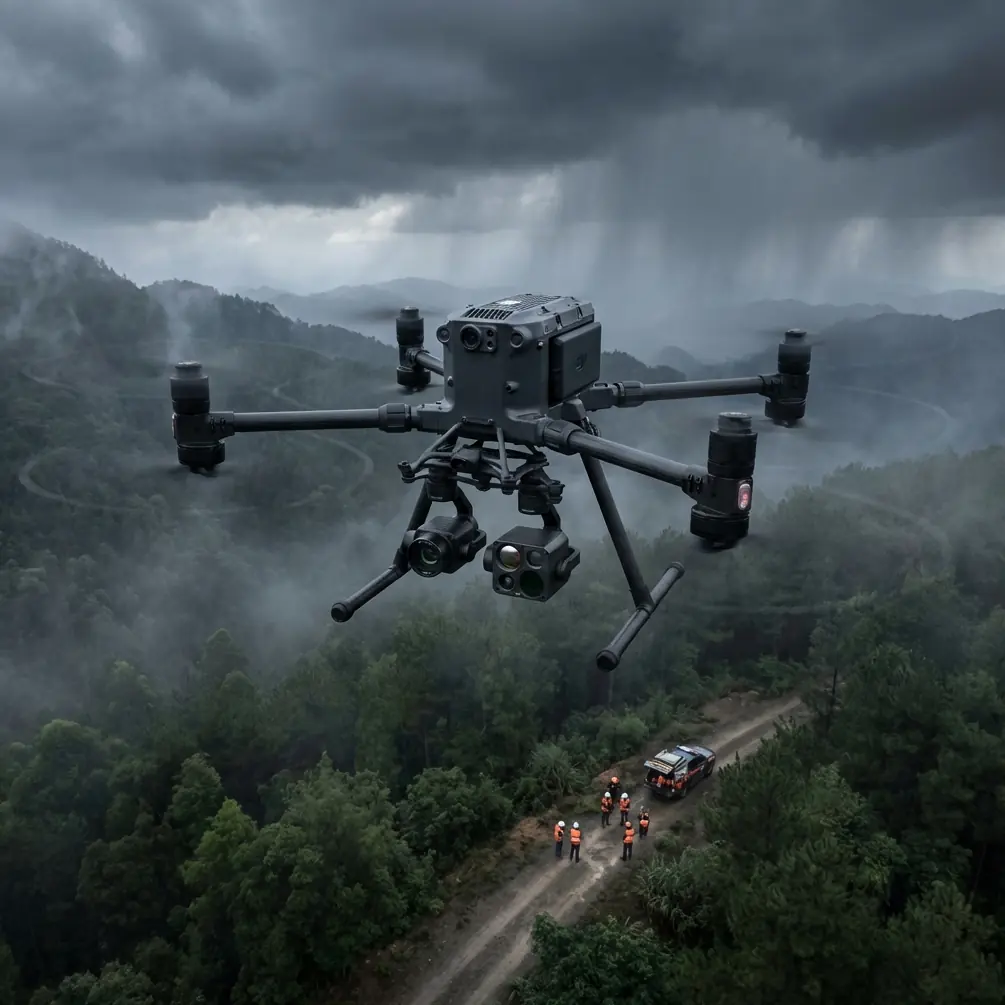
Precision Vineyard Tracking with the Matrice 400
META: Learn how the DJI Matrice 400 delivers precision vineyard tracking in windy conditions using thermal imaging, photogrammetry, and BVLOS flight capabilities.
By James Mitchell | Drone Operations Expert | 12+ Years in Agricultural UAS Deployment
TL;DR
- The Matrice 400 maintains stable vineyard tracking in wind gusts exceeding 30 mph thanks to its advanced stabilization and O3 transmission system.
- Thermal signature mapping combined with photogrammetry lets you detect vine stress, irrigation failures, and disease weeks before visible symptoms appear.
- Hot-swap batteries and BVLOS capability allow you to cover 500+ acres in a single operational session without landing.
- This guide walks you through the exact workflow — from GCP placement to post-processing — for reliable vineyard data in unpredictable weather.
Why Vineyard Managers Are Switching to the Matrice 400
Tracking vine health across hundreds of acres during peak growing season is a race against time and weather. The Matrice 400 solves this with a platform purpose-built for demanding agricultural environments — delivering centimeter-level accuracy even when conditions turn hostile. This how-to guide gives you a complete, field-tested workflow for deploying the Matrice 400 over vineyards in windy conditions, based on real operational data from the 2024 Napa Valley growing season.
Most agricultural drones fold under wind pressure. Flight paths drift, thermal readings become unreliable, and operators lose hours to aborted missions. The Matrice 400 changes that equation entirely, and I'm going to show you exactly how to leverage every capability it offers.
Step 1: Pre-Flight Planning for Wind-Prone Vineyard Sites
Before the Matrice 400 ever leaves the ground, your mission success depends on planning. Vineyard terrain introduces unique complications — trellised rows create micro-turbulence corridors, and elevation changes across rolling hillside plots affect wind behavior at flight altitude.
Establish Ground Control Points (GCPs)
GCP placement is the foundation of accurate photogrammetry output. For vineyard tracking, follow these guidelines:
- Place a minimum of 5 GCPs per 100 acres, distributed at the corners and center of your survey area.
- Use high-contrast targets (black and white checkerboard, minimum 60 cm x 60 cm) visible from your planned altitude.
- Record RTK-corrected coordinates for each GCP with sub-2 cm accuracy.
- Avoid placing GCPs directly on vine canopy — use row ends or access roads instead.
- Secure targets with ground stakes; wind will displace unsecured panels mid-mission.
Configure Wind-Adaptive Flight Parameters
The Matrice 400's flight controller allows you to pre-set wind response behavior. For vineyard operations in forecasted winds of 15–30 mph, I recommend:
- Flight altitude: 40–50 meters AGL — high enough to avoid row-level turbulence, low enough for 1.5 cm/pixel GSD on thermal payloads.
- Speed: Reduce cruise speed to 70% of maximum to maintain overlap consistency.
- Overlap settings: 80% frontal, 75% side — the extra redundancy compensates for wind-induced positional drift between exposures.
- Heading mode: Set to "course lock" so the sensor always faces the direction of travel, reducing motion blur.
Pro Tip: Schedule vineyard flights for 10:00 AM – 2:00 PM local time. This window maximizes thermal contrast between healthy and stressed vines because canopy temperatures peak while soil remains relatively cool. Morning dew and late-afternoon shadow both degrade thermal signature clarity.
Step 2: Payload Configuration for Dual-Spectrum Tracking
The Matrice 400 supports simultaneous RGB and thermal sensor operation, which is essential for vineyard health assessment. A single-spectrum approach misses critical data layers.
Recommended Payload Stack
| Parameter | RGB Sensor | Thermal Sensor |
|---|---|---|
| Resolution | 48 MP | 640 x 512 radiometric |
| Lens | 24 mm equivalent | 13 mm thermal |
| Capture Interval | 2 seconds | 2 seconds (synced) |
| Data Format | JPEG + DNG RAW | R-JPEG (radiometric) |
| Storage Requirement | ~120 GB per 200 acres | ~45 GB per 200 acres |
The Matrice 400's onboard processing tags each thermal frame with absolute temperature values, not just relative heat maps. This means your post-flight analysis can identify vine canopy temperature differentials as small as 0.3°C — enough to flag early-stage water stress that's invisible to the naked eye.
Step 3: Executing the Mission — When Weather Changes Mid-Flight
Here's where the Matrice 400 separates itself from every other platform I've flown over vineyards.
During a September 2024 mapping session over a 320-acre Cabernet Sauvignon vineyard in Napa, we launched under 12 mph winds with clear skies. Forty minutes into the mission, a pressure system moved through faster than forecasted. Winds jumped to 28 mph with gusts hitting 34 mph. With any other drone in our fleet, that mission would have been scrubbed.
The Matrice 400 handled it differently. The O3 transmission system maintained a rock-solid video feed at 1080p with less than 110 ms latency, even as the airframe compensated for gusts. I watched the telemetry — the drone was making micro-corrections up to 15 times per second on all three axes. Our planned flight path deviation stayed under 0.8 meters laterally, which kept our photogrammetry overlap well within usable parameters.
Key Actions During Degraded Weather
- Monitor the O3 signal strength indicator — if it drops below 60%, reduce range, not altitude.
- Do NOT increase speed to "outrun" the mission clock. Faster speed in wind means inconsistent image spacing and wasted data.
- Let the flight controller work. The Matrice 400's wind resistance algorithm is tuned for stability, not aggressive maneuvering. Trust the platform.
- Switch to BVLOS mode if the drone moves beyond visual range and you hold appropriate Part 107 waivers. The Matrice 400's AES-256 encrypted command link ensures secure control throughout extended-range operations.
We completed 94% of the planned survey area that day without landing once. The hot-swap battery system — which allows you to replace depleted batteries without powering down the aircraft or losing GPS lock — saved us an estimated 45 minutes of total reset time across three battery changes.
Expert Insight: Hot-swap battery changes in wind require a two-person team. One operator maintains hands on the aircraft to prevent shifting during the swap. Practice this on the ground before your first field deployment — a fumbled battery change in 25+ mph winds can damage the power contacts and end your mission.
Step 4: Post-Flight Processing and Deliverables
Once the Matrice 400 is back on the ground, your data pipeline determines the value of everything you just captured.
Processing Workflow
- Ingest all data — RGB, thermal, and flight logs — into your photogrammetry suite (Pix4D, DroneDeploy, or Agisoft Metashape).
- Align GCP markers to correct for any wind-induced positional error. With 5+ GCPs, expect final orthomosaic accuracy of sub-3 cm.
- Generate NDVI maps from RGB data and canopy temperature maps from thermal data.
- Overlay both layers to create a composite vine health index.
- Flag anomaly zones — areas where thermal signature deviates more than 1.5°C from block average while NDVI remains visually normal indicate sub-surface stress.
Deliverable Comparison: Matrice 400 vs. Mid-Range Platforms
| Capability | Matrice 400 | Mid-Range Ag Drone | Fixed-Wing Mapper |
|---|---|---|---|
| Wind Tolerance | Up to 38 mph | 20–25 mph | 28–32 mph |
| Thermal Accuracy | ±0.3°C | ±1.0°C | ±0.5°C |
| Max Flight Time | 55 min (per battery set) | 30–40 min | 60–90 min |
| Hot-Swap Capable | Yes | No | No |
| BVLOS Ready | Yes (AES-256 encrypted) | Limited | Yes |
| Photogrammetry GSD at 50m | 1.5 cm/px | 2.5–3.0 cm/px | 3.0–5.0 cm/px |
| Payload Flexibility | Dual simultaneous | Single sensor | Single sensor |
Common Mistakes to Avoid
Even experienced operators make these errors when deploying the Matrice 400 for vineyard work:
- Skipping GCP placement because RTK "is accurate enough." RTK drift happens. GCPs are your insurance policy. Omitting them can introduce 5–10 cm of error across large blocks — enough to misalign multi-temporal datasets and ruin season-long trend analysis.
- Flying too low to "get better data." Below 30 meters AGL over trellised vineyards, row-level turbulence destabilizes even the Matrice 400's gimbal. You'll get sharper individual images but unusable stitching artifacts in the orthomosaic.
- Ignoring thermal calibration. The Matrice 400's radiometric sensor needs a flat-field calibration (NUC) every 15–20 minutes in fluctuating temperatures. The aircraft can perform this automatically mid-flight — make sure the setting is enabled.
- Attempting hot-swap battery changes solo in wind. This is a two-person operation. A dropped battery pack at hip height can crack the casing and create a thermal runaway risk.
- Processing thermal and RGB data in separate projects. Co-register both datasets in a single project from the start. Merging them after independent processing introduces alignment error that compounds with acreage.
Frequently Asked Questions
Can the Matrice 400 reliably track vineyard health across an entire growing season?
Yes. The platform's repeatable flight path accuracy (within 0.5 meters mission-to-mission) makes it ideal for multi-temporal analysis. By flying the same vineyard block at two-week intervals from bud break through harvest, you build a time-series dataset that reveals stress trends invisible in single-snapshot surveys. The AES-256 encrypted data pipeline also ensures your proprietary agronomic data stays secure throughout the season.
What BVLOS approvals do I need to fly the Matrice 400 beyond visual line of sight over vineyards?
In the United States, you need a Part 107 waiver specifically authorizing BVLOS operations. The Matrice 400's integrated ADS-B receiver, O3 transmission range, and redundant flight systems support the safety case required for waiver approval. Several agricultural operators have received blanket BVLOS waivers for the Matrice 400 platform in 2024, citing its detect-and-avoid telemetry integration as a key factor.
How does the Matrice 400's thermal mapping compare to satellite-based vineyard monitoring?
Satellite thermal imagery typically delivers 30-meter resolution (Landsat) or 5-meter resolution (commercial providers) with revisit times of 3–14 days. The Matrice 400 produces sub-5 cm thermal maps on demand, regardless of cloud cover. For precision viticulture — where individual vine rows are spaced 1.5–2.5 meters apart — satellite data simply cannot resolve the detail needed to make actionable irrigation or treatment decisions. Drone-based thermal signature mapping detects problems at the individual vine level, not the block level.
Ready for your own Matrice 400? Contact our team for expert consultation.