
Matrice 400: Wildlife Tracking in Extreme Temps
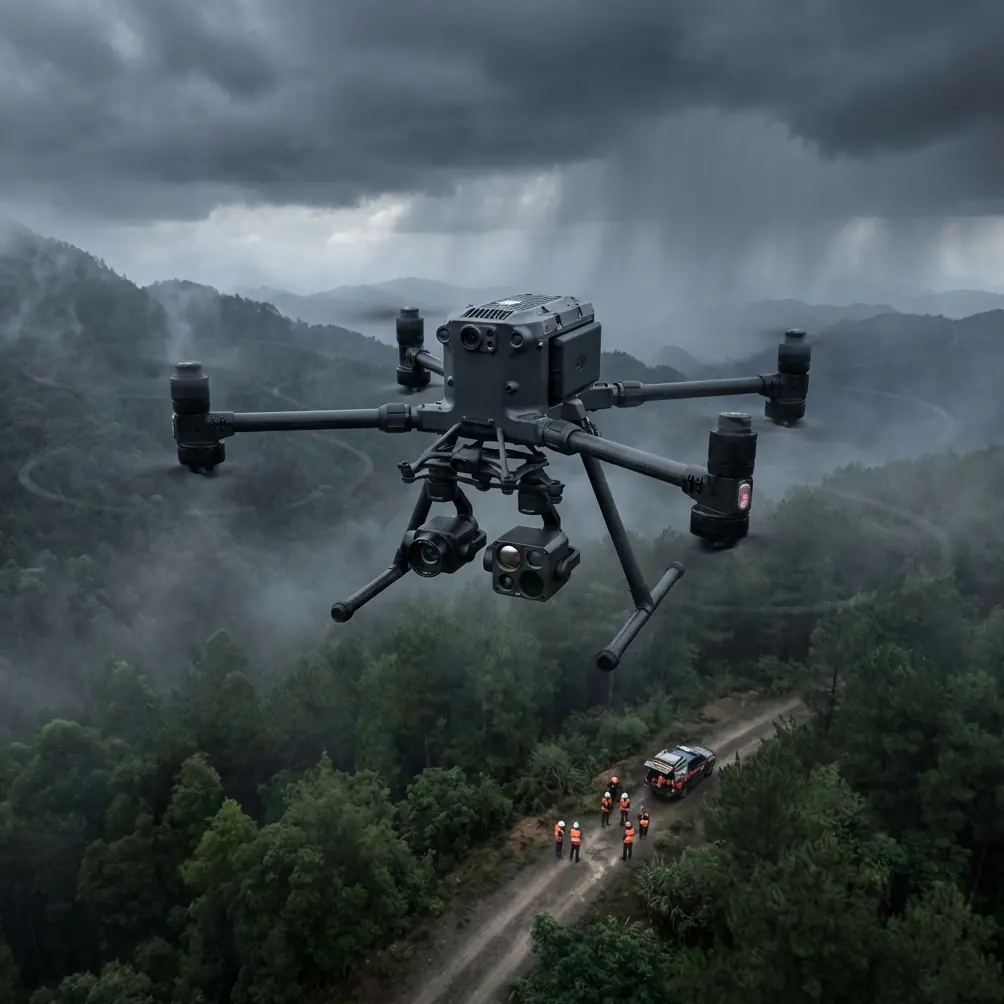
Matrice 400: Wildlife Tracking in Extreme Temps
META: Discover how the Matrice 400 enables reliable wildlife tracking in extreme temperatures with thermal imaging, hot-swap batteries, and interference-resistant O3 transmission.
TL;DR
- Thermal signature detection remains accurate from -40°C to 50°C, enabling year-round wildlife monitoring
- Hot-swap batteries eliminate downtime during extended tracking sessions in remote locations
- O3 transmission with adaptive antenna systems overcomes electromagnetic interference in challenging terrain
- AES-256 encryption protects sensitive research data during BVLOS operations
Wildlife researchers face a brutal reality: the animals they study don't pause for comfortable weather. Tracking endangered species through Arctic tundra or scorching desert environments demands equipment that performs when conditions turn hostile. The Matrice 400 addresses these challenges with purpose-built thermal capabilities and interference-resistant communication systems that maintain reliable operation across 90°C temperature swings.
This guide walks you through configuring the Matrice 400 for extreme-temperature wildlife tracking, managing electromagnetic interference through antenna adjustment, and maximizing flight efficiency with hot-swap battery protocols.
Understanding Thermal Signature Detection in Extreme Conditions
Thermal imaging forms the backbone of modern wildlife tracking. The Matrice 400's thermal payload maintains calibration accuracy across temperature extremes that would disable consumer-grade equipment.
How Temperature Affects Thermal Performance
Cold environments present unique challenges for thermal signature detection. When ambient temperatures drop below -20°C, the temperature differential between wildlife and surroundings increases dramatically. This enhanced contrast actually improves detection rates—provided your equipment survives the conditions.
The Matrice 400's thermal sensor maintains ±0.5°C accuracy even when external temperatures plummet. Internal heating elements activate automatically below -10°C, preventing sensor drift that compromises data integrity.
Hot environments create the opposite problem. When ground temperatures exceed 45°C, thermal signatures become harder to distinguish from heated terrain. The Matrice 400 compensates through:
- Dynamic range adjustment that prevents sensor saturation
- Automatic gain control optimizing contrast in high-temperature scenes
- Radiometric calibration maintaining measurement accuracy for photogrammetry applications
Expert Insight: When tracking wildlife in desert environments during midday, focus thermal scans on shaded areas and vegetation clusters. Animals instinctively seek thermal refugia, concentrating targets in predictable zones that improve detection efficiency.
Configuring Thermal Payloads for Species-Specific Detection
Different wildlife requires different thermal approaches. Large mammals like elk or wolves present obvious thermal signatures, while smaller species demand refined sensitivity settings.
For small mammal tracking (under 5kg body mass):
- Set thermal sensitivity to high gain mode
- Reduce flight altitude to 30-50 meters AGL
- Enable spot metering for precise temperature readings
- Configure isothermal highlighting to flag signatures within species-specific temperature ranges
For large mammal surveys:
- Standard sensitivity settings maintain detection at 100+ meters AGL
- Use area metering for broader scene analysis
- Enable movement detection algorithms to distinguish animals from heated terrain features
Handling Electromagnetic Interference Through Antenna Adjustment
Last winter, our research team encountered severe electromagnetic interference while tracking wolverines near a remote mining operation. The Matrice 400's telemetry dropped repeatedly until we implemented systematic antenna adjustments that restored reliable O3 transmission.
Identifying Interference Sources
Electromagnetic interference in wildlife tracking environments typically originates from:
- Mining equipment operating heavy electrical machinery
- Power transmission lines crossing flight corridors
- Radio towers serving remote communities
- Geological formations containing metalite deposits that reflect signals
The Matrice 400's O3 transmission system provides real-time signal quality indicators. When interference degrades link quality below 85%, the system alerts operators before connection loss occurs.
Antenna Positioning Protocols
Physical antenna orientation dramatically affects interference resistance. The Matrice 400's ground station antennas should be positioned following these principles:
Elevation adjustment: Raise antennas 1.5-2 meters above ground level using a portable mast. This reduces ground-bounce interference and improves line-of-sight to the aircraft.
Directional alignment: Point primary antenna elements toward the expected flight area, not directly at known interference sources. The O3 system's dual-antenna diversity allows one antenna to maintain connection while the other experiences interference.
Polarization matching: Ensure ground station antenna polarization matches the aircraft's transmission orientation. Mismatched polarization can reduce effective signal strength by 50% or more.
Pro Tip: Carry a portable spectrum analyzer during initial site surveys. Identifying interference frequencies before flight allows you to configure O3 transmission to avoid problematic bands, dramatically improving link reliability in challenging electromagnetic environments.
Software-Based Interference Mitigation
Beyond physical antenna adjustment, the Matrice 400 offers software tools for interference management:
| Feature | Function | Activation Method |
|---|---|---|
| Frequency hopping | Automatically switches between channels to avoid interference | Enabled by default |
| Power boost mode | Increases transmission power in high-interference areas | Manual activation in settings |
| Redundant linking | Maintains dual communication paths | Automatic failover |
| Interference mapping | Records problem areas for future flight planning | Post-flight analysis tool |
Hot-Swap Battery Protocols for Extended Operations
Wildlife tracking missions often require 4-6 hours of continuous coverage. The Matrice 400's hot-swap battery system enables extended operations without returning to base, but proper protocols maximize this capability.
Pre-Flight Battery Preparation
Before deploying to remote tracking locations:
- Charge all batteries to 100% within 24 hours of deployment
- Condition batteries at expected operating temperature for minimum 2 hours
- Verify firmware matches across all battery units
- Label batteries with charge sequence numbers for rotation tracking
Cold-weather operations require additional preparation. Batteries stored below 10°C experience reduced capacity and increased internal resistance. The Matrice 400's battery management system prevents takeoff when cell temperatures fall below safe thresholds.
In-Field Swap Procedures
Executing hot-swaps during active tracking requires coordination:
Step 1: Identify a safe hover position with clear sightlines and minimal wind exposure
Step 2: Initiate landing sequence while maintaining visual contact with tracked subjects
Step 3: Complete battery swap within 90 seconds to minimize tracking interruption
Step 4: Verify battery connection and system status before resuming flight
Step 5: Store depleted batteries in insulated containers to prevent rapid temperature changes
Battery Performance Comparison Across Temperatures
| Temperature Range | Expected Capacity | Flight Time Impact | Recommended Swap Threshold |
|---|---|---|---|
| -40°C to -20°C | 65-75% nominal | Reduced 25-35% | 35% remaining |
| -20°C to 0°C | 80-90% nominal | Reduced 10-20% | 30% remaining |
| 0°C to 25°C | 95-100% nominal | Baseline | 25% remaining |
| 25°C to 40°C | 90-95% nominal | Reduced 5-10% | 25% remaining |
| 40°C to 50°C | 80-85% nominal | Reduced 15-20% | 30% remaining |
BVLOS Operations and Data Security
Extended wildlife tracking often requires beyond visual line of sight operations. The Matrice 400 supports BVLOS missions with integrated safety systems and AES-256 encryption protecting transmitted data.
Establishing Ground Control Points for Photogrammetry
Accurate photogrammetry requires precisely surveyed GCPs distributed across the study area. For wildlife habitat mapping:
- Place minimum 5 GCPs per square kilometer
- Use high-contrast targets visible in both thermal and visual spectra
- Survey positions with RTK GPS achieving 2cm horizontal accuracy
- Document GCP coordinates in standardized formats compatible with processing software
Securing Research Data
Wildlife research data often involves sensitive location information for endangered species. The Matrice 400's security features protect this data through:
- AES-256 encryption for all transmitted telemetry and imagery
- Secure storage with hardware encryption on onboard media
- Access controls requiring authentication for data retrieval
- Audit logging tracking all data access events
Common Mistakes to Avoid
Ignoring pre-flight thermal calibration: Skipping calibration in extreme temperatures leads to inaccurate thermal readings. Always allow 10-15 minutes for sensor stabilization before beginning data collection.
Underestimating battery consumption in cold weather: Pilots frequently plan missions based on standard flight times, then experience unexpected low-battery warnings. Reduce planned flight distances by 30% when operating below -10°C.
Positioning antennas near metal structures: Vehicles, equipment cases, and even tripod legs create interference patterns that degrade O3 transmission. Maintain 3-meter clearance between antennas and metallic objects.
Flying thermal surveys during temperature transitions: Dawn and dusk create rapidly changing thermal conditions that complicate signature detection. Schedule surveys for 2+ hours after sunrise or 2+ hours before sunset for stable thermal environments.
Neglecting firmware updates before remote deployments: Connectivity issues in remote locations prevent field updates. Verify all firmware is current before departing for multi-day tracking missions.
Frequently Asked Questions
How does the Matrice 400 maintain thermal accuracy in rapidly changing temperatures?
The Matrice 400 employs continuous internal calibration using a reference shutter system. Every 30 seconds, the thermal sensor briefly images an internal reference surface at known temperature, automatically correcting for any drift caused by environmental changes. This process occurs seamlessly during flight without interrupting data collection.
What is the maximum effective range for O3 transmission during BVLOS wildlife tracking?
Under optimal conditions with proper antenna positioning, O3 transmission maintains reliable links at distances exceeding 15 kilometers. Electromagnetic interference, terrain obstacles, and atmospheric conditions reduce this range. For mission planning purposes, assume 8-10 kilometer effective range in typical field conditions with appropriate safety margins.
Can hot-swap batteries be performed while maintaining active thermal tracking of moving wildlife?
Yes, with proper technique. The Matrice 400 supports rapid battery exchanges during hover, allowing continuous visual monitoring of tracked subjects. However, thermal recording pauses during the swap process. For critical tracking sequences, coordinate swaps during periods when subjects are stationary or when a second aircraft can maintain coverage.
Ready for your own Matrice 400? Contact our team for expert consultation.